

On the dynamic stage of fertilizer production, material conveyance demands not just strength but also agility and adaptability. The mobile belt conveyor, a device that freely shuttles between factories and fields, is redefining efficiency with its unique charm. How does it transform into a “flexible magician,” effortlessly transporting fertilizers in complex environments? Let’s uncover the magic!
Advantages: Portability, Efficiency, and Versatility
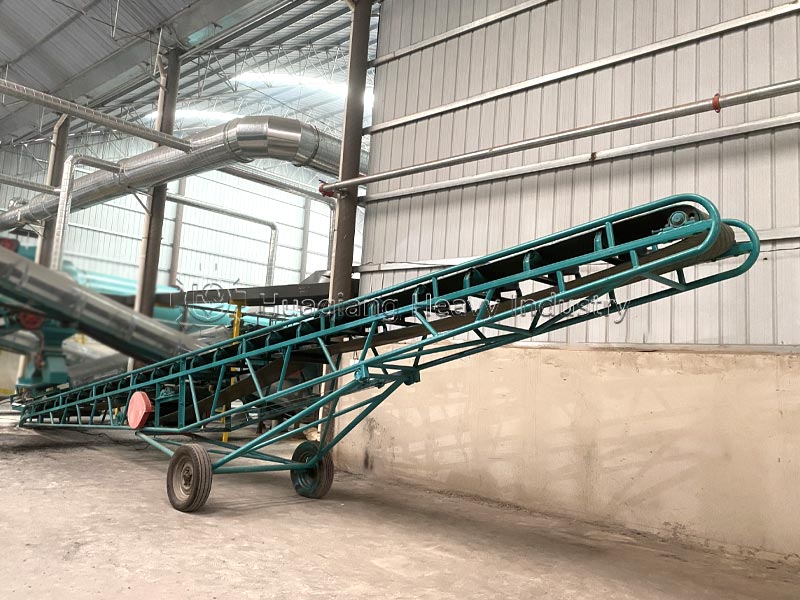
The mobile belt conveyor is far from a simple replica of fixed equipment. First, it is portable and flexible: equipped with wheeled or tracked chassis, it can be quickly deployed anywhere, seamlessly switching from warehouses to fields, saving installation time. Second, it offers efficient operation: an adaptive speed control system intelligently adjusts based on material load, ensuring smooth conveyance and boosting throughput by over 25%. Third, it is versatile and adaptable: whether handling granular fertilizers, organic compost, or powdered raw materials, it manages with ease, preventing cross-contamination. Finally, it is economical and practical: low-maintenance design reduces downtime, with low initial investment and high returns, making it favored by small and medium enterprises.
Case Study: Shining Moments in the Field
Take a medium-sized fertilizer distributor as an example. They often faced challenges in multi-location loading and unloading, with fixed conveyor lines unable to meet demands. After introducing a mobile belt conveyor, transformation quietly unfolded: loading efficiency increased by 40%, and labor costs dropped by 30%. This device moved like a “magician,” shuttling between trucks and storage piles to efficiently transport fertilizers to packaging areas. Workers praised its “multi-functional prowess,” even assisting in outdoor compost turnover, dancing with seasonal changes to make production rhythms light and effortless.
Synergy with Other Fertilizer Equipment: Weaving an Intelligent Production Network
The mobile belt conveyor is a key node in the fertilizer ecosystem. It collaborates with fertilizer crushers to quickly feed raw materials into preprocessing lines; links with dryers to ensure even conveyance of wet materials; and integrates with automated packaging systems for end-to-end logistics. For instance, in a flexible production line, the mobile conveyor moves mixed fertilizers from temporary storage to disc granulator, then coordinates with forklifts for distribution, with the entire process harmonizing like a symphony, showcasing the wisdom of modern production.
Conclusion: Transformer and Connector
The mobile belt conveyor is not just a tool but a bridge for the fertilizer industry toward agility. With portability, efficiency, and economy at its core, it shines brightly in practical applications. Combined with equipment like crushers and dryers, it weaves a responsive production network. For global readers, this symbolizes the user-friendly evolution of agricultural technology—next time you see fertilizers flowing smoothly on a mobile belt, consider: is this “flexible magician” quietly advancing the future of sustainable agriculture?