
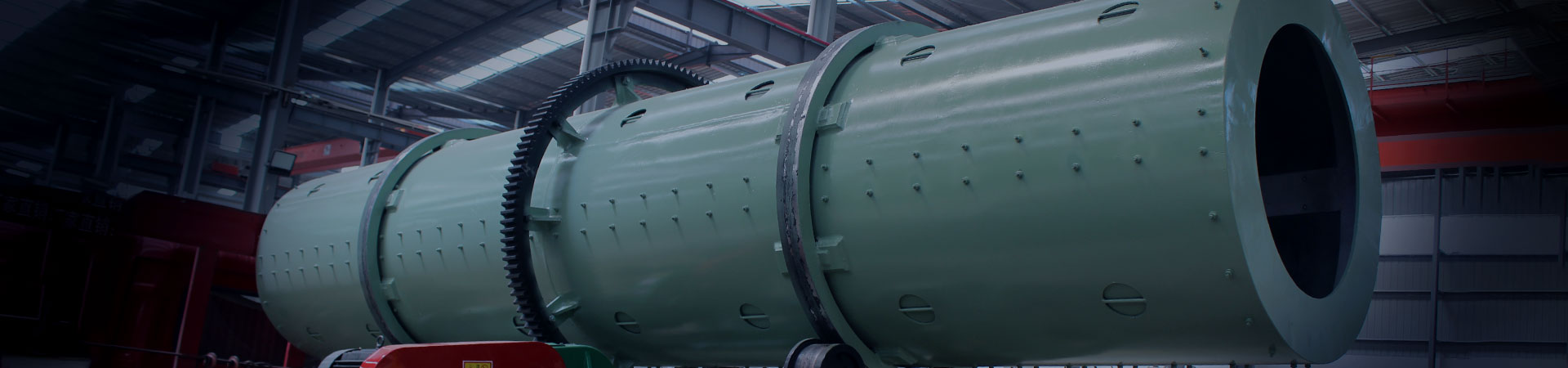
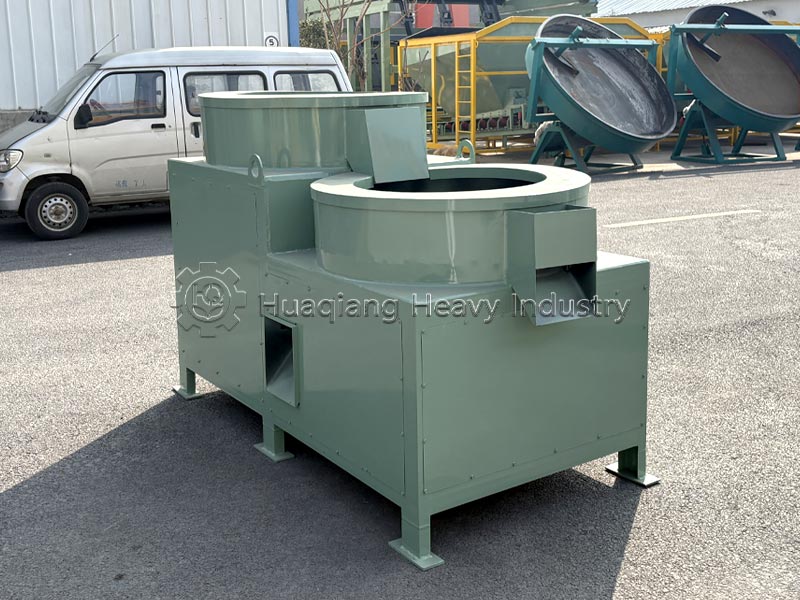
In the final stage of granular product manufacturing, where basic pellets are formed but lack refinement, the ball shaping machine takes center stage. Unlike granulators that create particles from raw materials, this machine acts as a masterful finishing tool. It meticulously polishes, refines, and densifies pre-formed granules, transforming them into products with superior sphericity, a smooth surface, and significantly enhanced commercial appeal.
Core Advantages: Precision Finishing and Enhancement
The ball shaping machine specializes in post-processing, elevating “adequate” pellets to “premium” status through several key benefits:
Exceptional Sphericity and Smoothness: Through controlled rotation, granules are repeatedly lifted and cascaded inside the drum. This gentle, continuous tumbling action wears down edges, removes burrs, and eliminates surface irregularities. The result is near-perfect spherical pellets with a smooth, polished finish that improves both visual appeal and handling properties.
Increased Strength and Dust Reduction: The process does more than polish. The constant rolling and mild compaction densify the granule structure, leading to higher crush strength and durability. Simultaneously, it effectively scrubs away loose surface dust and fines, producing a cleaner product with lower dust content—a critical factor for packaging, storage, and user experience.
Gentle Processing with Minimal Breakage: Operating on the principles of gravity and friction, the rounding action is inherently gentle. Carefully calibrated rotation speeds and internal designs ensure effective polishing while preserving granule integrity, keeping the breakage rate of on-spec material extremely low.
Integrated Coating Capability: Many rounding machines are designed as combination polisher-coaters. During the final stage of polishing, liquid coatings (such as anti-caking agents, colorants, or slow-release film formers) can be sprayed into the tumbling bed. This allows for the application of a uniform, functional coating in the same equipment, streamlining the process.
Simple and Reliable Operation: Featuring a straightforward rotating drum design, these machines are robust, energy-efficient, and easy to integrate into existing production lines after dryers or coolers. They offer a high return on investment by adding significant value at a relatively low operational cost.
Working Principle: The Science of Controlled Tumbling
At its heart, a ball shaping machine is a rotating drum. Its finishing process is a precise application of mechanical friction:
Feeding: Pre-formed granules from upstream processes (e.g., drum fertilizer dryer, cooler) enter the drum.
Lifting and Cascading: As the drum rotates, lifters or the friction of the material itself carries the granules upward.
Polishing and Refining: Upon reaching a certain height, the granules cascade down in a continuous curtain. During this fall, countless gentle collisions and rolling friction events occur between granules and between granules and the drum wall. This “micro-grinding” action smoothens surfaces and improves roundness.
Coating (Optional): If configured for coating, a fine mist of coating liquid is introduced onto the tumbling granules, forming a thin, even layer.
Discharge: After a predetermined residence time, the finished, polished (and potentially coated) granules are discharged, ready for packaging.
The Critical Role in a Production Line
The ball shaping machine serves as the definitive quality gate in a high-end granule production line, typically positioned after the cooler and before the packaging unit:
In NPK Fertilizer Production Lines, it receives dried granules. The polishing step drastically improves product appearance, reduces dust, and enhances flowability. When producing coated or slow-release fertilizers, its integrated coating function is indispensable.
In Animal Feed Lines, it polishes pellets from the pellet mill, removing sharp edges and surface fuzz to create more durable, visually appealing feed.
In Chemical, Food, and Specialty Industries, it is used to refine products like catalyst supports, seeds, or decorative granules, where surface quality is paramount.
Application and Value
Ball shaping machine are essential in lines producing high-grade fertilizers, animal feed, specialty chemicals, seeds, and any granular product where superior surface finish translates to higher market value. Their core value proposition is multifaceted: they enhance product aesthetics and perceived quality to secure premium pricing; improve physical properties like strength and dust control to reduce losses; and enable added functionality through integrated coating.
Conclusion
Selecting a rounding machine is an investment in product excellence and market differentiation. It embodies the principle that the final finish is critical. In an increasingly competitive landscape where visual quality and performance are key purchasing drivers, this machine provides the essential final step to transform good granules into exceptional, high-value products.