
We are a professional manufacturer of organic fertilizer equipment and a customized service provider for fertilizer production lines
-
NO.313, Wanshan Road, Xingyang City, Zhengzhou City, Henan Province, China
Company Address
-
Call Us: +86-18703630069
(Sat - Thursday)
-
inquiry@hqhifertilizermachine.com
Our Email
Bucket Elevator

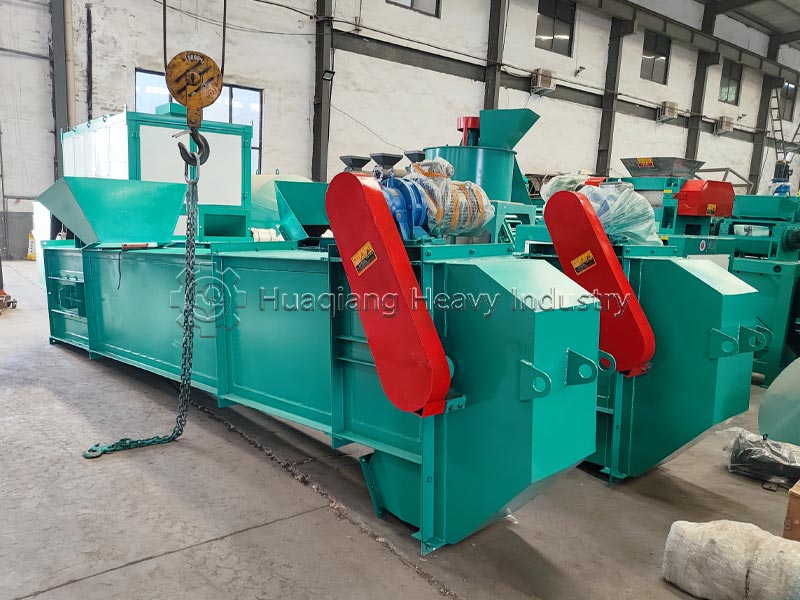
Equipment Introduction
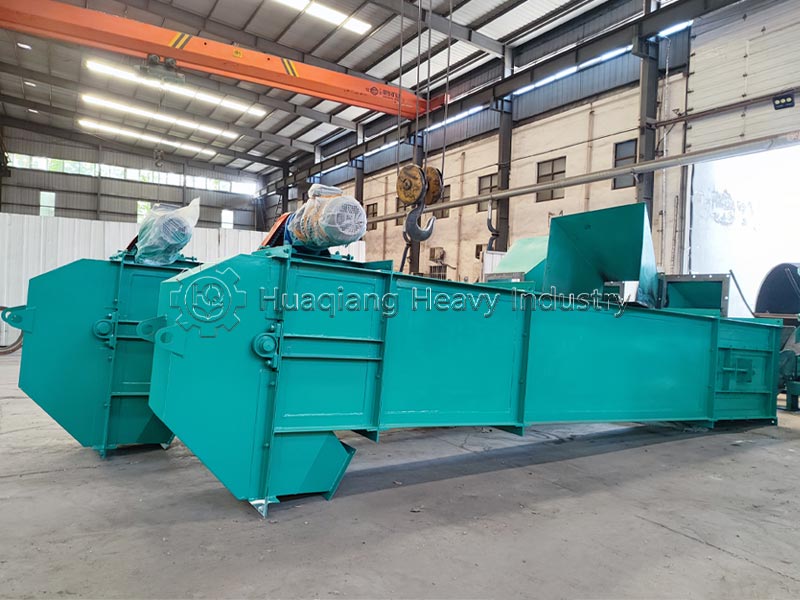
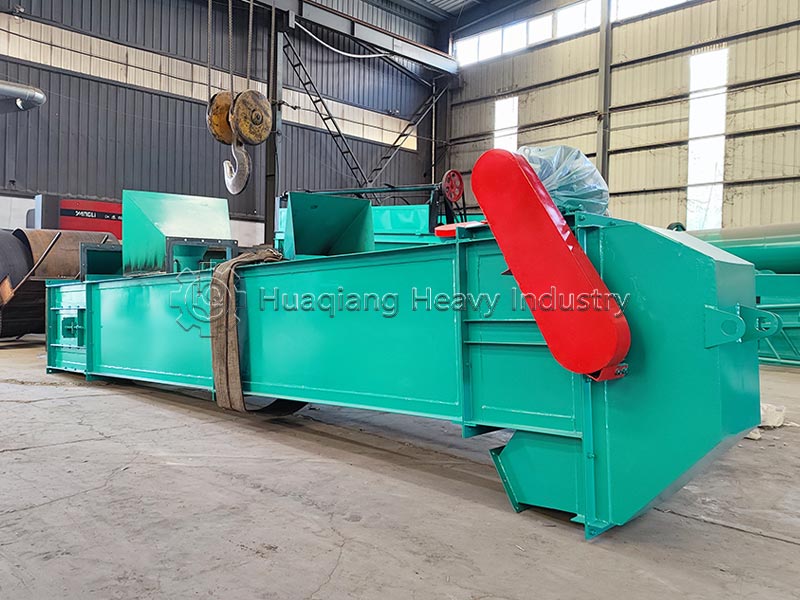
A bucket elevator, also known as a chain bucket elevator, multi-bucket elevator, or bucket lift, is a conveying machine that uses a series of buckets uniformly fixed to an endless traction component to continuously transport powdery, granular, and small lump bulk materials vertically or nearly vertically. It is a typical continuous conveying device for bulk materials, playing a crucial role in industrial production by connecting upstream and downstream processes and running the production line smoothly.
Bucket elevators are indispensable vertical conveying equipment in fertilizer production lines, feed processing plants, grain storage facilities, and other similar settings. Their core advantages lie in their small footprint, large lifting height, stable conveying capacity, and good sealing performance. The equipment can be customized to meet different material characteristics and process requirements by using different traction components (such as belts, ring chains, and plate chains) and bucket types, resulting in multiple series such as TD, TH, and NE.
This equipment is widely used in building materials, mining, chemical, grain, feed, power, metallurgy, and light industry sectors. The drive unit is usually located at the top of the elevator. It transmits power to the traction components through components such as electric motors and reducers to achieve continuous vertical lifting of materials.
Equipment Structure
| System Module | Components | Function Description |
|---|---|---|
| Head Section (Head Part) | Upper housing, driving shaft, reducer, coupling, motor, V‑belt | Equipment power source. The drive unit is arranged at the top to provide rotating power for the whole machine. |
| Middle Housing (Barrel) | Multi‑section standard spliced housing segments | Closed material lifting passage; sections can be added or removed according to lifting height. |
| Bottom Section (Base) | Feed inlet, tensioning device, tail wheel (redirecting pulley) | Material feeding position; fitted with redirecting pulley and matching tension mechanism. |
| Traction Component | Rubber belt (belt), ring chain, plate chain | Core transmission part. ①Belt: Buckets fixed by bolts; belt width 35‑40 mm wider than bucket width; ≤60℃ for standard belt, max 150℃ for heat‑resistant belt. ②Ring chain: Forged endless chain, suitable for large conveying capacity and high‑temperature materials. ③Plate chain: High‑strength steel link joint, for large throughput and high‑temperature materials. |
| Bucket | Deep bucket, shallow bucket, triangular bucket, sharp‑angled bucket | Material‑bearing container. ①Deep bucket 65°: Dry, free‑flowing granular materials. ②Shallow bucket 45°: Damp and poor‑flow materials. ③Triangular bucket: Self‑flowing bulk materials. ④Sharp‑angled bucket: Sticky and heavy lumpy materials. |
| Head & Tail Wheel | Head wheel (driving pulley), tail wheel (redirecting / tail pulley) | Head wheel at top, connected with drive unit to run traction parts; tail wheel at bottom for guiding purpose. |
| Tensioning Device | Gravity automatic tension mechanism | Maintain proper tension for traction components to prevent slipping and chain jumping; equipped with yielding buffer to protect moving parts. |
| Housing | Fully‑enclosed casing | Seal lifting passage, suppress dust leakage and realize slight negative pressure inside casing. |
Applicable Raw Materials for Bucket Elevators
The bucket elevator has a very wide range of adaptability to raw materials, covering almost all bulk materials:
- Classification by Material Form
Powdered Materials: Flour, cement, coal powder, fertilizer powder, etc.
Granular Materials: Grain, feed pellets, fertilizer pellets, plastic pellets, etc.
Small Lump Materials: Crushed ore, coal lumps, limestone fragments, etc.
Abrasive Materials: Cement, ore, etc.
High-Temperature Materials: Chain structure can withstand temperatures up to 250°C.
- Classification by Density
TD belt type is suitable for loose materials with a density ρ < 1.5t/m³, including powdered, granular, and small lump materials.
NE plate chain type has wider applicability and can lift materials of various densities.
- Examples of Applicable Materials
Grain, coal, cement, crushed ore, raw meal, limestone, dry clay, clinker, fertilizer, feed, sand, coke dust, etc.
- Temperature Limits
Ordinary belt: ≤60°C
Heat-resistant belt: Up to 150°C
Chain (ring chain/plate chain): Withstands 250°C
Working Principle
The machine is vertically installed, with the traction components forming a closed-loop circulation system. It operates continuously in four steps: scooping, lifting, unloading, and return.
- Bottom Scooping: The empty hopper descends with the traction components to the machine base inlet, scooping up material falling into the base at a uniform speed, with a filling coefficient controlled at 0.7–0.8.
- Vertical Sealed Lifting: The fully loaded hopper rises vertically along the inside of the cylinder, with the sealed shell preventing dust and material spillage.
- Head Unloading: The hopper circles the arc-shaped section of the top head wheel, relying on centrifugal unloading (high-speed TD type) or gravity unloading (low-speed TH/NE type) to throw the material out, flowing from the outlet into the next stage of equipment.
- Empty Hopper Return Circulation: After unloading, the empty hopper descends vertically along the other side of the cylinder back to the machine base, scooping material again, achieving continuous automated conveying through uninterrupted circulation. Discharge method distinction:
1) Centrifugal discharge: Belt type TD model, speed 1.2–1.4m/s, suitable for dry, free-flowing granular fertilizers;
2) Gravity discharge: Chain type TH/NE model, speed 0.4–0.6m/s, suitable for moist, easily broken organic fertilizer granules.
Target Audience:
- Organic fertilizer, compound fertilizer, bio-fertilizer, and slow-release fertilizer production plants;
- Large-scale livestock and poultry breeding groups, fruit and vegetable planting cooperatives, and companies with self-built fertilizer processing workshops;
- Enterprises engaged in the environmentally friendly resource utilization of sludge, kitchen waste, and livestock and poultry manure;
- Fertilizer complete equipment integrators and production line engineering installation service providers;
- Grain, feed, and chemical powder processing plants;
- Foreign trade equipment purchasers and overseas fertilizer processing plants purchasing complete sets of conveying equipment.
Common Faults, Causes, and Standardized Solutions
| Fault Phenomenon | Possible Causes | Solutions |
|---|---|---|
| Abnormal Running Noise | Bucket collides with housing; bearing damage; loose transmission key; foreign object jammed | Adjust clearance between bucket and housing; replace damaged bearing; fasten transmission key; stop machine and clear foreign objects |
| Dust Leakage | Damaged flange gasket; loose bolts; heavy impact from feeding material causing seal failure | Replace sealing gasket, apply sealant, tighten bolts; reduce feeding drop height or install buffer device |
| Insufficient Lifting Capacity | Mismatched upstream feeding capacity; rotating speed too low; material sticking to buckets or chute; over‑feeding | Match upstream equipment capacity; adjust drive sprocket speed ratio; regularly clean sticky materials; reduce feeding volume |
| Base / Body Vibration | Uneven installation foundation; misaligned head & tail wheels; uneven tension of chain/belt; worn sprocket profile | Re‑calibrate horizontal & vertical level of base; correct coaxiality of head‑tail wheels; evenly tension traction components; replace worn sprockets |
| Belt / Chain Slippage | Insufficient tension; over‑loaded operation; worn head wheel rubber lagging; excessive material accumulation inside housing | Adjust tensioning device; control feeding rate; replace head wheel lagging; clean accumulated material inside housing |
| Material Back‑flow | Insufficient discharging speed; small chute angle or chute blockage | Adjust rotating speed to rated value; clean discharging chute and guarantee smooth discharge |
Application Technology of Bucket Elevators in Fertilizer Production Lines
Complete Fertilizer Production Line Process Link (Multiple Bucket Elevators Included)
Raw Material Bin → TD/TH Bucket Elevator → Crusher → Batching and Mixing Machine → Bucket Elevator → Granulator → Dryer → Cooler → Bucket Elevator → Coating Machine → Screening Machine → Finished Product Bin → Automatic Packaging Machine
Sectional Logic
- Raw Material Section: Straw and manure piled on the ground are vertically lifted to the feed inlet of the crusher and mixer, saving manual handling.
- Granulation and Drying Section: Wet granules are lifted into the drum dryer, and after drying, the high-temperature granules are lifted and transferred for cooling.
- Finished Product Refining Section: After cooling, the fertilizer is vertically fed into the coating machine and screening equipment. The screened fine powder is returned to the mixer for secondary granulation via a small elevator.
- Storage and Packaging Section: Finished granules are lifted to a high-level bin and flow into the automatic packaging machine by gravity.
Selection suggestions
- Choose TD for lightly loaded powder materials: such as fertilizer powder and grain, which have low cost and low noise, but you need to pay attention to the temperature limit (generally <60°C).
- Select TH for medium load particles: such as compound fertilizer particles and coal. The ring chain structure can withstand a temperature of 250°C, is easy to maintain, and is cost-effective.
- Heavy-duty high-temperature NE selection: such as cement clinker and high-temperature slag. The plate chain has large load-bearing capacity, wear resistance, and high temperature resistance (up to 400°C), but the initial investment is relatively high.
- Anti-sticking design: For organic fertilizer raw materials that are prone to moisture absorption and caking, shallow hoppers and anti-stick coating hoppers are preferred, and the moisture content of the feed is controlled.
- Explosion-proof requirements: In situations where grain or dust concentration is high, explosion-proof motors, anti-static belts, and explosion vents must be installed.
Equipment Capacity Range
The capacity range of bucket elevators is extremely wide, depending on the traction components and specifications:
| Type | Common Models | Conveying Capacity | Lifting Height | Application Scenarios |
|---|---|---|---|---|
| TD Belt Type | TD160‑TD630 | 5.4‑238 m³/h | ≤40 m | Grain, feed, light‑weight fertilizer powder |
| TH Ring Chain Type | TH160‑TH630 | 15‑185 m³/h | ≤40 m | Cement, coal, medium‑abrasive materials |
| NE Plate Chain Type | NE15‑NE800 | 8‑500 m³/h | ≤40 m (higher height customizable) | Heavy‑duty, high‑temperature and high‑abrasion working conditions |
In practical applications in the fertilizer industry, the lifting capacity of a typical single unit is usually 5–100 t/h, with a lifting height of 5–50 m. When selecting a model, comprehensive calculations should be performed based on the material’s bulk density, particle size, abrasiveness, and process height, with a 10%–20% capacity margin reserved.