
We are a professional manufacturer of organic fertilizer equipment and a customized service provider for fertilizer production lines
-
NO.313, Wanshan Road, Xingyang City, Zhengzhou City, Henan Province, China
Company Address
-
Call Us: +86-18703630069
(Sat - Thursday)
-
inquiry@hqhifertilizermachine.com
Our Email
Chain Crusher
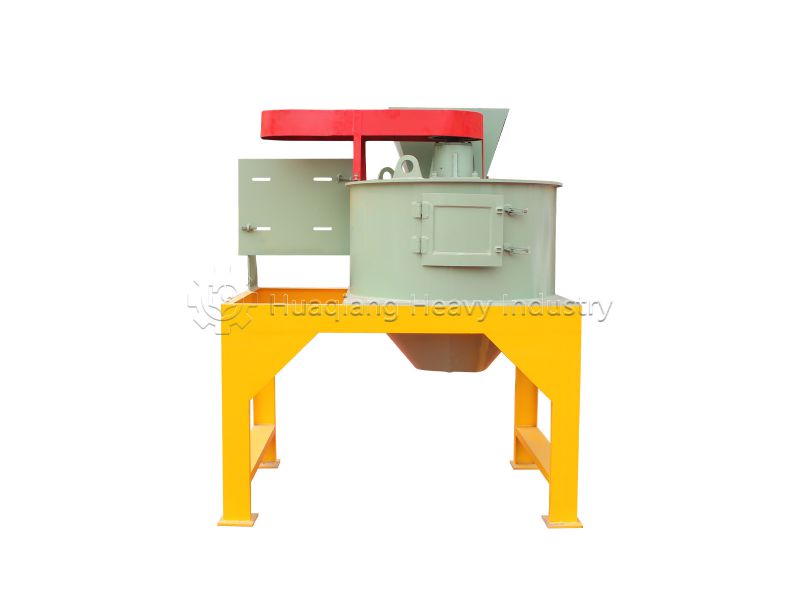


Equipment Introduction
A chain crusher is a machine that uses a high-speed rotating chain to crush materials. It is a highly efficient and professional material crushing equipment, playing an irreplaceable role, especially in fertilizer production and environmental treatment. It is renowned not only for processing dry materials but also for its ability to handle high-moisture and viscous materials without clogging. In the fertilizer industry, it is often used as a key step in raw material pretreatment or re-crushing of recycled materials.
Equipment Structure
The chain crusher mainly consists of the following components:
- Frame Section
Lower Frame: The overall supporting foundation of the equipment.
Casing Assembly: Mounted on the lower frame, enclosing the rotor.
- Rotor and Crushing Part
Main Shaft: The core drive shaft of the equipment, supported on two bearing seats via self-aligning bearings.
Rotor Disc: Mounted on the main shaft, used to fix the chain.
Chain (Link Chain): The main working component of the chain crusher; one end of the link chain is connected to the rotor, and the other end has a wear-resistant steel chain head.
Chain Seat: Mounted on the main shaft, the link chain is installed through the chain seat, protecting the main shaft from corrosion and damage.
Hammer Blades: Equipped on some models, used in conjunction with the chain.
- Bearings and Transmission Part
Upper and Lower Bearing Seats: The main shaft has two bearing seats, mounted at the upper and lower ends of the casing.
Motor: The power source driving the equipment.
Motor Frame: Used to fix the motor.
Drive Belt: Transmits the motor power to the main shaft.
- Feeding/Discharging and Auxiliary Sections
Feeding Hopper (Inlet): Located on the upper part of the machine casing, used for material input.
Discharge Port: Located at the bottom of the machine body, used for finished product discharge.
Door/Maintenance Door: A door is provided on the machine casing for easy disassembly and maintenance of the chain and hammers.
Inner Lining Plate: To prevent material adhesion and machine body wear, the machine body is lined with a rubber or polypropylene plate.
Vibration Damper Base: The equipment is mounted on a base equipped with vibration dampers to reduce vibration.
Applications of the Equipment
Chain crushers are widely used in the following fields:
- Fertilizer industry: Crushing of granular compound fertilizers, superphosphate, heavy calcium carbonate, phosphate fertilizers, nitrate phosphate fertilizers, urea, and other lumpy fertilizer materials.
- Organic fertilizer industry: Crushing of fermented lumpy organic materials and recycled materials.
- Chemical industry: Crushing of medium-hardness lumpy chemical raw materials.
- Building materials and mining: Crushing of medium-hardness ores and building materials.
- Environmental protection field: Treatment of organic waste from waste and sewage treatment plants. This equipment is particularly suitable for processing fertilizer materials with high moisture content, free acid, and high viscosity, and is an upgraded replacement for traditional vertical chain crushers.
Raw materials and scope of equipment
| Category | Sub Field / Material Type | Applicable Material Description |
|---|---|---|
| Application Scope | Fertilizer Industry (Core) | Crushing of agglomerated compound fertilizer; crushing of block organic fertilizer and organic-inorganic compound fertilizer; grinding of unqualified returned materials; crushing of ordinary calcium, heavy calcium, phosphate fertilizer, ammonium phosphate nitrate and potash fertilizer |
| Chemical Industry | Crushing of various chemical raw materials | |
| Building Materials Industry | Crushing processing of building materials raw materials | |
| Mining Industry | Crushing of medium-hard lump ores | |
| Other Industries | Food raw materials, briquette processing; fibrous materials such as leaves, residues, bamboo chips, wood chips and waste paper; hard materials including brick fragments, gravel and coal slag | |
| Applicable Raw Materials | Organic Fertilizer Raw Materials | Livestock manure (pig manure, cow manure, chicken manure), industrial sludge, kitchen waste, biogas residue, bacterial bran, compacted straw |
| Chemical Fertilizer Raw Materials | Caked compound fertilizer, ordinary calcium, heavy calcium, phosphate fertilizer, ammonium nitrate phosphate fertilizer, potash fertilizer | |
| Other Materials | Fibrous materials such as leaves, residues, broken bamboo, wood chips and waste paper; broken bricks, tiles, gravel and coal slag; medium-hard mining ores | |
| Moisture Requirement | Horizontal model can process phosphate fertilizer with 14% moisture content and 6% free acid; the whole machine adapts to wet materials with moisture content ≤40% |
Working Principle of the Equipment
The chain crusher is an impact crusher that crushes materials by impacting them with a high-speed rotating chain.
Its complete working process is as follows:
- Material Intake and Diversion
After entering the feed inlet, the material is divided into two paths and falls into the two rotors respectively.
- Initial Impact Crushing
The material enters the casing and collides with the high-speed rotating chain, being violently crushed by the impact. The material is then whipped by the chain on one rotor and flies towards the other rotor.
- Repeated Impact Crushing
The material undergoes multiple impacts and compressions within the casing:
1)Crushing by the impact of the high-speed rotating chain
2)Crushing through collisions between material particles
3)Rebounding from impact against the inner wall of the casing and colliding with the chain again.
- Multi-Stage Fall Crushing
During its fall, the material undergoes several impacts, becoming powder or fine particles.
- Finished Product Discharge
The crushed material that meets the required standards is discharged from the bottom of the machine.
- Particle Size Adjustment
The particle size can be adjusted by increasing or decreasing the number of chains. When the crusher is fully loaded with the chain and operating at its optimal load, the material can be crushed to less than 1 mm. The circumferential speed of the chain head is generally 28~78 m/s.
Equipment operation and maintenance methods
| Category | Item / Cycle | Details & Requirements |
|---|---|---|
| Installation & Commissioning | Foundation Installation | Install on horizontal concrete foundation and fix with anchor bolts |
| Verticality Requirement | Ensure the main unit is perpendicular to the horizontal plane | |
| Post-installation Inspection | Check all bolts for looseness; confirm tight sealing of main machine door | |
| Electrical Configuration | Arrange power cables and control switches according to equipment power | |
| Test Run Acceptance | Complete inspection, carry out no-load trial run; production can start only after normal operation | |
| Daily Operation | Before Startup | Check bolt tightness, sufficient lubrication, intact chains, no foreign objects inside the chamber |
| During Operation | Maintain uniform feeding; listen for abnormal noise, monitor current and temperature | |
| After Shutdown | Clean residual materials; inspect wear condition of vulnerable parts | |
| Lubrication Maintenance | Bearing Lubrication | Add No.3 lithium base grease every shift; filling volume accounts for 1/3~1/2 of bearing space |
| Regular Oil Replacement | Replace lubricant regularly; thoroughly clean bearings when replacing oil | |
| Wheel Inspection | Newly installed wheels tend to loosen; regular inspection and tightening are required | |
| Periodic Maintenance | Every Shift | Check bolts, replenish lubricant, clean residuals |
| Weekly | Check wear of chains and hammer pieces, belt tension | |
| Monthly | Check bearing status and wear of casing liner plates | |
| Quarterly | Comprehensive inspection of rotor balance, replace severely worn spare parts |
Application of the Equipment in the Production Line
Chain crushers are typically located after the batching system and before the granulation system. In organic fertilizer production lines, they are responsible for crushing fermented compost materials to a suitable fineness for granulation (usually below 3mm), ensuring a high pelleting rate in subsequent granulation.
- Location in the Organic Fertilizer Production Line
In a complete organic fertilizer production line, the chain crusher is located after fermentation and before mixing and granulation, performing the crucial functions of breaking up agglomerates and refining materials.
Complete Processing Flow:
Raw materials such as livestock and poultry manure → Turning and fermentation → Crushing and refining by chain crusher → Uniform batching by twin-shaft mixer → Forming by disc granulator or roller extrusion granulator
- Application in Compound Fertilizer Production Lines
Chain crushers are one of the most commonly used crushing equipment in the compound fertilizer industry, suitable for:
Raw material crushing
Return material (unqualified products) crushing
Crushing agglomerated compound fertilizer
- Application Features
Can handle high-moisture manure, not prone to clogging
Screenless design, particle size controlled by adjusting chain speed
Anti-winding structure, can handle long-fiber materials
Common problems and solutions
| No. | Fault Phenomenon | Main Causes | Solutions |
|---|---|---|---|
| 1 | Motor fails to operate normally | Voltage too high or too low Motor phase loss Motor winding short circuit | Restart after voltage stabilizes Check wiring faults and ensure three-phase operation Repair or replace the motor |
| 2 | Bearing overheating | Insufficient lubrication Damaged bearing Excessive machine vibration | Add lubricating grease Clean and regrease bearings; replace bearing if necessary Overhaul the machine and correct rotor balance |
| 3 | Excessive machine vibration | Uneven chain wear Rotor unbalance Loose anchor bolts | Replace unevenly worn chains Correct rotor dynamic balance Tighten anchor bolts |
| 4 | Reduced output | Severely worn chains / hammer blades Uneven feeding Feed inlet blockage | Replace worn chains / hammer blades Adjust feeding mechanism for uniform feeding Clear blockages at the feed inlet |
| 5 | Coarser crushing particle size | Insufficient number of chains Chain abrasion Excessive clearance between hammer blades | Increase the number of chains Replace worn chains Adjust clearance between hammer blades and liner plates |
| 6 | Material sticking on machine housing | Excessively high material moisture Damaged liner plate inside housing | Control moisture content of raw materials Replace or repair the inner liner plate of the housing Clean the inner wall of the housing regularly |
Target Customers for the Equipment:
- Commercial Organic Fertilizer Plants: Chain crushers are the preferred crushing equipment in the organic fertilizer industry, especially suitable for processing materials such as straw, branches, fermented manure blocks, and mushroom residue. They can meet the needs of organic fertilizer plants with an annual output of 10,000 to 200,000 tons.
- Organic-Inorganic Compound Fertilizer Manufacturers: Companies that need to mix and crush organic raw materials with chemical fertilizers.
- Compound Fertilizer Manufacturers: Crushing and returning lumpy materials in compound fertilizer production.
- Chemical Fertilizer Manufacturers: Companies producing products such as superphosphate, superphosphate, phosphate fertilizer, nitrate phosphate fertilizer, and potash fertilizer.
- Feed Mills: Companies that need to crush feed raw materials.
- Small and Medium-Sized Mines and Building Material Processing Plants: Companies that need to crush medium-hardness ores and process building material raw materials.
- Biomass Enterprises and the Landscaping Industry: Companies that process biomass raw materials and landscaping waste. 8. Small workshops and small factories: Small chain crushers are easy to operate and can be used by one person. They are suitable for crushing various materials such as organic fertilizer raw materials, feed, Chinese medicinal materials, and ores, making them a perfect fit for small-batch production scenarios.
Equipment Parameters
| Model | Feed Size (mm) | Output Size (mm) | Motor Power (kW) | Capacity (t/h) |
|---|---|---|---|---|
| LP600 | ≤60 | <0.7 | 15 | 1–5 |
| LP800 | ≤60 | <0.7 | 18.5 | 2–8 |
| LP1000 | ≤60 | <0.7 | 30 | 5–10 |
| LP1500 | ≤60 | <0.7 | 55 | 10–20 |