
We are a professional manufacturer of organic fertilizer equipment and a customized service provider for fertilizer production lines
-
NO.313, Wanshan Road, Xingyang City, Zhengzhou City, Henan Province, China
Company Address
-
Call Us: +86-18703630069
(Sat - Thursday)
-
inquiry@hqhifertilizermachine.com
Our Email
Coating Machine

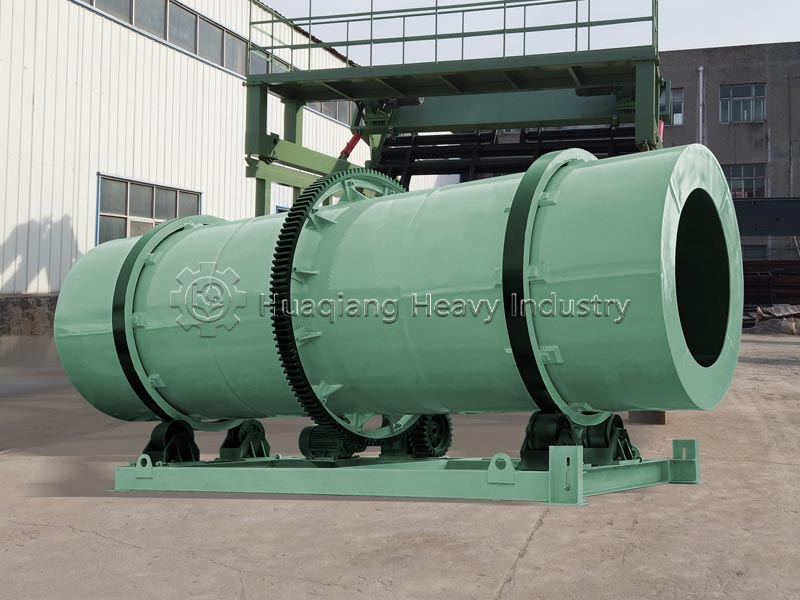
Equipment Introduction
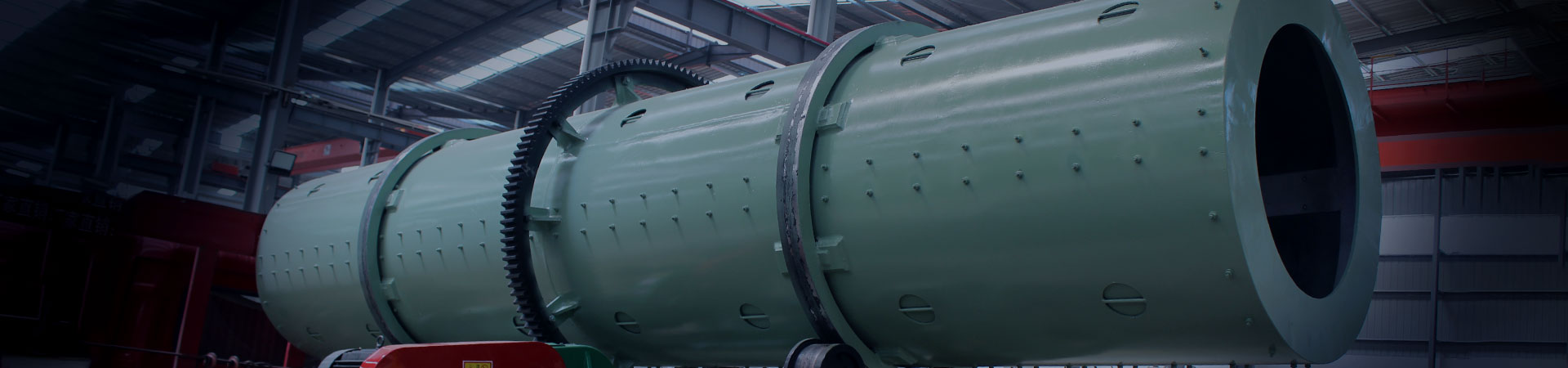
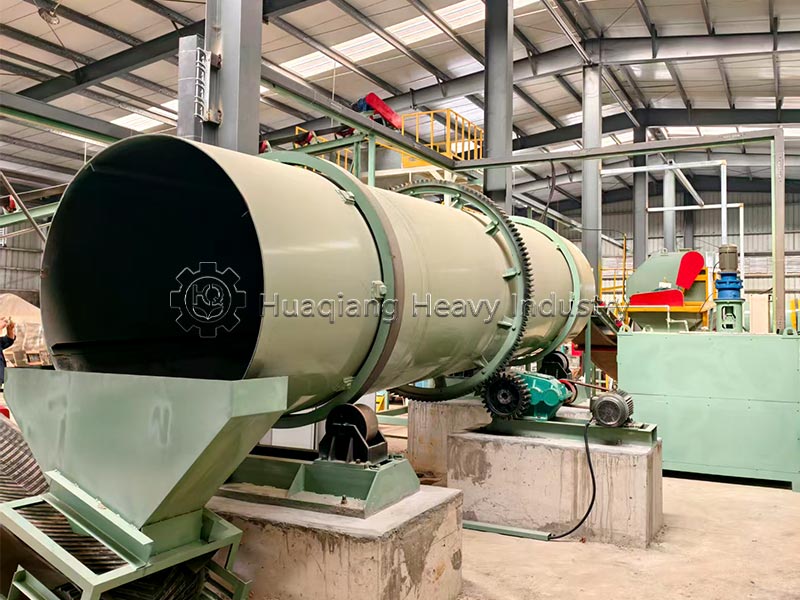
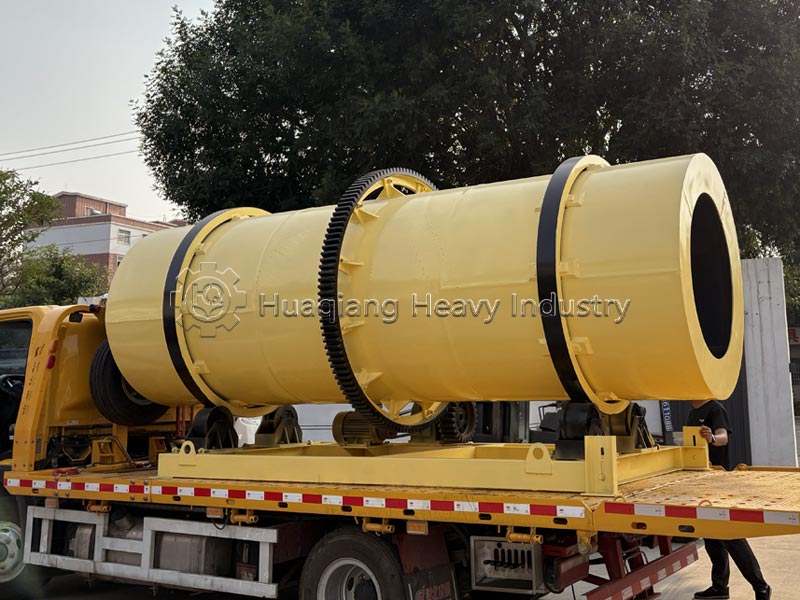
The rotary fertilizer coating machine is a core piece of equipment in the finishing process of compound fertilizer and organic fertilizer production lines. Located at the rear of the cooler and the front of the packaging machine, it is specifically designed to coat the surface of cooled fertilizer granules. Two main processes are used: liquid oil film spraying and powder coating. It is an essential piece of equipment for improving fertilizer product quality and extending storage life.
Core Functions
Anti-caking and Moisture-proof: Forms a hydrophobic isolation film on the particle surface, blocking salt bridge crystallization between particles and solving the problems of fertilizer moisture absorption and caking in high-humidity environments;
Polishing, Brightening, and Dust Suppression: The tumbling friction of the cylinder polishes the particles, resulting in a smooth and rounded surface, eliminating dust during transport and feeding;
Slow-release and Controlled-release Enhancement: Spraying with paraffin wax, resin, and sulfur coating agents controls the nutrient release rate and reduces leaching loss;
Functional Modification: Can simultaneously spray trace elements and beneficial biological agents to produce functional microbial fertilizers and micronutrient compound fertilizers;
Equipment Core Advantages
Cylinder Corrosion-resistant Design: Inner wall polypropylene/acid-resistant stainless steel lining, resistant to acid and alkali corrosion from fertilizers, suitable for high-salt urea-based compound fertilizers;
High Coating Uniformity: Atomized spraying + Continuous tumbling material curtain with a film coverage rate of ≥98%, eliminating missed packaging and uneven thickness; Continuous automation: Connects to front-end cooling and screening, and back-end automatic packaging, suitable for uninterrupted production lines; Simple operation and maintenance, standardized wear parts, adjustable machine tilt angle and drum speed, adaptable to different particle sizes and types of fertilizers; Suitable for full-scale production capacity, with standard models ranging from 1 to 15 t/h, and custom-designed large-capacity equipment with extended drums available upon request.
Equipment Structure
The complete coating machine consists of a screw conveyor, mixing tank, oil pump, and main unit. The main unit can be divided into five main components:
- Frame and Support: The rotating parts of the entire machine are supported by the frame, which bears significant force. The support roller frame is welded from medium carbon steel plate and channel steel. The support rollers fixed to the frame are made of high-quality anti-corrosion and wear-resistant materials, greatly improving service life. The support roller frame adopts integrated casting technology, and lifting hooks are provided at the four corners for easy loading, unloading, and transportation.
- Transmission: The transmission part drives the entire machine. The transmission frame is welded from high-quality channel steel. The main motor and reducer installed on the transmission frame are of reliable quality. The motor drives the pulley, V-belt, and reducer to transmit power to the main shaft. The transmission reducer and the working part of the main shaft are connected by a nylon pin coupling for drive transmission.
- Large Gear Ring: Fixed to the machine body, it meshes with the transmission pinion gear, driving the machine body in opposite directions. It is made of high-tech wear-resistant materials. 4. Roller Belts: Fixed to both sides of the machine body, used to support the entire machine.
- Machine Body (Cylinder): The cylinder is the most important part of the entire coating machine, welded from medium carbon steel plates. The inner wall of the cylinder is equipped with lifting plates to lift and spread the granular material into a uniform material curtain. The main body is lined with polypropylene or acid-resistant stainless steel, making it corrosion-resistant and durable.
- Spraying/Powdering System: Includes a spraying system (nozzles, pipes, delivery pump) and a powdering device, used to evenly apply the coating agent to the surface of the granules. Some equipment is also equipped with a temperature control system to precisely control the temperature and humidity of the spraying area, ensuring rapid curing of the coating agent.
Applicable raw materials for equipment
| Category | Sub‑category | Material Name | Key Process Requirements |
|---|---|---|---|
| Coatable Granular Fertilizer | Fertilizer Granule Types | Organic fertilizer granules, compound / compound‑mixed fertilizer granules, bio‑organic fertilizer granules, BB fertilizer granules, slow‑controlled release fertilizer granules | Granule size: 1‑4.75 mm; good roundness, no sharp edges; moisture content ≤2%; granule qualification rate>95%; screening equipment shall be configured in the upstream process |
| Coating Agent | Liquid Coating Agent | Anti‑caking oil / paste, paraffin wax, fatty acid, coating oil, anti‑caking agent, talcum‑powder‑containing adhesive / grease‑mixed coating liquid | Atomization temperature of anti‑caking grease: 70‑110 °C; divided into hot‑melt type and solvent type; liquid anti‑caking agent approx. 1.5 kg per ton of fertilizer |
| Coating Agent | Powder Coating Agent | Talcum powder, bentonite, humic acid, sulfur powder | Solid anti‑caking agent approx. 3 kg per ton of fertilizer; can be used for dusting and slow‑release coating |
| Coating Agent | Coating Agent Dosage | ‑ | Total spraying dosage accounts for 0.5%‑2% of granule weight |
Working Principle of the Equipment
The working principle of the rotary coating machine can be summarized as “drum tumbling + atomized spraying + uniform adhesion”:
- Power Transmission: The main motor drives the belt and pulley, which, after being reduced in speed by a reducer, drives the drive shaft to rotate. The split gear on the drive shaft meshes with a large gear ring fixed to the machine body, driving the entire cylinder to rotate slowly at a set speed (usually 12–14 r/min).
- Material Movement: Particles enter the inclined rotating cylinder from the feed end and are continuously lifted to a certain height by the lifting plates before being thrown down, forming a uniform “material curtain”.
- Coating Agent Application: The spray system atomizes and evenly sprays liquid coating agent (or powder coating) onto the surface of the tumbling particles. The powder coating process uses a screw conveyor to quantitatively feed powdered coating agent into the cylinder, achieving uniform adhesion through the rolling friction between the particles.
- Curing and Film Formation: Under the airflow generated by the induced draft fan, the airflow inside the cylinder accelerates, promoting solvent evaporation and initial curing of the coating layer. After the particles remain inside the cylinder for a sufficient time, they are continuously discharged from the outlet.
- Continuous Operation: Due to the cylinder maintaining an inclination angle of approximately 2.5°, the material moves slowly from the high-end feed end to the low-end discharge end under the combined action of gravity and rotational thrust, achieving continuous feeding, continuous coating, and continuous discharge.
Applications:
Fertilizer Manufacturing Industry
Small and Medium-Sized Compound Fertilizer Plants: Drum, High-Tower, and Extrusion Granulation Finishing to Prevent Agglomeration;
Organic Fertilizer/Bio-Fertilizer Processing Plants: Organic Fertilizer Polishing and Microbial Coating to Ensure Viable Microbial Storage;
Slow-Release and Controlled-Release Fertilizer Enterprises: Resin and Sulfur Long-Lasting Coating for the Production of Long-Lasting Fertilizers for Economic Crops;
Livestock Groups and Planting Cooperatives: Small-Scale Upgrading and Processing of Self-Produced Organic Fertilizer;
Environmental Resource Utilization Plants: Sludge and Kitchen Waste Fertilizer Granulation Processing.
Cross-Industry Expansion: Anti-stick Polishing Treatment for Feed Granules and Chemical Granules.
Equipment Parameters
Uniform cylinder inclination angle 2.5°, compatible with pre-cooling units, coating uniformity ≥98%
| Equipment Model | Shell Size (Inner Diameter × Length, mm) | Shell Rotation Speed (r/min) | Hourly Capacity (t/h) | Main Motor Power (kW) |
|---|---|---|---|---|
| BM1000×4000 | Φ1000×4000 | 15 | 1~3 | 4 |
| BM1200×4000 | Φ1200×4000 | 14 | 3~5 | 5.5 |
| BM1500×6000 | Φ1500×6000 | 12 | 5~10 | 12 |
| BM1500×7000 | Φ1500×7000 | 12 | 8~15 | 15 |
Target Users of the Equipment
The coating machine is primarily intended for the following user groups:
- Compound fertilizer manufacturers: NPK compound fertilizer production lines with an annual output of 10,000–500,000 tons, requiring anti-caking and surface treatment of finished granules.
- Organic fertilizer/bio-organic fertilizer plants: Producing powdered or liquid microbially enhanced organic fertilizers, requiring the addition of functional microorganisms during the low-temperature stage (after cooling).
- Slow-release/controlled-release fertilizer manufacturers: Needing to achieve slow nutrient release through coating technology to meet the needs of precision agriculture.
- Large-scale fertilizer trading and warehousing companies: Providing post-processing anti-caking treatment for bulk granular fertilizers to extend inventory lifespan.
- Seed and feed processing companies: Production scenarios requiring granule coating, surface spraying with oils or pesticides.
Equipment operation procedures and maintenance methods
| Module Category | Operation Phase | Key Operation & Maintenance Points |
|---|---|---|
| Installation & Commissioning | Foundation Installation | Install equipment on horizontal concrete foundation; shell inclination 2‑5°; install wedge‑shaped base shims with thickness ≤30‑35mm; adjust supporting roller position after shell installation. |
| Installation & Commissioning | No‑load Test Run | Complete foundation pouring and curing for 8‑10 days before test run; run continuously with no‑load for 8h, bearing temperature ≤50℃. |
| Start‑up Operation | Pre‑start Inspection | Clean residual materials inside drum; check motor and reducer oil level; confirm supporting rollers and riding rings rotate flexibly, adjust belt tension; inspect spraying pipeline and nozzles for blockage. |
| Start‑up Operation | Start‑up Sequence | Apply dry grease to gears and belts; fill lubricant for bearings and reducer; run empty shell for several minutes first; start feeding system; finally activate spraying system to prevent material caking. |
| Running Operation | Process Control | Maintain uniform feeding to form even material curtain inside drum; adjust spray volume according to feed rate and granule size for smooth non‑sticky coating; oil‑powder process: spray oil first then dust powder; monitor abnormal noise & drum vibration, sample to check coating performance. |
| Running Operation | Safety Notes | Do not stand under running machine; no internal maintenance during operation; do not remove protective guards; keep hands away from rotating motor and cables; never start without reliable grounding. |
| Shutdown Operation | Shutdown Sequence | Stop feeding; empty materials inside shell; shut down spraying system and drain residual liquid from pipelines; finally turn off coating machine drive motor. |
| Maintenance | Drum Cleaning | Clean adhesive residues on inner drum wall after daily shift to avoid disturbing material flow and guarantee uniform coating. |
| Maintenance | Spraying System Maintenance | Check nozzle atomization regularly; clean filter and nozzles with hot water or dedicated solvent; thoroughly clean pipelines when coating agent solidifies. |
| Maintenance | Lubrication Maintenance | Grease gears before startup; add grease to belt surface every 7 days; refill / replace bearing grease every 3 months; first fill reducer gear oil, replace every 4 months afterwards; apply gear grease on large gear meshing parts periodically. |
| Maintenance | Transmission & Anti‑corrosion Maintenance | Check wear condition of riding ring and supporting rollers; inspect head‑end sealing status; touch‑up paint on worn surfaces timely to prevent machine corrosion. |
Equipment Applications in Production Lines
- Core Position in Fertilizer Production Lines
The coating machine is a core post-processing piece of equipment in fertilizer production lines, located after granulation and before packaging. Situated at the end of the production line, it plays a crucial role in the quality of the finished product.
Complete Processing Flow:
Raw Material Pretreatment → Fermentation and Composting → Crushing → Ingredient Mixing → Granulation → Drying → Cooling → Sieving → Coating → Packaging
- Specific Roles in the Production Line
1) Anti-caking Treatment: Forms a protective film on the granule surface to prevent moisture absorption and clumping during storage and transportation.
2) Appearance Improvement: Makes granules smoother, rounder, and more appealing.
3) Functional Addition: Adds trace elements or functional microbial agents during the coating process to enhance the added value of fertilizers.
4) Slow-Release Coating: Achieves controlled nutrient release through coating with slow-release materials.
- Coating Process Classification
1) Liquid Coating Process: Uses liquid coating agent alone for spraying.
2) Powder Coating Process: Uses powder coating agent alone for powder coating.
3) Oil-Powder Combined Process: Sprays oil first, then applies powder for the best effect and drier granules.
- Supporting Equipment
The coating machine needs to be used in conjunction with the following equipment:
1) Screw conveyor: to uniformly feed granules into the coating machine
2) Mixing tank: used for mixing and blending the coating agent
3) Oil pump/transfer pump: to deliver the coating agent to the nozzle
4) Powder applicator: used for powder applicator application
5) Front-end screening equipment: to ensure that the fed granules are uniform and free of impurities
- Temperature Control Equipment
To accommodate coating agents of different properties (such as hot melt or solvent-based), the equipment is often equipped with a temperature control system to precisely control the temperature and humidity of the spraying area, ensuring that the coating agent can quickly solidify or form a film on the surface of the granules and prevent the granules from sticking together.
Common Faults, Causes, and Standardized Solutions
| Fault Phenomenon | Possible Causes | Solutions |
|---|---|---|
| Uneven coating (partial no‑coating, partial over‑coating) | Nozzle blockage, poor atomization with water‑drop spraying; inconsistent nozzle installation angle, uneven pipeline distribution; unstable spraying pressure; large granule size difference; inconsistent material moisture content | Clean nozzles every 4h; adjust nozzle angle to 30° against drum axis; control spraying pressure 0.3‑0.5MPa; adjust drum rotating speed for full granule turnover; reduce material moisture; install screening equipment upstream to ensure uniform granule size |
| Coating layer easy to peel off & powder shedding | High feeding rate, insufficient material retention time; insufficient coating agent dosage or improper concentration; low drum rotating speed, insufficient compaction of coating layer | Reduce feeding capacity and extend material retention time; properly increase coating agent dosage or adjust concentration; raise drum rotating speed to fully compact coating layer |
| Severe vibration & abnormal noise of equipment | Drum offset; loose anchor bolts; misaligned transmission system; worn gears and belts; accumulated materials inside shell | Stop machine and inspect drum offset; tighten anchor bolts; correct transmission position; inspect & replace worn gears and belts; clean accumulated materials inside shell |
| Nozzle blockage & poor spraying | Solidified coating agent; poor filtration of coating agent with impurities entering pipelines | Stop machine, disassemble and clean nozzles with water / special solvent; implement good filtration for coating agent; drain pipelines after shutdown to avoid blockage |
| Drum sliding | Loose fastening of riding ring end face; mis‑aligned axial positioning; uneven tension causing machine vibration & sway | Fasten riding ring and end‑face bolts; use shims for positioning; avoid excessive compression and uneven tension |
| Shell offset | Worn supporting roller and riding ring, leading to shell position deviation | Repair slightly worn supporting roller / riding ring; directly replace for heavy wear; adjust installation position of supporting rollers |
| Gear offset | Heavy wear of pinion; damaged connection between big gear and drum shell | Re‑install reversible pinion for slight wear; replace heavily‑worn pinion; correct alignment between big gear and shell; repair if necessary |
| Shell vibration | Invalid connection between supporting roller base and foundation; heavily‑worn riding ring | Correct base connection and tighten bolts for supporting rollers; repair or replace riding ring according to wear degree |
| Heavy material caking inside shell | Excessive coating agent spraying; high granule moisture and uneven raw‑material mixing | Reduce spraying dosage of coating agent; perform coating operation only after granules are fully cooled and dried |
Summary of Equipment’s Comprehensive Technical Features:
Corrosion-resistant and durable: Lined with polypropylene/stainless steel, suitable for high-salt and acidic fertilizers, ensuring a long service life.
Strong process compatibility: Supports three coating processes: pure liquid, pure powder, and liquid-powder composite, addressing needs for anti-caking, slow release, and microbial coating.
Low breakage and polishing: Gentle tumbling without lifting plates, particle breakage rate <0.5%, resulting in smooth and glossy finished products.
Continuous and stable production: Suitable for 24-hour uninterrupted production lines, with automated oil and powder supply, minimizing manual intervention.
Environmentally friendly and clean: Equipped with a dust removal system, eliminating disorderly emissions of dust and oil/gas, meeting environmental protection standards for fertilizer plants.
High compatibility: The same model can be matched one-to-one with dryers and coolers in terms of capacity and size, resulting in a compact production line layout and reduced investment in conveying equipment.