
In BB fertilizer production line investment decisions, equipment selection directly determines the initial investment scale and long-term operating costs. Small-scale NPK blending machines and large-scale continuous bulk blending machines each have their advantages and disadvantages; an inappropriate choice may lead to waste (“using a large machine for a small load”) or bottlenecks (“using a small machine for a large load”). This article analyzes the cost matching logic of the two types of equipment for enterprises of different sizes from a life-cycle cost perspective.
Small-scale batch blending equipment has a clear initial investment advantage. A small production line with an hourly output of 1-5 tons requires an equipment investment of approximately US$7,000-22,000, including an automatic batching system, mixer, and packaging system. It occupies only 100-300 square meters, has no special requirements for plant height, and can even utilize existing buildings for renovation, resulting in extremely low civil engineering costs.
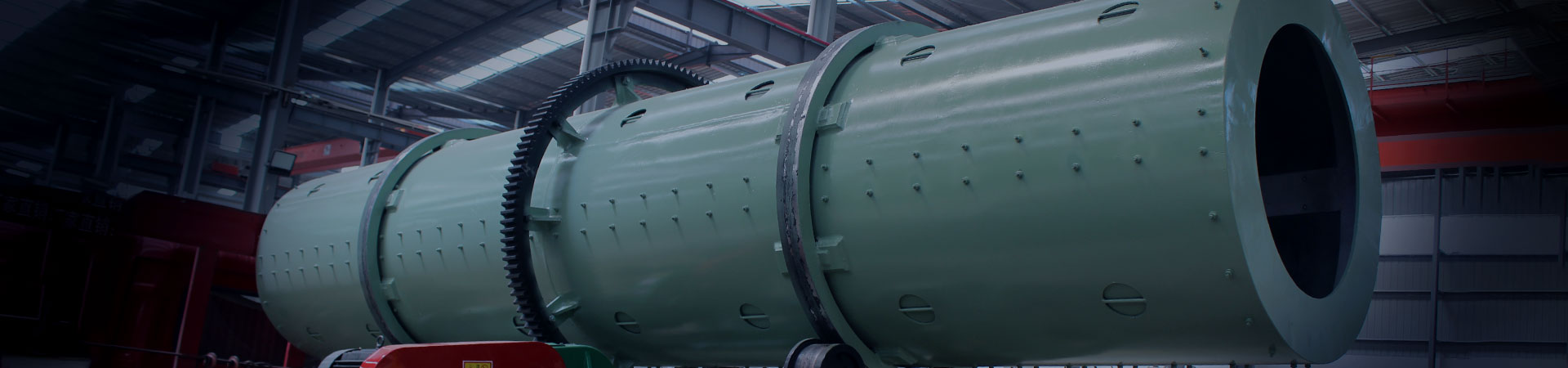
Large-scale continuous blending systems, on the other hand, require a larger initial investment. A fully automated production line with an hourly output of 20-50 tons requires an equipment investment of approximately US$80,000-200,000. It necessitates multiple raw material silos, long-distance conveying equipment, and a DCS control system, occupying 800-2000 square meters of land, significantly increasing investment in factory buildings and infrastructure. However, its single-machine capacity can be more than 10 times that of smaller equipment, while the investment cost per unit capacity is actually lower—a 100,000-ton-per-year production line requires an equipment investment of approximately US$1.8-2 per ton of capacity, while a smaller line requires US$3-5 per ton.
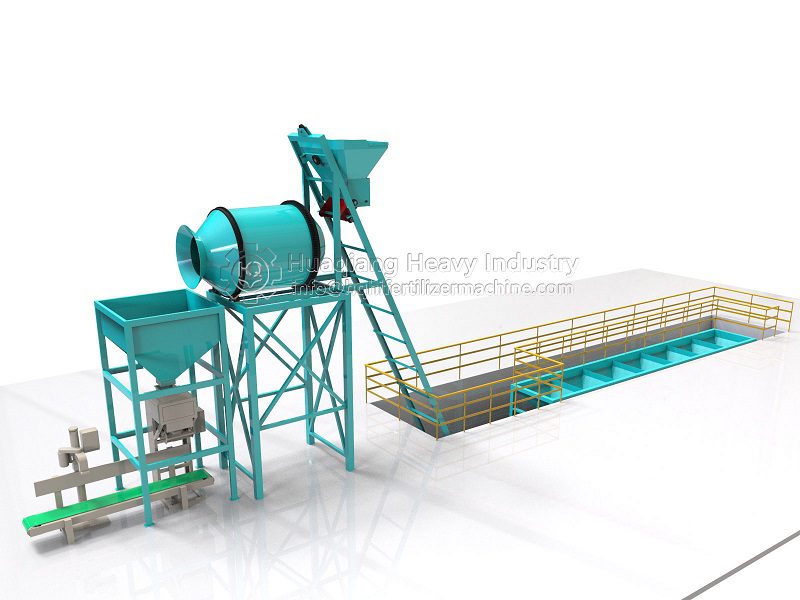
The difference in operating costs is even more significant. Large-scale continuous systems, due to the absence of frequent start-stop cycles and the use of variable frequency speed control for on-demand energy supply, consume only 2.8-4.5 kWh/ton of energy per unit product, reducing energy consumption by more than 40% compared to smaller batch equipment. In terms of automation, large systems require only 1-2 operators, while the same total capacity requires multiple smaller machines operating in parallel, necessitating 5-8 operators and increasing labor costs by 3-4 times.
In terms of maintenance costs, large equipment uses long-life components such as cast gears and wear-resistant liners. Although the cost of a single repair is higher, the failure rate is low and the lifespan is long. Small equipment requires frequent replacement of wear parts, resulting in a higher proportion of long-term maintenance costs.
Comprehensive calculations show that the blending cost per ton of product for a small-scale production line with an hourly output of 5 tons is approximately $4-6, while for a large-scale line with an hourly output of 20 tons it can be reduced to $2.5-3.5, and for a large-scale production line with an hourly output of 50 tons it can be further reduced to $1.8-2.2. The cost difference mainly comes from labor cost reduction and energy efficiency improvements—the labor cost per ton of product for large-scale lines is only 1/5 to 1/4 of that for small-scale lines.
Small-scale blending stations with an annual output of 10,000-30,000 tons and regional compound fertilizer processing points should prioritize small-batch blending equipment. They have a low investment threshold, flexible formula switching, and can meet the customized needs of multiple varieties and small batches. Although the unit cost is slightly higher, the overall investment payback period is short, typically recovering the investment in 1-2 years.
For medium-sized plants with an annual production capacity of 50,000-100,000 tons, a continuous blending system is recommended. Automation upgrades can reduce labor costs, and the overall cost per ton of product can be reduced by 25%-30% compared to smaller lines.
Large-scale compound fertilizer bases with an annual production capacity of over 150,000 tons must be equipped with fully automated continuous blending production lines. Their economies of scale are significant, the overall cost per ton of product can be controlled below $2, and product quality is stable, traceable, and meets export market access standards.
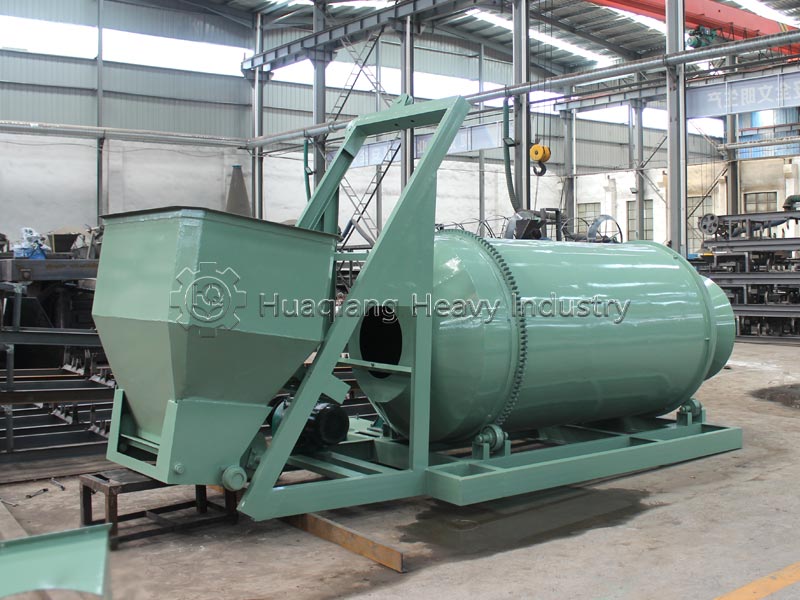
For enterprises of different sizes, our company offers a full range of blending equipment covering capacities from 1 to 50 tons per hour. For small plants, we recommend the MS series batch blender, which comes standard with high-precision sensors and a PLC control system, with a metering error ≤ ±0.3%, and capacities of 1-5 tons per hour, with an investment of $20,000-$50,000.
For medium-sized plants, we recommend the CB series continuous blending system, which uses a loss-in-weight weighing system and a twin-shaft paddle mixer, with capacities of 5-20 tons per hour, an investment of $50,000-$120,000, and standard features include anti-stratification silos and remote monitoring capabilities.
The cost analysis of blending equipment underscores that the choice between batch and continuous systems is a strategic decision that must consider the entire production ecosystem. A small-scale npk blending machine can be the heart of a compact, flexible operation. However, as a business scales up, it often integrates this blending into a complete npk fertilizer line. This larger line would include not only the npk blending machine for precise batching, but also downstream equipment like a rotary drum screening machine to classify granules, a fertilizer dryer machine and fertilizer cooler machine for product stability, and a fertilizer packing machine for final packaging. While the initial investment for this complete npk fertilizer line is higher, the long-term cost advantages—lower energy consumption per ton, reduced labor, and consistent quality—align perfectly with the scale-driven benefits of a large-scale continuous blending system. The selection, therefore, is not just about the blender itself, but about choosing the right foundation for a cost-effective, scalable production operation.
For large factories, we recommend the HB series fully automated blending production line, with a capacity of 20-50 tons per hour and an investment of US$120,000-250,000. It utilizes cast gear transmission and wear-resistant liners, extending its lifespan by 3-5 times compared to ordinary models. It can be integrated with a DCS system for fully automated plant operation.
Bulk purchases are eligible for tiered discounts. Please contact us for a detailed quote and personalized selection advice.