

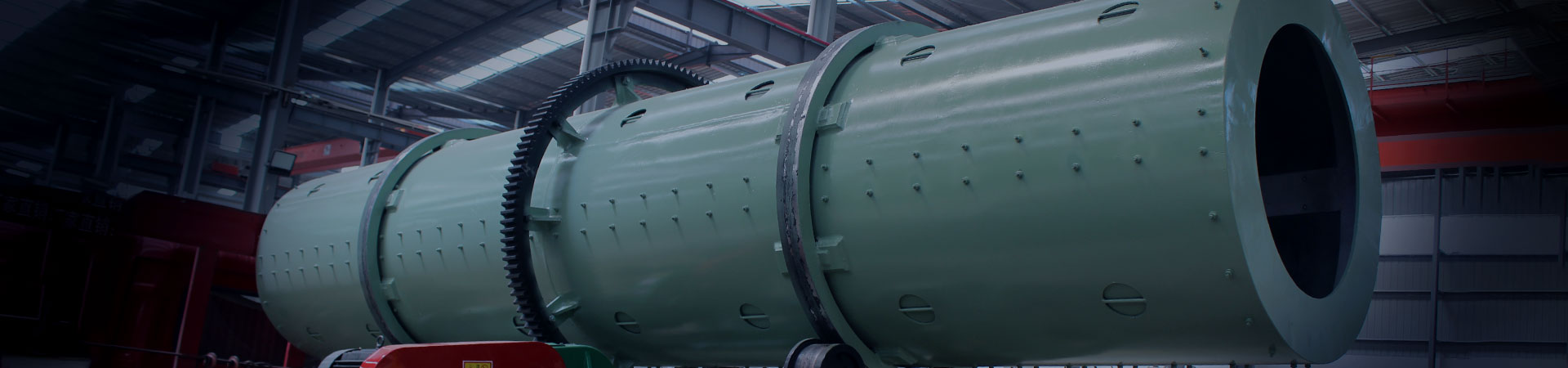
In the grand symphony of fertilizer production, freshly formed wet pellets require a vital “maturation rite” before becoming stable, market-ready products. The drum fertilizer dryer plays this crucial transformative role—an efficient and reliable “thermal maestro.” With its distinctive rotating cylinder and effective heat exchange mechanism, it rapidly converts moist granules with 15%-30% moisture content into robust, shelf-stable finished products. It serves as the indispensable thermal bridge between granulation and final packaging, ensuring product integrity and longevity.

Core Advantages: Efficient, Uniform, Highly Adaptable
The drum dryer’s superiority stems from its elegantly simple yet highly effective direct heating principle:
Excellent Thermal Efficiency & High Capacity: Within the rotating cylinder, wet granules and hot air (from coal, gas, or biomass furnaces) achieve full concurrent or counter-current heat exchange. The vast contact area and optimal retention time ensure maximum thermal efficiency. With single-unit capacities ranging from several to tens of tons per hour, it perfectly meets the demands of large-scale continuous production.
Gentle and Uniform Drying Action: The cylinder’s slow rotation causes material to be continuously lifted and cascaded by internal lifters, forming a consistent curtain of falling particles. This guarantees each granule receives uniform heating, eliminating localized overheating or under-drying. This prevents surface hardening (case-hardening) and ensures complete internal moisture removal, resulting in predictable, high-quality output.
Exceptional Material Versatility: Whether processing damp organic pellets from a disc granulator, compound fertilizer granules from a rotary drum granulator, or dense briquettes from a roller press line, the drum dryer handles them all effectively. By fine-tuning rotation speed, inclination, air temperature, and velocity, it adapts seamlessly to materials with varying initial moisture, particle size, and thermal sensitivity.
Robust Construction for Reliable Operation: Built from heavy-duty, heat-resistant steel, the drum withstands corrosive compounds and sustained high temperatures. Its proven drive system ensures dependable 24/7 operation with minimal maintenance, making it the production line’s endurance champion.
Working Principle: The Science of Heat and Mass Transfer in Motion
At its core, the drum dryer is a slightly inclined (typically 1-5°), slowly rotating steel cylinder. The drying process is a precise physical transformation:
Controlled Feeding: Moist granules enter the cylinder’s elevated end via a precise feeder.
Mechanical Dispersal & Heating: Internal lifters scoop and shower the material, creating maximum surface exposure. Simultaneously, high-temperature, clean hot air is introduced, facilitating intense convective heat exchange with the falling particle curtain, driving off moisture.
Progressive Drying & Transport: Driven by rotation and gravity, the material travels toward the lower discharge end. Moisture content is progressively reduced to the target specification (often below 2%) during this journey.
Product Discharge & Emission Control: Dried granules exit at the lower end, proceeding to cooling. The humid, dust-laden exhaust air is cleaned through a cyclone separator and bag filter or wet scrubber system before compliant emission, with potential for heat recovery.
The Central Hub in the Production Line
The drum dryer is not an isolated unit; it functions as the critical thermal processing hub within an integrated fertilizer line:
Upstream Integration: It receives moist granules directly from upstream granulation equipment (disc, rotary drum, or roller press systems).
Core Thermal Processing: It performs the essential function of moisture removal, granting granules the necessary physical stability and storage strength.
Downstream Coordination: The discharged hot granules immediately enter a rotary cooler for temperature stabilization, then proceed to a screening system (e.g., rotary screener or vibratory screen) for classification. On-spec product advances to automated packaging, while fines are efficiently recycled back to the mixer or granulator. An upstream hot air furnace supplies the thermal energy, while a downstream dust collection system ensures environmental compliance.