
We are a professional manufacturer of organic fertilizer equipment and a customized service provider for fertilizer production lines
-
NO.313, Wanshan Road, Xingyang City, Zhengzhou City, Henan Province, China
Company Address
-
Call Us: +86-18703630069
(Sat - Thursday)
-
inquiry@hqhifertilizermachine.com
Our Email
Drum Fertilizer Dryer


Equipment Introduction
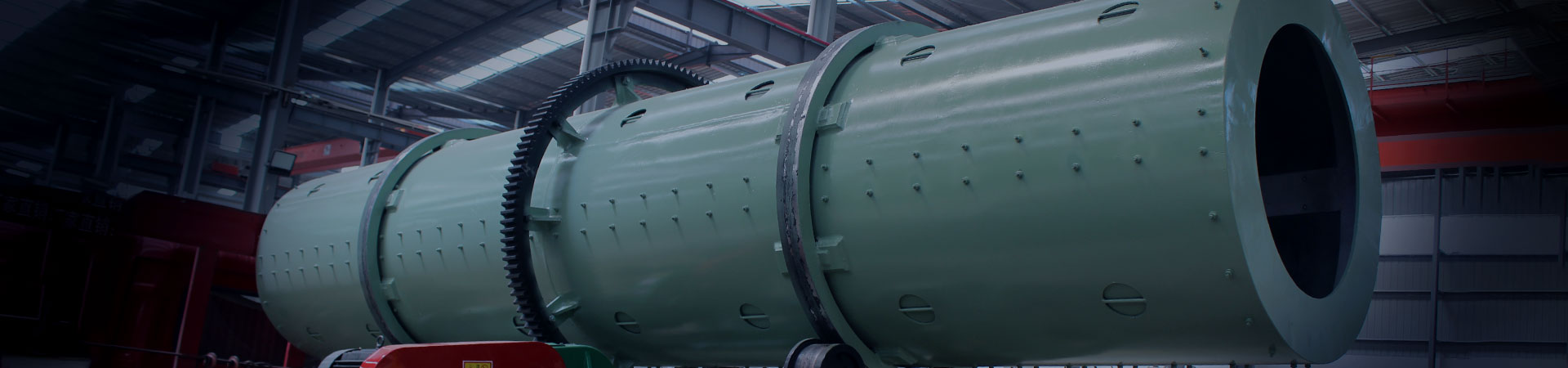
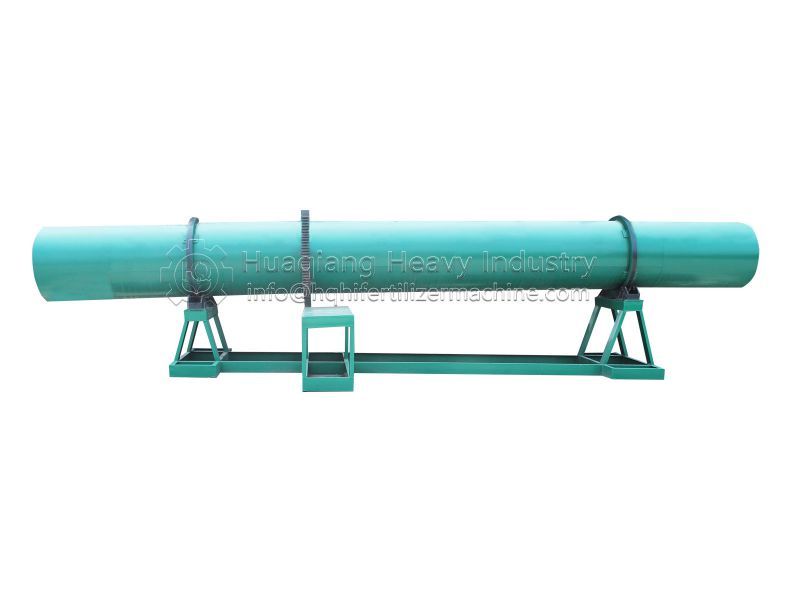
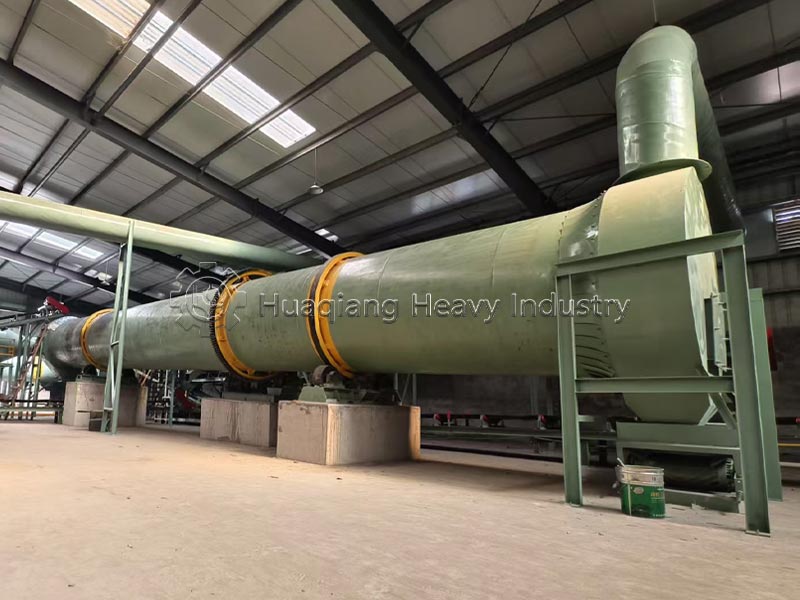
Fertilizer rotary dryer machiness are core drying equipment in organic fertilizer, compound fertilizer, and bio-organic fertilizer production lines. They are primarily used to dry granulated or fermented wet materials to a safe storage moisture content.
In fertilizer production, dryers typically refer to rotary drum dryers, a traditional type of drying equipment with outstanding advantages such as reliable operation, high operational flexibility, strong adaptability, and large processing capacity. This equipment is widely used in fertilizer, building materials, metallurgy, chemical, and cement industries.
Taking organic fertilizer drying as an example, this equipment can directly dry livestock manure with a moisture content as high as 70%-80% to a safe storage moisture content of 13% in a single pass. The entire process is carried out within a closed system, effectively reducing environmental pollution during the drying process. The dryer is aesthetically pleasing, easy to operate, provides uniform drying, has low energy consumption, a long service life, and is easy to maintain, making it an advanced drying equipment in the fertilizer production field.
Complete Equipment Structure
The entire machine consists of two main systems: the main drying unit and the supporting heating and dust removal auxiliary equipment. The main unit comprises five parts:
(I) Core Structure of the Main Unit
Cylinder Body (Core Drying Component): Made of high-quality medium carbon steel plate, rolled and welded, with an outer layer of thermal insulation; multiple sets of wear-resistant lifting plates (fan-shaped/honeycomb type) are welded to the inner wall to continuously lift materials and form a material curtain, maximizing the hot air contact area; the cylinder is installed at a 2.5° inclination, relying on gravity to transport materials forward.
Support Bracket Assembly
Front and rear double brackets, welded from channel steel and steel plates; includes rollers and thrust rollers, bearing the entire weight of the machine; the rollers are made of high wear-resistant cast steel, requiring grease application every 7 days; the base has pre-drilled feet, allowing adjustment of the cylinder’s level and inclination angle via wedge blocks.
Transmission Drive System
National standard inspection-free main motor + V-belt + reducer + cross-block coupling, transmitting torque; the transmission frame is welded as a whole, resulting in low operating vibration; the reducer’s gear oil is changed every 4 months. Gear Ring Drive Pair: The large gear ring is fixed to the outside of the cylinder and meshes with the pinion gear on the drive shaft to drive the cylinder rotation; the gear ring and pinion gear are made of wear-resistant alloy steel and must be lubricated with grease before starting the machine.
Rolling Belts (Pulleys): Two annular wear-resistant steel belts are welded to both ends of the cylinder and provide rolling support against the support rollers; grease should be applied to the surface every 7 days to prevent dry friction wear.
(II) Supporting Systems (Essential for a Complete Drying Production Line)
Hot Air Supply System: Coal/Gas/Biomass hot air furnace, induced draft fan, hot air ducts, providing stable hot air at ≤700℃;
Dust Removal System: Cyclone dust collector/bag filter, collecting dust from drying exhaust gas to ensure compliant emissions;
Inlet and Outlet Sealing Components: Flexible seals at the inlet and outlet ends to prevent cold air backflow and dust overflow;
Cooling Support: The dryer outlet temperature is 60~80℃, requiring a drum cooler to lower the temperature to below 40℃ before packaging and storage;
Auxiliary Conveying Equipment: Belt conveyor, bucket elevator, for wet material feeding and dry material transfer.
Raw Material Characteristics and Feeding Requirements
The dryer can process raw materials in the following forms: powdery, granular, lumpy, and high-moisture viscous materials:
- High-moisture materials: Fresh livestock and poultry manure can have a moisture content of 70%–85%. It needs to be dehydrated to about 60% using a solid-liquid separator before entering the dryer, which can significantly reduce energy consumption.
- Granulated materials: The moisture content of granules is usually 6%–16%, which can be directly fed into the dryer for secondary drying.
- Heat-sensitive materials: Some organic materials (such as microbial organic fertilizer containing bacteria) require the hot air temperature to be controlled ≤200°C to prevent killing beneficial microorganisms or causing organic matter carbonization.
Working Principle of the Equipment
The working principle of the fertilizer drum dryer is based on the principles of heat conduction and convection heat transfer:
- Material Feeding and Conveying
Wet materials are fed into the hopper by a belt conveyor or bucket elevator, and then fed into the feed end of the drum through a feeding pipe. The inclination of the feeding pipe must be greater than the natural angle of repose of the material to ensure smooth flow.
- Hot Air Supply
High-temperature flue gas generated by the hot air furnace enters the drum under the suction of the fan. Depending on the drying characteristics of the material, the high-temperature flue gas can enter the drum in the same direction as the material (parallel flow) or in the opposite direction (reverse flow).
- Material Turning and Drying
As the drum rotates, lifting plates installed on the inner wall of the drum continuously lift and evenly distribute the material. The material is constantly turned, lifted, and scattered inside the drum, making full contact with the high-temperature hot air. Moisture continuously absorbs heat and turns into water vapor, which is discharged from the drum through the dust collector system with the flue gas. 4. Material Feeding and Discharge
Due to the inclined installation of the drum (2-5 degrees), the material gradually moves towards the drum outlet under the influence of gravity and during the scattering process. The dried material flows out from the discharge port and is discharged through a star-shaped discharge valve. With the continuous rotation of the motor and the continuous intake of material, large-scale continuous production is achieved.
- Temperature Control
The inlet flue gas temperature is typically 600℃-800℃, the outlet exhaust gas temperature is 80℃-120℃, and the material contact temperature does not exceed 50℃. The intelligent temperature control system monitors and adjusts the heat source input in real time through temperature sensors and a PLC control system to ensure temperature fluctuations are ≤±10℃.
Applications:
Fertilizer Production Industry
Organic Fertilizer Plants: Complete production lines for organic fertilizer from livestock and poultry manure and straw, ranging from 10,000 to 500,000 tons/year;
Compound Fertilizer Plants: Rotary drum granulation and spray granulation compound fertilizer drying sections;
Bio-fertilizer and Microbial Fertilizer Processing Plants: Low-temperature drying to protect the activity of beneficial microorganisms;
Garbage/Sewage Treatment Plants: Dehydration and harmless treatment of sludge and kitchen waste into fertilizer.
Other Supporting Industries: Biomass pellet processing, small-scale chemical pellet dehydration, and feed ingredient drying.
Equipment capacity range:
General inlet air temperature <700℃, uniform cylinder inclination angle 2.5°, final material moisture content controllable from 2% to 10%.
| Model | Cylinder Diameter × Length (mm) | Cylinder Speed (r/min) | Hourly Capacity (t/h) | Motor Power (kW) |
|---|---|---|---|---|
| ZG8080 | Φ800 × 8000 | 8 | 1–1.5 | 4 |
| ZG8100 | Φ1000 × 10000 | 7 | 1.5–2 | 5.5 |
| ZG12120 | Φ1200 × 12000 | 7 | 2–2.5 | 7.5 |
| ZG15150 | Φ1500 × 15000 | 6 | 3–6 | 11 |
| ZG15150 | Φ1500 × 15000 | 6 | 3–7 | 15 |
| ZG18180 | Φ1800 × 18000 | 5 | 7–10 | 22 |
| ZG20200 | Φ2000 × 20000 | 3.9 | 8–14 | 22 |
| ZG22220 | Φ2200 × 22000 | 3.2 | 12–16 | 30 |
Customized services: We can customize larger diameter/longer cylinder models according to the initial moisture content of raw materials and annual production requirements, suitable for large-scale fertilizer bases with an annual output of more than 500,000 tons.
Target Customers for the Equipment:
- Organic Fertilizer and Bio-organic Fertilizer Production Enterprises: Fertilizer dryers are core equipment in organic fertilizer production lines with an annual output of 10,000-500,000 tons. Suitable for large-scale production enterprises processing organic waste such as livestock and poultry manure, urban sludge, and straw.
- Compound Fertilizer and Blended Fertilizer Production Enterprises: The drying process for granular materials is indispensable in the production of compound and blended fertilizers. Suitable for the large-scale production of various fertilizer products.
- Livestock Farms: Large-scale livestock farms (chicken farms, pig farms, cattle farms, etc.) that need to process livestock and poultry manure into commercial organic fertilizer.
- Biomass Energy and Environmental Protection Enterprises: Enterprises that process organic waste such as distiller’s grains, medicinal residues, fruit pomace, and sludge.
Equipment Operation and Maintenance Methods
(I) Pre-start Preparation
- Heat Source Check: Ignite the hot air furnace 30 minutes in advance and check the combustion chamber, feeding device, and blower for normal operation.
- Equipment Inspection: Clear any stuck material from the feed hopper; check the lubrication status of each bearing; confirm the grounding wire is in good condition.
- No-load Test Run: New machines or machines after major overhauls need to run under no-load for 8 hours. The bearing temperature rise should be stable, and the termination temperature should not exceed 50°C; the gear noise should be uniform, with no abnormal vibration.
(II) Operation
- Start-up Sequence: First, start the induced draft fan → start the blower → ignite the hot air furnace → after the temperature stabilizes, start the main motor → start the feeding equipment.
- Parameter Monitoring: Monitor the cylinder rotation speed, hot air temperature (usually controlled between 150–400°C), discharge moisture content, and motor current in real time. 3. Shutdown sequence: Stop feeding → Stop the main unit after the material in the cylinder is emptied → Stop the hot blast furnace after 30 minutes → Finally, stop the induced draft fan.
(III) Daily Maintenance
| Maintenance Position | Maintenance Cycle | Maintenance Content |
|---|---|---|
| Gear Meshing Surface | Every shift | Apply grease for lubrication |
| Belt Surface | Every 7 days | Apply grease once |
| Bearing Housing | Every 3 months | Fill or replace grease |
| Reducer | First‑time use / Every 4 months | Fill or replace gear oil |
| V‑belt | Monthly inspection | Check tension and wear condition |
| Lifting Plate / Gear Ring | Quarterly | Check wear, deformation and fastening status |
Common Faults, Causes, and Standardized Solutions
| Fault Phenomenon | Main Causes |
|---|---|
| Ring Formation | Uneven material particle size; substandard fuel; too slow kiln material flow rate; excessively high hot‑air temperature; material sticking (wall‑coating) fault |
| Discharge Moisture Too Low or Too High | Excessive fuel input; over‑feeding of inlet conveying |
| Equipment Vibration | Unstable foundation; failed damping springs; poor gear meshing; defective bearings; irregular gear engagement |
| Equipment Blockage | Excessively fast feeding speed; inconsistent material viscosity; unreasonable internal structure |
| Hot‑air Stove Failure | Abnormal hot‑air stove operation; pipeline leakage or blockage; induced‑draft fan failure |
| Transmission Device Failure | Belt / chain abnormality; reducer fault; motor fault |
| Low Drying Efficiency | Poor air pressure and ventilation of drying system; too short material residence time inside drying equipment |
| Uneven Drying | Temperature control system fault (e.g. thermocouple malfunction); stratified material stacking thickness |
| Equipment Corrosion | Damaged sealing parts (aging gasket, poor sealing, etc.); hot gas and dust leakage |
| Drum Slippage | Misaligned position or angle of supporting rollers; missing rotary blocks in radial direction |
| Body Axial Shift | Supporting roller wear; poor large‑gear meshing and other causes |
| Gear Vibration | Pinion wear; large‑gear tooth surface damage and other causes |
| Cylinder Axial Movement | Damaged contact surface between roller support device and riding ring; riding ring wear |
Application Technology of Dryers in Complete Fertilizer Production Lines
Complete Standard Production Line Flow: Raw material crushing → Batching and mixing → Granulation (disc/drum/extrusion) → Rotary drum dryer (core dehydration section) → Rotary drum cooler → Screening machine → Automatic packaging machine; Hot air furnace + dust collector are used in the drying section.
Section Function Description: The moisture content of the granulated particles is 25%~45%, which directly enters the dryer for dehydration, a crucial process determining the fertilizer’s storage life;
The dryer’s outlet temperature is 60~80℃, and it must be connected to a cooler to reduce it to ≤40℃; otherwise, the high-temperature granules are prone to overheating and clumping after packaging;
The drying exhaust gas is collected by a bag filter to recover fine powder, which is then returned to the mixer for secondary granulation, resulting in zero raw material waste;
The automated production line can be equipped with a PLC temperature control system to automatically adjust the hot air temperature and feed rate, stabilizing the outlet moisture content.
Supporting Equipment Combination Schemes:
Small-scale organic fertilizer production line (1~3t/h): Φ1200 dryer + small coal-fired hot air furnace + cyclone dust collector + simple cooler;
Medium-scale compound fertilizer production line (5~10t/h): Φ1800/Φ2000 dryer + gas-fired hot air furnace + bag filter + complete screening and cooling system;
Large-scale organic fertilizer base (12~16t/h): Φ2200 extended dryer + waste heat recovery hot air system + pulse dust collector + automated temperature control system.
Summary of Equipment’s Comprehensive Technical Features:
Reliable Structure: All-steel welded construction, wear-resistant and corrosion-resistant parts, supporting continuous production around the clock;
Stable Drying Quality: Uniform material distribution via lifting plates, thorough hot air heat exchange, eliminating localized uneven drying and granule surface crusting;
Economical Energy Consumption: External insulation of the cylinder, high utilization rate of hot air waste heat, low energy consumption per unit of dehydration;
Wide Adaptability: Adjustable speed, tilt angle, and hot air temperature, accommodating both high-moisture manure and heat-sensitive fertilizers;
Simple Operation and Maintenance: Modular structure, standardized wear parts, simple daily lubrication and maintenance procedures;
Environmentally Compliant: Equipped with a dust removal system, dust and exhaust emissions meet the environmental standards for organic fertilizer plants, with no production wastewater or waste residue discharged externally.