
We are a professional manufacturer of organic fertilizer equipment and a customized service provider for fertilizer production lines
-
NO.313, Wanshan Road, Xingyang City, Zhengzhou City, Henan Province, China
Company Address
-
Call Us: +86-18703630069
(Sat - Thursday)
-
inquiry@hqhifertilizermachine.com
Our Email
Hydraulic Roller Granulator
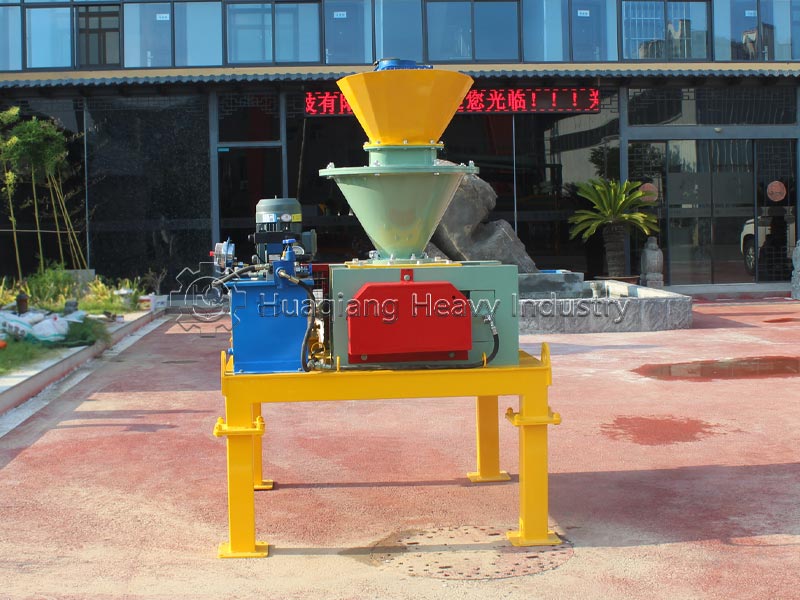
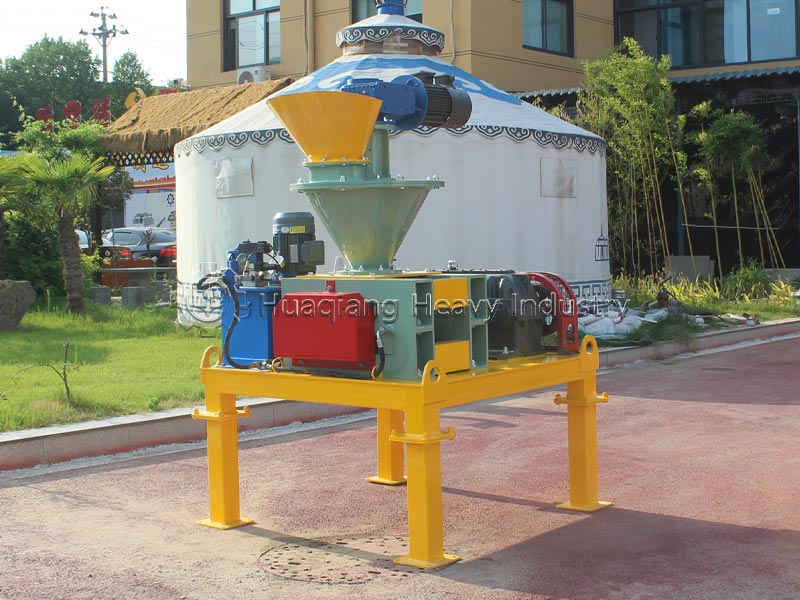
Equipment Introduction
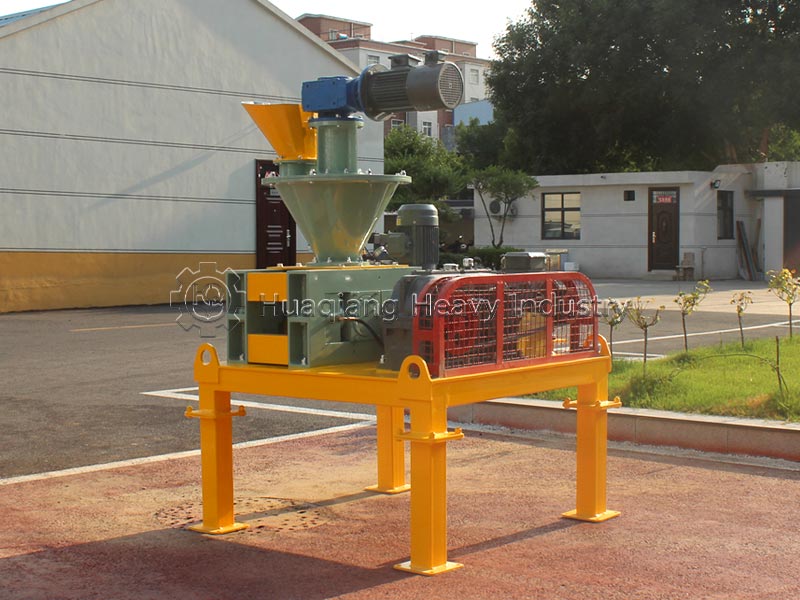
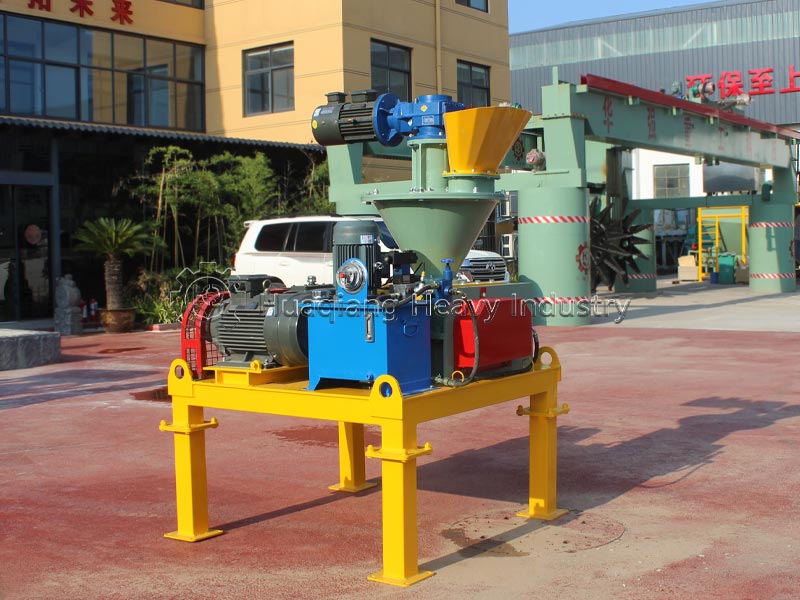
The hydraulic double-roller granulator is an intelligent granulation equipment for dry high-pressure extrusion molding. It is a core piece of equipment for deep processing of powder materials, differing from traditional mechanical double-roller granulators, disc granulators, and rotary drum granulators. Its core technology utilizes hydraulic constant pressure drive + double-roller reverse extrusion, eliminating the need for water, binders, or high-temperature heating. It can achieve one-time granulation of dry powder materials at room temperature, making it a mainstream energy-saving and environmentally friendly granulation equipment in the organic fertilizer, chemical, mining, feed, and building materials industries.
The equipment relies on a high-precision hydraulic control system to achieve precise adjustment of roller pressure and roller gap, solving the pain points of traditional granulation equipment such as uneven particle size, high pulverization rate, low forming rate, high energy consumption, and complex operation. With core advantages such as high forming rate, high particle strength, stable operation, low failure rate, wide material compatibility, high degree of automation, no drying required, and strong adaptability to production lines, the dry powder granulation forming rate can reach over 97%, and the material density can be increased by 1.5-3 times. The finished particles are dense, not easily absorbing moisture, and not easily broken. It is suitable for storage, transportation, and mechanized spreading and feeding operations, making it a core piece of equipment in current powder granulation technology that combines cost-effectiveness and practicality.
The hydraulic roller granulator is an extrusion sliding model. Its working principle is to forcefully extrude and shape the material through a pair of relatively rotating rollers. With the addition of a hydraulic system, the equipment can provide constant and adjustable extrusion pressure, ensuring the consistency of particle hardness, and is particularly suitable for processing heat-sensitive or moisture-sensitive materials.
Equipment Structure Composition
The hydraulic double-roller granulator features a modular design, compact layout, and convenient disassembly and maintenance. The machine comprises ten core systems, all operating collaboratively to ensure granulation stability and precision:
1. Main Frame: Constructed from thickened steel plates and welded together, undergoing stress-relief heat treatment. This results in high rigidity, pressure and vibration resistance, enabling it to withstand high-pressure roller pressing and preventing deformation and shaking during long-term operation. It provides a stable support foundation for all components.
2. Double-Roller Extrusion Assembly (Core Component): Composed of fixed and movable rollers. The roller bodies are forged from high-strength alloy steel with a surface-hardened and wear-resistant treatment. Customizable circular, elliptical, and strip-shaped groove cavities are available. The roller surfaces are wear-resistant, extrusion-resistant, and have a long service life. The double rollers rotate in opposite directions at a uniform speed, making them the core execution component for material extrusion molding.
3. Hydraulic Pressurization System: Includes a hydraulic pump station, hydraulic cylinders, pressure regulating valves, pressure stabilizing valves, pressure gauges, and oil pipelines. It provides an adjustable constant extrusion pressure of 10-150MPa, supports micron-level roller gap adjustment, and ensures stable pressure without fluctuations, completely solving the problems of uneven pressure and poor forming caused by traditional mechanical spring pressurization.
4. Quantitative Feeding System: Composed of a hopper, a screw forced feeder, and a variable frequency feeding motor, it can precisely control the feed rate, ensuring uniform, continuous, and quantitative feeding of materials into the double-roller extrusion zone, avoiding problems such as material interruption, blockage, and uneven feeding that lead to inconsistent particle size.
5. Power Transmission System: Includes a main motor, reducer, coupling, and transmission gear set. It features high transmission efficiency, low noise, and stable operation, and can precisely control the speed matching of the double rollers to ensure a stable extrusion rhythm.
6. Crushing and Granulating System: The extruded flaky material is broken up and shaped by a dedicated crushing toothed roller, breaking large pieces into standard particles and removing irregularly shaped and oversized materials to ensure the uniformity of the finished particle size.
7. Screening and Discharge System: Equipped with a vibrating screen structure, it automatically screens finished granules, fine powder, and waste materials. Fine powder can be recycled for secondary granulation, eliminating material waste and improving raw material utilization.
8. PLC Intelligent Control System: Equipped with a fully automatic electrical control cabinet, it supports frequency conversion speed regulation, pressure regulation, feed control, overload protection, fault alarm, one-button start/stop, remote debugging, and parameter memory, allowing beginners to quickly get started.
9. Safety Protection System: Equipped with overload pressure relief, material blockage shutdown, leakage protection, and a mechanical protective shell. The equipment automatically relieves pressure and shuts down when overloaded or blocked, preventing equipment damage and safety accidents.
10. Recirculation and Recycling System: Screened fine powder and ungranulated materials are automatically recycled back to the feed end, creating a closed-loop granulation process with near 100% raw material utilization.
Working Principle
The working principle of a hydraulic double-roll granulator can be summarized in the following stages:
Step 1 – Quantitative Feeding: Raw materials are evenly fed into the feeding hopper via a quantitative feeder. Before feeding, the material needs to be crushed to a certain fineness (usually 60-100 mesh), and the moisture content should be controlled within a suitable range.
Step 2 – Forced Feeding: The material is forced into the space between two parallel rollers through a screw pre-compression device. Dry powdery material continuously and evenly enters the space between the two rollers from above by its own weight and forced feeding.
Step 3 – High-Pressure Extrusion: One set of roller bearing seats is fixed within the frame, while the other set of roller bearing seats moves along the frame guide rail, pressed together by a hydraulic cylinder. The hydraulic system outputs a stable extrusion pressure (usually controlled at 15-30 MPa) according to the material characteristics. Under high pressure, the material is forced into the die holes, forming flat, round, or cylindrical granules consistent with the shape of the die holes. Step 4 – Demolding and Crushing: As the rollers rotate continuously, the space occupied by the material gradually decreases, and it is gradually compressed until the forming pressure value is reached. Subsequently, the pressure gradually decreases, and the compressed block detaches from the cavity due to elastic recovery and its own weight.
Step 5 – Granulation and Screening: After the formed particles leave the pressure rollers, they undergo crushing, screening, and shaping processes to obtain a finished product with uniform particle size. Unqualified fine powder is returned to the feeding system for regranulation.
This process is a pure dry extrusion granulation, unlike traditional wet granulation equipment. No humidification is required throughout the process, and granulation can be completed at room temperature.

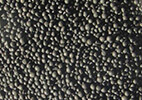
Equipment Application Scope
Hydraulic double-roll granulators have a wide range of applications and can be adapted to the granulation production of various materials:
1. Fertilizer Production
Organic fertilizer, compound fertilizer, blended fertilizer, bio-fertilizer, water-soluble fertilizer
Single-element fertilizers: ammonium bicarbonate, urea, ammonium oxide, ammonium phosphate, potassium chloride
Potassium fertilizer, potassium sulfate, potassium chloride, potassium nitrate, monoammonium phosphate, diammonium phosphate, ammonium sulfate, ammonium bicarbonate
2. Chemical Raw Materials
Antioxidants, zinc oxide, lead oxide, potassium carbonate, strontium carbonate, calcium chloride
Sodium metasilicate, sodium orthosilicate, cryolite, aluminum fluoride
Silica, calcium aluminate, superphosphate, ordinary superphosphate, carnallite, phosphate rock powder
Metal powders, fillers, feed additives, pharmaceutical intermediates
Steelmaking additives, de-icing agents, bentonite, alumina powder
3. Environmental Materials
Phosphogypsum, desulfurization gypsum, mineral processing agents
Environmental materials, graphite, carbon black
4. Organic fertilizer raw materials: Livestock and poultry manure such as chicken manure, pig manure, sheep manure, and cow manure; straw powder, mineral powder, etc. Particularly suitable for granulation of high-hardness or low-viscosity materials.
Granulation Process
The hydraulic double-roll granulator adopts a pure dry extrusion granulation process, unlike traditional wet granulation equipment.
Process Features:
1. Room Temperature Granulation: The entire process is carried out at room temperature, requiring no heating.
2. No Additives Required: No binders or wetting agents are needed. Dry powder is granulated directly. Even with a small amount of dry powder binder added, the proportion is ≤3%.
3. No Drying Required: Eliminates the expensive dryers and coolers of traditional processes, directly utilizing the material’s own crystal water or a very small amount of moisture for molding.
4. Circulating Operation: Unqualified fine powder is returned to the elevator feed port via a return auger, mixed with fresh material, and added to the pre-feeding hopper for the next round of process flow. This achieves continuous production.
5. Adjustable Particle Strength: The strength of the finished product can be controlled by adjusting the pressure of the rollers.
6. Significantly Increased Density: The actual density of the material can increase by 1.5 to 3 times.
Operating Instructions
1. Pre-start Inspection
Check the hydraulic oil level for normalcy and any leaks.
Check that all components are securely fastened.
Check that the gap between the rollers is appropriately adjusted according to the material characteristics.
Check the machine body for obvious deformation, cracks, or loose parts.
Check that grease is applied to the gears.
2. No-load Start
The roller granulator should be started under no-load conditions. Starting with material is strictly prohibited.
It is strictly forbidden for iron objects to enter the material, as this may break the roller shafts.
3. Parameter Adjustment
Hydraulic pressure: Generally controlled at 15-30MPa.
Roller speed: Generally adjusted to 20-40r/min.
Excessive pressure can lead to overly hard granules and increased energy consumption; insufficient pressure results in loose granules.
Excessive speed can prevent the raw material from being extruded and formed in time; insufficient speed affects production efficiency.
4. Feed Control
Maintain a stable and continuous feed to avoid material blockage.
Equip a material distribution device to ensure that the material is evenly distributed on the roller surface, avoiding one-sided feeding.
Do not feed excessive or insufficient material.
5. Operation Monitoring
Regularly observe parameters such as hydraulic oil temperature, pressure, and current.
Pay attention to equipment operating noise and vibration; excessive noise and vibration may be a precursor to malfunction.
6. Shutdown Operation
Stop feeding before shutting down.
Stop the machine only after most of the material inside has been discharged.
Clean up any remaining material inside the equipment promptly after shutdown.
Common equipment malfunctions, causes, and solutions
| Common Fault Phenomenon | Core Causes of Faults | Corresponding Solutions |
|---|---|---|
| Low pellet forming rate and serious pulverization | Insufficient hydraulic pressure, excessive roller gap, high material moisture content, serious roller surface wear | Increase the pressure of hydraulic system, slightly reduce the roller gap; dry materials to lower moisture content; polish or replace the worn roller shell |
| Material blockage and machine jamming | Excessively fast feeding speed, agglomerated materials, too small roller gap, foreign matters entering the extrusion zone | Stop the machine immediately for pressure relief and clear blocked materials; reduce feeding frequency; pre-crush agglomerated materials; inspect and remove hard foreign impurities |
| Hydraulic system oil leakage and unstable pressure | Loose oil circuit joints, aging seals, insufficient hydraulic oil, clogged filter element | Tighten oil circuit joints and replace sealing gaskets; replenish qualified hydraulic oil; clean or replace hydraulic filter element, readjust and stabilize pressure |
| Uneven pellet size | Deviation of double roller parallelism, uneven feeding, partial wear of roller surface, mismatched rotating speed | Calibrate double roller parallelism; adjust the uniformity of spiral feeding; repair worn parts of roller surface; calibrate transmission speed ratio |
| Abnormal noise and severe vibration during operation | Loose frame bolts, lack of bearing lubrication, gear wear, excessively hard materials | Tighten all machine bolts and fill with grease; replace worn gears and bearings; screen out hard materials |
| Overheated motor and overload tripping | Long-term overload operation, blockage stall, poor motor heat dissipation, unstable voltage | Reduce feeding load and clear blocked materials; clean dust on motor heat dissipation parts; stabilize power supply voltage and overhaul circuits |
Product Advantages
1. Dry Forming, No Drying Required
No binders or wetting agents are needed; dry powder is directly granulated. This eliminates complex processes like drying and cooling, reducing the time from material input to finished product to just 1-2 hours.
2. Significant Energy Saving and Consumption Reduction
Extrusion granulation is performed at room temperature, eliminating the need for fuel oil or natural gas drying. Unit energy consumption is reduced by over 40%, saving over 30% compared to traditional granulation equipment. Energy consumption is 15% lower than traditional models.
3. Excellent Granule Quality
High granule density and strength (compressive strength ≥20N/granule), preventing breakage and pulverization. Effectively solves the problem of powder dust pollution.
4. High Return on Investment
Eliminating the drying process results in a low return material ratio (approximately 15% of the total extruder feed), simplifying the process. Operating costs are extremely low, requiring no coal or natural gas.
5. Controllable Pressure, Strong Adaptability
Hydraulic automatic pressure stabilization technology allows for precise adjustment of extrusion pressure, adapting to materials with varying hardness. Equipped with intelligent overload protection, effectively preventing equipment jamming and damage.
6. High Production Efficiency: The hydraulic transmission system offers fast response and high transmission efficiency. Compared to mechanical granulators of the same specifications, production efficiency can be increased by 20%-30%.
7. Green and Environmentally Friendly: Extrusion granulation consumes only electricity, with no waste emissions. The fully enclosed operation design, coupled with sealing devices, reduces dust leakage.
8. Compact Structure and Convenient Maintenance: Compact structure, convenient maintenance, simple operation, and short process flow. Rollers are removable and replaceable, with annual maintenance costs of only 3000-5000 yuan.
Hydraulic roller granulators, as efficient, energy-saving, and environmentally friendly dry granulation equipment, directly compress powdery materials with a moisture content of ≤5%-10% into granules using high-pressure extrusion (50-300MPa) provided by a hydraulic system. No binders or moisture are needed, and no subsequent drying process is required. This equipment achieves a granulation rate of ≥85%, high particle strength (≥10-30N), and can increase bulk density by 1.5-3 times. It is widely used in compound fertilizers, organic fertilizers, chemicals, pharmaceuticals, environmental protection, and many other fields.
Whether you are building a new organic fertilizer/compound fertilizer/feed production line and need a complete equipment solution, upgrading an existing production line and need equipment selection advice, or encountering difficulties in granulating high-moisture, sticky, or coarse-fiber materials and need technical support—we are always ready to provide you with professional and sincere service.