

We are a professional manufacturer of organic fertilizer equipment and a customized service provider for fertilizer production lines
-
NO.313, Wanshan Road, Xingyang City, Zhengzhou City, Henan Province, China
Company Address
-
Call Us: +86-18703630069
(Sat - Thursday)
-
inquiry@hqhifertilizermachine.com
Our Email
Multiple Silos Single Weigh Type


Equipment Introduction
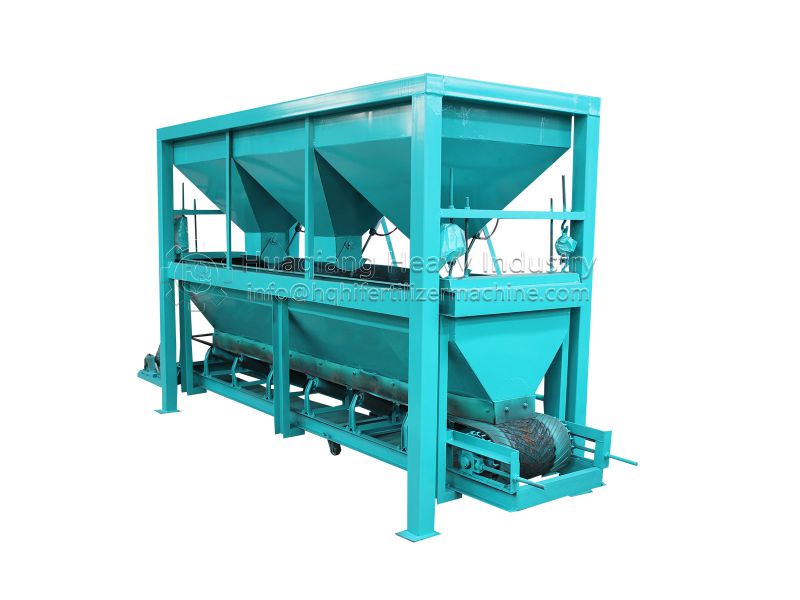
The multi-silo single-weighing batching system, also known as a multi-silo single-weighing batching machine, uses a shared independent weighing hopper for multiple raw material storage silos to accumulate and meter the materials. It is a batch-type static batching equipment, specifically designed for small and medium-sized organic fertilizer and BB blended fertilizer plants. Unlike single-silo single-weighing systems, its core feature is that multiple raw materials are sequentially fed into the same weighing hopper to complete the overall batching. It boasts low overall cost, compact footprint, and requires fewer units.
(I) Core Advantages and Disadvantages
- Advantages
1) Low cost and small footprint: Only one set of weighing sensors and hoppers is needed, saving 40% of equipment investment compared to single-weighing systems with the same number of silos; suitable for small workshops.
2) Simple structure and easy maintenance: Only one set of weighing components, few vulnerable parts, and low maintenance workload.
3) Modular silo structure: 3-12 raw material silos can be freely added or removed, adaptable to 3-8 kinds of fertilizer raw material formulas.
4) Integrated dust removal: Only one centralized dust removal system is used, with simple pipeline layout.
5) Easy operation: Single set of weighing instruments, low learning curve for operators. 2. Shortcomings
1) Cumulative metering has an accumulated error, with an overall accuracy of ±0.3%~±0.8%, lower than the ±0.2% accuracy of a single bin and single scale;
2) Batch-based intermittent production cannot simultaneously feed multiple raw materials, resulting in slow batching speed;
3) Blockage in a single bin can lengthen the entire batching cycle, and there is no independent isolation and maintenance function;
4) Frequent formula switching can easily lead to residual cross-contamination, resulting in a larger cleaning workload.
(II) Model Differentiation
- Granule-Specific Model: Each bin is equipped with an electromagnetic vibrating feeder, suitable for urea and compound fertilizer granules;
- Powder-Specific Model: The bottom of the silo is equipped with a variable frequency screw feeder + vibration arch breaker, suitable for humic acid and organic fertilizer powder;
- General-Purpose Mixed Model for Granules and Powders: A combination of screw feeders in some bins and vibration feeders in others.
Equipment Structure
The entire machine consists of six main modules: multiple raw material silos, independent feeding mechanisms, a single weighing assembly, a centralized conveying system, a centralized dust removal system, and a PLC electrical control system.
- Multiple Independent Raw Material Silos: 3-12 carbon steel/stainless steel storage silos, each with an independent conical hopper for feeding. The silo walls are equipped with vibrating anti-bridging motors to prevent fertilizer from absorbing moisture and forming bridging. A unified feed inlet at the top of each silo connects to a bucket elevator; silos are not interconnected.
- Dedicated Feeding Mechanisms for Each Silo: Each silo has an independent frequency conversion feeding unit: granules are fed by vibrating feeders, and powders by coarse and fine double-spiral feeders. The PLC controls the start/stop of each silo independently, with fast and slow feeding stages, sequentially feeding materials into a shared weighing hopper below.
- Single Shared Weighing Assembly (Core): The entire machine uses only one stainless steel weighing hopper + 4 high-precision weighing sensors, with a pneumatic discharge door at the bottom. The entire weighing unit is equipped with shock-absorbing pads, and all raw materials are weighed sequentially and cumulatively.
- Conveying Equipment: After unloading from the weighing hopper, all the mixed material falls onto the bottom belt/screw conveyor and is then uniformly fed into the horizontal mixer for further mixing.
- Centralized Dust Collection System: The branch pipes from each bin’s discharge port converge to a single pulse dust collector for unified collection of batching dust, eliminating the need for independent dust collection in each bin.
- PLC Centralized Control System: A single weighing instrument + touchscreen system stores multiple fertilizer formulas, automatically records the total weight of each batch, and issues over-tolerance alarms. It sequentially controls the discharge from each bin and automatically compensates for inertial errors during material discharge.
Working Principle
The multi-silo single-weighing batching machine adopts the static incremental weighing (Gain-in-Weight) principle. The workflow is as follows:
- Formula Setting: The operator selects the formula on the touchscreen, setting the target weight and batching order for each raw material.
- Sequential Feeding: The control system starts the feeder of the first silo in the preset sequence, and the material enters the weighing hopper. The feeding process is divided into two stages:
1) Coarse Flow (Fast Feed): Rapidly feeds to 90% of the target weight;
2) Fine Flow (Slow Feed): Automatically reduces speed when approaching the target value, accurately replenishing material with a small flow rate to reduce overshoot.
- Metering and Locking: After reaching the set weight, the feeder stops, and the pneumatic gate closes. The system reads and records the stable weight.
- Circular Batching: Repeat the above steps for the second, third, and so on raw materials, accumulating the weight of all raw materials in the weighing hopper.
- Unloading: After all raw materials have been batched, the bottom door of the weighing hopper opens, and the material falls into the mixing bin below or is conveyed out via belt conveyor to the next process.
- Zeroing and Resetting: After unloading, the weighing hopper is zeroed, and the next batch batching begins.
Applicable Raw Materials
Suitable Materials for Stable Batching
- Granular Fertilizers: Urea, Potassium Sulfate, BB Fertilizer Granules, Well-rotted Organic Granules, Oilseed Cake Powder;
- Powdered Fertilizers: Humic Acid Powder, Chicken Manure Organic Fertilizer Powder, Monoammonium Phosphate, Bentonite, Microbial Powder;
Unsuitable Materials
Moisture Content > 15%; Strongly Sticky Slurry, Extra-long Wounded Fibers, Extra-large Hard Lumps (Easily Clogs Feeding Screw/Vibrator); High-Requirement Water-Soluble Fertilizers, Slow-Release Fertilizers (Not Recommended if Insufficient Proportioning Accuracy).
Equipment Capacity Range
| Number of Silos | Single Silo Volume (m³) | Hourly Batching Capacity (t/h) | Comprehensive Weighing Accuracy |
|---|---|---|---|
| 3 silos | 1.5 | 5~10 | ±0.5% |
| 5 silos | 1.8 | 10~20 | ±0.4% |
| 8~12 silos | 2.2 | 20~35 | ±0.3% |
Note: The batching cycle is 3-6 minutes. The more types of raw materials, the lower the hourly capacity.
Equipment Applications in Production Lines
(I) Complete Fertilizer Process Chain
Raw material bucket elevator → Multi-silo single-weighing batching system → Horizontal mixer → Granulator / BB fertilizer packaging machine → Drying, cooling, and screening → Finished product packaging
(II) Application Logic
- Main batching equipment for small and medium-sized fertilizer plants, preferred for those with limited budgets and small plant spaces;
- Standard equipment for BB blended fertilizer production lines, suitable for scenarios with 3-6 types of raw materials and moderate requirements for proportioning accuracy;
- Batching for small organic fertilizer granulation lines, mixing and proportioning organic matter, nitrogen, phosphorus, and potassium auxiliary materials;
- Not suitable for high-end water-soluble fertilizers and precision slow-release fertilizers (cumulative errors affect nutrient compliance).
(III) Comparison with Single-Silo Single-Scale Selection
1) Annual production below 100,000 tons, ≤6 types of raw materials, limited budget: Choose multi-silo single-scale;
2) Annual production above 100,000 tons, frequent switching of multiple formulas, and stringent nutrient indicators: Choose single-silo single-weighing batching system.
Standard Operation and Full-Cycle Maintenance
(I) Standard Start-up and Shutdown Procedures
Start-up
- Inspect all bins for clumping, weighing hoppers for fertilizer buildup, dust collector filters for blockages, and air supply pressure of 0.5~0.7MPa;
- Start the dust collector and conveying equipment under no-load conditions, and perform zero-point calibration on the touchscreen;
- Retrieve the production formula, conduct a no-load test run on one entire batch, and officially start feeding after confirming the error meets the standard.
Shutdown
- Stop the front-end lifting and feeding mechanism, and wait for all material to be emptied from the weighing hopper and each bin’s feeding mechanism;
- Sequentially shut down the feeding, dust collector, and conveying equipment;
- Clean the shared weighing hopper and all discharge ports of residual fertilizer to prevent clumping and corrosion of the sensors.
(II) Graded Maintenance Standards
- Daily: Zero-point calibration of the weighing system for each shift, cleaning of material adhering to the weighing hopper, and checking the vibration/screw operation of each bin;
- Weekly: Lubrication of the feeding drive bearings, and cleaning of dust accumulation on the surface of the dust collector filter bags;
- Quarterly: Replacement of gear oil in the reducer, and inspection of the load cell wiring and aging of the vibration damping pads;
- Annual Overhaul: Disassembly of the weighing assembly, thorough cleaning of all feeding mechanisms, and calibration of the overall metering accuracy.
(III) List of Vulnerable Parts
Load cell, screw blades, vibrating motor, dust collector filter bags, pneumatic unloading door seals, drive V-belts.
Common Faults, Causes, and Standardized Solutions
| Fault Phenomenon | Root Cause | Professional Solution |
|---|---|---|
| Severe total batching error for whole batch | Accumulated repeated error; material buildup on weighing hopper; too fast discharging of single raw material | Reduce feeding speed of each silo, clean weighing hopper per shift, enable dynamic advance compensation via PLC |
| No discharging from single silo, material bridging | Damaged vibration flow‑aid motor, fertilizer caking caused by moisture absorption | Repair vibrator, control workshop humidity, install auxiliary stirring rod inside silo |
| Large proportion deviation of only one raw material | Worn feeding screw / vibrator of this silo, unstable discharging | Replace worn feeding parts, independently fine‑tune fast‑slow discharging parameters for this silo |
| Continuous zero‑point drift of weighing system | Material blockage and pipe collision around weighing hopper; aging shock‑absorbing pads | Clear foreign objects around weighing unit, replace thickened shock‑absorbing pads, recalibrate zero point |
| Massive dust overflow during discharging | Blocked dust‑extraction branch pipe of silo, insufficient air volume of centralized dust removal | Unclog dust suction pipeline section by section, clean blocked filter bags |
| Extremely low batching efficiency, too long single‑batch cycle | Too many types of raw materials, asynchronous superposition for multi‑silo sequential feeding | Remove redundant raw material silos or adopt single‑silo single‑scale synchronous batching system |
Target Audience and Selection Recommendations
- Main Target Audience
Small and medium-sized organic fertilizer plants: Annual production of 10,000-50,000 tons, with diverse raw materials and frequent formula changes, prioritizing cost-effectiveness;
Compound fertilizer/BB fertilizer manufacturers: Require precise control of NPK ratios to meet national nutrient content standards;
Feed processing plants: Precise formulation of multiple raw materials (corn, soybean meal, premix, additives);
Blended fertilizer (BB fertilizer) distributors: Flexible formulation of different contents based on orders, multi-variety small-batch production;
Start-up fertilizer companies: Limited budget, hoping for a single set of equipment to handle both organic and compound fertilizer production.
- Core Selection Principles
Select the number of compartments based on formula complexity: 4 compartments for conventional formulas with 3-4 raw materials; 6-8 compartments for complex formulas (including trace elements and microbial agents).
Select the feeding method based on material characteristics: Belt feed for granular feed; variable frequency screw feed + arch-breaking device for powdery/wet feed.
Select sensors based on accuracy requirements: ±0.3% for ordinary organic fertilizers; ±0.1% for compound/BB fertilizers, with automatic drop compensation.
Select models based on production capacity: PLZ1000 for 10,000–30,000 tons/year; PLZ1200 for 30,000–50,000 tons/year; PLZ1500 or dual systems in parallel for over 50,000 tons/year.Comprehensive Technical Features of the Equipment:
- Low cost and small footprint: Only one weighing unit is required, significantly reducing equipment and civil engineering investment compared to single-weigher units of the same capacity;
- Simple overall structure, few vulnerable parts, and low daily maintenance workload;
- Modular silo design, 3-12 silos can be added or removed as needed, adaptable to various fertilizer raw material formulas;
- Centralized dust removal system, simple pipeline layout, and controllable dust pollution in the workshop;
- Obvious shortcomings: Batch-by-batch intermittent batching and cumulative metering result in accumulated errors, low production efficiency with multiple raw materials, and frequent material changes can easily lead to cross-contamination, making it unsuitable for high-precision fertilizer production.
In summary, the multi-silo single-weighing batching machine, with its core logic of “multi-silo storage, single-weighing, sequential batching, and automatic accumulation,” significantly reduces equipment investment and floor space while ensuring batching accuracy. Mastering its two-stage feeding control principle of “coarse flow + fine flow” and establishing a maintenance system of “daily cleaning, weekly calibration, and monthly upkeep” are crucial for ensuring formula stability and achieving the required finished product qualification rate.