

We are a professional manufacturer of organic fertilizer equipment and a customized service provider for fertilizer production lines
-
NO.313, Wanshan Road, Xingyang City, Zhengzhou City, Henan Province, China
Company Address
-
Call Us: +86-18703630069
(Sat - Thursday)
-
inquiry@hqhifertilizermachine.com
Our Email
New Type Organic Fertilizer Granulator

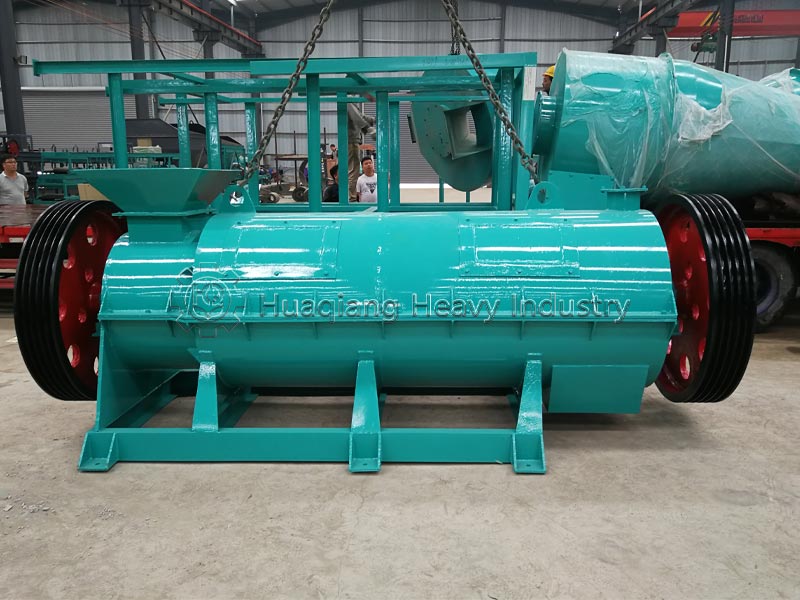
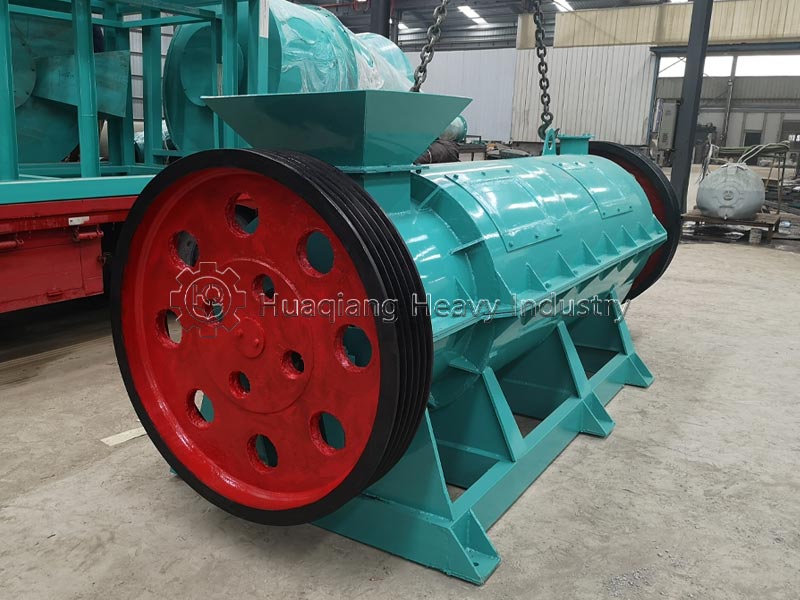
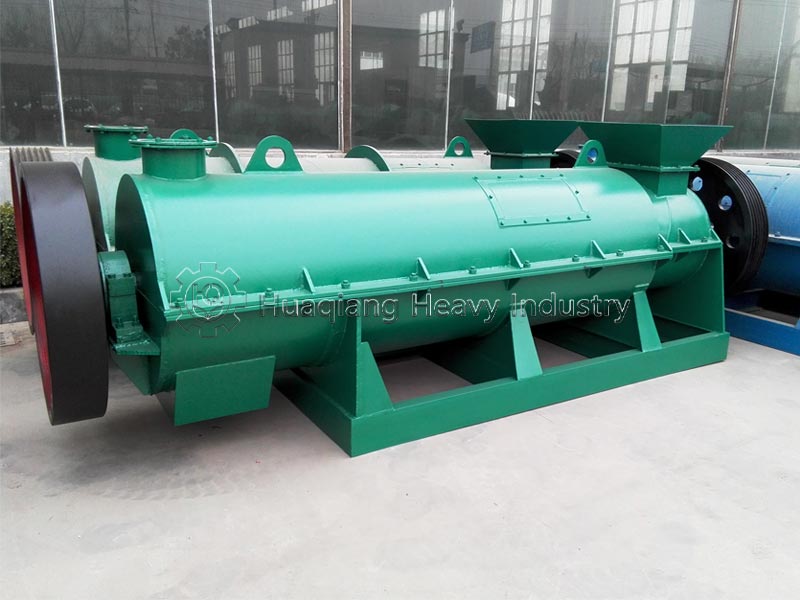
Equipment Introduction
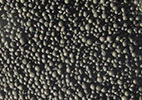
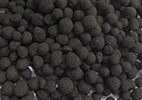
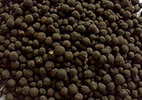
This new type of organic fertilizer granulator is a patented, environmentally friendly granulation equipment jointly developed by our company and the Agricultural Machinery Research Institute. Unlike traditional disc granulators and drum granulators, it adopts an industry-leading wet continuous pusher granulation process, overcoming the material limitations of traditional granulation equipment. It is a new generation of organic fertilizer granulation equipment specifically designed for coarse fiber, high moisture content, and difficult-to-form organic materials.
This equipment completely solves the industry pain points of traditional granulators, which cannot form coarse fiber materials such as straw, mushroom residue, and medicinal residue, as well as poor-quality granules and low pelleting rates from sludge and humic acid. It boasts core advantages such as strong versatility, stable pelleting, low energy consumption, stable operation, convenient installation, and environmental friendliness. The machine is suitable for large-scale organic fertilizer production lines, small and medium-sized fertilizer processing plants, and agricultural solid waste resource utilization projects. It is a core piece of equipment for the resource utilization of agricultural waste and standardized production of organic fertilizer, meeting the requirements of modern agricultural green and environmentally friendly production policies. The equipment can achieve a pelleting rate of over 85%, producing uniform and moderately strong finished granules that can be directly used for subsequent drying, coating, and packaging processes. The finished fertilizer meets the national organic fertilizer industry standards.
This equipment completely solves the industry pain points of traditional granulators, which cannot form coarse fiber materials such as straw, mushroom residue, and medicinal residue, as well as poor-quality granules and low pelleting rates from sludge and humic acid. It boasts core advantages such as strong versatility, stable pelleting, low energy consumption, stable operation, convenient installation, and environmental friendliness. The machine is suitable for large-scale organic fertilizer production lines, small and medium-sized fertilizer processing plants, and agricultural solid waste resource utilization projects. It is a core piece of equipment for the resource utilization of agricultural waste and standardized production of organic fertilizer, meeting the requirements of modern agricultural green and environmentally friendly production policies. The equipment can achieve a pelleting rate of over 85%, producing uniform and moderately strong finished granules that can be directly used for subsequent drying, coating, and packaging processes. The finished fertilizer meets the national organic fertilizer industry standards.
Equipment Working Principle
This equipment utilizes the mechanical stirring force of high-speed rotation and the resulting aerodynamics to continuously mix, granulate, spheroidize, and densify fine powder materials within the machine.
Physical Granulation: After entering through the feed inlet, the material is rapidly granulated due to the impact and friction of the high-speed rotating stirring teeth.
Centric Spheroidization: Under the frictional force of the inner wall of the machine casing and the driving force of the stirring teeth, the particles advance through a multi-stage spiral motion, gradually becoming rounded and polished, forming particles with extremely high sphericity.
Output: The finished product is ejected from the discharge end. The entire process is completed in less than one minute, representing a highly efficient continuous production process.
Physical Granulation: After entering through the feed inlet, the material is rapidly granulated due to the impact and friction of the high-speed rotating stirring teeth.
Centric Spheroidization: Under the frictional force of the inner wall of the machine casing and the driving force of the stirring teeth, the particles advance through a multi-stage spiral motion, gradually becoming rounded and polished, forming particles with extremely high sphericity.
Output: The finished product is ejected from the discharge end. The entire process is completed in less than one minute, representing a highly efficient continuous production process.
Equipment Structure
The new type of organic fertilizer granulator mainly consists of the following core components:
| Component Name | Function Description | Material / Specification Key Points |
|---|---|---|
| Drum Body (Housing) | Working cavity for holding materials and completing granulation | Thickened spiral steel pipe or welded steel plate, sturdy and deformation-resistant; lined with ultra-high molecular weight polyethylene, rubber or stainless steel anti-corrosion plates |
| Granulating Rotor (Main Shaft + Blades) | Core working part; high-speed rotation realizes material mixing, shearing and pellet forming | Main shaft made of high-strength alloy steel; blades adopt wear-resistant alloy steel or surfacing wear-resistant alloy, arranged in spiral or staggered layout |
| Drive Unit | Supply rotating power for rotor operation | Motor + reducer combination, adjustable rotating speed (20-50r/min normally), power range 5.5-160KW |
| Frame & Base | Support the whole equipment to ensure stable operation | Welded steel structure with vibration aging treatment |
| Feeding Device | Deliver materials evenly into the drum cavity | Hopper + variable-frequency spiral feeder, volume range 0.5-3m³ |
| Discharge Port | Export finished pellets out of the machine | Located at the opposite end of the machine body, gravity self-flow discharging design |
| Water Spraying & Sprinkling System (Optional) | Spray water or binder onto materials to adjust moisture content | Atomizing nozzles with controllable flow rate |
Structural Features:
1. The transmission and main body are mostly fixed on the same frame, resulting in a robust structure, smooth operation, and easy installation.
2. Cylinder installation angle: 2°-2.5° (slight tilt), with the feed end 3-5cm higher than the discharge end.
3. Rubber or wooden boards are used for shock absorption between the frame and the foundation.
1. The transmission and main body are mostly fixed on the same frame, resulting in a robust structure, smooth operation, and easy installation.
2. Cylinder installation angle: 2°-2.5° (slight tilt), with the feed end 3-5cm higher than the discharge end.
3. Rubber or wooden boards are used for shock absorption between the frame and the foundation.
Equipment Compatible Raw Materials
This equipment can efficiently granulate various fermented organic materials, especially adept at processing coarse fibrous materials that conventional equipment cannot form. The core compatible raw materials are as follows:
1. Livestock and Poultry Manure: Chicken manure, pig manure, cow manure, sheep manure, and other livestock and poultry manure can be directly granulated after fermentation, resulting in plump granules.
2. Agricultural Straw: Wheat straw, corn straw, rice straw, peanut vines, and other coarse fibrous crop straws (after fermentation and decomposition).
3. Industrial Waste: Distillery lees, vinegar residue, mushroom residue, medicinal residue, sugar residue, and other organic industrial waste residues.
4. Specialty Raw Materials
Core Process Parameters: The moisture content of the raw materials is strictly controlled between 35% and 45%, with minor adjustments based on the material type. For coarse fibrous materials and sludge, a moisture content of 40%-45% is recommended; for humic acid and fine powder materials, a moisture content of 35%-40% is recommended to maximize pelleting rate and granule uniformity. This process requires no chemical binders, uses purely physical molding, is environmentally friendly, and preserves fertilizer nutrients without loss, meeting the standards for green organic fertilizer production.
1. Livestock and Poultry Manure: Chicken manure, pig manure, cow manure, sheep manure, and other livestock and poultry manure can be directly granulated after fermentation, resulting in plump granules.
2. Agricultural Straw: Wheat straw, corn straw, rice straw, peanut vines, and other coarse fibrous crop straws (after fermentation and decomposition).
3. Industrial Waste: Distillery lees, vinegar residue, mushroom residue, medicinal residue, sugar residue, and other organic industrial waste residues.
4. Specialty Raw Materials
Core Process Parameters: The moisture content of the raw materials is strictly controlled between 35% and 45%, with minor adjustments based on the material type. For coarse fibrous materials and sludge, a moisture content of 40%-45% is recommended; for humic acid and fine powder materials, a moisture content of 35%-40% is recommended to maximize pelleting rate and granule uniformity. This process requires no chemical binders, uses purely physical molding, is environmentally friendly, and preserves fertilizer nutrients without loss, meeting the standards for green organic fertilizer production.

Applications of the Equipment
The new organic fertilizer granulator is primarily used to solve the granulation problems of “high moisture, high viscosity, and coarse fiber” organic materials that are difficult to process with traditional equipment:
1. Livestock and Poultry Manure
Fermented materials such as chicken manure, pig manure, cow manure, and sheep manure. These materials are highly viscous and have a high moisture content. Dry extrusion machines easily cause them to stick to the mold, while disc or drum extruders require controlled moisture levels. The new toothed granulator can produce round, spherical granules even with higher moisture content.
2. Agricultural Waste
Crop straw (corn stalks, rice straw, cotton stalks, etc.), distiller’s grains, mushroom residue, medicinal residue, furfural residue, etc. These materials retain a certain degree of fibrous toughness after fermentation, making it difficult for ordinary granulation equipment to form round granules. The toothed granulator, through strong stirring, effectively forces the fibers to interweave into spheres.
3. Organic Waste
Humic acid (peat, weathered coal, lignite), urban sludge, kitchen waste residue, biogas residue, and waste microbial inoculum, etc. 4. Organic-Inorganic Compound Fertilizer
Nitrogen, phosphorus, and potassium fertilizer powders can be added to organic materials for mixing and granulation to produce organic-inorganic compound fertilizer.
In terms of application scale, this equipment flexibly covers various scenarios, from family farms and planting cooperatives to medium-sized organic fertilizer plants and large-scale integrated breeding projects.
1. Livestock and Poultry Manure
Fermented materials such as chicken manure, pig manure, cow manure, and sheep manure. These materials are highly viscous and have a high moisture content. Dry extrusion machines easily cause them to stick to the mold, while disc or drum extruders require controlled moisture levels. The new toothed granulator can produce round, spherical granules even with higher moisture content.
2. Agricultural Waste
Crop straw (corn stalks, rice straw, cotton stalks, etc.), distiller’s grains, mushroom residue, medicinal residue, furfural residue, etc. These materials retain a certain degree of fibrous toughness after fermentation, making it difficult for ordinary granulation equipment to form round granules. The toothed granulator, through strong stirring, effectively forces the fibers to interweave into spheres.
3. Organic Waste
Humic acid (peat, weathered coal, lignite), urban sludge, kitchen waste residue, biogas residue, and waste microbial inoculum, etc. 4. Organic-Inorganic Compound Fertilizer
Nitrogen, phosphorus, and potassium fertilizer powders can be added to organic materials for mixing and granulation to produce organic-inorganic compound fertilizer.
In terms of application scale, this equipment flexibly covers various scenarios, from family farms and planting cooperatives to medium-sized organic fertilizer plants and large-scale integrated breeding projects.
Fermentation Process of the Equipment
While the new type of organic fertilizer granulator itself does not directly participate in the fermentation process, fermentation is a pre-process in the organic fertilizer production line—it provides qualified raw materials for granulation.
1. Key Points of Fermentation Process
Livestock and poultry manure, straw, and other organic waste must first undergo composting and fermentation.
During fermentation, a turning machine (trough-type turning machine, tracked turning machine, etc.) is used to turn the compost regularly to provide sufficient oxygen.
The fermentation cycle is generally 10-25 days, depending on the type of material and process conditions.
The moisture content of the material after fermentation should be around 30%-40%.
2. Impact of Fermentation on Granulation
The degree of fermentation directly affects the granulation effect—incompletely fermented material has insufficient viscosity and a low granulation rate.
The moisture content of the fermented material must be controlled within the range required by the equipment (20%-50%).
If the moisture content after fermentation is too high (>45%-50%), simple dehydration or the addition of auxiliary materials such as rice husk powder or straw powder is required for adjustment.
3. Seamless Integration of Fermentation and Granulation
One of the core advantages of the new organic fertilizer granulator is that the wet material after fermentation can be directly fed into the machine for granulation after exiting the fermentation tank. This feature eliminates the need for drying equipment between the fermentation and granulation stages, greatly simplifying the process and reducing material loss and time waste during intermediate transfer.
1. Key Points of Fermentation Process
Livestock and poultry manure, straw, and other organic waste must first undergo composting and fermentation.
During fermentation, a turning machine (trough-type turning machine, tracked turning machine, etc.) is used to turn the compost regularly to provide sufficient oxygen.
The fermentation cycle is generally 10-25 days, depending on the type of material and process conditions.
The moisture content of the material after fermentation should be around 30%-40%.
2. Impact of Fermentation on Granulation
The degree of fermentation directly affects the granulation effect—incompletely fermented material has insufficient viscosity and a low granulation rate.
The moisture content of the fermented material must be controlled within the range required by the equipment (20%-50%).
If the moisture content after fermentation is too high (>45%-50%), simple dehydration or the addition of auxiliary materials such as rice husk powder or straw powder is required for adjustment.
3. Seamless Integration of Fermentation and Granulation
One of the core advantages of the new organic fertilizer granulator is that the wet material after fermentation can be directly fed into the machine for granulation after exiting the fermentation tank. This feature eliminates the need for drying equipment between the fermentation and granulation stages, greatly simplifying the process and reducing material loss and time waste during intermediate transfer.
Granulation Process of the Equipment
The new organic fertilizer granulator adopts a wet continuous pusher granulation process. The core process parameters and control points are as follows:
1. Process Principle
Utilizing the high-speed rotating mechanical stirring force and the resulting aerodynamics, fine powder materials are continuously mixed, granulated, pelletized, and densified within the machine. This process leverages the characteristic that organic particles can interlock and grow under certain forces to achieve granulation.
2. Key Process Parameters
Material Moisture Content: 20%-50%, optimal 30%-40%
Spindle Speed: Organic fertilizer (containing coarse fiber) 220-260 r/min
Gap between stirring teeth and chamber wall: 5-10 mm
Finished Particle Diameter: 0.3-5 mm
Pelletizing Rate: ≥85%-90%, some models can reach over 95%
Organic Content: Up to 100%
3. Process Features
No Drying Required: High moisture content materials can be directly granulated without pre-drying.
No Crushing Required: Fermented materials can be fed into the machine without crushing.
No Binder Required: Utilizing the self-embedding characteristics of organic microparticles, no binder needs to be added.
One-Step Forming: The entire process of mixing, granulation, and pelletizing is completed in one step within the machine.
High Particle Roundness: The finished product is spherical granules with good appearance quality.
Adjustable Particle Size: Particle size can be controlled by adjusting the material mixing amount and spindle speed.
1. Process Principle
Utilizing the high-speed rotating mechanical stirring force and the resulting aerodynamics, fine powder materials are continuously mixed, granulated, pelletized, and densified within the machine. This process leverages the characteristic that organic particles can interlock and grow under certain forces to achieve granulation.
2. Key Process Parameters
Material Moisture Content: 20%-50%, optimal 30%-40%
Spindle Speed: Organic fertilizer (containing coarse fiber) 220-260 r/min
Gap between stirring teeth and chamber wall: 5-10 mm
Finished Particle Diameter: 0.3-5 mm
Pelletizing Rate: ≥85%-90%, some models can reach over 95%
Organic Content: Up to 100%
3. Process Features
No Drying Required: High moisture content materials can be directly granulated without pre-drying.
No Crushing Required: Fermented materials can be fed into the machine without crushing.
No Binder Required: Utilizing the self-embedding characteristics of organic microparticles, no binder needs to be added.
One-Step Forming: The entire process of mixing, granulation, and pelletizing is completed in one step within the machine.
High Particle Roundness: The finished product is spherical granules with good appearance quality.
Adjustable Particle Size: Particle size can be controlled by adjusting the material mixing amount and spindle speed.
Equipment Operation Method
1. Installation and Foundation
The user constructs the foundation according to the foundation drawings provided by the equipment manufacturer. The foundation can be made of concrete or steel structure.
Equipment installation should be carried out under the guidance of technical personnel. For most models, the motor and reducer are pre-installed on the same frame before leaving the factory.
During installation, ensure the machine’s feed end is 3-5cm higher than the discharge end.
Use rubber or wooden boards for vibration damping between the frame and the foundation surface.
After installation, ensure the left and right sides are parallel, the four corners are stable, and the bottom of the frame is in uniform contact with the foundation surface.
2. Pre-Start Preparation
First, add enough gear oil to the reducer before production.
Before connecting the power supply, check that all bolts are tightened.
Check that the oil in the bearing housing and reducer is sufficient.
Check that the rotation direction of each transmission component is correct.
3. No-Load Trial Run
The machine should be started without load; starting with material is strictly prohibited.
Start the motor and check that the rotation direction is correct. If it rotates in the opposite direction, stop the machine immediately and adjust.
Run the machine without load for 3-5 minutes. Only after confirming there is no abnormal vibration or noise can it be put into load operation.
4. Load Operation
Since this machine is a wet granulation equipment, the moisture content of the raw materials must be measured and adjusted before starting. Depending on the material, the moisture content should be between 35% and 45%.
During trial production, use materials with lower moisture content for initial granulation (a slightly lower pelleting rate is normal at this stage). After producing 200-300 kg, the moisture content of the raw materials can be adjusted based on the pelleting quality.
General rule: If the pellets are too large, reduce the moisture content of the raw materials; if the pellets are too small or powder appears, increase the moisture content of the raw materials.
During normal production, ensure the uniformity of feeding and consistent moisture content of the raw materials.
Observe the pelleting process in real time during operation and adjust as needed.
5. Shutdown
Before shutting down, stop feeding and wait until most of the material inside the machine has been discharged before stopping.
If necessary, restart the machine for 2-3 minutes after stopping to expel all remaining material.
Stop the machine while it is still carrying material, as this will cause difficulties in restarting or damage to the equipment.
Common Problems and Solutions
| Common Faults | Possible Causes | Solutions |
|---|---|---|
| Reduced Output | Worn mixing blades or insufficient feeding volume | Replace mixing blades; inspect the feeding system |
| Excessive Machine Vibration | Uneven installation or unbalanced material caking | Re-level the foundation; clean accumulated internal materials |
| Failure to Form Spherical Pellets | Unbalanced moisture ratio or insufficient material viscosity | Adjust moisture content to 35-45%; add an appropriate amount of binder |
| Machine Blockage & Stalling | Foreign matter entering the chamber or residual materials not emptied before shutdown | Remove foreign objects; open the housing for full cleaning |
Application of the Equipment in the Production Line
The new type of organic fertilizer granulator is the core forming equipment in the organic fertilizer production line. It undertakes the front-end pre-processing steps and connects to the back-end finished product processing steps, serving as the key hub of the entire production line. The complete production line process is as follows: Raw material crusher → Mixing and blending machine → Fermentation and turning equipment → Screening machine → New type of organic fertilizer granulator → Dryer → Cooler → Screening and polishing machine → Coating machine → Automatic packaging machine. The equipment can operate as a standalone small-scale unit, suitable for simple production by individual farmers and small workshops; it can also be integrated with a complete production line to achieve fully automated assembly line operation from raw material processing to finished product packaging, suitable for large-scale, standardized, and intelligent organic fertilizer production projects. It can also be connected to complete sets of equipment for municipal solid waste treatment and livestock manure treatment projects.
Equipment Parameters
| Model | Capacity (t/h) | Output Granules Size (mm) | Motor Power (Kw) | Outside Dimension (mm) |
|---|---|---|---|---|
| YSL-60 | 1-2 | 1-5 | 37 | 3700*1800*1050 |
| YSL-80 | 2-4 | 1-5 | 45 | 3700*2100*1300 |
| YSL-100 | 3-5 | 1-5 | 55 | 3750*2500*1500 |
| YSL-120 | 4-7 | 1-5 | 75 | 4900*2950*1900 |
| YSL-150 | 5-8 | 1-5 | 90 | 5000*3300*2150 |
The new type of organic fertilizer granulator (stirring tooth granulator) has become the preferred granulation equipment for organic fertilizer, bio-organic fertilizer, and organic-inorganic compound fertilizer production lines due to its core advantages such as superior adaptability to coarse fibrous materials, high pelletizing rate, no binder required, and direct wet granulation. It specifically solves the industry pain point of traditional disc granulators and rotary drum granulators in handling high-fiber materials such as straw, mushroom residue, and medicinal residue.
Whether you are building a new organic fertilizer production line and need a complete equipment solution, upgrading an existing production line and need equipment selection advice, or encountering difficulties in granulating coarse fibrous materials and need technical support—we are always ready to provide you with professional and sincere service.