

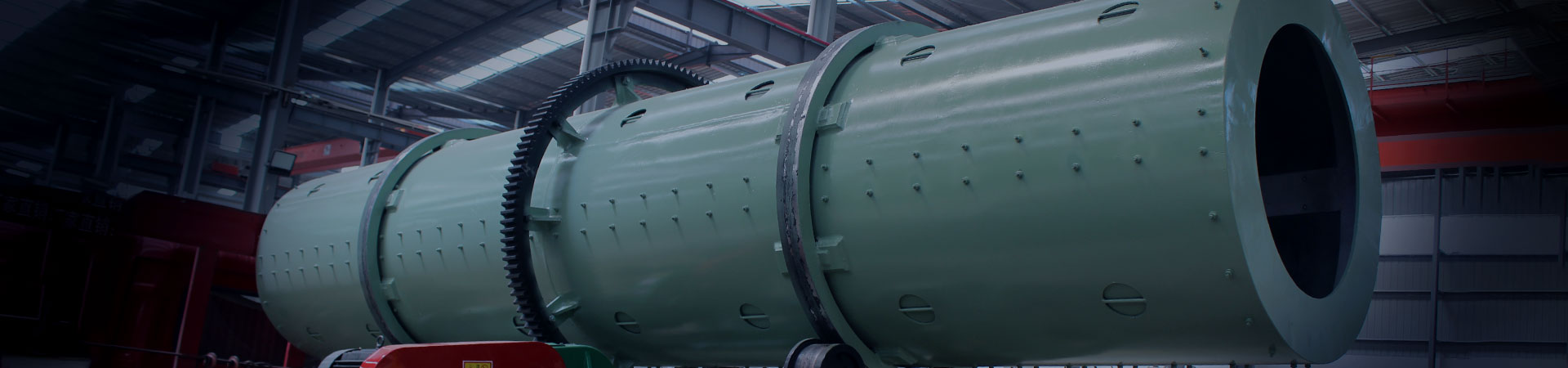
In the vast industrial chain of solid waste processing, mining separation, and recycled resource recovery, efficiently and accurately sorting mixed, heterogeneous materials by particle size is a crucial step in enhancing resource value. The rotary screener machine (also known as a Trommel Screen) is precisely the “core refiner” for this stage. It does not rely on intense vibration but instead utilizes its unique rotational screening principle to achieve excellent classification of large volumes of diverse materials in a gentle yet continuous manner.
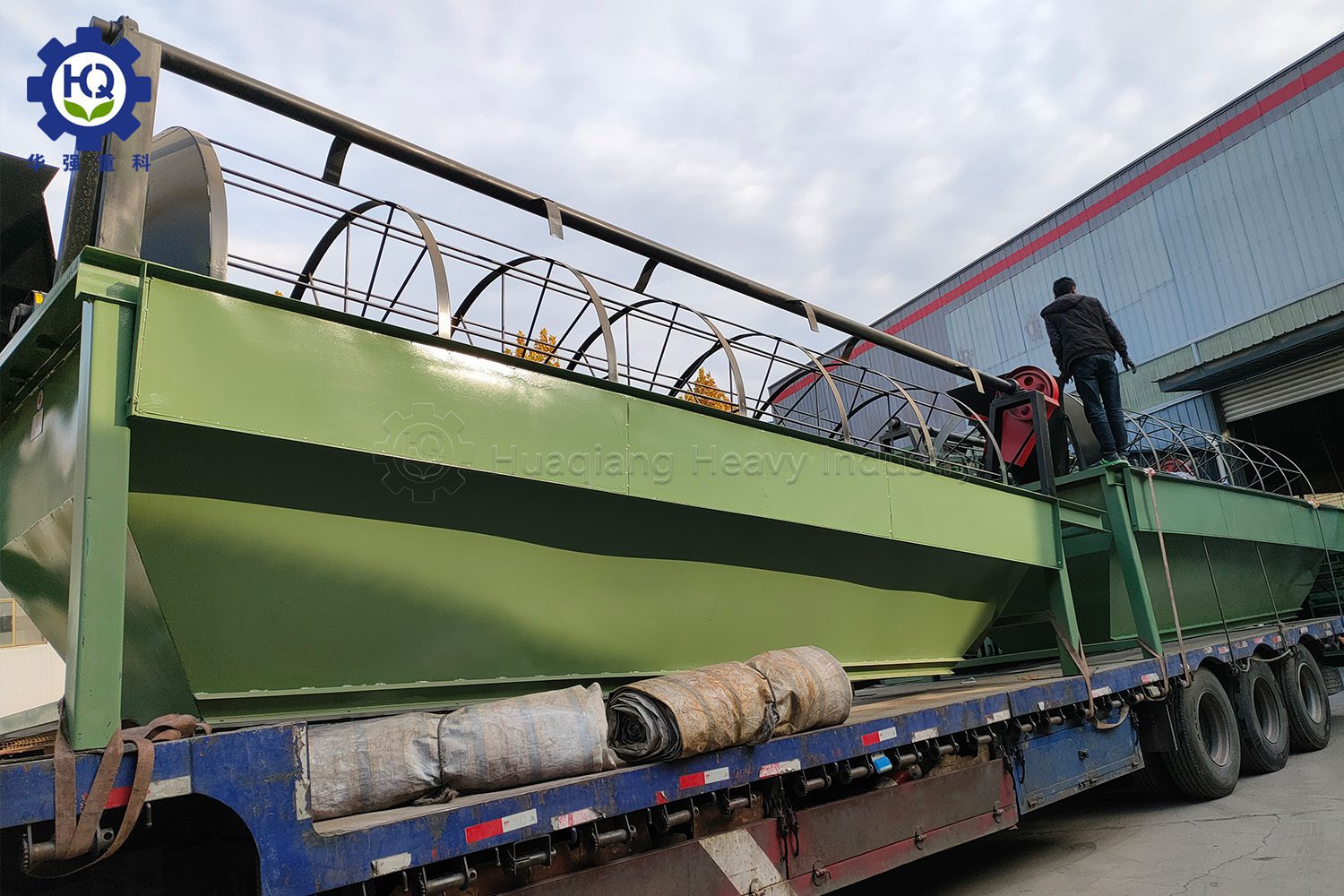
Core Advantages: Robust, Continuous, Widely Adaptable
The design philosophy of the rotary screener machine revolves around the clever integration of “rotation” and “gravity,” giving it unique strengths when handling complex materials:
Excellent Anti-Blinding & Self-Cleaning Capability: During constant rotation, built-in cleaning devices (such as elastic cleaning balls, chains, or brushes) continuously tap or scrape the screen mesh. This effectively prevents moist, sticky materials (like aged municipal solid waste, sludge, wet compost) from adhering to and blinding the screen apertures, ensuring the continuity and stability of the screening operation.
High Throughput, Suitable for Continuous Production: As a typical continuous feed and discharge machine, the rotary screener offers exceptionally high hourly processing capacity. It can seamlessly connect with upstream equipment like belt conveyor and crushers, meeting the demands of modern production lines for high-efficiency, high-volume screening. It is a vital component in achieving automated process flows.
High Classification Accuracy, Easy Multi-Stage Separation: By installing screen sections with different aperture sizes along the axis of a single drum, or by connecting multiple drums of different specifications in series, materials can be sequentially separated into coarse, medium, fine, and other product fractions. This accomplishes multi-stage screening in a single pass, simplifying the process flow.
Smooth Operation, Low Noise & Wear: Compared to high-frequency vibration screener machine, the rotary screener relies on trunnion rollers and gear drives for low-speed rotation (typically 10-20 RPM). This results in extremely smooth operation, significantly reducing mechanical vibration and noise. It has lower requirements for foundation and plant structure, while also minimizing wear on the machine itself, extending its service life.
Extremely Wide Material Adaptability: From heavy, abrasive materials like construction & demolition waste, slag, and crushed stone, to light, fibrous materials like municipal solid waste, straw, and wood chips, and even organic compost with high moisture content, the rotary screener can handle them all effectively, demonstrating powerful “one-machine, multiple-uses” flexibility.
Working Principle: The Spiral Refinement Journey in a Gravity Field
The core of a rotary screener is a cylindrical or polygonal screening drum, slightly inclined (typically 4-7 degrees) and driven by a drive assembly. The material’s journey inside it is a meticulously designed “spiral refinement”:
Feed & Initial Distribution: Mixed material is evenly fed into the high end (feed inlet) of the drum.
Lifting & Cascading via Rotation: As the drum rotates, lifters on the inner wall or the material’s own friction carry it to a certain height.
Gravity Screening & Fines Passage: When the material reaches a certain angle, it begins to roll and cascade down under gravity. During this process, particles smaller than the apertures of the current screen section (the undersize) pass through the screen holes under the combined forces of gravity and centrifugal force. They are collected in corresponding chutes or conveyors below.
Progressive Conveying & Discharge: Particles larger than the apertures (the oversize) cannot pass through. Due to the drum’s rotation and inclination, they gradually travel toward the lower end (discharge end). During this travel, they may encounter subsequent screen sections with smaller apertures for further screening. Finally, materials of different size fractions are discharged from their respective outlets, completing the separation.
Comparison with Other Screening Equipment
Within the family of screening equipment, the rotary screener fills a specific application niche with its unique motion:
VS Vibrating Screen (Circular/Linear Motion): Vibrating screens use exciters to generate high-frequency vibration, offering high screening efficiency and a compact footprint. However, they are prone to blinding with sticky, fine materials and pose a risk of breaking fragile particles. The rotary screener wins with its superior anti-blinding properties, exceptional ability to handle wet/sticky materials, and gentler operation, making it the preferred choice for high-throughput, continuous-duty, and difficult-to-screen materials.