
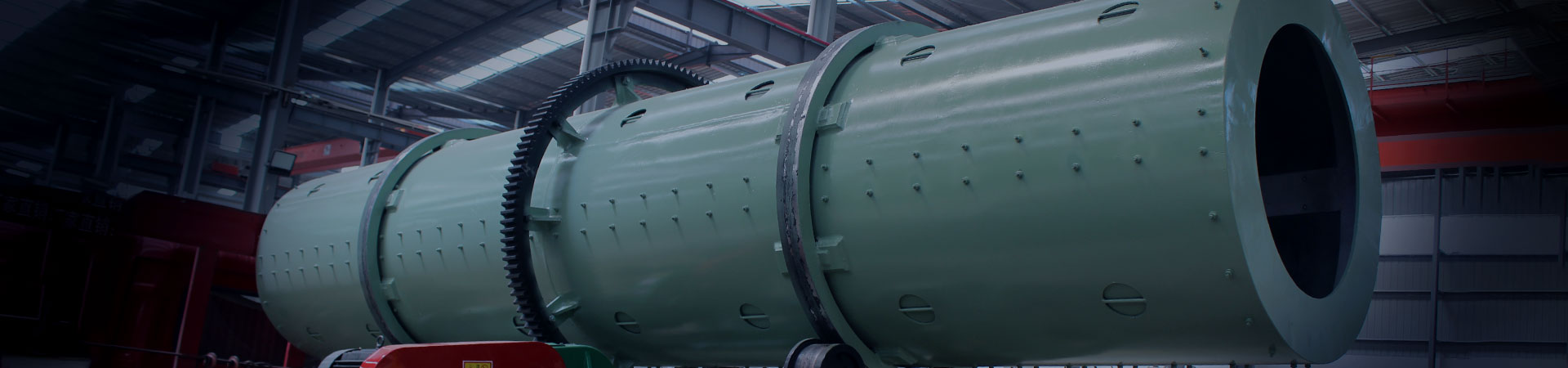

We are a professional manufacturer of organic fertilizer equipment and a customized service provider for fertilizer production lines
-
NO.313, Wanshan Road, Xingyang City, Zhengzhou City, Henan Province, China
Company Address
-
Call Us: +86-18703630069
(Sat - Thursday)
-
inquiry@hqhifertilizermachine.com
Our Email
Rotary Screener Machine

Equipment Overview
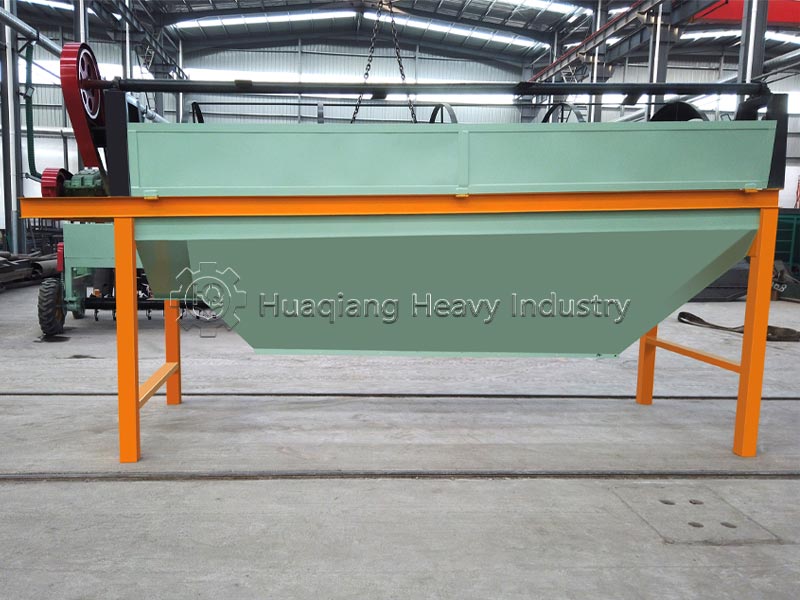
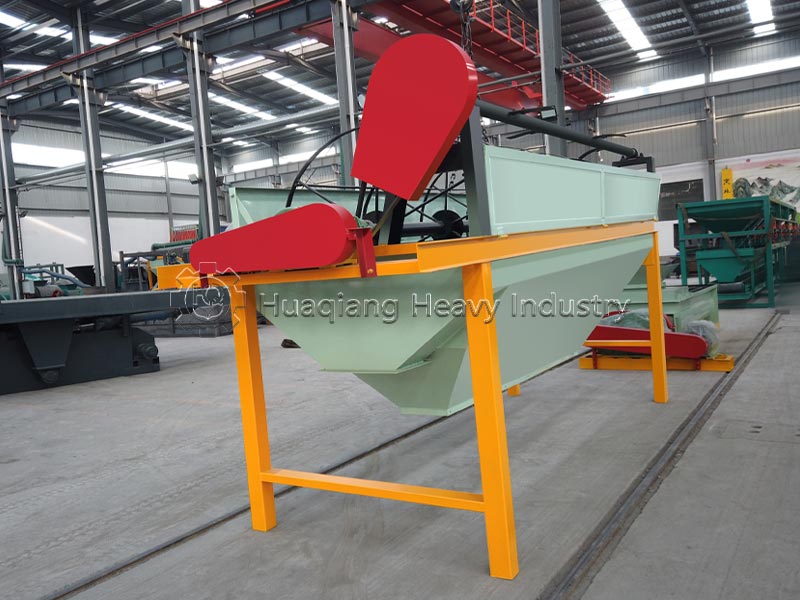
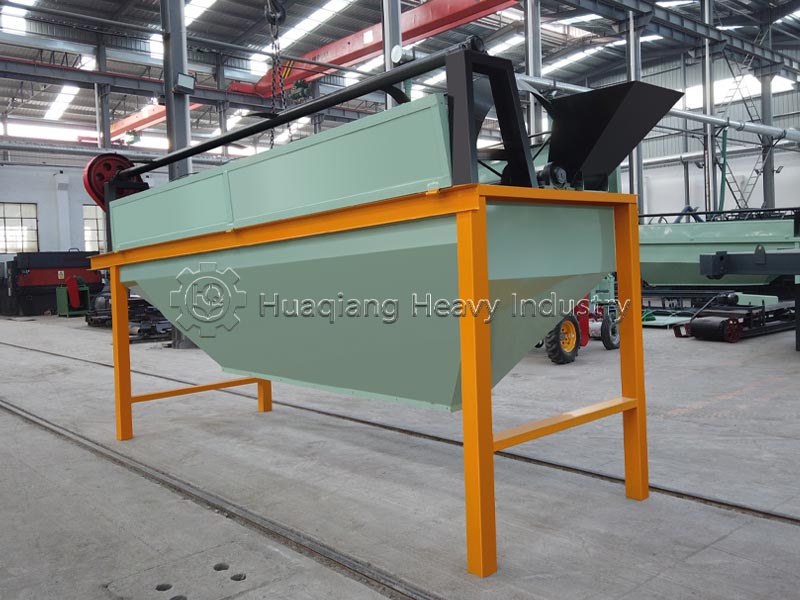
A drum screen, also known as a rotary drum screen or cage drum screen, is a screening device that uses a rotating screen cylinder to classify or separate materials according to particle size. Its core features include simple structure, stable operation, resistance to screen clogging, good sealing, and low noise. It is widely used in industries such as organic/inorganic compound fertilizers, mining, building materials, chemicals, coal, metallurgy, biomass, and solid waste treatment.
In the fertilizer industry, it is mainly used for separating finished products from recycled materials. It can also be used to classify finished products, ensuring uniform classification. It is a key supporting equipment in compound fertilizer and organic fertilizer production lines.
Equipment Structure
The drum screen can be divided into three main parts:
- Frame Section
The frame is welded from high-quality steel plates and channel steel, forming the foundation for the entire equipment. The steel frame is welded from shaped steel, making it sturdy and durable. The drum assembly is installed at an angle to the ground on the frame.
- Transmission Screening Section (Core)
This section consists of the drive wheel, coupling, main shaft, drum, and combined screen. The screen is installed and welded to the drum on the main shaft. The screen is composed of several circular flat steel rings, with a cross-sectional area much larger than the screen bars of other screening equipment, resulting in a longer service life. The drum is usually cylindrical, and the inner wall may be equipped with lifting plates to assist material movement.
- Transmission Connection Section
The electric motor drives the pulley, V-belt, and reducer to rotate the main shaft. The transmission reducer and the main working parts are driven by sprockets and chains, facilitating assembly and maintenance. 4. Feeding, Discharging, and Sealing Section
This includes the feed inlet, discharge outlet, and sealing cover. The feed inlet is located at the higher end of the inclined roller, and the discharge outlet is located at the lower end. Multiple discharge funnels can be installed to collect materials of different particle sizes, depending on the grading requirements.
Working Principle
The drum is driven by a motor and reducer to rotate at low speed. The entire machine is arranged with a slight inclination. Material enters the drum from the high-end feed inlet:
- The lifting ribs inside the drum rotate with the drum body, continuously lifting and dropping fertilizer granules, loosening clumps;
- Qualified granules and fine powder with a particle size smaller than the screen mesh size pass through the screen and fall into the corresponding hopper below;
- Large clumps and oversized coarse particles cannot pass through the screen and move along the inclined drum wall to the end, exiting from the coarse material outlet;
- An optional beating device continuously taps the outer wall of the screen, automatically removing adhering wet fertilizer and preventing clogging even after long-term use;
- The three types of materials are continuously discharged through separate channels and transported to the packaging and granulation return sections respectively.
Applications and Applicable Raw Materials
The drum screen is highly adaptable and can process a variety of solid materials with a particle size of less than 300mm.
| Industry Field | Applicable Raw Materials / Materials |
|---|---|
| Organic / Inorganic Fertilizer | Fermented raw materials, compost, organic fertilizer powder, compound fertilizer granules, returned materials, BB fertilizer raw materials |
| Mining & Building Materials | Sand, broken stone, river pebble, coal gangue, limestone, coke, quicklime and slaked lime |
| Coal & Power Industry | Raw coal, coal powder, lump coal, coal slime, circulating fluidized bed boiler fuel |
| Agriculture & Grain | Wheat, corn, rice, straw, forage, coconut coir, palm fiber |
| Biomass & Environmental Protection | Wood pellets, biomass fuel, domestic waste, construction waste, recycled materials |
This equipment is particularly adept at handling moist, sticky, and easily clogged materials, overcoming the shortcomings of traditional vibrating screens that are prone to clogging and have low efficiency under such conditions.
Applicable Raw Materials (Fertilizer Industry Only)
Materials that can be stably screened:
- Granular fertilizers: Organic fertilizers, bio-fertilizers, compound fertilizers, BB fertilizers, extrusion granulation/drum granulation finished granules;
- Semi-dry organic materials: Fermented and decomposed chicken manure, cow manure, mushroom residue, crushed straw;
- Powdered return materials: Fine powder from screening, powder with detached coating;
- Lumpy impurities: Granulation lumps, uncrushed hard clumps.
Materials not suitable: Moisture content > 40%; High-viscosity slurry; Long fiber entangled materials; Large hard stones with a particle size > 30mm.
Equipment capacity range
| Model | Cylinder Diameter × Length (m) | Matching Motor (kW) | Hourly Capacity (t/h) |
|---|---|---|---|
| GS1.0×3.0 | Φ1.0×3.0 | 4.05 | 1~3 |
| GS1.2×4.0 | Φ1.2×4.0 | 5.5 | 3~10 |
| GS1.8×6.0 | Φ1.8×6.0 | 7.5 | 10~25 |
The drum speed is uniformly 10~22r/min. Different mesh sizes of screens can be replaced according to the particle size, and the capacity fluctuates slightly with the size of the screen holes.
Application of Rotary Drum Screening Machines in Fertilizer Production Lines
(I) Complete Process Chain: Granulator → Rotary Drum Dryer → Rotary Drum Cooler → Rotary Drum Screening Machine; Screening into three stages:
- Qualified uniform granules → Rotary wrapping machine → Automatic packaging machine;
- Fine powder return → Screw feeder, return mixer, and secondary granulation;
- Large lumps/agglomerates → Crushed and re-granulated by crusher.
(II) Supporting Logic:
- Post-cooling section: Screens and cools the finished product, removes defective granules, and improves the appearance of the fertilizer product;
- Closed-loop recovery of fine materials and lumps, reducing raw material waste and increasing finished product yield;
- Single machine replaces multi-stage screening, requiring fewer pieces of equipment and allowing for a compact workshop layout.
Common Faults, Causes, and Standardized Solutions
| Fault Phenomenon | Root Cause | Professional Solution |
|---|---|---|
| Poor screening quality, oversize contains large quantity of qualified particles | Damaged screen mesh; excessive feeding flow; clogged mesh holes; too small drum inclination angle | 1. Replace damaged screen mesh; 2. Reduce upstream feeding speed; 3. Activate beating device for mesh cleaning; 4. Adjust drum inclination angle |
| Frequent screen clogging, sharp drop of screening efficiency | High moisture content of fertilizer, no self‑cleaning beating device | Install external beating hammers, stop machine regularly to flush screen mesh |
| Abnormal drum noise, metal scraping sound | Bearing oil shortage & wear; loose chain hitting frame; hard lumps falling into drum | Inject grease to bearings, tension transmission chain, stop machine and remove hard foreign objects inside drum |
| Motor overload, tripping shutdown | Start‑up with residual materials inside drum; instantaneous overloading during feeding | Strictly follow rules: stop feeding first then empty materials before shutdown, maintain uniform feeding speed |
| Drum reverse rotation, disordered discharging | Reversed connection of motor power cables | Swap any two three‑phase power wires to correct rotation direction |
| Frequent slipping of transmission chain / V‑belt | Worn transmission parts, insufficient tension | Replace worn belt / chain, adjust tension pulley for proper tightness |
Target Users and Selection Recommendations
Drum screeners are primarily intended for the following user groups:
- Fertilizer producers: Organic fertilizer plants, compound fertilizer plants, and BB fertilizer plants, used for finished product grading and return material recycling;
- Mining and building materials companies: Sand and gravel quarries, stone pits, and cement plants, used for aggregate grading and soil-rock separation;
- Energy and chemical companies: Coal washing plants, coking plants, and power plants, used for coal screening and fuel pretreatment;
- Environmental protection and resource recycling companies: Municipal solid waste treatment plants, construction waste recycling stations, and biomass pellet plants.
Core Selection Principles: Select the screen mesh size based on the maximum particle size of the material; select the drum diameter and length based on the target output; determine whether to configure a self-cleaning screen and a fully enclosed dust cover based on the material moisture content. For corrosive materials, it is recommended to use stainless steel or galvanized steel mesh to extend service life.