
We are a professional manufacturer of organic fertilizer equipment and a customized service provider for fertilizer production lines
-
NO.313, Wanshan Road, Xingyang City, Zhengzhou City, Henan Province, China
Company Address
-
Call Us: +86-18703630069
(Sat - Thursday)
-
inquiry@hqhifertilizermachine.com
Our Email
Simple Compost Turning Machine


Equipment Overview
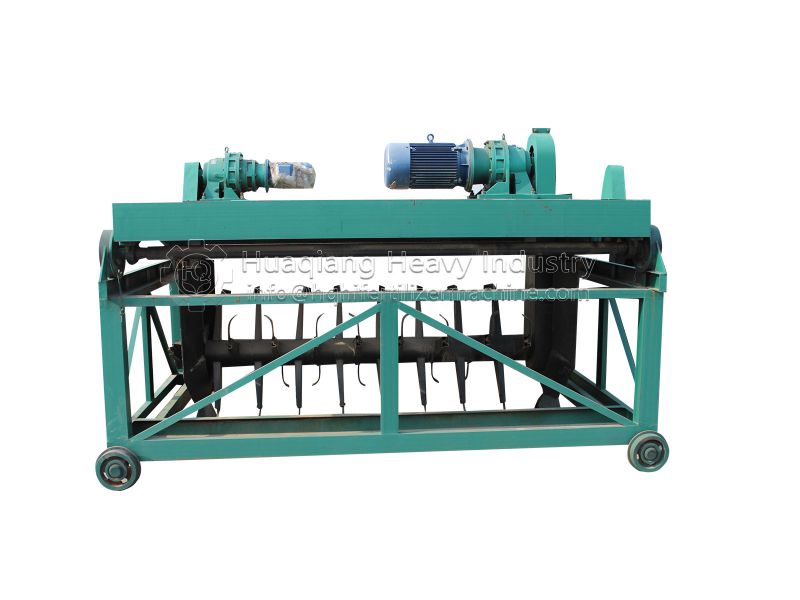
The trough-type compost turner, also known as a trough-type turner, is a specialized mechanical device for processing solid organic waste and is a core piece of equipment in composting and fermentation plants. This equipment is mainly used for fermenting and turning organic waste such as livestock and poultry manure, sludge, sugar mill filter mud, pomace, and straw sawdust. It is widely used in organic fertilizer plants, compound fertilizer plants, sludge and waste treatment plants, horticultural farms, and mushroom cultivation plants for fermentation, composting, and moisture removal.
The trough-type compost turner is suitable for aerobic fermentation and can be used in conjunction with solar fermentation chambers, fermentation tanks, and transfer machines. When used with a transfer machine, it can achieve multi-tank functionality. The fermentation tanks it is paired with can discharge continuously or in batches, offering high efficiency, stable operation, durability, and uniform turning.
The compost turner is the core equipment for aerobic dynamic composting, replacing manual labor and loader turning, and is an important product influencing the development trend of the composting industry.
Equipment Structure and Composition
The trough-type compost turner adopts a modular design and mainly consists of the following core components:
1. Transmission Device: Driven by an electric motor through a cycloidal pinwheel reducer and chain, it transmits power to the turning drum.
2. Lifting Device: Some models (such as FDT, FDX, and FPY types) are equipped with a winch or hydraulic lifting system, allowing adjustment of the drum height.
3. Traveling Device: Controls the equipment’s forward and backward movement along the trough tracks.
4. Turning Drum: The core operating component, equipped with wear-resistant blades.
5. Control Cabinet: A centralized control system supporting manual or automatic control functions, and equipped with limit switches.
6. Transfer Cart (Optional): A mobile platform for cross-trough operations.
Applications of the Equipment
The trough-type compost turner is one of the main supporting equipment in fertilizer machinery units. Suitable for trough-type fermentation, it is a core piece of equipment for the industrial-scale harmless treatment of livestock farming, municipal waste, and municipal sewage sludge. Specific applications include:
| Application Field | Typical Scenarios |
|---|---|
| Organic Fertilizer Plant | Fermentation and decomposing process of organic fertilizer production line |
| Compound Mixed Fertilizer Plant | Fermentation pretreatment of compound mixed fertilizer raw materials |
| Sludge & Waste Disposal Plant | Harmless treatment of urban sewage sludge and domestic waste |
| Horticulture Farm | Composting treatment of garden waste |
| Button Mushroom Cultivation Plant | Fermentation preparation of mushroom culture substrate |
| Large-scale Livestock & Poultry Farm | Resource utilization of livestock and poultry manure |
| Brewing, Sugar-making & Paper-making Industry | Treatment of organic wastes such as distiller’s grains and sugar mill filter mud |
This equipment features a reasonable design, high efficiency, low energy consumption, high degree of automation, ease of use, and low cost, making it widely applicable. The trough-type compost turner is typically motor-driven and can be used in environments ranging from -20℃ to 50℃. The length of the fermentation trough can be customized according to the user’s site conditions, typically ranging from 50 to 200 meters.
Working Principle of the Equipment
The working principle of the trough-type compost turner is based on aerobic fermentation technology. The core mechanism is as follows:
1) Power Transmission Principle
The electric motor directly transmits power to the cycloidal pinwheel reducer, which then drives the turning drum via a sprocket. The turning shaft and turning plates welded to the main shaft cut and turn the material under high-speed rotation.
2) Turning and Composting Operation Principle
1. Longitudinal Movement: The entire machine moves longitudinally along the tracks on both sides of the fermentation tank.
2. Drum Rotation: The turning drum rotates at high speed, and the stirring blades are spirally distributed.
3. Material Turning and Composting: The material in the fermentation tank is turned and stirred, and then moved backward by 0.2–1 meter.
4. Aeration and Oxygen Supply: The material is fully in contact with air during the turning and composting process.
5. Crushing and Mixing: The clumps in the fermentation material are effectively crushed, increasing permeability.
3) Aerobic Fermentation Principle
Through regular turning and composting, the temperature of the pile quickly rises to 50–65℃ (ideal range is 60–70℃). Under this high temperature condition:
1. Pathogens, insect eggs, and weed seeds are effectively killed.
2. Microorganisms fully decompose organic matter.
3. The fermentation cycle is shortened.
4. The oxygen content of the pile increases, and moisture evaporates.
5. Problems such as odor and seedling burn caused by anaerobic fermentation are avoided.
4) Continuous Fermentation Process
Under the transport of the longitudinal and transverse moving mechanisms, the rotating turning and composting teeth throw the fermentation material up, scatter it, and create a certain displacement. Every day, the fermented material is removed from the end of the fermentation tank, and the space freed up in the tank is replenished with new fermented material, thus forming a continuous fermentation process.
Equipment Parameters
| Model | Main Motor | Walking Motor | Lifting Motor | Mobile Car Motor |
|---|---|---|---|---|
| FD3 | 7.5kw*2 | 1.5kw | / | 1.5Kw |
| FD4 | 11kw*2 | 1.5kw | / | 1.5Kw |
| FD5 | 15kw*2 | 2.2kw | 0.75kw | 1.5Kw |
| FDT3 | 7.5kw*2 | 1.5kw | 0.75kw | 1.5Kw |
| FDT4 | 11kw*2 | 1.5kw | 0.75kw | 1.5Kw |
| FDT5 | 15kw*2 | 2.2kw | 0.75kw | 1.5Kw |
Operating Procedures and Precautions
1) Start-up Procedure: Check (fasteners, lubrication, wiring) → Start the turning equipment → Travel operation.
2) Key Precautions:
1. No-load test run: Check the rotation direction of the drum (adjust phase if reversing), listen for abnormal noises from the reducer, and check if the blades are rubbing against the ground.
2. Loaded operation: Start the lifting device to slowly lower the drum to the bottom of the trough. If the ground flatness error is within 15mm, the blade clearance should be controlled at 30-50mm; if uneven, it should be controlled at around 50mm.
3. Shutdown prevention: Before shutting down, check for any accumulated material in front of the drum and raise the drum to its highest point to prevent excessive starting load.
Maintenance and Care Methods
1. Per-Shift Maintenance:
Check fasteners and bearing clearances.
Add grease to bearing housings and check the gearbox oil level.
Clean up any residual material from the machine and work area.
2. Weekly Maintenance and Periodic Inspection:
Check the contactors in the electrical control cabinet for damage.
Check the motor and gearbox for overheating and abnormal noises; replace severely worn bearings promptly.
3. Oiling Standards:
The cycloidal pinwheel gearbox must have its oil changed after the first 200 hours of operation, and thereafter every six months or one year (using No. 50 machine oil or hypoid gear oil).
Common Equipment Problems and Solutions
Based on experience with common equipment malfunctions and troubleshooting, the main problems are as follows:
| Common Faults | Cause Analysis | Solutions |
|---|---|---|
| Difficult Compost Turning | 1. Excessively thick material layer 2. Severe deformation of blades & shaft or winding of foreign matters 3. Foreign matters stuck on transmission gear or gear damage | 1. Remove redundant fertilizer layer 2. Repair blades or shaft, clear foreign matters 3. Clear foreign matters or replace gears |
| Unstable Traveling, Abnormal Noise or Overheating of Reducer | 1. Foreign matters inside traveling sprocket 2. Bent transmission shaft 3. Lack of lubricating oil | 1. Clear foreign matters 2. Calibrate or replace transmission shaft 3. Add lubricating oil |
| Difficult or Failed Motor Startup with Buzzing Noise | 1. Excessively worn or damaged bearings 2. Deformed & bent reduction shaft 3. Too low or too high voltage | 1. Replace bearings 2. Calibrate or replace shaft 3. Restart after voltage returns to normal or install voltage stabilizer |
| Abnormal Rotating Speed of Mixing Shaft | 1. Motor failure (winding short circuit, damaged bearing) 2. Incorrect parameter setting of frequency converter 3. Faulty transmission parts | 1. Detect motor winding, replace damaged bearings 2. Recheck and reset frequency converter parameters 3. Troubleshoot, repair or replace damaged parts |
| Slow Lifting or Complete Failure of Hydraulic Lifting System | 1. Insufficient hydraulic oil or deteriorated oil quality 2. Blocked hydraulic oil filter element 3. Internal leakage caused by worn hydraulic pump 4. Oil leakage due to aging of cylinder sealing ring 5. Low preset pressure of overflow valve | 1. Check oil level, add or replace hydraulic oil 2. Clean or replace filter element 3. Contact professional personnel for maintenance or replacement 4. Replace hydraulic cylinder sealing parts 5. Contact professional personnel for adjustment |
| Uneven Compost Turning | 1. Improper adjustment of blade shaft angle 2. Severe wear or fracture of blades 3. Excessively fast traveling speed 4. Hard agglomerated materials | 1. Adjust hydraulic lifting mechanism to keep left and right sides at the same level 2. Replace blade assembly, keep dynamic balance 3. Appropriately reduce traveling speed 4. Spray water to soften materials before turning |
| Machine Drifting During Traveling | 1. Inconsistent tension of left and right tracks 2. Uneven wear of support wheels or thrust wheels 3. Uneven base of fermentation trough | 1. Adjust tension to be consistent on both sides 2. Inspect and replace severely worn parts 3. Level the base |
Application of the Equipment in the Production Line
The trough-type compost turner is a core fermentation device in a complete organic fertilizer production line. In a complete organic fertilizer production line, this equipment is located at the front-end fermentation stage of the process.
I. Typical Organic Fertilizer Production Line Process Flow:
Fermentation (Trough Turner) → Crushing → Mixing → Granulation → Drying → Cooling → Screening → Packaging
II. Specific Working Process:
1. Feeding into the Fermentation Tank: Add the fermentation materials (livestock manure, straw, etc.) to the fermentation tank according to the specified ratio, and evenly sprinkle in microbial agents.
2. Turning and Fermentation: The trough turner travels back and forth along the track of the fermentation tank, turning the material daily, and simultaneously moving it to the other end of the fermentation tank (usually about 3 meters per day), achieving the purpose of moisture regulation and uniform mixing.
3. Fermentation Cycle: Generally requires 10–15 days (12–15 days for some processes).
4. Discharging from the Tank: After the fermentation cycle is completed, the material is discharged from the tank and proceeds to the next process.
III. Functions of the trough turner in the fermentation stage include:
1. Evenly turning the fermented material to ensure full contact with air.
2. Removing some moisture.
3. It can crush large pieces of material and grind small pieces into powder, functioning as a pulverizer.
IV. Multi-tank mode: Using a transfer vehicle (transfer machine), one trough-type compost turner can switch between multiple fermentation tanks, achieving multi-tank operation and significantly improving equipment utilization and return on investment.
Trough-type compost turners offer high cost-effectiveness, simple operation, and low cost, making them suitable for open-air fermentation in small to medium-sized factories with ample space.
Complete Aerobic Fermentation Process in a Trench
1) Overall Process Flow:
Raw material collection → Solid-liquid separation (high-moisture manure optional) → Auxiliary material mixing (straw, microbial agent, recycled material) → Fermentation trough covering → Trench-type compost turner for timed turning and fermentation → Mature compost discharge → Crushing and screening → Powdered organic fertilizer packaging / Granulation deep processing
2) Fermentation Cycle and Turning Frequency Standards:
1. Total fermentation cycle: 15~25 days;
2. Heating stage (1~5 days): Turn over every 2~3 days to quickly raise the pile temperature to 55~65℃;
3. High-temperature harmless treatment stage (5~12 days): Maintain the pile temperature above 55℃ for no less than 7 days, turn over every 3 days to fully kill harmful microorganisms;
4. Cooling and stabilizing stage (12~25 days): The pile temperature drops below 40℃, turn over every 4~5 days, and the organic matter is completely degraded and matured;
3) The core technological roles of the compost turner in fermentation:
1. Oxygen supply: Maintaining an aerobic environment within the compost pile and preventing anaerobic fermentation and foul odors;
2. Temperature control: Releasing excess heat from the compost pile and preventing high-temperature carbonization of organic matter;
3. Homogenization: Mixing materials to achieve a balanced fermentation process and prevent localized raw material accumulation;
4. Dehydration: Accelerating moisture evaporation from the compost pile, reducing the moisture content of the composted material, and decreasing energy consumption for subsequent crushing and drying.
Safety Operating Procedures
1. Operators must not operate the compost turner after consuming alcohol, or when feeling unwell or unwell.
2. For safety, all tracks of the compost turner must be grounded.
3. Power must be disconnected before replacing cable trays or cables.
4. No one may pass in front of or behind the compost turner during production.
5. No maintenance or lubrication is permitted during production.
6. The turner must be operated at the specified speed; exceeding the speed limit is prohibited.
7. Unauthorized personnel are prohibited from operating the machine.
8. When raising or lowering the winch, prevent the drum from being lowered too low and damaging the blades, and prevent over-extension, which could damage the winch shaft and bearing housing.
9. Replace the winch wire rope immediately if it has fuzz or more than 7 broken strands.
The trough-type compost turner, as the core equipment for aerobic composting of organic solid waste, boasts significant advantages such as reasonable structure, high efficiency, low energy consumption, high degree of automation, ease of use, and low cost. Working in conjunction with fermentation tanks, transfer machines, and other supporting equipment, it achieves the harmless, reduced-volume, and resource-based treatment of organic waste.
Compared to disc compost turners, trough-type compost turners offer better cost-effectiveness and simpler operation, making them suitable for small to medium-sized plants with ample space. From small production lines with an annual output of 10,000 tons to large production lines with an annual output of 200,000 tons, trough-type compost turners provide reliable fermentation solutions. Whether it’s the treatment of manure from livestock and poultry farms, the harmless disposal of municipal sludge, or the large-scale production of organic fertilizer plants, trough-type compost turners play an irreplaceable core role.
Whether you need a compost turner or plan an entire fertilizer production line—from fermentation and turning, crushing and mixing, to granulation, drying and cooling, screening and packaging—we can provide you with a one-stop solution.