

We are a professional manufacturer of organic fertilizer equipment and a customized service provider for fertilizer production lines
-
NO.313, Wanshan Road, Xingyang City, Zhengzhou City, Henan Province, China
Company Address
-
Call Us: +86-18703630069
(Sat - Thursday)
-
inquiry@hqhifertilizermachine.com
Our Email
Vibration Screener Machine

Equipment Introduction
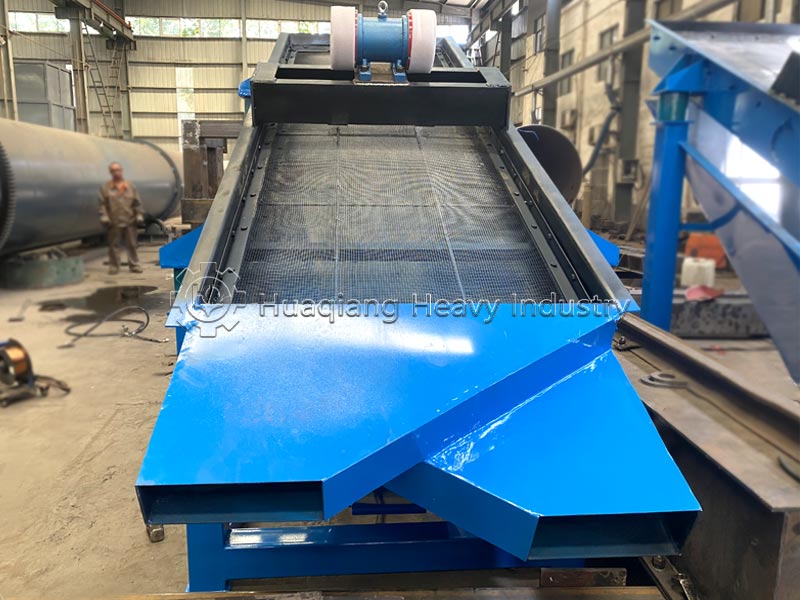
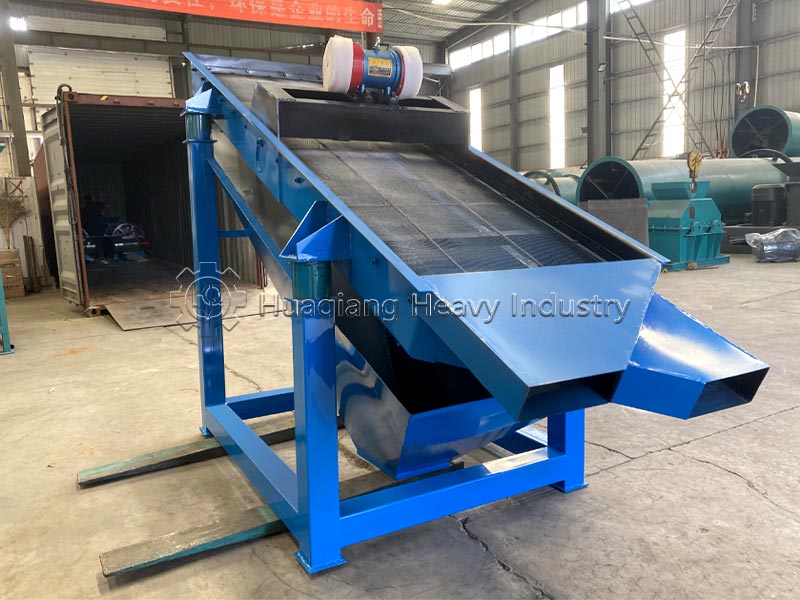
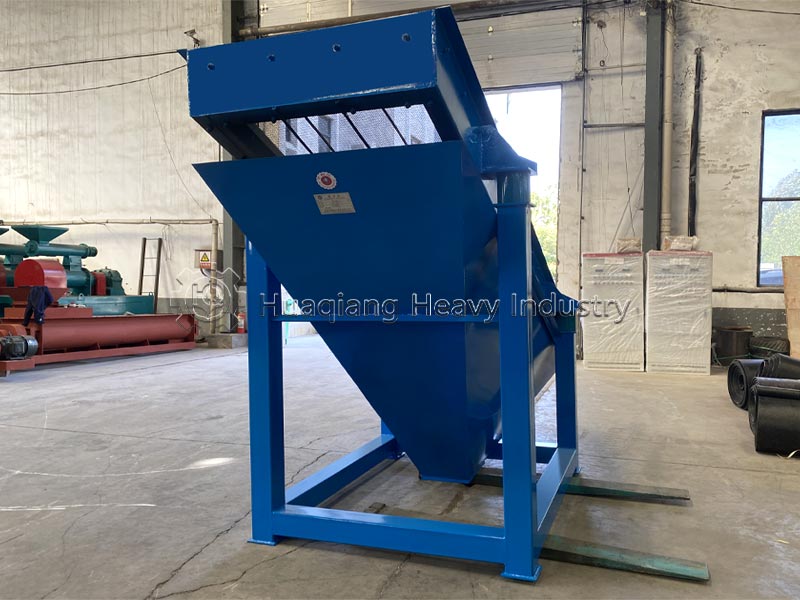
Vibration screeners are specialized screening equipment for high-precision particle grading in fertilizer production lines. They come in two main types: linear vibrating screens and circular vibrating screens. Utilizing a vibrating motor/exciter to generate high-frequency vibration force, they drive the screen to reciprocate, quickly separating qualified particles, fine powder, and agglomerated impurities. Compared to drum screens, they offer higher screening accuracy and processing efficiency.
Mainstream Models and Fertilizer Applications
- Linear Vibrating Screen (Mainstay of Fertilizer Production Lines): Dual motors synchronously vibrate, causing material to slide forward in a straight line. It can perform 1-5 layers of multi-level grading, with a screening accuracy of 92%-96%. Suitable for fine sorting of compound fertilizers and organic fertilizers after drying and cooling. Applicable to both dry and wet particles, and suitable for compact workshop layouts.
- Circular Vibrating Screen: Single-axis eccentric circular vibration causes material to tumble and stratify. It features large amplitude and good anti-clogging properties. Primarily used for coarse screening of raw materials and pre-separation of large clumps. Suitable for initial grading of high-humidity fermented organic fertilizers.
Core Advantages (Fertilizer Industry)
- High Grading Precision: Multi-layered screens separate finished products, returned materials, and impurities in one pass, significantly improving fertilizer particle size uniformity.
- Self-Cleaning and Anti-Clogging: High-frequency vibration combined with a bouncing ball screen cleaning device prevents wet, sticky fertilizer from clogging the screens.
- Wide Production Capacity Coverage: 1-50 tons per hour, suitable for all scales of organic and compound fertilizer production lines.
- Sealed and Environmentally Friendly: Can be equipped with a fully enclosed dust cover, preventing dust leakage during screening.
- Modular Screens: Polyurethane/manganese steel wear-resistant screens allow for quick disassembly and replacement, simplifying maintenance.
- Vibration Reduction and Noise Reduction: Rubber springs isolate vibration transmission, eliminating the need for heavy concrete foundations.
Equipment Structure Composition
Although vibrating screens come in various types, their core structure is common and mainly consists of the following components:
- Screen Box: A rigid frame constructed from welded or bolted steel plates, serving as the main support for the screen mesh and vibration system. The screen box is connected to the base via heavy-duty damping springs or rubber vibration isolation supports, ensuring free vibration while minimizing vibration transmission to the ground.
- Screen Mesh: The screen mesh is the core working component that directly contacts the material. Materials include stainless steel woven wire mesh, perforated plates, polyurethane screen plates, or bar screen surfaces. Single-layer or multi-layer (up to 5 layers) screens can be configured according to process requirements to achieve simultaneous grading of 2-6 particle sizes.
- Vibration Source: Vibration motor: Mostly used in small and medium-sized screens. Eccentric blocks are mounted at both ends of the motor shaft; the excitation force and amplitude are changed by adjusting the angle of the eccentric blocks.
- Vibration Exciter: Primarily used in large mining screens, driven by a standard motor via a universal coupling. Internal gears rotate an eccentric wheel to generate vibration force.
- Damping System: Employs steel helical springs, rubber springs, or composite springs to support the screen box and absorb vibration energy, preventing resonance transmission and reducing operating noise.
- Feeding and Discharging System: Includes a buffer feed hopper, dust cover, observation port, and multiple graded discharge ports. The dust cover and sealing rings ensure fully enclosed operation, meeting environmental protection and cleanroom requirements.
Working Principles
- Circular Vibrating Screen (Rotary Vibrating Screen) Working Principle: A vertically mounted vibrating motor serves as the excitation source. Eccentric blocks at both ends of the motor convert the rotational motion into a three-dimensional composite motion (horizontal, vertical, and inclined), which is then transmitted to the screen surface. After entering the screen box, the material spreads outward in a spiral pattern on the screen surface. Fine materials pass through the mesh and coarse materials are discharged from the discharge port along the edge. By adjusting the phase angle of the upper and lower eccentric blocks, the trajectory and residence time of the material on the screen surface can be changed.
- Linear Vibrating Screen Working Principle: Utilizes dual vibrating motors rotating synchronously in opposite directions. The components of the forces of the two motor eccentric blocks in the direction parallel to the motor axis cancel each other out, and in the direction perpendicular to the motor axis, they are superimposed into a resultant force, causing the screen box to perform a reciprocating throwing motion in a straight line. The material is thrown up and jumps forward, achieving rapid linear screening. The screen surface inclination angle is typically 0°-15°. A larger inclination angle results in a larger throughput, but a decrease in screening accuracy.
- Gyratory Screen Working Principle: A special vibration exciter generates nonlinear three-dimensional motion, simulating the low-speed swaying motion of a manual sieve. The material undergoes a combined radial displacement and circular motion (spiral motion) on the screen surface, which is particularly suitable for spherical, flaky, irregular, and fragile materials, and the screening accuracy can reach 90%-99%.
Equipment Capacity Range
- Linear Vibrating Screen (Mainstream Fine Processing Screening)
| Model | Screen Size (mm) | Number of Layers | Hourly Capacity (t/h) | Matching Motor Power (kW) |
|---|---|---|---|---|
| DZSF515 | 500×1500 | 1‑3 | 1‑8 | 2×0.37 |
| DZSF1030 | 1000×3000 | 2‑4 | 10‑25 | 2×1.5 |
| DZSF1540 | 1500×4000 | 3‑5 | 25‑50 | 2×3.0 |
- Circular Vibrating Screen (Raw Material Coarse Screening) Hourly processing capacity 5~40t, single-layer large-aperture screen, mostly used for pre-treatment of impurities in fermentation raw materials.
Applicable Raw Materials (Fertilizer Industry Exclusive)
Materials that can be stably screened:
- Granular fertilizers: Rotary drum/disc granulation organic fertilizer, compound fertilizer, BB fertilizer, slow-release coated granules, urea granules;
- Semi-wet organic materials: Well-rotted chicken manure, cow manure, mushroom residue, crushed straw (moisture content ≤35%);
- Powdered return materials: Screening fine powder, talc powder with coating detachment;
- Lumpy impurities: Granulated hard lumps, incompletely crushed raw material clumps.
Materials that are prohibited from being conveyed: Moisture content >40%, highly sticky mud, extra-long fiber straw, sharp and extra-large hard stones (easily tearable screens).
Application of Vibrating Screens in Fertilizer Production Lines
(I) Complete Process Chain
Roller Dryer → Roller Cooler → Vibrating Screen → Three-Way Diversion
- Standard Uniform Particles → Rotary Coating Machine → Automatic Packaging Machine;
- Fine Powder Return → Screw Feeder → Recirculating Mixer → Secondary Granulation;
- Large Hard Lumps → Crusher → Re-granulation.
(II) Value of Supporting Processes
- Post-cooling section performs fine grading of finished products, removing unqualified particles and improving the appearance of fertilizer products;
- Closed-loop recovery of fine materials and lumps, increasing raw material utilization by more than 15%;
- Multi-layer grading can simultaneously separate dust, finished products, and large particles, with a single machine replacing multi-stage simple screening equipment.
Common Faults, Causes, and Standardized Solutions
| Fault Phenomenon | Root Cause | Professional Solution |
|---|---|---|
| Poor screening effect, coarse material mixed with a large amount of fine powder | Damaged screen mesh / loose pressure plate; off‑center feeding with excessive flow; missing bouncing balls | Repair or replace screen mesh, install central guide chute, reduce feeding speed, replenish screen‑cleaning bouncing balls |
| Frequent screen hole clogging, sharp drop of screening efficiency | High fertilizer moisture, no self‑cleaning bouncing balls | Install built‑in bouncing balls, regularly blow screen mesh with compressed air |
| Material runs to one side, uneven discharging | Biased feeding at inlet; inconsistent excitation force of two‑side motors; fatigue failure of one‑side spring | Adjust guide chute for central feeding, correct motor eccentric weights, replace failed springs |
| Motor / bearing temperature>75℃, abnormal noise | Insufficient bearing grease, deteriorated lubricant; fertilizer dust entering seals | Drain old grease, fill special lithium‑based grease for vibration, replace shaft‑end sealing parts |
| Severe whole‑machine resonance, spring fracture | Long‑term overload operation; inconsistent eccentric block weights; uneven installation foundation ground | Reduce feeding load, unify weights on both sides, level installation ground, replace springs |
| Rapid tearing and wear of screen mesh | Hard lumps in material, heavy impact from high feeding drop | Install buffer baffle at feeding inlet, replace thickened polyurethane wear‑resistant screen mesh |
Target Customers:
- Large-scale production plants of organic fertilizer, compound fertilizer, bio-fertilizer, and slow-release fertilizer;
- Large-scale livestock and poultry breeding groups with their own manure resource processing workshops;
- Municipal sludge and kitchen waste harmless treatment enterprises;
- Fertilizer complete equipment integrators and organic fertilizer production line engineering service providers;
- Foreign trade agricultural input equipment purchasers and overseas fertilizer processing plant supporting customers.
Summary of Equipment’s Comprehensive Technical Features:
- High grading accuracy: Multi-layer screens complete multi-size sorting in one pass, resulting in fertilizer particle uniformity superior to drum screens;
- Strong adaptability to wet materials: A self-cleaning bouncing ball structure prevents screen clogging with high-moisture organic fertilizers, ensuring stable continuous production;
- High space utilization: Multi-layer stacked design reduces floor space required for the same production capacity;
- Environmentally friendly and clean: A fully enclosed dustproof casing eliminates dust pollution in the screening section, meeting environmental protection standards;
- Low maintenance costs: Modular screens allow for quick replacement, and vibration damping springs have a long service life, minimizing potential failure points;
- Adaptable to all production line scales: Models are available for everything from small cooperatives to large fertilizer bases with an annual output of 500,000 tons.