

A Wise Choice in the Green Agricultural Revolution
As sustainable agriculture becomes a global consensus, organic fertilizer disc granulator are gaining unprecedented popularity worldwide. From modern farms in Europe to small cooperatives in Asia, from specialized plantations in North America to community projects in Africa, why has this equipment earned such widespread recognition? The answer lies not only in its technical advantages but also in how perfectly it integrates into the entire fertilizer production ecosystem.
Four Core Attractions: Why Choose It?
- The Philosophy of Natural Granulation
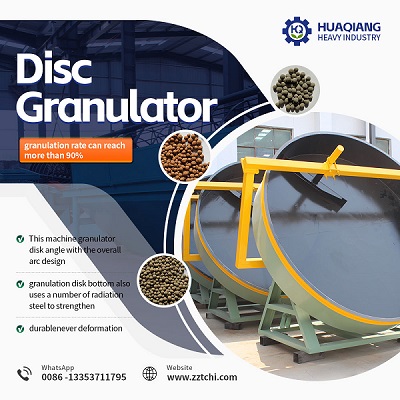
The design inspiration for disc granulator comes from natural agglomeration phenomena—gentle yet effective like rolling a snowball. Unlike high-pressure extrusion granulation, it forms granules naturally at room temperature through centrifugal force and gravity, perfectly preserving active microorganisms and enzymes in organic matter. A comparative study in Germany showed that organic fertilizer produced by disc granulation contains 52% more beneficial microbial communities than extrusion granulation, directly translating into healthier soil and more vigorous crop growth.
- Outstanding Economic Benefits
Return on investment is every producer’s primary consideration. Disc granulation production lines stand out with their low energy consumption and high efficiency: energy consumption is 35-45% lower than traditional extrusion granulation, maintenance costs are reduced by 30%, while capacity can increase by 25%. Data from a medium-sized organic farm in California is convincing: after introducing a disc granulation system, production cost per ton of fertilizer decreased by $28, with annual savings exceeding $65,000, recouping the investment in just 14 months.
- Flexible Versatility
True value lies in adaptability. Disc granulators can easily process various raw materials from livestock manure and crop straw to food processing waste and municipal sludge. Through simple adjustments of angle and rotation speed, the same equipment can produce granules of different specifications to meet diverse needs from precision horticulture to field crops. The practice of a cooperative in India proves this: using only one production line, they seasonally produce three specialized organic fertilizers suitable for rice, wheat, and vegetables.
- Complete System Integration
The real power of disc granulators lies in their synergistic effects. Modern production lines typically include:
Intelligent pretreatment systems: Integrated crushing, mixing, and fermentation equipment such as chain compost turner.
Precise control systems: Automatic adjustment of moisture, temperature, and rotation speed
Efficient post-processing units: Integrated drying, cooling, screening, and coating
Environmental processing modules: Exhaust gas treatment and dust recovery devices
A leading organic fertilizer producer in the Netherlands maximizes this integration advantage: their fully automated production line requires only 3 operators to achieve an annual output of 25,000 tons of high-quality organic fertilizer, with product consistency reaching an impressive 98.7%.
Global Testimonies: The Power of Success Stories
The Netherlands: A Circular Model for Greenhouse Agriculture
In the Westland greenhouse cluster, tomato growers faced dual challenges: high fertilizer costs and mountains of plant residues. They invested in a medium-sized disc granulation line, converting pruning waste, discarded plants, and some poultry manure into specialized greenhouse organic fertilizer. Results exceeded expectations: fertilizer expenses decreased by 48%, tomato yields increased by 22%, and they achieved the goal of reducing external inputs by 150 tons annually, truly establishing a closed-loop production system.
United States: Sustainable Development in Wine Estates
Napa Valley’s Silver Oak Winery converts grape skins, seeds, and stems from the winemaking process into vineyard-specific fertilizer. Their customized disc granulation line not only achieved zero-waste goals but also significantly improved wine quality. Winemakers found that grapevines using estate-made organic fertilizer were more vigorous, with fruits exhibiting more complex and rich flavors, ultimately increasing the market value of the final product by 18%.
China: A Transformation Model for Ecological Agriculture
Shouguang vegetable base in Shandong adopted disc granulation technology to process abundant local agricultural waste. By converting vegetable residues, mushroom substrate, and poultry manure into high-quality organic fertilizer, they not only solved waste disposal challenges but also increased soil organic matter content from 1.2% to 2.8%, reduced chemical fertilizer use by 65%, achieved vegetable quality meeting EU export standards, and added over $3 million in annual export value.