
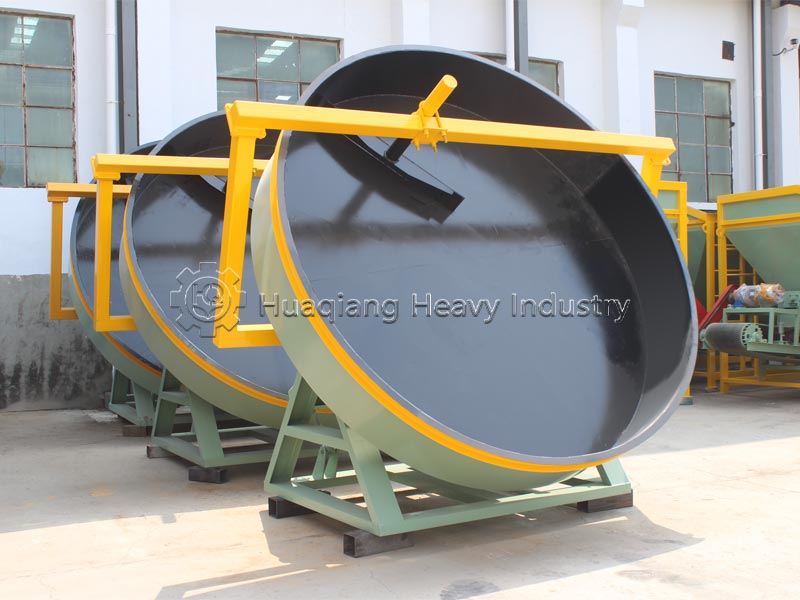
In the green wave of organic agriculture and waste resource recovery, how is loose, dusty compost transformed into high-value commodities? The organic fertilizer disc granulator is the core technology enabling this remarkable transformation. It eschews chemical reactions, instead cleverly utilizing the material’s own physical properties. Through the natural law of tumbling agglomeration in a rotating disc, it shapes fermented organic powder into uniform, solid spherical pellets. It is the “spherical artisan” connecting ecological cycles with modern agricultural application.
Core Advantages: Natural, Efficient, Highly Adaptable, Low Energy Consumption
Designed specifically for organic materials, the disc granulator’s advantages perfectly align with the particularities of organic fertilizer production:
Natural Affinity for Moist, Sticky Organic Materials: Organic fertilizer raw materials (e.g., fermented livestock manure, food waste, straw) typically contain optimal moisture (20%-35%) and natural adhesiveness. The disc granulator leverages this, allowing material to spontaneously form pellets through tumbling and compaction, requiring minimal artificial binders. This maximally preserves the “organic” essence and biological activity of the fertilizer.
Excellent Pelletizing Rate & Commercial Appearance: The unique inclined rotation creates a classification effect. Pellets grow layer-by-layer in a “snowballing” fashion, forming spherical pellets with high roundness, uniform size (typically adjustable 2-8mm), and smooth surfaces. The product boasts an attractive appearance, significantly enhancing commercial value, and offers good flowability for mechanical application.
Intuitive Process, Real-Time Control: “What you see is what you get” is its standout feature. Operators can directly observe the entire pelletizing process and adjust the disc angle, rotation speed, and water spray in real-time based on pellet formation. This allows flexible adaptation to fluctuations in raw material composition and moisture, making it especially suitable for organic fertilizer production with complex feedstock sources.
Low-Temperature Process, Protects Active Life: The entire process involves ambient-temperature physical granulation, with no high-heat stages. This perfectly protects the precious probiotics, enzymes, and other heat-sensitive active components in organic fertilizer, ensuring the final efficacy of bio-organic fertilizers.
Economical Investment & Operation: Simple, compact structure with energy consumption far lower than wet processes requiring drying. For small-to-medium organic fertilizer plants, on-farm projects, or as a flexible supplement to large lines, it is one of the most cost-effective forming solutions.
Working Principle: The Trio of Gravity, Centrifugal Force
Its core is an inclined (adjustable 35-55°), shallow-bottomed disc rotating at constant speed. The pelletizing process is an elegant physical evolution:
Feeding & Nucleation: Pre-processed organic fines are fed from the top while being moistened by a fine water mist. The fines tumble and collide on the disc bottom, beginning to adhere into microscopic “seed nuclei.”
Growth & Compaction: Driven by the disc’s rotation, the seed nuclei move in a spiral trajectory, continuously adhering to surrounding fines, growing larger and more compact layer by layer, much like rolling a snowball.
Classification & Discharge: When pellets grow to the set size, their weight overcomes centrifugal force, and they automatically spill over the disc edge. This natural classification mechanism ensures uniform discharge size.
Collection & Post-Processing: The moist green pellets are collected and conveyed to a subsequent Rotary Dryer for low-temperature curing, ultimately yielding finished organic fertilizer pellets with standard moisture content and qualified strength.
Pivotal Role in the Organic Fertilizer Production Line
The disc granulator is the “forming hub” of the organic fertilizer deep-processing line:
Upstream Processes: Fully fermented material is processed to suitable fineness by a Half-Wet Material Crusher.
Core Forming: The crushed material is steadily fed into the disc granulator via a Uniform Feeder, completing the qualitative change from “powder” to “pellet.”
Downstream Processes: The wet pellets undergo drying, cooling, and screening (by a Rotary Screener) to obtain qualified finished product. Fines are recycled for re-pelletizing, forming a closed loop.
Comparison with Mainstream Granulation Technologies
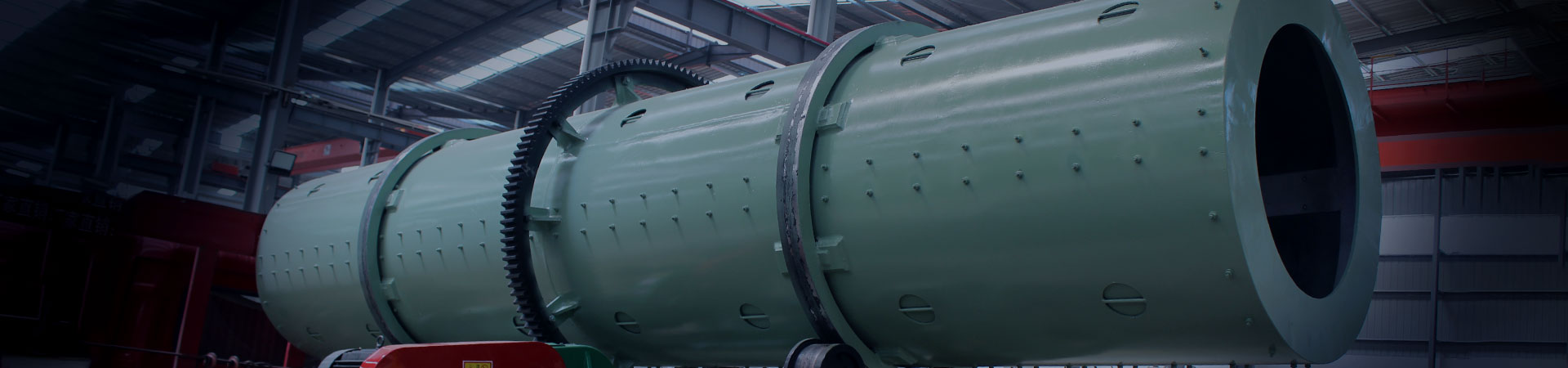
VS Rotary Drum Granulator: Drum granulators suit large-scale continuous production but have high investment, energy consumption, and a closed process. The disc granulator wins with flexibility, economy, and visual controllability, making it ideal for small-to-medium scale and multi-variety production.
VS Double Roller Press Granulator: Roller presses produce high-density cylindrical or oblate pellets, requiring very dry raw materials (moisture <10%). Disc granulators can handle high-moisture organic materials, producing natural spherical pellets that better match organic fertilizer characteristics.
VS Flat Die Pelleting Machine: Flat die mills rely on high-pressure extrusion, suitable for biomass fuel or feed pellets. Disc granulators rely on tumbling agglomeration, which better preserves the loose structure and biological activity of organic matter.