
Picture this: a fleet of front-end loaders circles your plant, dumping raw materials directly onto a heaped pile. Then comes the backbreaking work—shoveling, sweeping, pushing every last grain toward the intake. Dust billows. Time ticks. And somewhere in the chaos, production stops because the next machine is starving for material. Sound familiar?
Now imagine a different scene. The loader rumbles up, tips its bucket, and in one smooth motion, dumps two tons of material into a massive steel hopper. The hopper swallows it whole, then feeds your line steadily, evenly, without complaint. No dust. No spills. No waiting. That’s the power of a loader feeding hopper.
What Exactly Is It?
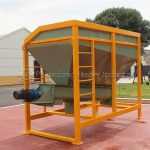
Think of it as the front door to your entire process—but a door that’s always open and hungry. A loader feeding hopper is a large, reinforced bin designed to accept sudden dumps from wheel loaders, skid steers, or excavators. At its bottom, a heavy-duty belt or vibratory feeder meters material out at a controlled rate. It’s the bridge between chaotic incoming bulk and orderly, continuous processing.
Why Your Plant Needs One
- The Buffer That Never Blinks
Loaders operate in cycles. They scoop, travel, dump, and return. During those few minutes when the loader is away, your production line shouldn’t have to pause. The hopper stores that surge—typically 5 to 20 tons of material—and keeps feeding while the loader fetches the next load. It’s the shock absorber between batch delivery and continuous processing. - Say Goodbye to Starvation and Flooding
Without a hopper, your intake fluctuates wildly. The loader dumps—suddenly the belt conveyor is buried. Then nothing—and the line runs empty. That feast-or-famine cycle wreaks havoc on downstream equipment: screens blind, mixers overload, disc granulators choke. A properly designed hopper with a metering feeder delivers material at a steady, adjustable rate. Your whole line breathes easier. - Dust Containment Built Right In
Here’s where most plants lose the dust battle. Open dumping creates explosions of fine particles. But a well-designed feeding hopper features:
Enclosed top grids that catch oversized lumps while letting fines fall through
Rubber curtains or flexible seals that contain dust during dumping
Integrated dust collection ports that connect directly to your plant’s filtration system
Skirt boards and seals along the discharge conveyor that keep material where it belongs
Result? The dust cloud never forms in the first place.
- Built to Be Beaten On
Let’s be honest: loaders aren’t gentle. They drop rocks, frozen lumps, and tons of abrasive material from several feet up. A feeding hopper must take that punishment daily for years. That means:
AR400 or harder steel liners in impact zones
Reinforced structural steel that won’t buckle under repeated pounding
Replaceable wear plates that extend the hopper’s life indefinitely
Heavy-duty impact bars under the loading zone, not ordinary idlers
- Handles the Nastiest Materials
Sticky clay? Damp urea? Sharp granules that cut ordinary belts? The feeding hopper doesn’t care. Options include:
Vibratory feeders for materials that won’t flow freely
Hydraulic dumpers for bags or containers
Stainless steel construction for corrosive or food-grade materials
Heated walls for materials that freeze or cake in cold weather
- The Automation Connection
Modern feeding hoppers aren’t just bins—they’re smart. Level sensors tell loaders when to dump and when to wait. Variable-frequency drives adjust feed rates automatically based on downstream demand. Remote monitoring lets you see material levels from the control room. The hopper becomes an active participant in your plant’s brain, not just a passive bucket.