
In modern fertilizer production, screening and packaging are crucial steps before the finished product leaves the factory. A professional screening and packaging production line, through its integrated design of “grading and screening – impurity removal – precision packaging,” not only improves product appearance and quality but also directly impacts storage, transportation, and final usage effectiveness. This system is suitable for the large-scale production of various granular and powdered fertilizers and is core equipment for achieving fertilizer commercialization and standardization.
How the Production Line Works: Process and Core Equipment
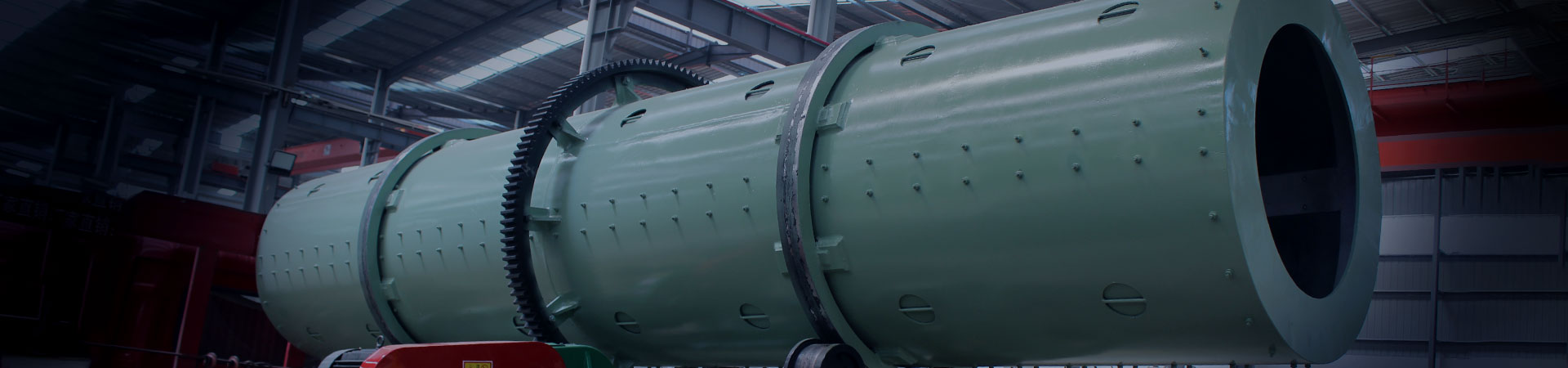
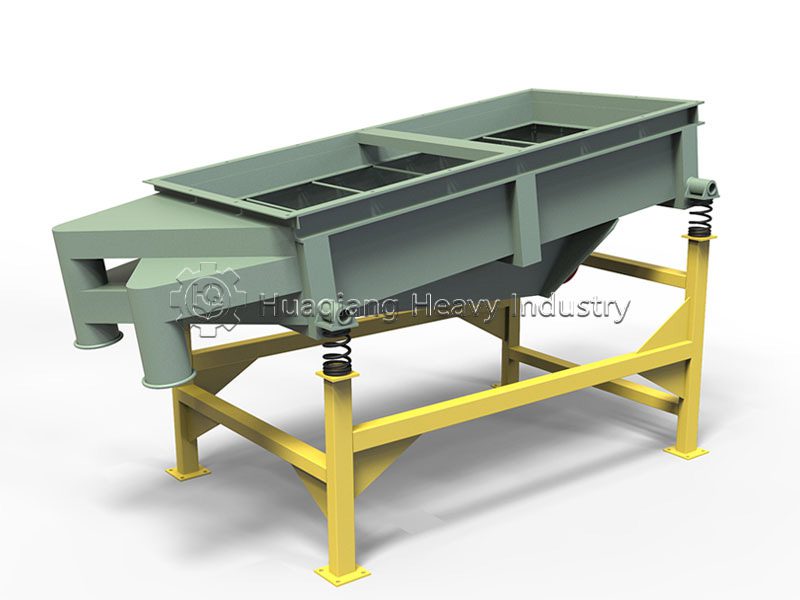
A typical screening and packaging line begins with the receipt of granulated or dried fertilizer. The material first enters a grading and screening machine via a closed conveyor system. For common granular fertilizers (such as compound fertilizers), a drum screen is typically used. Its multi-layered replaceable screens accurately separate qualified particles (e.g., 2-5 mm) and remove oversized pieces, fragments, and impurities. For powdered fertilizers, vibrating screens are more commonly used, effectively controlling dust while performing fine screening.
The screened qualified fertilizer is then conveyed to an automatic quantitative packaging scale. Modern packaging scales offer high precision, with an error controllable within ±0.2 kg. They support rapid packaging of various sizes from 10 kg to 50 kg, processing dozens to hundreds of bags per hour. Subsequent automatic sewing, labeling, and even palletizing can be integrated into the automated production line. Throughout the process, defective materials screened out can be returned to the previous process for reprocessing, significantly reducing waste.
The intelligent control system is the “brain” of this production line, monitoring the operational status of each stage in real time to ensure process stability and data traceability. Simultaneously, a highly efficient pulse dust removal system collects over 99% of dust, meeting stringent environmental protection requirements.

Wide Application Scenarios: Adaptable to Various Fertilizers and Production Scales
This production line is highly flexible and can handle a variety of fertilizer products.
Granular Fertilizers: Such as common NPK compound fertilizers, organic-inorganic compound fertilizers, granular potassium fertilizers, etc. Screening ensures uniform and aesthetically pleasing granules, enhancing market competitiveness.
Powder Fertilizers: Such as powdered organic fertilizers, water-soluble fertilizer raw materials, etc. The production line features a dust-proof design, ensuring accurate packaging while maintaining a clean production environment. Specialty Fertilizers: For coated products such as slow-release fertilizers, a gentle screening process can be used to avoid damaging the coating. For fertilizers that are easily hygroscopic, the processing speed can be accelerated and a dehumidifying environment can be provided.
In terms of capacity, the production line configuration can be flexibly scaled. Small production lines (1-5 tons per hour) are compact and require low investment, suitable for cooperatives or startups. Medium to large production lines (5-30 tons per hour and above) adopt dual-station or multi-station packaging and automatic palletizing designs to meet the needs of continuous large-scale production and are seamlessly connected to the upstream granulation and drying lines.

Core Value: Beyond Packaging itself
Investing in a professional screening and packaging line brings multiple benefits:
Ensuring Product Quality: Removing impurities and substandard particles delivers customers products with uniform specifications and high purity.
Enhancing Brand Image: Standard, neat, and clearly labeled packaging is a direct reflection of brand reputation and professionalism.
Meeting Distribution Requirements: Whether for long-distance transportation, export, or warehousing and stacking, standardized packaging reduces damage and loss, complying with logistics and trade regulations. Achieving Environmentally Friendly Production: Closed systems and efficient dust removal significantly control dust emissions, protecting the working environment and meeting increasingly stringent environmental regulations.
Key Considerations for Successful Selection: Choosing the right production line requires comprehensive consideration of the following:
Fertilizer Form: Rotary drum screens are preferred for granular fertilizers, while vibrating screens and powerful dust removal systems are necessary for powder fertilizers.
Capacity Requirements: Select a single-station or multi-station packaging system based on actual output, allowing for appropriate capacity margins.
Environmental Standards: The performance of the dust removal system is crucial, especially when handling powders.
End Markets: If there are export needs, consider labeling, coding, and palletizing equipment that meets international standards.
Conclusion: Screening and packaging are far more than simple “bagging” processes; they represent the final optimization link in the fertilizer production value chain. A well-designed and efficient screening and packaging production line is a solid guarantee for fertilizer manufacturers to ensure product consistency, enhance brand value, expand market reach, and achieve sustainable operations. For global fertilizer producers aiming to enhance competitiveness, strategic investment in this segment will yield significant returns in an increasingly standardized market.
The Complete Manufacturing Ecosystem
The screening and packaging line is the final, critical segment of a much larger integrated system. Its efficiency is directly dependent on the quality of the incoming product from upstream processes. For an npk fertilizer production line, the granules are typically created earlier in the npk fertilizer production process. This may involve a npk blending machine or a npk bulk blending machine for formulation, followed by granulation using equipment like a rotary drum, a disc granulator (often part of a disc granulation production line), or a double roller press granulator in a roller press granulator production line. These professional fertilizer manufacturing equipment units determine the granule’s initial size, shape, and strength before they are conveyed to the fertilizer packing machine.
Similarly, for an organic fertilizer production line or a bio organic fertilizer production line, the feedstock is first processed through a windrow composting machine (or windrow machine). The cured compost is then granulated, potentially using a disc granulator for shaping in an disc granulator machine setup, chosen for its gentle action. Regardless of the fertilizer type—produced by a dedicated npk fertilizer line or an organic line—the final packaging stage is what transforms bulk material into a standardized, market-ready commodity, closing the loop on the manufacturing value chain.
Therefore, investing in a high-performance screening and packaging system is not an isolated decision. It is the logical culmination of a well-designed production flow, ensuring that the value created by the core fertilizer granulator and other processing equipment is fully captured and delivered to the end user in optimal condition.