

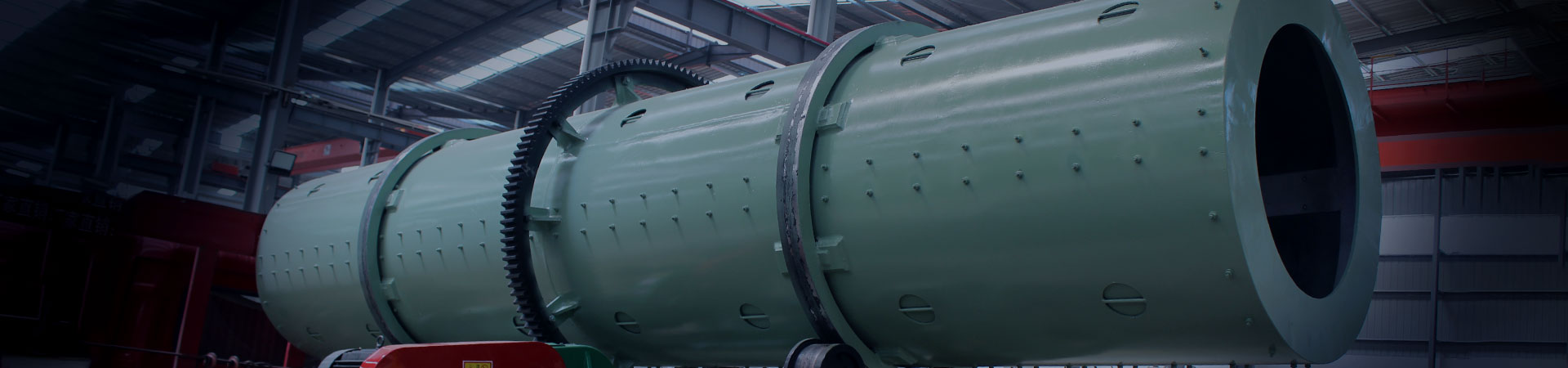
Fertilizer mixers process powdery, granular, and even sticky materials for extended periods, making minor malfunctions inevitable. The key is to quickly pinpoint the cause and resolve the problem, minimizing downtime. Huaqiang Heavy Industry mixers are designed for ease of use, allowing operators to resolve most malfunctions themselves without waiting for professional technicians. This article summarizes solutions and preventative measures for five common malfunctions to help you minimize downtime.
Uneven Mixing: Quick Troubleshooting of Non-Uniformity
Symptoms: Sampling and testing of the discharged material reveals significant nutrient deviations, or visually uneven material color.
Causes: The feed rate exceeds the equipment’s rated capacity (typically 70%-80%), leaving insufficient space for material agitation; excessive particle size differences in the raw materials cause centrifugal stratification; the mixing speed is mismatched with the material characteristics.
Quick Solution: Immediately stop the machine and check the current batch feed rate. If overloaded, process in batches. Check the raw material particle size; if excessively large particles are found, sieve or crush them and remix. Adjust the rotation speed according to the material – increase the speed appropriately for powdery materials and decrease the speed appropriately for granular materials to prevent breakage.
Preventive Measures: Strictly control raw material pretreatment to ensure similar particle sizes; control the feed rate for each batch to within 70% of the rated volume; regularly check the mixing uniformity and establish batch records.
Abnormal Equipment Noise: Quick Diagnosis of Abnormal Sounds
Fault Phenomenon: Metallic friction sounds, impact sounds, or irregular abnormal noises occur during operation.
Cause Analysis: Loose bolts fixing the agitator blades or impellers, causing friction with the cylinder; insufficient lubrication and wear of bearings; hard impurities such as stones and nails have entered the machine.
Quick Solution: Immediately stop the machine and open the cleaning door for inspection. Tighten any loose bolts one by one; check the bearing temperature; if overheated, add grease; clean hard impurities from inside the machine.
Preventive Measures: Check all fasteners before starting the machine; lubricate bearings weekly; install a grating or magnetic separator at the feed inlet to intercept debris.
III. Poor Discharge: Difficulty in Discharging Material – Quick Clearing
Symptom: After mixing, the discharge gate opens, but material discharges slowly or not smoothly.
Cause Analysis: The material is too viscous (e.g., high proportion of organic fertilizer), causing adhesion and blockage at the discharge port; the discharge gate sealing strip is aged and deformed, resulting in insufficient opening.
Quick Solution: After stopping the machine, use a wooden stick or plastic rod to clear the blockage from the discharge port upwards. Do not use an iron rod to avoid damaging the sealing surface; clean the material adhering to the discharge port; check if the discharge gate opens fully and adjust the limit switch.
Preventive Measures: When handling highly viscous materials, appropriately reduce the moisture content (control it below 20%); clean the accumulated material at the discharge port after each shift; regularly check the sealing strip and replace it promptly if it is aged.
Motor Overheating: Emergency Handling of High Temperatures
Symptom: The motor casing temperature rises abnormally (above 80℃), even emitting smoke and shutting down.
Causes: Excessive feed rate, prolonged overload operation of the equipment; blocked cooling fan or poor ventilation; unstable voltage.
Quick Solution: Immediately stop the machine and disconnect the power, allowing the motor to cool naturally. Clean the dust accumulated on the motor casing and cooling fan. After restarting, reduce the feed rate to 80% of the rated load and observe whether the ammeter is normal.
Preventive Measures: Strictly adhere to the rated capacity of the equipment for feeding, avoiding “underpowered operation”; maintain ventilation around the motor, and enhance heat dissipation in summer; install a current monitoring alarm device.
Material Adhesion: Techniques for Cleaning Residues Inside the Machine
Symptom: After mixing, a large amount of material adheres to the cylinder wall or blades, making it difficult to remove completely.
Causes: Excessive moisture content of the material; multiple batches of continuous operation without cleaning, resulting in the residue drying and accumulating thicker.
Quick Solution: After stopping the machine, open the cleaning door and use a scraper or plastic shovel to remove the adhered material. For severely hardened areas, gently tap the drum wall with a wooden mallet to loosen the clumps; do not strike them forcefully with hard objects, as this may cause deformation.
Preventive Measures: Control the moisture content of raw materials; shorten mixing time (no more than 5 minutes) when processing high-moisture materials; thoroughly clean the machine of any residue after each shift; for materials that easily stick, consider spraying an anti-stick coating onto the inner wall of the mixer.
General Maintenance Principles: Minimize Equipment Failures
Daily Inspection Checklist: Before starting the machine, check all fasteners, listen for any abnormal noises during operation, and observe whether the ammeter is normal; clean the machine of any residue after operation.
Weekly Maintenance Points: Lubricate all bearings; check the tension of the V-belts (a 10-15mm deflection at the midpoint is ideal); clean the motor cooling fan.
Monthly Inspection Items: Check the wear of the mixing blades; replace severely worn ones; check the sealing of the discharge gate, adjust or replace the sealing strip; check for loose wiring in the control cabinet.
Seasonal Special Maintenance: Check the motor’s moisture-proof seal before the rainy season; change the gearbox lubricating oil (according to viscosity requirements) before winter.
As a core piece of equipment in fertilizer production, a mixer’s malfunction is not the real problem; the real problem is not knowing how to repair it and waiting for rescue. Mastering quick solutions for five common malfunctions and establishing a standardized daily maintenance system will minimize downtime and ensure consistently high production efficiency. Huaqiang Heavy Industry not only provides stable mixing equipment but also offers operation training and lifetime technical support to every user, helping you use and maintain your equipment effectively.
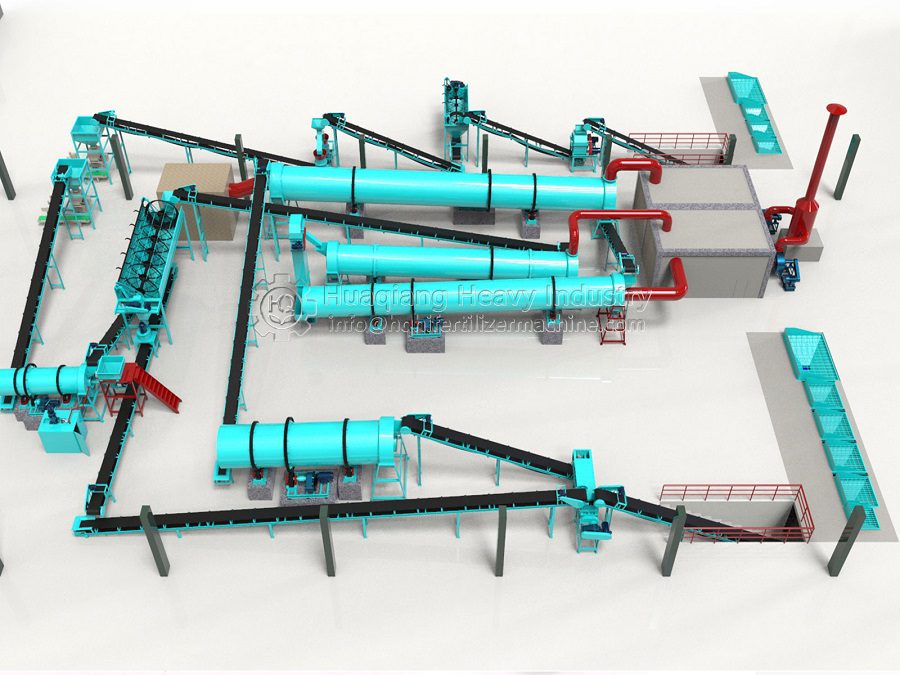
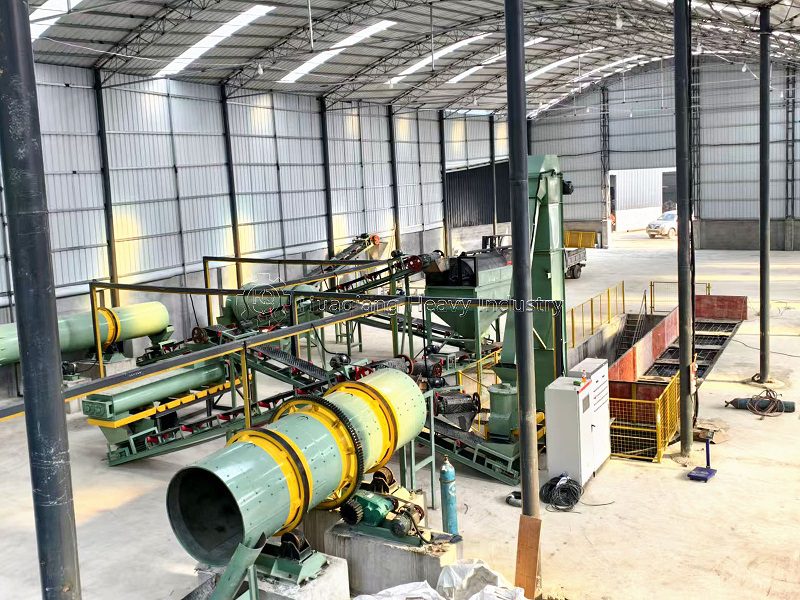
The principles of preventative maintenance apply across the entire fertilizer production line. For example, before material even reaches the mixer, the upstream composting process, managed by a double screws compost turning machine, requires regular checks on the turning mechanism and drive system to ensure consistent, efficient fermentation. In a complete npk fertilizer line, after precise batching with an npk blending machine and thorough mixing, the material is often processed by a fertilizer dryer machine. Here, routine cleaning of lifting flights and checking of seals are vital for thermal efficiency. A bucket elevator then lifts the material to a rotary drum screening machine, where worn screens must be replaced promptly to maintain product quality. Finally, the consistent, screened granules are fed into a fertilizer packing machine, which requires regular calibration of its weighing system and inspection of its sealing jaws. A proactive maintenance strategy, applied systematically from the initial composting stage to the final packaging, is the key to maximizing uptime, ensuring product quality, and protecting your investment in a sophisticated fertilizer manufacturing plant.