

Have you ever watched a potter’s wheel spin a lump of clay into a perfect, rounded vessel? Now imagine that same graceful motion, but instead of clay, it’s compost, manure, and crop residue—transformed into smooth, uniform organic fertilizer pellets. That’s the magic of the organic fertilizer disc granulator.
At first glance, it looks deceptively simple: a shallow, circular pan tilted at just the right angle, rotating slowly like a lazy merry go round. But step closer, and you’ll see the poetry in motion. As the disc turns, fine powder feeds in from above. A fine mist of water or binder kisses the particles, and suddenly—like snowflakes gathering into snowballs—tiny granules begin to form. They roll, tumble, and grow, layer by layer, until they reach the perfect size, then gracefully spill over the rim like ripe fruit falling from a tree.
But the disc granulator never works alone. Behind every perfect pellet stands a team of unsung heroes. It all starts with the windrow compost turner or fermentation equipment, which turns raw organic waste into stable, mature compost. Then comes the crusher, a rugged beast that tears through any remaining lumps and fibers, reducing everything to a fine, uniform powder. That powder feeds into the mixer, where it’s blended with binders, beneficial microbes, or additional nutrients—a recipe carefully calibrated for whatever crop will eventually receive these pellets.
Only then does the disc granulator take center stage. Its tilt angle and rotation speed are finely tuned, because granulation is an art as much as a science. Too fast, and particles fly apart; too slow, and they clump into misshapen blobs. Skilled operators adjust the disc’s angle—usually between 40 and 55 degrees—and the spray of liquid binder to achieve that signature “ball bearing” uniformity. The result? Rounds that roll smoothly, dry evenly, and spread perfectly across fields.
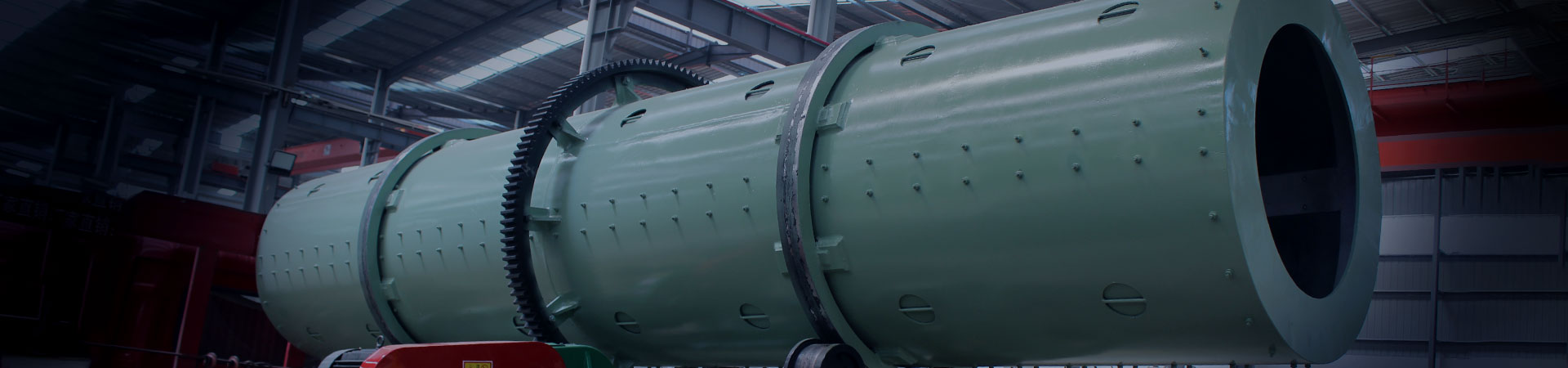
Once the granules tumble out, the relay continues. They pass through a dryer to lock in their shape and remove moisture, then a cooler to bring them back to ambient temperature. A rotary screener machine separates any undersized or oversized particles—the former get recycled back to the granulator for another try, the latter are crushed and returned. Finally, a coating machine adds a protective layer or beneficial microbes before the finished organic fertilizer flows into automatic packers, ready to enrich soil.
So why does all this matter? Because organic fertilizer isn’t just “waste made useful.” It’s a living, breathing amendment that feeds the soil food web. And the disc granulator, with its gentle tumbling action, preserves the delicate microbial life that chemical granulation processes often destroy. It creates pellets that are uniform enough for precision application, yet soft enough to break down naturally when planted in the earth.
Isn’t it remarkable how a spinning disc, a little water, and a team of supporting equipment can turn yesterday’s crop residue into tomorrow’s harvest? The disc granulator doesn’t just make fertilizer—it orchestrates a transformation, turning waste into something the soil eagerly welcomes.
Next time you see a bag of organic pellets, remember the quiet dancer that helped create it. And ask yourself: if a simple spinning disc can work such magic, what else might we learn to transform?