

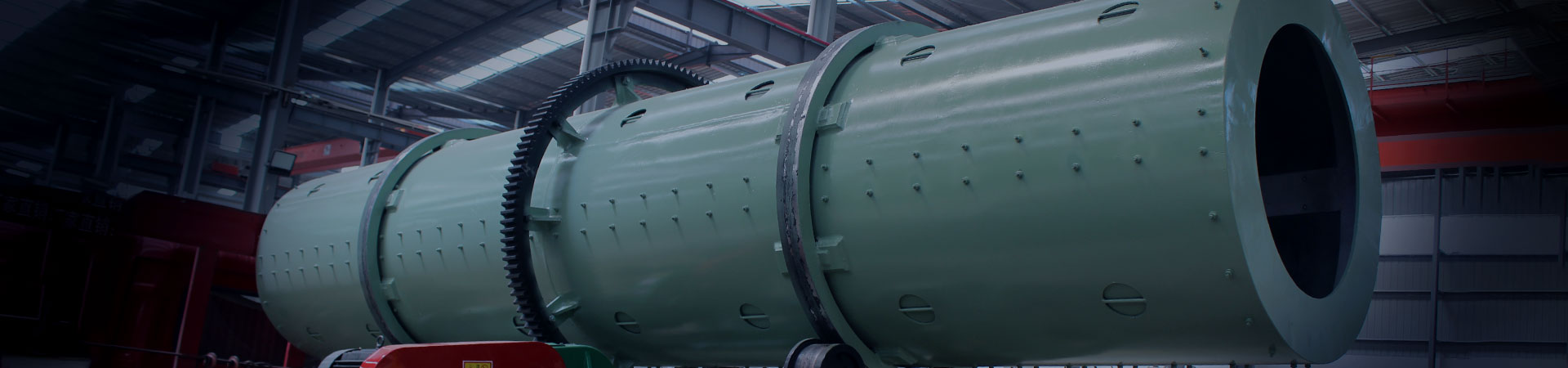
Chain crushers are classic main equipment in organic fertilizer production. They efficiently crush straw, branches, and hardened manure lumps through the impact and shearing action of a high-speed chain. Understanding its structural advantages and mastering correct maintenance techniques can extend the equipment’s lifespan by more than 30% while ensuring continuous production.
Structural Advantages and Applications
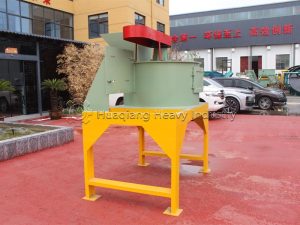
Chain crushers employ a simple yet robust design: the rotating shaft is equipped with a high-strength alloy steel chain. When the rotor rotates at high speed (chain tip speed can reach 28-78 m/s), the chain impacts the feed, crushing it. This design is particularly suitable for processing dry materials (moisture content ≤20%), such as straw powder, dry cakes, and hard lumps.
Key advantages include simple structure, low failure rate, ease of operation and maintenance, and an investment cost that is approximately 60% of similar equipment. It is an ideal choice for small-scale organic fertilizer production or multi-stage crushing systems.
Installation Points
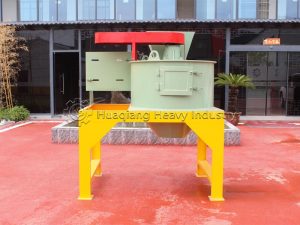
Proper installation begins with a stable foundation to absorb vibration. The equipment should be installed on a reinforced concrete base, with vibration dampers installed between the base and the foundation. Ensure the main shaft is level (deviation ≤0.1mm/m), and the concentricity of the coupling between the motor and the crusher is within 0.1mm.
III. Daily Operation Procedures
Pre-start Inspection (“Three Inspections”):
Chain tension: Mid-span deflection should be 10-15mm
Liner bolts: Torque 25-30 N·m
Magnetic separator: Remove collected metal debris
During operation:
Start in sequence: Blower → Crusher → Feeder
Maintain a stable feed rate (≤110% of rated capacity)
Monitor bearing temperature (≤60°C), motor current (fluctuation ≤10%), and discharge particle size
After shutdown:
Idle for 1-2 minutes to remove residual material
Clean the crushing chamber with compressed air
Record operating data
Preventive Maintenance
Daily: Clean the crushing chamber, check chain wear, and lubricate the chain pins with lithium-based grease.
Weekly: Check chain tension and sprocket wear; inspect liner bolts.
Monthly: Lubricate the main bearing (fill to 1/3 to 1/2 of the bearing cavity); check lubricant quality.
Quarterly: Replace the liners when they wear to 1/3 of their original thickness; inspect bearings and seals.

Tips for Extending Wear Part Life
Chains should be replaced in sets—replacing them as a set rather than individually—to maintain balance. For high-hardness materials, choose surface-hardened chains (surface hardness HRC 58-62). Consider welding carbide wear-resistant strips to the liners to create a “secondary crushing zone,” extending liner life by 60%.
By integrating these maintenance points into daily habits, the effective operating rate of chain crushers can exceed 90%, and the replacement cycle of wear parts can be extended by 30-50%, significantly reducing overall operating costs.
The robust and reliable chain crusher, with its simple maintenance, is the workhorse at the start of many fertilizer lines, efficiently reducing dry materials to a consistent particle size. This prepared material then flows into the heart of a typical npk fertilizer line. After granulation, the material enters a fertilizer dryer machine to reach the target moisture content. It then passes through a fertilizer cooler machine to prevent caking. Next, a rotary drum screening machine classifies the granules, ensuring product uniformity. Finally, the consistent granules are weighed and bagged by a fertilizer packing machine. The dependable performance of the initial chain crusher ensures the entire line operates smoothly.