
Ever watched a production line stop because materials couldn’t get from point A to point B—fast enough, clean enough, reliably enough? That bottleneck isn’t just annoying; it’s profit slipping through the cracks. Enter the bucket elevator: the unsung hero that lifts tons of material skyward without breaking a sweat—or your budget.
What Exactly Is It?
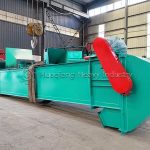
Imagine a continuous loop of heavy-duty buckets bolted onto a belt or chain. At the bottom, they scoop up powder, granules, or small lumps. At the top, they flip and fling everything into the next machine. Simple? Yes. Brilliant? Absolutely. Whether it’s lifting raw ingredients to a vertical disc mixer, hoisting granules to a vibration screener machine, or feeding a packing machine on a mezzanine, the bucket elevator is the vertical backbone of any fertilizer plant.
Why You Can’t Live Without One
- Vertical Victory
Floor space is money. Spreading equipment out horizontally eats up expensive real estate. Bucket elevators go straight up—lifting materials 10, 20, even 30 meters high while occupying barely a square meter of footprint. That frees your layout for what really matters: production. - Gentle Handling, No Degradation
Fragile granules? Prilled urea? Biological pellets that crumble if you look at them wrong? Bucket elevators treat them with kid gloves. Unlike pneumatic conveyors that blast particles through pipes at Mach speed, buckets simply carry them. No impact, no abrasion, no dust generation. What goes in as perfect granules comes out the same way. - Dust-Tight Design
Remember that dust problem we chased away with the dry granulator? Don’t let it creep back in through material transport. Modern bucket elevators feature gasketed housings, anti-dust seals, and controlled ventilation points. Connect them to your plant’s dust collection, and fugitive emissions drop to zero. Your workers’ lungs—and your compliance reports—will thank you. - Handles the Tough Stuff
Sticky fertilizer? Hygroscopic material that wants to cake? Bucket elevators laugh at it. With self-cleaning bucket designs (think rounded corners, smooth interiors) and optional anti-stick liners, material discharges cleanly every cycle. No buildup, no blockages, no midnight unclogging sessions. - Built for the Long Haul
Industrial environments eat weak equipment for breakfast. Bucket elevators are built tough: abrasion-resistant steel buckets, heavy-duty chains or belts, sealed bearings that keep out dust, and drives sized to handle surges. With proper maintenance, these machines run for decades—not years. - The Perfect Team Player
In a complete fertilizer line—from the dry granulator to the cooler to the screener to the coater—the bucket elevator connects them all. It takes what the granulator produces, lifts it to the screener on the next floor, delivers oversize back to the crusher, and sends fines to the recycle conveyor. It’s the circulatory system that keeps the whole plant alive.
Real-World Proof
In a recent upgrade at a 200,000-ton NPK plant, replacing old screw conveyors with high-capacity bucket elevators increased throughput by 30% and cut maintenance downtime by 80%. The plant manager’s verdict: “I didn’t realize how much we were losing until we went vertical.”
The Bottom Line
Choosing a bucket elevator isn’t just about moving material up. It’s about moving your operation forward—efficiently, gently, dust-free, and reliably. From raw intake to finished product, let the buckets do the heavy lifting.