

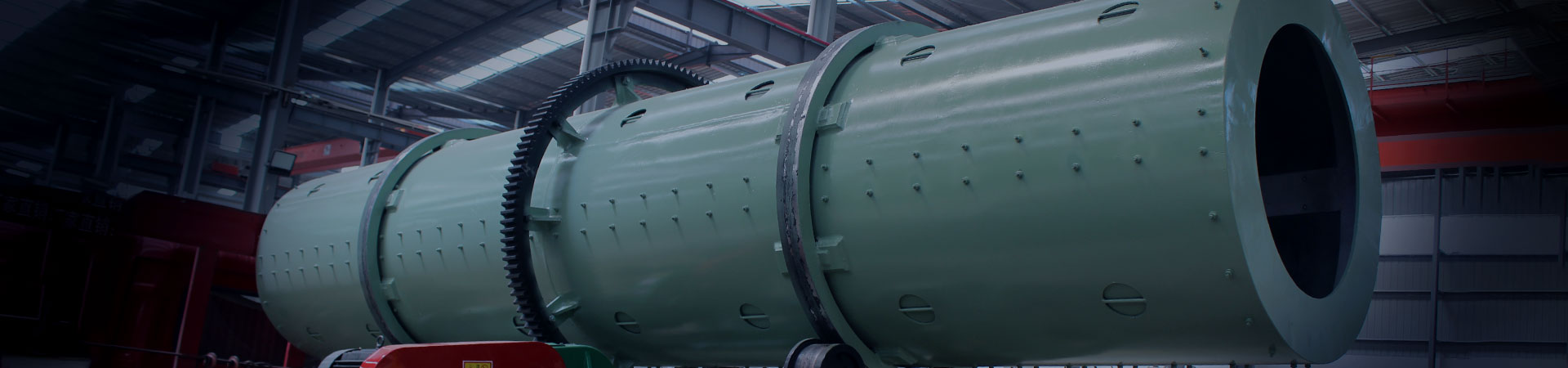
The livestock industry in Yuanqu County, Shanxi Province, is developing rapidly, and the disposal of cow manure has always been a prominent problem for local farmers. To achieve resource utilization of waste, a local enterprise planned and constructed an organic fertilizer processing project. In April 2025, the installation and commissioning of the entire 15-ton-per-hour cow manure organic fertilizer production line was completed and successfully put into operation. The project is designed with an annual production capacity of 40,000 tons, mainly processing granular commercial organic fertilizer to serve the surrounding forestry, fruit, and medicinal herb planting industries.
This production line features a targeted process design for the high moisture and fiber content of cow manure. At the raw material end, a solid-liquid separation device is used to dehydrate the fresh cow manure, reducing the moisture content to 55-62%, before conveying it to a semi-wet material crusher for crushing. The fineness of the crushed material is controlled to ≤6mm. A twin-shaft continuous mixer is used to mix and batch the cow manure, straw, and microbial agents, adjusting the appropriate carbon-to-nitrogen ratio before feeding it into the fermentation tank.
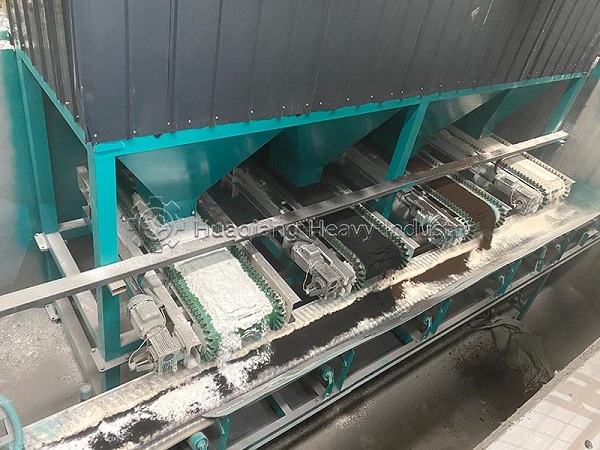
The fermentation system employs a trough-type turning and turning device with an effective turning depth of 1.3 meters. It is equipped with a waste gas collection and deodorization device. Under a closed fermentation environment, the material undergoes 13-16 days of high-temperature aerobic composting, eliminating weed seeds and pathogenic microorganisms. The finished product meets national organic fertilizer industry standards. The composted material enters the post-processing section, undergoing drum granulation, drying and cooling, and grading and screening to produce uniform 2-4mm organic fertilizer granules. Finally, automatic packaging equipment completes the bagging of 25-50kg finished products. The entire system uses centralized electrical control, enabling continuous production.
During the project implementation phase, the technical team conducted on-site surveys of the plant conditions, optimized equipment layout, completed equipment installation and connection, and conducted trial production with materials. Simultaneously, practical training was provided to plant operators on daily equipment inspection, replacement of vulnerable parts, and process adjustments. After the project is put into operation, actual production can reach the designed capacity of 15 tons per hour.
This project transforms livestock manure into a valuable resource, consuming large quantities of local livestock waste. The resulting organic fertilizer is used to improve the soil in orchards and for planting medicinal herbs, creating a virtuous cycle of livestock farming, organic fertilizer production, and crop cultivation. The client stated that the entire production line is adapted to local raw material conditions, operates stably, and can be expanded to produce organic-inorganic compound fertilizers in the future based on market demand.