

We are a professional manufacturer of organic fertilizer equipment and a customized service provider for fertilizer production lines
-
NO.313, Wanshan Road, Xingyang City, Zhengzhou City, Henan Province, China
Company Address
-
Call Us: +86-18703630069
(Sat - Thursday)
-
inquiry@hqhifertilizermachine.com
Our Email
Single Silo Single Weigh Type

Equipment Introduction
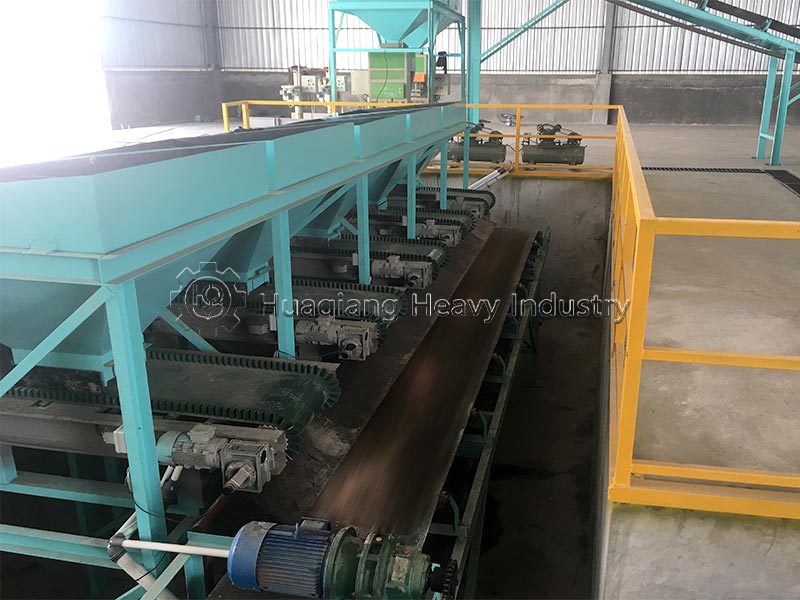
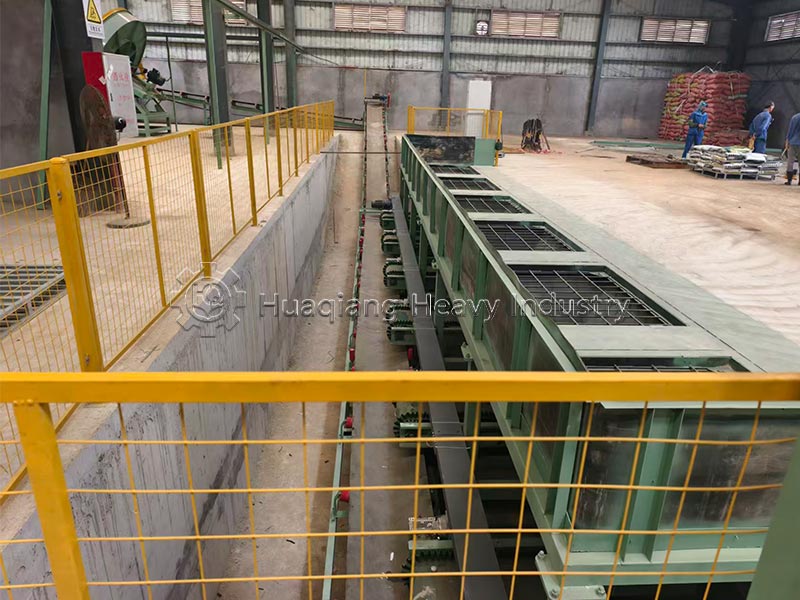
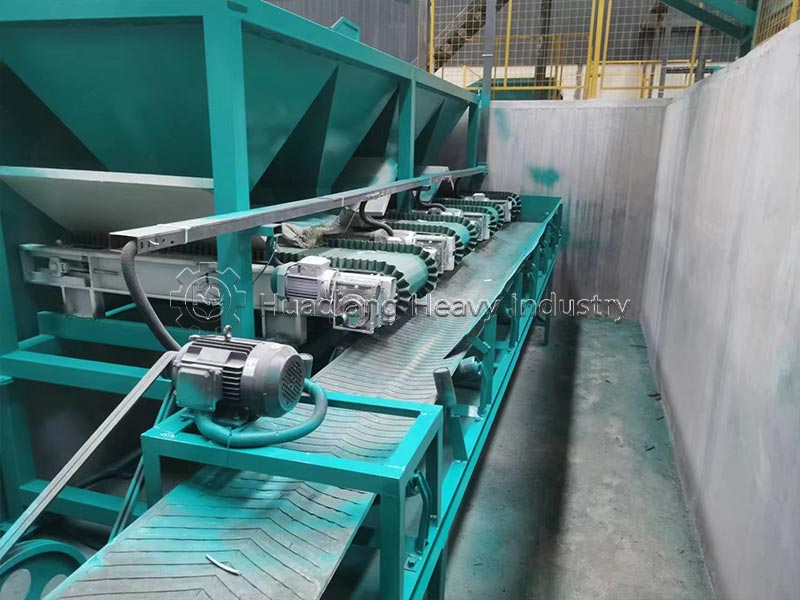
The single-silo single-weighing batching system, also known as a single-silo single-scale batching machine, is a core automatic metering and batching equipment in fertilizer production lines. It adopts a modular design with one independent weighing unit per raw material silo. It comes in two main models: dynamic belt conveyor type and static hopper type. Unlike multi-silo batching equipment that shares a single scale, each fertilizer raw material has its own independent storage, feeding, and weighing unit, ensuring no interference and resulting in higher batching accuracy and faster formula changes.
(I) Core Industry Advantages
- High Metering Accuracy: Each bin weighs independently, eliminating interference from cross-weighing of materials. Static weighing error ≤ ±0.2%, dynamic belt conveyor error ≤ ±1%, ensuring stable and compliant fertilizer nutrient content.
- Zero Cross-Contamination During Material Changes: Each bin is completely independent; switching formulas for organic fertilizer, compound fertilizer, and BB fertilizer requires not emptying the entire weighing hopper.
- Adaptable to Both Dry and Wet Materials: Powders are fed by screw feeders, granules by belt/vibration feeders. Bins are equipped with vibration-damping systems to prevent moisture absorption and bridging.
- Modular and Expandable: Bins can be freely combined from 2 to 12, with 2 to 4 bins for small plants and 6 to 12 bins for large compound fertilizer bases.
- Complete Automated Closed-Loop System: PLC independently controls the start/stop and feeding speed of each bin, automatically recording batch batch data and allowing integration with factory digital systems.
- Convenient Maintenance: A single bin failure does not affect production in other bins; maintenance can be performed independently without interrupting the entire production line. (II) Model Differentiation
- Static hopper type single bin single scale: suitable for small batches, high-precision compound fertilizers and water-soluble fertilizers, intermittent batch weighing;
- Dynamic belt type single bin single scale: suitable for continuous large-scale production of organic fertilizers, continuous and uninterrupted batching.
Equipment Structure
The core structure of a single-silo single-weighing system consists of four main components:
- Storage Silo: Used to temporarily store a single raw material to be batched. Each silo is independently designed and corresponds to only one type of raw material, physically eliminating the risk of mixing. The silo body is usually made of stainless steel with an anti-corrosion treatment.
- Weighing Module: Each silo is equipped with an independent weighing module, typically using high-precision strain gauge sensors. The system uses a “one silo, one weigher” configuration, with each weighing module operating independently without interference.
- Feeding Device: Responsible for conveying materials from the silo to the weighing equipment. Different types of feeders can be flexibly configured according to different material characteristics:
1)Screw feeder: Suitable for free-flowing granular materials
2)Vibrating feeder with stirring function: Suitable for easily agglomerated powdery materials
3)Belt feeder: Suitable for high-flow continuous batching
- Control System: The “brain” of the system, usually based on a PLC or microcomputer. It is responsible for analyzing sensor data and outputting control commands to achieve fully automated operation. The system can store hundreds of recipe parameters and has functions such as fault self-diagnosis, audible and visual alarms, and data logging.
Working Principle
The entire system operates under two logics: static batch batching and dynamic continuous batching. Both follow an independent metering logic with one weigher per hopper:
(I) Static Hopper Type (Compound Fertilizer/Water-soluble Fertilizer)
- The PLC retrieves the target formula and sequentially starts the vibration breaking and coarse feeding mechanisms of the corresponding raw material hoppers;
- Material falls into the dedicated weighing hopper of this hopper, coarsely feeding until 90% of the target weight is reached, then switching to fine screw/fine vibration micro-feeding;
- The weighing sensor provides real-time weight feedback, compensating for the inertia of the falling material in advance. Once the set ratio is reached, the feeding in this hopper stops;
- After all raw materials are weighed individually, the discharge doors of each weighing hopper are opened uniformly, and the material is collected and sent to the mixer for the next batch cycle. (II) Dynamic Belt Belt Type (Large-Scale Organic Fertilizer Production)
- Each silo’s belt scale monitors the instantaneous flow rate in real time; the PLC compares the flow rate with the formula settings and automatically adjusts the motor frequency converter.
- If the flow rate is too high, the speed is automatically reduced; if the flow rate is too low, the speed is increased, continuously and dynamically correcting the flow.
- Materials from each silo synchronously fall onto the bottom collection belt and are continuously fed into the mixer, achieving 24-hour uninterrupted batching.
Applicable Raw Materials:
- Powdered Raw Materials: Humic acid powder, chicken manure organic fertilizer powder, urea powder, monoammonium phosphate, potassium fertilizer powder, microbial inoculum powder, bentonite coating powder;
- Granular Raw Materials: Urea granules, NPK compound fertilizer, BB fertilizer granules, fermented and decomposed organic granules, oilseed cake fragments;
- Prohibited Materials: Moisture content > 15%, highly sticky slurry, ultra-long wound fibers, large hard lumps > 15mm (easily clog the feeding mechanism).
Production capacity range
| Model Silo Quantity | Single Silo Volume (m³) | Total Batching Capacity (t/h) | Single‑Silo Weighing Range |
|---|---|---|---|
| 2 silos | 0.8~1.2 | 3~6 | 0~1000kg |
| 4 silos | 1.2~1.6 | 6~15 | 0~1500kg |
| 6 silos & above | 1.6~2.4 | 15~40 | 0~3000kg |
Matching accuracy: Static ≤ ±0.2%, dynamic belt conveyor ≤ ±1%, the number of silos can be increased or decreased as needed.
Equipment Applications in Fertilizer Production Lines
(I) Complete Fertilizer Process Chain
Raw Material Yard Bucket Elevator → Single Silo Single-Weighing Batching System → Horizontal Mixer → Granulator / Direct Packaging (BB Fertilizer) → Drying / Cooling / Screening → Finished Product Packaging
(II) Core Value of the Equipment
- Extremely High Formula Stability: Each raw material is independently metered, preventing material blockage or weighing drift from affecting the proportions of other raw materials, ensuring stable nitrogen, phosphorus, and potassium levels in the fertilizer;
- Flexible Multi-Category Production: Switching between organic fertilizer, compound fertilizer, and water-soluble fertilizer does not require emptying the entire weighing system; only the PLC formula needs to be changed for production to begin;
- Fault Isolation: Blockage or sensor failure in a single silo only shuts down that silo, while production of other raw materials can continue, significantly reducing downtime losses;
- Closed-Loop Dust Recovery: Independent dust removal at each discharge port ensures zero powder leakage, meeting environmental protection standards;
- Can be equipped with an automated feeding bucket elevator to achieve fully automated, unmanned operation from raw material warehousing to batching.
Standard Operation and Full-Cycle Maintenance
(I) Standard Start-up and Shutdown Procedures
Start-up
- Check that there is no fertilizer buildup in the vibration motors, feeding mechanisms, and weighing sensors of each bin, and that the dust removal fan is functioning normally;
- Start the entire system under no-load conditions, and perform independent zero-point calibration of each weighing unit on the touchscreen;
- Retrieve the corresponding fertilizer formula, conduct a no-load test run of a whole batch, and formally feed the fertilizer after confirming that the accuracy meets the standards.
Shutdown
- First, stop the front-end feeding elevator, and wait until all materials in each bin and weighing unit are emptied;
- Sequentially shut down the feeding, vibration, dust removal, and collection conveyor equipment;
- Clean the surface of each bin’s weighing hopper and belt to remove any residual fertilizer, preventing clumping and corrosion of the sensors.
(II) Graded Maintenance Standards
- Daily Inspection: Zero-point calibration of each bin’s weighing system, cleaning of clumps at the discharge port, and checking for misalignment of the vibrating motor and belts;
- Weekly Maintenance: Lubrication of the screw/belt drive bearings, and cleaning of the dust collector filter bags;
- Quarterly Maintenance: Replacement of the reducer gear oil, and inspection of the load cell wiring and damping pads for aging;
- Annual Overhaul: Disassembly and thorough cleaning of the feeding mechanisms and weighing units of each bin, and calibration of the entire metering system’s accuracy.
(III) List of Vulnerable Parts
Weighing sensors, screw blades, belts, vibrating motors, dust collector filter bags, cylinder seals, and drive V-belts.
Common Faults, Causes, and Standardized Solutions
| Fault Phenomenon | Root Cause | Professional Solution |
|---|---|---|
| Excessive batching error of single silo | Material accumulation on silo weighing unit, aging shock‑absorbing pad, excessive fine feeding speed | Clean the independent weighing unit, replace shock‑absorbing pad, reduce fine feeding speed, perform independent zero‑point calibration |
| No discharging from single silo, material bridging | Damaged vibration flow‑aid motor, fertilizer caking due to moisture absorption | Repair vibration motor, control workshop humidity, install auxiliary stirring rod inside silo |
| Flow fluctuation of multiple silos simultaneously | Deviation of bottom collecting belt, workshop vibration transmitted to weighing unit | Correct belt position, install thickened shock‑absorbing pads for each weighing unit |
| Loss of sensor signal | Junction box damp, loose signal cable, sensor burnout from overload | Dry junction box, fasten wiring connections, replace damaged weighing module |
| Severe dust overflow during discharging | Blocked dust‑suction opening of single silo, damaged flexible sealing connection | Clean filter bag, replace silo opening sealing parts |
| Feeding motor overload tripping | Large caked material jams screw / belt conveyor | Stop machine and empty silo materials, install impurity‑removing sieve at front‑end |
Target Customers:
- Large-scale production plants of organic fertilizer, compound fertilizer, BB blended fertilizer, and water-soluble fertilizer;
- Large-scale livestock and poultry breeding groups with their own manure-to-fertilizer processing workshops;
- Agricultural input repackaging companies and bio-fertilizer processing plants that frequently switch between multiple formulas;
- Large-scale fertilizer industrial parks with an annual output of over 100,000 tons requiring continuous and stable feed mixing;
- Fertilizer complete equipment integrators and automated production line supporting service providers;
- Overseas compound fertilizer and organic fertilizer processing plants’ foreign trade procurement customers.
Comprehensive Technical Features of the Equipment:
- Independent weighing in each bin, eliminating cross-weighing interference and achieving industry-leading precision in fertilizer nutrient ratio proportions;
- Modular and freely expandable, with 2-12 bins that can be assembled as needed, suitable for small plants and large-scale bases;
- Fault isolation design, ensuring continuous production of the entire batching line is unaffected by a single bin failure, minimizing downtime losses;
- Full coverage of both dry and wet materials, with screw feed for powders and vibratory/belt feed for granules, and a built-in arch-breaking system to prevent organic fertilizer bridging;
- Convenient material changes with no cross-contamination, as each bin is completely independent, allowing for fertilizer formula changes without emptying the entire equipment;
- Automated and digitalized, with independent bin control, complete functions including formula storage, batching records, and out-of-tolerance alarms;
- Environmentally friendly, sealed dust removal system, with independent dust extraction ports for each bin, preventing dust leakage during powder fertilizer production.