

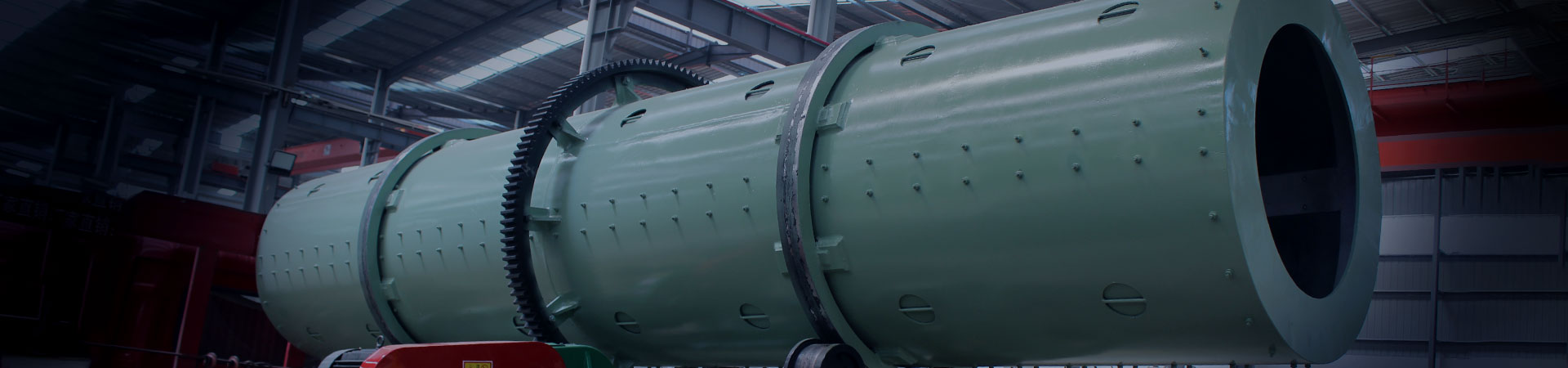
In today’s global push for sustainable development, organic fertilizer production has become a focus in the agricultural sector. Have you ever wondered how those uniformly sized, perfectly shaped fertilizer granules come into being? The answer lies in the ingenious design of modern fertilizer equipment—the organic fertilizer disc granulator is a key driver in this efficient production revolution.
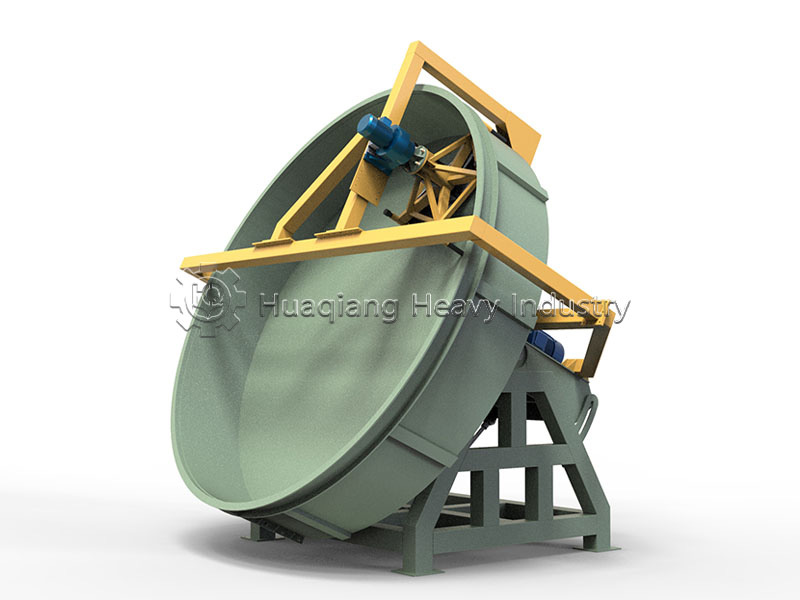
The disc granulator, with its unique tilted rotating disc as the core, magically transforms powdered raw materials into spherical granules. During operation, raw materials are fed into the disc, and under the action of centrifugal force and gravity, they continuously roll and adhere, gradually growing into granules. This process is not only efficient and fast but also allows precise control over granule diameter and density by adjusting the disc angle and rotation speed, ensuring every fertilizer pellet meets standards. Like a gardener carefully nurturing flowers, the disc granulator uses mechanical precision to give fertilizer a life-like form.
However, the excellent performance of the disc granulator relies on the seamless cooperation of the entire fertilizer production line. Imagine a complete production system: first, the cage crusher acts like a warrior, breaking raw materials into fine powder, paving the way for subsequent processes; next, the horizontal mixer plays the role of a harmonizer, evenly blending various components to ensure nutrient balance; then, the dryer uses gentle hot air to remove moisture, making the granules sturdy and durable; the cooler works quietly to prevent clumping due to residual heat; the rotary screener machine acts as a strict quality inspector, separating granules of qualified size; finally, the packaging machine efficiently seals the finished products, ready for market. These devices each perform their duties, forming a smooth automated chain that significantly improves production efficiency.
The disc granulator stands out due to its simple design and low energy consumption. It is particularly suitable for processing organic materials, such as livestock manure and crop straw, maximizing nutrient activity retention during granulation, promoting soil microbial reproduction, and thereby enhancing fertilizer effectiveness. For small and medium-sized fertilizer plants, this is undoubtedly an economical and practical choice.
From an international perspective, this technology is driving global agriculture toward environmental protection. The use of organic fertilizers reduces reliance on chemical fertilizers, lowering risks of soil pollution and water eutrophication, echoing the United Nations Sustainable Development Goals. Whether on large farms in Europe and America or small-scale fields in Asia and Africa, disc granulators and their supporting equipment are quietly contributing to the green revolution.
Looking ahead, with the development of smart and IoT technologies, fertilizer equipment will become more intelligent, enabling remote monitoring and optimized control. Disc granulators may also incorporate more eco-friendly materials to further reduce carbon footprints.
In summary, organic fertilizer disc granulators and their collaborative equipment are not just production tools but cornerstones of sustainable agriculture. They silently shape efficient and environmentally friendly agricultural production models through innovation and efficiency.