

In the grand narrative of ensuring global food security, fertilizer technology and its production systems play a crucial role. From early simple composting to today’s highly intelligent production, technological evolution in this field has profoundly impacted agricultural productivity and is closely related to environmental protection and sustainable development.
Breakthroughs in Intelligent Fertilizer Technology
The core of modern fertilizer technology lies in “precision” and “efficiency.” Breakthrough advancements in intelligent fertilizer technology are fundamentally changing traditional fertilization methods. Slow-release and controlled-release fertilizers, as representative innovations, achieve on-demand nutrient release through special coating technologies. An Israeli agricultural technology company has developed an intelligent nitrogen fertilizer using a three-layer polymer coating that automatically adjusts the nitrogen release rate based on soil temperature and humidity, increasing nitrogen utilization from the traditional 30-40% to over 70%, while reducing nitrogen volatilization loss by up to 50%.
Precision fertilization equipment combined with digital technology enables truly personalized fertilization solutions. A variable-rate fertilization system developed by Wageningen University in the Netherlands uses drones to remotely sense crop growth data and combines this with real-time soil sensor monitoring of nutrient status to automatically adjust the amount of fertilizer applied by the applicator. In sugar beet cultivation trials, this system reduced fertilizer use by 25% while increasing yield by 12%, truly achieving reduced-feed, increased-efficiency results.
The deep application of digital technology has brought a new dimension to fertilizer management. Large farms in California, USA, use an IoT-based intelligent decision-making system that integrates meteorological data, soil monitoring information, and crop growth models to develop precise fertilization plans for each field. This system reduces the farm’s annual fertilizer costs by 18% while reducing nutrient loss by 35%.
The Industrial Revolution in Modern Production Systems: Fertilizer production systems have undergone a transformation from extensive to intensive industrialization. Chemical synthesis systems remain the mainstream technology for nitrogen fertilizer production. The Haber-Bosch process, after a century of development, has made significant progress in energy efficiency and environmental protection. A large nitrogen fertilizer company in China has adopted a new synthesis tower design that, by optimizing catalysts and reaction conditions, has reduced energy consumption per unit product by 15% and carbon dioxide emissions by 20%.
Mineral-based fertilizer production technology continues to innovate. Moroccan phosphate fertilizer producers have developed a new wet-process phosphoric acid production method, employing energy-efficient reactors and high-efficiency filtration systems to increase phosphorus recovery from the traditional 92% to 96%. Simultaneously, waste heat recovery devices utilize waste heat from the production process for raw material preheating, saving over $2 million in energy costs annually.
Automation upgrades in mechanical production processes have significantly improved efficiency and quality. A German-made fertilizer production line achieves fully automated control throughout the entire process, from raw material batching to finished product packaging, all managed by a central control system. The system’s intelligent batching unit can simultaneously process eight raw materials with a metering accuracy of 0.1%, ensuring the precision of the product formulation. The granulation process uses an adaptive control system that automatically adjusts process parameters based on real-time monitoring of granule quality, maintaining a product qualification rate of over 99%.
High-tech Production of Bio-fertilizers
Bio-fertilizer technology represents the green direction of fertilizer production. In the field of microbial preparation production, technological innovation is advancing rapidly. A Brazilian biotechnology company has developed a highly efficient nitrogen-fixing bacteria cultivation system. Utilizing a constant-temperature, constant-pressure fermenter and precise nutrient supply technology, this system triples the activity of the microbial agent and extends its shelf life to 18 months. Application in soybean cultivation shows that this agent can replace 30% of chemical nitrogen fertilizer without affecting yield.
Carrier technology is another key aspect of biofertilizer production. Indian researchers have developed a nanoporous carrier material using a composite technology of natural minerals and organic polymers to provide an ideal living environment for microorganisms. Field trials show that rhizobium inoculants produced using this carrier increase nitrogen fixation efficiency in chickpeas by 40% and yield by 25%.
Innovation in production processes continues to drive industry development. A Japanese company has developed a low-temperature vacuum drying technology that can remove moisture from microbial preparations at temperatures below 35°C, achieving a bacterial survival rate of over 95%, far exceeding the 70% survival rate of traditional drying methods. South Korea has adopted microencapsulation technology, encapsulating probiotics in biodegradable materials for slow release into the soil, extending the effective period to 3 months.
System Integration and Circular Economy
Modern fertilizer production is developing towards system integration and recycling. Denmark’s “farm-factory” circular system uses anaerobic fermentation to produce biogas from livestock manure, processes the biogas residue into organic fertilizer, and uses the biogas slurry for hydroponic nutrient solutions, achieving full utilization of waste. This system processes 100,000 tons of livestock manure annually, producing 20,000 tons of organic fertilizer and generating 5 million kilowatt-hours of electricity simultaneously.
In an eco-industrial park established in Shandong, China, fertilizer plants, chemical plants, and power plants form a material recycling chain. Waste heat from the fertilizer plant is used for boiler preheating in the power plant, fly ash from the power plant is used as a silicon source for fertilizer production, and sulfuric acid byproducts from the chemical plant are used for phosphate fertilizer production. This symbiotic industrial model reduces overall energy consumption in the park by 20% and waste emissions by 35%.
Future Prospects and Technological Challenges
Fertilizer technology development faces new opportunities and challenges. New nano-fertilizer technology is being transferred from the laboratory to the field. Nanoscale nutrient carriers can precisely target crop roots, achieving nutrient utilization rates of up to 90%. Biosynthesis technology uses genetic engineering to modify microorganisms, enabling them to produce specific forms of nutrient compounds. Digital twin technology provides full life-cycle simulation and optimization for fertilizer production and use.
However, the widespread adoption of these technologies still faces many challenges. The high cost of smart fertilizers limits their large-scale application in developing countries, the quality stability of microbial fertilizers needs further improvement, and their adaptability to different soil and climatic conditions requires further research. In the future, it is necessary to strengthen international cooperation, promote technological innovation and transfer, so that advanced fertilizer technologies can benefit global agricultural production.
From traditional manufacturing to smart manufacturing, from linear production to a circular economy, fertilizer technology and production systems are undergoing profound changes. This transformation is not only improving agricultural production efficiency but also reshaping the relationship between humanity and nature, paving new paths for sustainable agricultural development.
Diverse Pathways for Modern Fertilizer Production
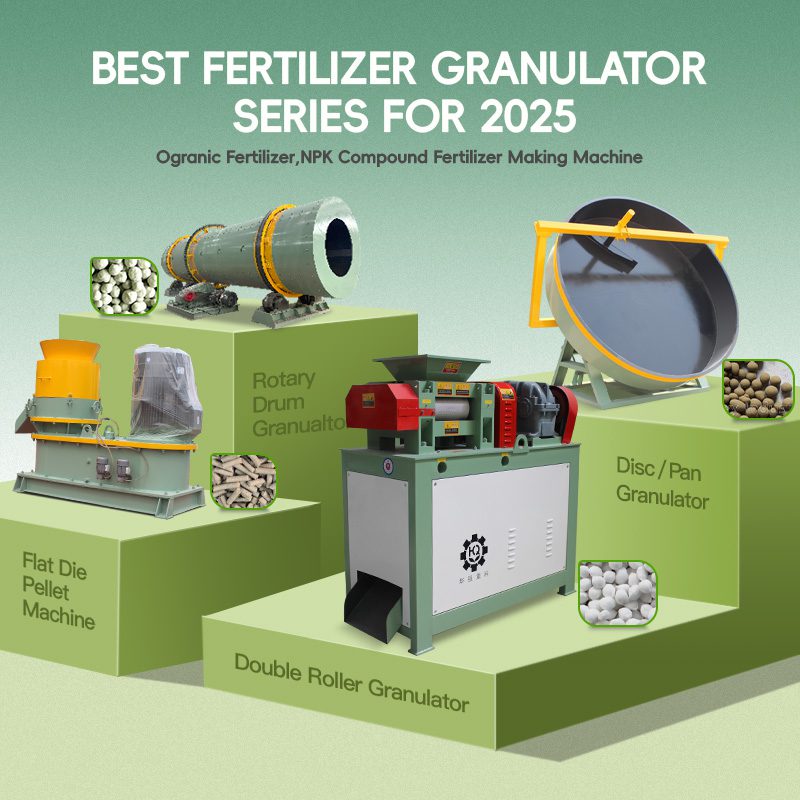
This evolution towards efficiency and circularity is realized through distinct, technology-driven production lines. For mineral-based fertilizers, a modern npk fertilizer production line is central. It begins with precise formulation using an npk blending machine and proceeds to granulation via equipment like a disc granulator (core to a disc granulation production line) or a double roller press granulator for dry compaction. In contrast, a bio organic fertilizer production line starts with organic waste, where a windrow composting machine is often key for large-scale aerobic decomposition. Following curing, the compost is shaped using granulation equipment similar to that in NPK lines. Both pathways rely on a comprehensive suite of fertilizer raw material processing machinery and equipment—including crushers, mixers, and dryers—to transform base materials into consistent, market-ready products, whether for conventional agriculture or organic systems.