


In the precise industrial process of NPK compound fertilizer production, the intelligent batching system plays a decisive core role. This system is not merely a collection of mechanical equipment, but a “most powerful brain” that integrates the principle of mass conservation, automatic control theory, and modern information technology. It ensures that every granule of fertilizer precisely delivers the nutrient content promised on the label, laying a solid technical foundation for precision agriculture.
System Architecture: From Theory to Engineering Implementation
Theoretical Basis and Engineering Transformation
The theoretical basis of the intelligent batching system is rooted in the law of mass conservation and automatic control theory. In engineering practice, this means that the system must ensure that the error between the input quality of each raw material in the formula and the set value approaches zero, and can monitor and adjust this process in real time.
Modern intelligent batching systems adopt a distributed architecture, usually consisting of five key components:
Raw Material Storage Unit: 8-12 independent silos, storing raw materials such as urea, monoammonium phosphate, potassium chloride, and fillers.
Precise Metering Unit: High-precision loss-in-weight feeders or electronic belt scales, with a resolution of up to 0.1% FS.
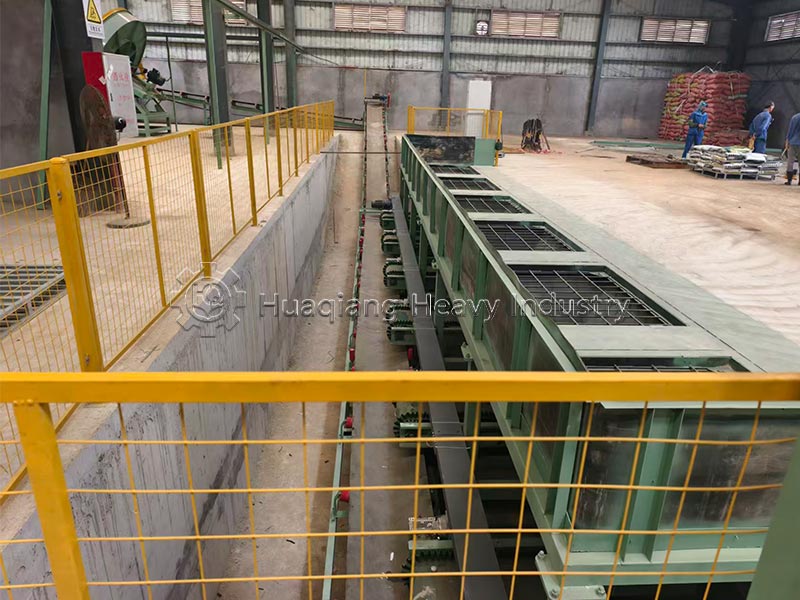
Material Conveying Unit: Sealed screw conveyors or belt conveyors to prevent cross-contamination and dust spillage.
Central Control Unit: Industrial-grade PLC and DCS system integration, running dedicated batching algorithms.
Quality Monitoring Unit: Online near-infrared analyzer (NIR) or XRF elemental analyzer to verify the composition of the mixture in real time.
Core Technological Breakthrough: Loss-in-Weight Metering
Traditional volumetric or batch metering methods can no longer meet modern production needs, and loss-in-weight feeding systems have become the industry standard. This system precisely controls the discharge rate by continuously monitoring the rate of change in silo weight, rather than simply measuring the throughput.
Taking potassium chloride batching as an example: the system first dispenses most of the material at a higher speed (e.g., 200 kg/min), and automatically switches to a low-speed fine-tuning mode (e.g., 20 kg/min) when approaching the target value. Finally, it stops completely when 99.5% of the set value is reached. This process is automatically adjusted by a PID control algorithm, controlling the dynamic metering error within ±0.3%. Precision Control: From Theoretical Error to Practical Impact
The Practical Significance of Precision Standards
“Controlling ingredient errors within ±0.5%” is not only a technical indicator but also has practical significance in agriculture. Taking a 100,000-ton per year 17-17-17 compound fertilizer production line as an example:
Theoretical calculation: Each batch produces 30 tons, with target values of 5.1 tons each for nitrogen, phosphorus, and potassium.
Allowable error: ±0.5% means the actual input amount of each nutrient can fluctuate between 5.0745 and 5.1255 tons.
Nutrient balance impact: Even if the error of a single nutrient reaches the upper limit, the deviation in the N:P₂O₅:K₂O ratio is only 1:1.01:1 or 1:0.99:1, far below the threshold perceptible by crops.
Multiple Mechanisms for Precision Assurance
Ensuring this level of precision requires multiple technical safeguards:
Sensor redundancy design: Key metering points use dual sensor backup, automatic calibration, and fault switching.
Environmental compensation algorithm: The system automatically compensates for the effects of temperature, humidity, and vibration on the sensors.
Material characteristics database: Preset control parameters for the fluidity and hygroscopicity of different raw materials.
Real-time feedback correction: Downstream online analyzer data is fed back to the batching system in real time, forming a closed-loop control.
Intelligent Evolution: From Automation to Intelligence
Data-Driven Optimization and Learning
Modern intelligent batching systems have gone beyond simple automatic execution and entered the data-driven optimization stage. The system analyzes historical production data through machine learning algorithms to automatically identify and optimize batching parameters for various formulas.
For example, a company’s system, through analyzing 365 days of production data, found that:
When ambient humidity >75%, urea fluidity decreases by 12%, requiring adjustment of feeding parameters in advance.
When producing the 15-15-15 formula, pre-mixing monoammonium phosphate with fillers can improve mixing uniformity by 5%.
After 8 hours of continuous production, the sensor exhibits a 0.1% drift, which the system automatically compensates for.

Predictive Maintenance and Quality Control
The system integrates predictive maintenance functions, providing early warning of potential failures by monitoring motor current, bearing vibration, and metering deviation trends. A case study from a factory shows that the system successfully predicted a screw conveyor bearing failure, preventing the spoilage of an entire batch of raw materials due to sudden equipment shutdown, saving approximately 150,000 RMB in costs.
In terms of quality control, the system is linked in real-time with downstream processes. When the online analyzer detects that the mixing uniformity is below standard, the batching system automatically adjusts the feeding sequence and speed, instead of simply shutting down, ensuring production continuity and quality stability.
Practical Application Case: The Cornerstone of Precision Agriculture
Small-Batch Customized Production
A compound fertilizer company in Jiangsu developed a small-batch customized batching system to meet the needs of family farms. This system can handle orders with a minimum batch size of 5 tons. Farmers select crop types and soil conditions via a mobile app, and the system automatically generates an optimized formula and organizes production.
In a typical case, a grape grower needed a special fertilizer with high calcium and magnesium content. The system completed formula calculation, raw material allocation, and production preparation in just 30 minutes. The final product fully met the customized requirements, and the nutrient error was controlled within the promised range.
Conclusion
The intelligent batching system, as the “brain” of compound fertilizer production, has gone beyond simple metering functions, becoming a core hub connecting raw material management, production control, quality assurance, and customer needs. The ±0.5% accuracy guarantee is backed by complex technological integration and continuous innovation. With the development of precision agriculture, this system will continue to evolve, not only ensuring the precise nutrient content of every bag of fertilizer but also providing crucial technical support for personalized, on-demand fertilizer supply in modern agriculture. To some extent, the core competitiveness of modern compound fertilizer production is increasingly reflected in this invisible “intelligence.”
The precision of the intelligent batching system feeds directly into the broader npk fertilizer production line. This line integrates all fertilizer raw material processing machinery and equipment. Following the highly accurate blending by an npk blending machine (or npk bulk blending machine), the uniformly mixed powder is ready for granulation. The core granulation technology can vary: an agglomeration process using a disc granulator (often as a disc granulator for shaping within an organic fertilizer disc granulation production line), or a dry compaction process using a double roller press granulator as part of a roller press granulator production line. The complete npk fertilizer line also includes dryers, coolers, and coaters. For organic fertilizer production, the upstream process involves composting, efficiently managed by equipment like a windrow composting machine or a double screws compost turning machine, before the material enters its respective granulation line.