


Answer: Physiologically acidic fertilizers (such as ammonium sulfate and ammonium chloride) play a role in increasing crop yield. However, if used alone in NPK compound fertilizer formulations for a long period, they will erode the soil’s overall productivity through a chain reaction of “acidification-leaching-fixation-toxicity.” The core mechanism is as follows:
- Soil acidification and “displacement leaching” of mineral nutrients: After these fertilizers enter the soil, crop roots preferentially absorb ammonium ions (NH4+NH4+)while releasing hydrogen ions (H+) to maintain charge balance. The long-term accumulation of hydrogen ions will displace key base ions such as calcium (Ca2+) and magnesium (Mg2+) adsorbed on soil colloids. These displaced nutrients are lost with water, leading to a “deficit” state of soil with a lack of secondary elements and a decrease in base saturation.
- Nutrient Fixation and the “Activation Toxicity” of Aluminum/Manganese
Reduced Phosphate Fertilizer Effectiveness: In highly acidic environments, phosphate ions in the soil readily combine with active aluminum and iron ions to form insoluble aluminum or iron phosphate. This means that even if sufficient phosphorus is added to the production line, crops will have difficulty absorbing it.
Metal Toxicity Risk: Low soil pH can induce excessive dissolution of aluminum and manganese, leading to aluminum toxicity, directly inhibiting root apical development and weakening the crop’s ability to absorb nutrients and water.
- Soil Physical Structure Compaction and Microecological Imbalance
Physical Level: Acidification disrupts the soil’s aggregate structure, leading to decreased soil permeability and making it prone to compaction, increasing the difficulty of cultivation.
Biological Level: Most beneficial microorganisms (such as nitrifying bacteria and nitrogen-fixing bacteria) are inhibited in acidic environments, while rhizosphere fungi (such as Fusarium oxysporum) proliferate on a large scale, not only slowing down the mineralization rate of organic matter but also significantly increasing the risk of soil-borne diseases.
- [Production Recommendations] How to resolve this issue through process adjustments?
As a fertilizer manufacturer, we recommend the following optimization measures for NPK compound fertilizer production lines:
Balanced Formula Design: Appropriately introduce nitrate nitrogen into the formula, or apply magnesia lime (magnesium calcium carbonate) to neutralize physiological acidity.
Developing Bio-organic Compound Fertilizers: Utilize our organic fertilizer microbial system to combine chemical fertilizers with organic matter and functional microbial communities to produce “microbial + chemical” compound fertilizers, leveraging the buffering capacity of organic matter to mitigate acidification impact.
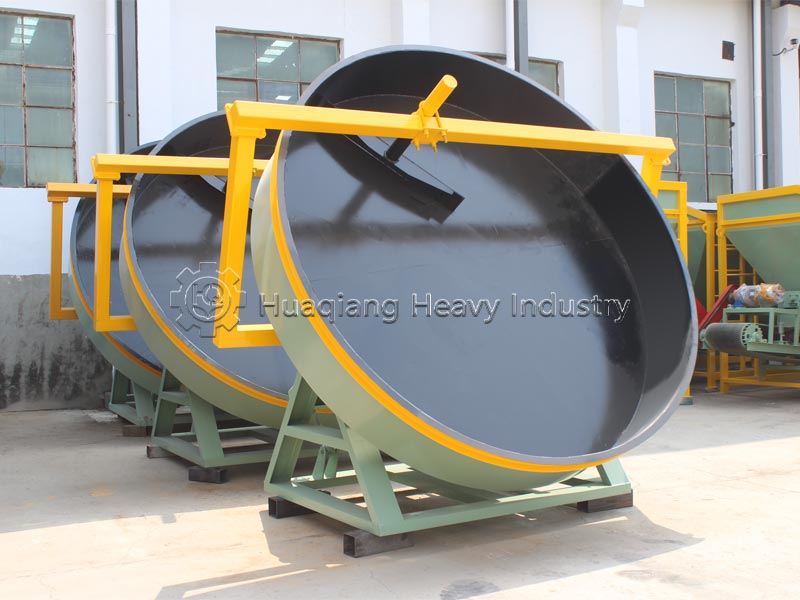
Precise Granulation Control: Use disc granulation or drum granulation processes to thoroughly and evenly mix acidic materials with alkaline/neutral conditioners, ensuring more stable nutrient release after the granules enter the soil.
Long-term application of physiologically acidic fertilizers is not impossible; the key lies in scientific formulation and optimized fertilization structure. If you encounter problems during production where the formula is too acidic, leading to granule pulverization or poor fertilizer efficiency, our technical team can provide you with targeted equipment improvement solutions.
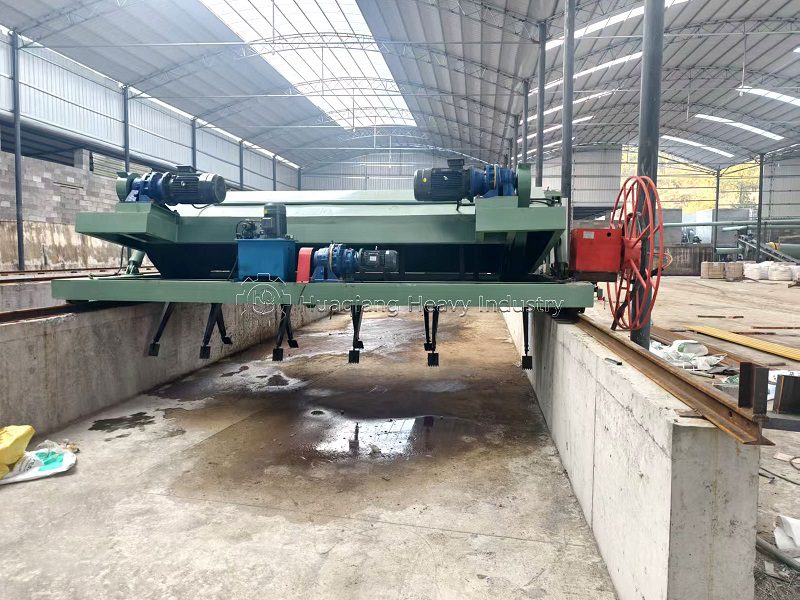
In practice, reversing the “acidification-leaching-fixation” spiral does not rely on a single remedy, but on an integrated production and application system. By upgrading to a bio-organic fertilizer production line, manufacturers can blend physiologically acidic materials with alkaline organic carriers and functional microbes — the buffering capacity of mature compost, prepared with a windrow composting machine, effectively moderates pH swings. For granulation, the organic fertilizer disc granulator or a full disc granulation production line ensures homogeneous mixing of acidic salts with calcium‑magnesium conditioners, while precise fertilizer screening equipment guarantees uniform particle size for controlled release. When producing blended products, a npk bulk blending machine allows flexible adjustment of nitrate‑N and phosphate sources, reducing fixation risks. Ultimately, modern bio-organic fertilizer production technology and compound fertilizer production technology are not mutually exclusive — they complement each other to build a resilient soil‑fertility base. With optimized formulations, proper conditioning, and microbial synergy, long‑term use of physiologically acidic fertilizers becomes both agronomically effective and environmentally sustainable, turning a former liability into a managed asset for high‑yield farming.