


The precision revolution in automated batching systems is reducing the batching tolerance in fertilizer production from the traditional ±2% to within ±0.5%. This seemingly small numerical leap is underpinned by systemic breakthroughs in hardware, algorithms, and process management. For NPK compound fertilizer, BB fertilizer, and organic fertilizer production lines, a ±0.5% tolerance means a nutrient deviation of no more than 5 kg per ton of fertilizer, resulting in a simultaneous improvement in product qualification rate and market competitiveness.
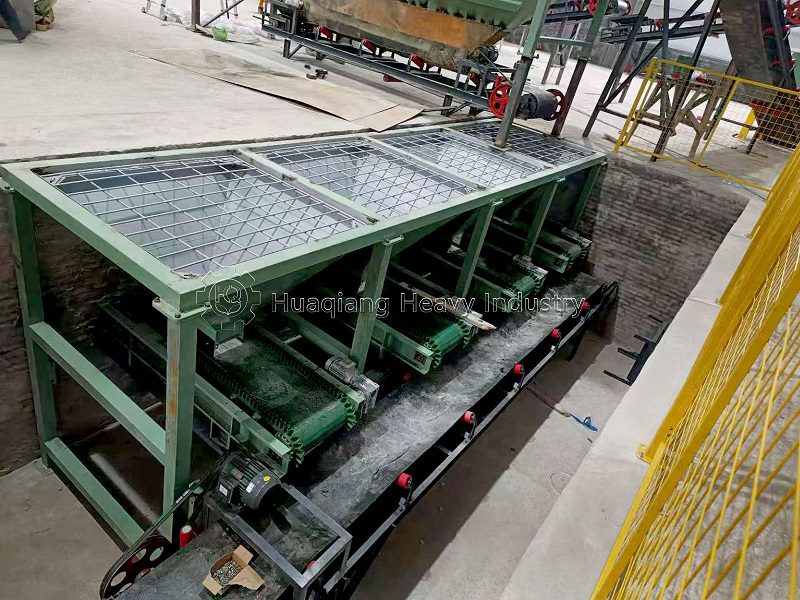
I. High-Precision Weighing Sensors: The Hardware Foundation of Precision
The primary condition for achieving ±0.5% tolerance is the selection of high-precision digital weighing sensors. These sensors have a resolution of up to 1/30000, a repeatability error of less than 0.01%, and automatic temperature compensation. Compared to traditional analog sensors, digital sensors have stronger anti-interference capabilities and no signal attenuation during transmission. During installation, it is essential to ensure that the weighing platform is free from lateral force interference, that the sensor is subjected to uniform force, and to avoid zero-point drift caused by mechanical stress.
II. Dual-Speed Feeding: A Coordinating Feeding Strategy
Automatic batching systems commonly employ a dual-speed feeding mode of “fast feeding + slow feeding.” During the fast feeding phase, the feed rate quickly approaches 90%-95% of the target value, significantly shortening the batching time. During the slow feeding phase, a smaller flow rate is used for fine feeding until the set weight is reached. The switching point between the two phases is precisely controlled by a PLC, combined with a drop correction algorithm, to prematurely shut off the feeder and offset the overshoot caused by material flying through the air. This is a key action to achieve a tolerance of ±0.5%.
III. Intelligent Control Algorithm: Dynamic Compensation and Adaptive Adjustment
Modern automatic batching systems are equipped with PID control algorithms and adaptive compensation models. The system collects weighing data in real time and automatically adjusts feeding parameters based on changes in material flowability and bulk density. When a batch of material is detected to be too wet and the feeding speed is slow, the algorithm automatically extends the slow feeding time; when the material is too dry and has good flowability, it switches ahead of schedule. Some high-end systems also introduce neural network prediction, continuously optimizing the feeding curve by learning from historical batch data to stabilize the tolerance within ±0.3%.
IV. Anti-interference Design and Regular Calibration
Vibration, airflow, dust, and temperature changes in the production environment can all affect weighing accuracy. Therefore, the batching scale must be equipped with a windproof cover, vibration damping pads, and grounding protection. Anti-blocking devices should be installed at the hopper outlet to prevent bridging or material spillage. Furthermore, a regular calibration system must be established: daily zero-point calibration, weekly weight verification, and monthly full-range calibration. Calibration records should be included in the equipment archive to ensure the system is always in optimal condition.
V. Data Traceability and Closed-Loop Control
The automatic batching system interfaces with the MES or ERP system, automatically uploading batch data for each batch, enabling full traceability of raw material consumption, formula execution, and finished product nutrient content. When deviations are detected in finished product testing, the problem can be quickly identified as occurring in the batching or mixing stage, forming a quality closed loop.
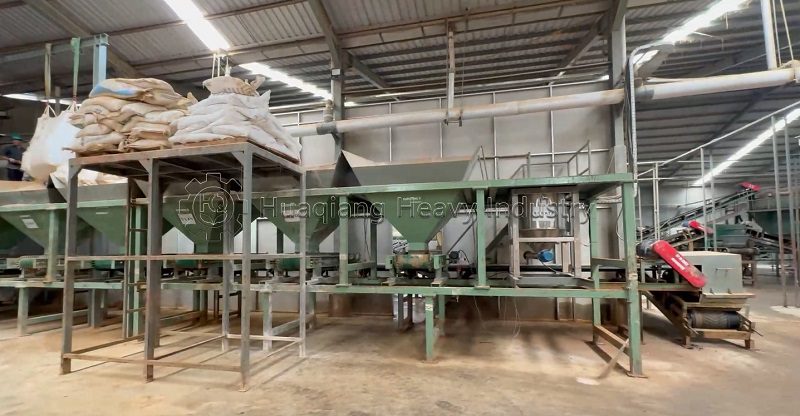
VI. Extending Precision to Diverse Fertilizer Production Lines
The same precision architecture can be extended beyond NPK and BB fertilizers. On a bio organic fertilizer production line, where moisture, fiber content, and bulk density fluctuate widely, adaptive PID compensation and dual-speed feeding help maintain stable recipe accuracy; on a roller press granulator production line, precise batching of raw materials before granulation reduces recycle load and improves granule strength consistency. For a Large-capacity automatic batching system, multi-hopper synchronization, high-speed data acquisition, and MES/ERP closed-loop traceability are essential to preserve ±0.5% tolerance at high throughput. These applications show that the precision revolution is scalable across different fertilizer processes rather than limited to a single equipment configuration.
VII. Conclusion
The precision revolution of the automatic batching system is essentially a trinity of “high-precision hardware + intelligent algorithms + rigorous management.” The ±0.5% tolerance is not the achievement of a single device, but rather the result of the synergistic effect of sensors, feeding mechanisms, control algorithms, and calibration procedures. For fertilizer companies pursuing high-quality development, investing in high-precision automatic batching systems is equivalent to investing in product consistency and brand reputation.