


The mechanical differences in the granulation section itself are minimal; the real dividing line is in the drying section. Ordinary organic fertilizer does not contain functional bacteria, so the drying hot air can reach 120-150℃, and the material temperature should not exceed 60℃. Bio-organic fertilizer adds functional bacteria such as Bacillus subtilis; the material temperature must be stable at 50-55℃, and the hot air temperature should not exceed 110℃. Temperatures exceeding 65℃ will cause a large number of bacteria to die, directly failing to meet the viable bacteria index. NY 884 requires an effective viable bacteria count ≥0.2 billion/g and a finished product moisture content ≤30%. This means that drying bio-fertilizer is not simply “drying away the water,” but rather “drying away the water while preventing the bacteria from dying”—equipment configuration and operating windows must be designed separately according to product positioning.
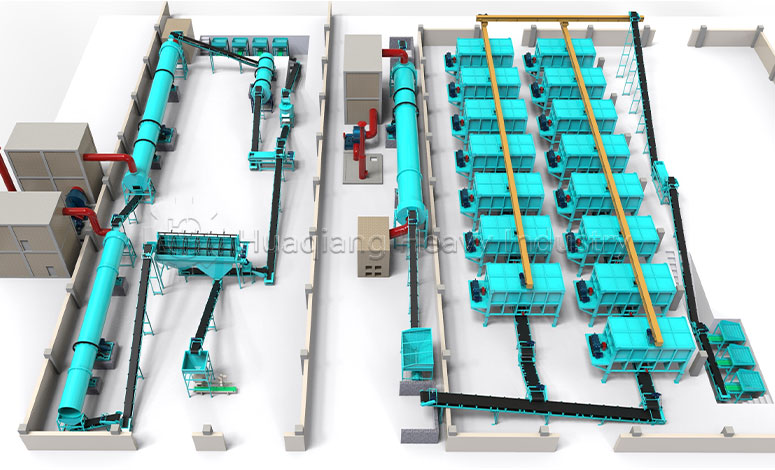
I. Drying Temperature Window Comparison: “Efficiency First” for Conventional Fertilizers, “Survival First” for Bio-fertilizers
Both product lines can share similar equipment in the granulation section (disc, agitator, drum, and roller can all be used for organic materials), but the process objectives fundamentally change after entering the drying section.
Conventional Organic Fertilizers: Hot air 120-150℃, material ≤60℃. Conventional composted organic fertilizers do not contain functional bacteria; the core constraint for drying is “no carbonization of organic matter and no large-scale nitrogen volatilization.” Hot air temperatures can be higher to improve dehydration efficiency, while the material temperature itself only needs to be controlled below 60℃. A finished product moisture content below 13% is generally acceptable. Within this window, the focus of equipment configuration is on thermal efficiency and production capacity, not bacterial activity.
Bio-organic Fertilizers: Material 50-55℃, hot air ≤110℃. Functional bacteria (Bacillus subtilis, Bacillus licheniformis, etc.) are highly sensitive to temperature. When the material temperature exceeds 65℃, a large number of microorganisms die. Even with highly tolerant strains, the loss rate of viable bacteria under traditional high-temperature drying can still exceed 50%, or even approach complete inactivation. Therefore, the drying window for bio-fertilizers is very narrow: the material temperature should be stable at 50-55℃, the hot air temperature should not exceed 110℃, and the ideal drying temperature range is 40-60℃. The trade-off for this window is slower dehydration and larger equipment size, but it results in a higher survival rate of viable bacteria—two-stage variable-temperature drying combined with low-temperature, high-volume airflow can achieve a survival rate of over 90% for beneficial microorganisms.

II. Measurement Points and Settings for Segmented Temperature Control: Don’t Just Look at “Hot Air Temperature”
The difficulty in controlling the drying of bio-organic fertilizers lies in the fact that hot air temperature is not equal to material temperature, and material temperature is not equal to the internal temperature of the particles. The significance of segmented temperature control is to decouple these three temperatures, setting different hot air windows in each segment while simultaneously monitoring the actual material temperature.
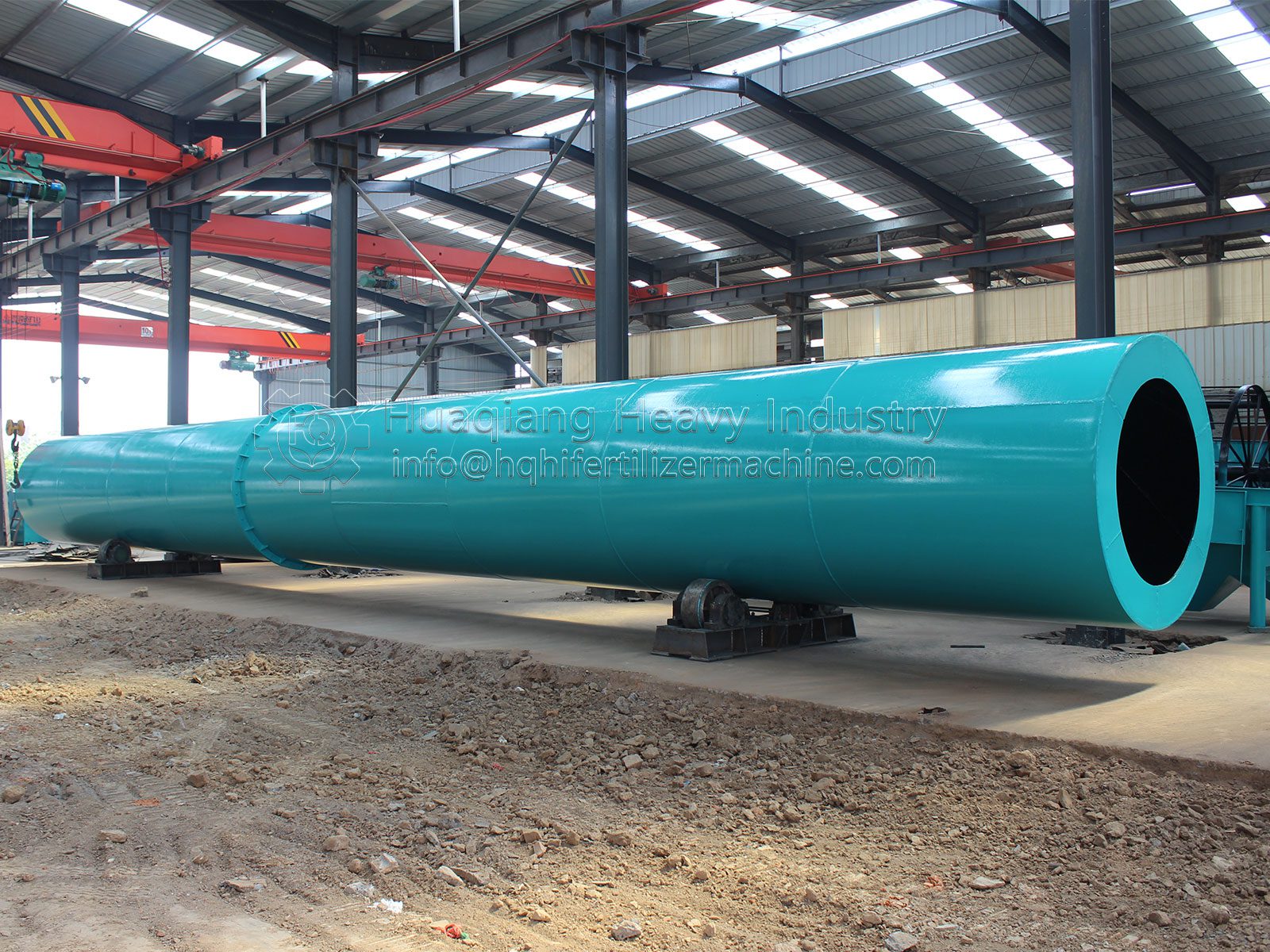
A workable setup framework is as follows: In the preheating zone, hot air is maintained at 60-80℃ to slowly remove free water from the particle surface, preventing sudden heating that could cause surface crusting or cracking; in the main drying zone, hot air is maintained at 80-100℃ to remove internal bound water; at the discharge end, the temperature is gradually reduced, and the material is immediately sent to a cooler to below 40℃ to prevent residual heat from further damaging the microorganisms and organic matter. Another validated engineering approach is a two-stage process: the first stage is ≤65℃ for no more than 10 minutes, allowing the microorganisms to quickly enter a dormant state; the second stage is ≤75℃ for no more than 30 minutes, further removing moisture to below 5%. The common logic of both approaches is: gentle initial temperature, moderate later temperature, and no exceeding the microorganisms’ tolerance limits throughout the process.
Regarding measurement point setup, hot air temperature should be monitored at both the dryer inlet and outlet, and material temperature should be measured at points in the middle section of the dryer and at the discharge outlet, rather than relying solely on thermocouples at the inlet. The operating principle for drying bio-fertilizer is “low temperature, high air volume”: when the temperature is too high, increase the induced draft and reduce the feeding speed, rather than relying on simply increasing the hot air temperature for “hard dehydration.” If the temperature is too low, the finished product will have excessive moisture content and become damp during storage, which will also shorten the shelf life of the live bacteria.
III. Granulation Moisture and Granulation Method: The Indirect Impact on Bacterial Activity Cannot Be Ignored
The granulation stage itself does not directly “kill” bacteria, but the granulation moisture content and granulation method determine the subsequent drying load and the physical stress on the bacteria during granulation.
Moisture Window. The suitable moisture content for bio-organic fertilizer granulation is usually in the range of 20%–35%. If the moisture content is too high, the drying stage requires a longer time or higher temperature to reduce the moisture, prolonging the cumulative time the bacteria are exposed to hot air and reducing the survival rate; if the moisture content is too low, pellet formation is difficult, the granule strength is insufficient, and mechanical damage during subsequent screening and conveying will further reduce the yield.
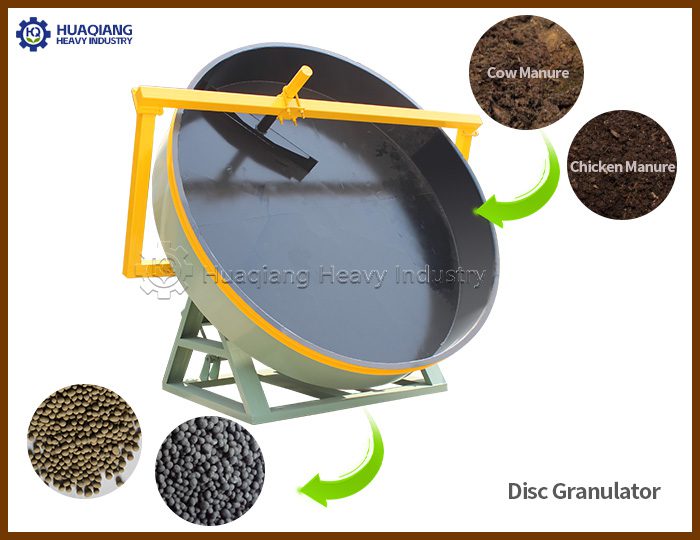
Differences in Granulation Methods Disc granulation involves rolling agglomeration, a gentle process that maintains a bacterial survival rate above 80%, but has a lower single-machine capacity (2-4 tons per hour). Extrusion granulation relies on high-pressure compaction, offering high capacity (8-12 tons per hour), but the pressure and frictional heat during extrusion generally reduce the bacterial survival rate to below 65%. Disc granulation is suitable for small- to medium-scale bio-fertilizer lines with stringent requirements for bacterial activity, while extrusion is suitable for large-scale lines prioritizing production capacity and willing to compensate in formulation and post-process protection. If extrusion is chosen, subsequent drying must strictly adhere to a low-temperature window; otherwise, the bacterial activity lost during extrusion will be further amplified during drying.
IV. FAQ: Frequently Asked Questions about Bio-organic Fertilizer Granulation and Drying
Q1: Can bio-organic fertilizer be rapidly dried at high temperatures?
No, rapid drying at high temperatures is incompatible with the concept of “bio-“. Material temperatures exceeding 65℃ will cause the death of a large number of functional bacteria. Even if the hot air temperature is controlled at around 110℃, the actual material temperature must be kept between 50-55℃. High-temperature rapid drying might reduce moisture content to within the standard range, but the viable bacteria count is likely to be substandard, rendering the product unqualified according to NY 884. If production capacity is under pressure, the correct approach is to increase airflow, extend drying time, and increase heat exchange area, rather than raising the hot air temperature.
Q2: What needs to be changed in the drying section when converting a conventional organic fertilizer line to bio-organic fertilizer?
The core change is in the “temperature control logic,” not the entire dryer. Conventional organic fertilizer lines often have excessively high hot air temperatures (120-150℃), which would kill functional bacteria if used directly to dry bio-fertilizer. The key to modification is adding segmented temperature control and material temperature measurement points, locking the upper limit of the hot air temperature below 110℃, and switching the operating strategy from “high-temperature rapid drying” to “low-temperature high-volume drying.” If the existing dryer’s heat exchange capacity and airflow are insufficient to bring moisture content to the standard at low temperatures, it may be necessary to expand the dryer’s volume or add a cooling section, rather than increasing the temperature to compensate for insufficient capacity.
Q3: The survival rate of bacteria in extrusion granulation is relatively low; can it still be used to make bio-organic fertilizer?
Yes, but compensation is needed in the process. The mechanical pressure and frictional heat of extrusion granulation will cause some loss of bacterial activity, and the survival rate is usually lower than that of disc granulation. If the extrusion route is chosen for bio-fertilizer production, the bacterial solution spraying or coating should be done after granulation and drying to avoid the bacteria experiencing the dual heat-stress of extrusion and drying; or a “granulation first, inoculation later” process sequence can be adopted. If the bacteria must be mixed into the material before granulation, the survival rate advantage of the disc route is more obvious; when selecting a disc granulation method, bacterial activity indicators should be considered before production capacity indicators.