Equipment Introduction

The BB fertilizer mixer, also known as a blended fertilizer mixer, is a specialized mixing equipment developed for the physical blending process of BB fertilizer (Bulk Blended Fertilizer). Its core function is to uniformly mix various granular fertilizers with significant differences in specific gravity and particle size without breakage or stratification, involving only physical mixing and no chemical reactions. The industry mainstream models are divided into three types: drum-type BB mixers, horizontal double-ribbon BB mixers, and vertical conical BB mixers. Unlike the twin-shaft paddle mixers used for organic fertilizers, the BB fertilizer mixer employs a low-speed, gentle mixing structure, strictly controlling the particle breakage rate to <0.5% and the coefficient of variation (CV) for mixing uniformity to ≤5%, meeting the national standards for fertilizer nutrient uniformity.

The structure of the equipment

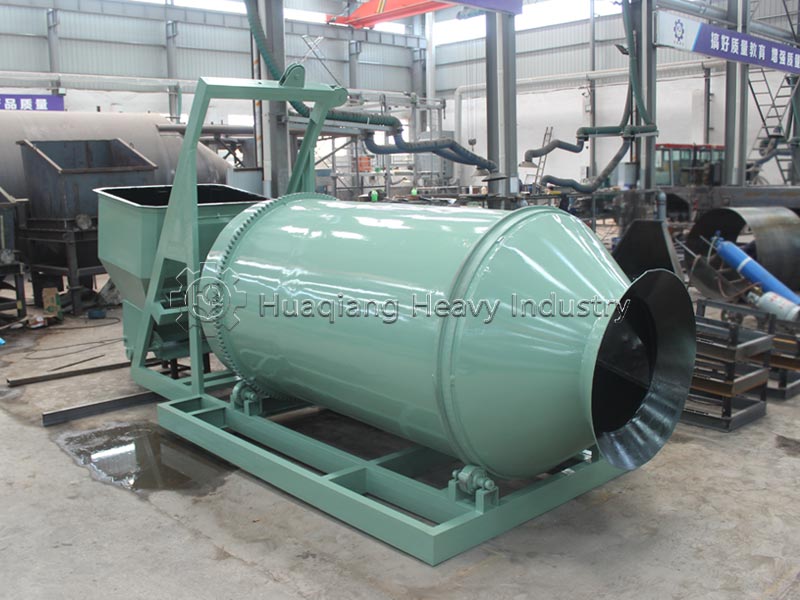
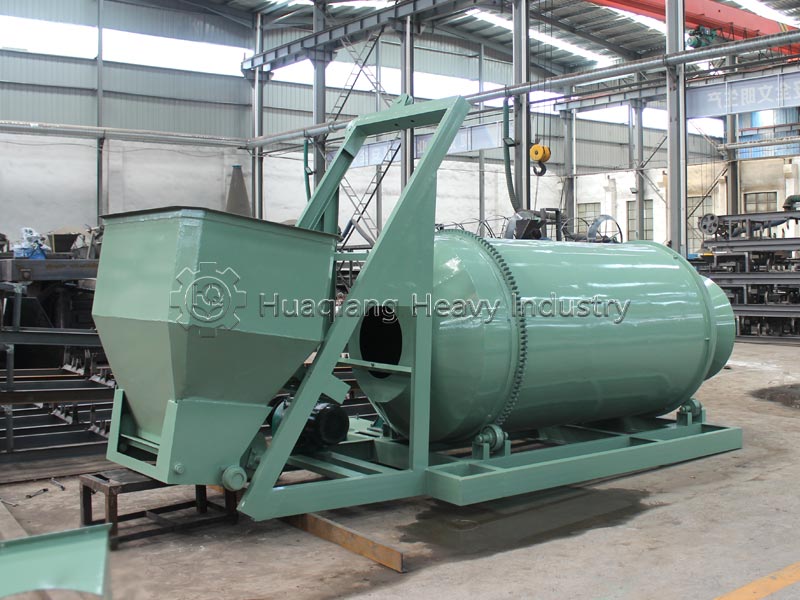
The BB fertilizer mixer can be divided into three parts: the frame part, the cylinder working part and the climbing bucket feeding part.

  1. Rack part

All working bodies of the machine are installed and fixed on the frame. The frames are all welded with high-quality carbon steel plates and channel steel, and have passed strict process requirements.

  1. Working part of cylinder

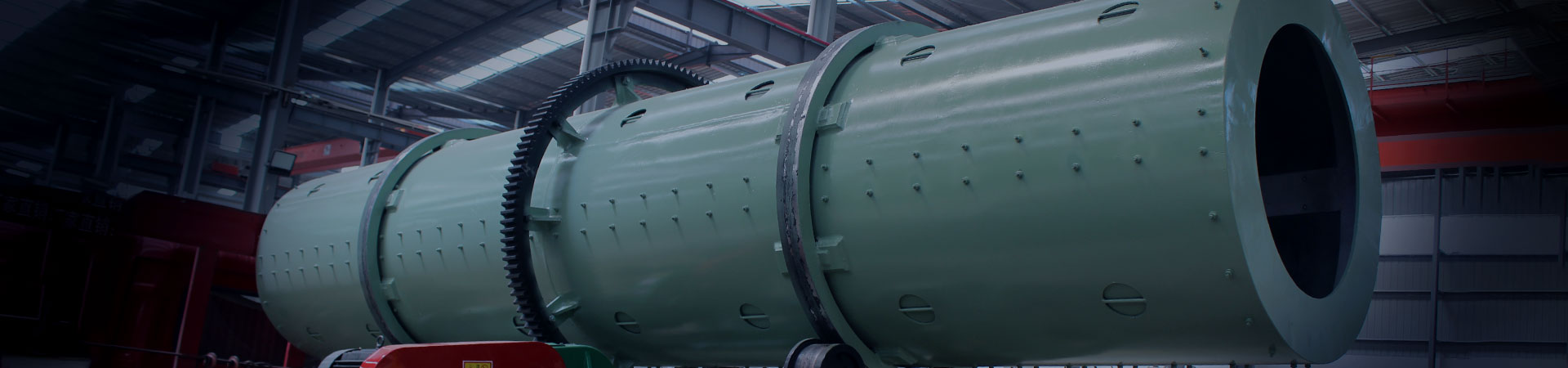
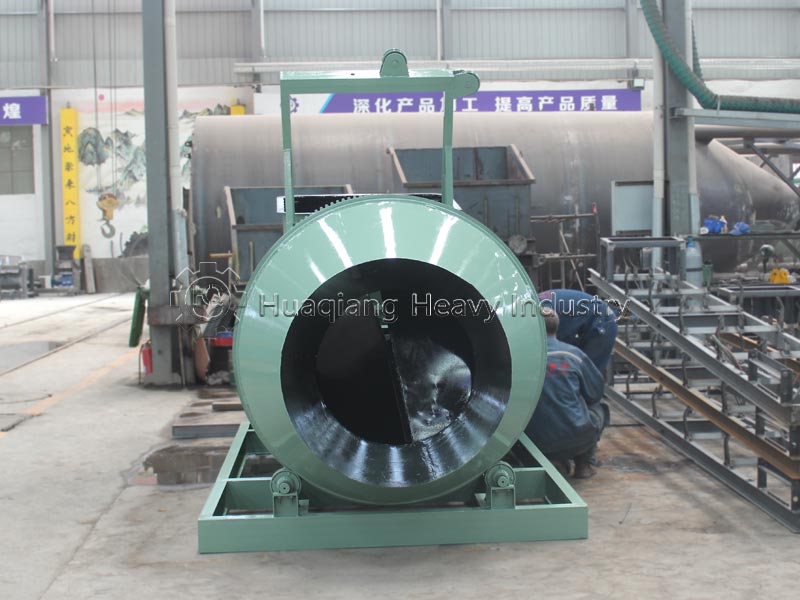
The cylinder part is made of high-quality carbon steel plate processed by special technology. The inner wall of the cylinder is equipped with special spiral mixing blades. While the cylinder is working, the material enters from the feed port, and the materials are evenly mixed by the flipping of the spiral mixing blades. The parts in contact with materials are mostly lined with stainless steel or polymer polyethylene plates to prevent corrosion and wear resistance. The closure plate adopts a protruding format structure to improve durability.

  1. Climbing bucket feeding part

The feeding part of the climbing bucket is designed with special technology. The guide rail parts are made of high-quality channel steel and are designed with reasonable angles to ensure smooth overall operation and overcome the previous problems of difficulty in loading materials and easy deviation of the lifting bucket due to height restrictions.

  1. Transmission connection part

The motor drives the pulley, V-belt, and reducer transmission. The gears installed on the reducer mesh with the gears of the machine body, thereby driving the cylinder to work.

  1. Electronic control system

The BB fertilizer mixer is equipped with an electronic control system with manual, automatic and composite settings, supporting flexible control. It can be combined with the upper batching scale and the lower quantitative packaging machine to form a fully automatic batching-mixing-packaging production line.

Working Principle of the Equipment

The BB fertilizer mixer mainly adopts forward and reverse rotation operation, using a special internal spiral mechanism and a unique three-dimensional structure to mix and output materials.

  1. Drum Mixing Working Principle (Mainstream Model)

The equipment uses a drum mixing device, which is placed horizontally with the inlet and outlet at both ends of the drum. Forward rotation is for feeding and mixing, and reverse rotation is for discharging. After the material enters through the inlet, it is evenly mixed by the tumbling of the spiral mixing blades. The drum mixing method can prevent segregation of the mixed product, resulting in high mixing uniformity.

  1. Vertical Spiral Mixing Working Principle

The rapid rotation of the screw lifts the raw material from the bottom of the drum to the center, then scatters it in an umbrella-like pattern back to the bottom. The raw material tumbles and mixes inside the drum, and a large amount of raw material can be evenly mixed in a short time.

  1. Core Process Advantages

The equipment adopts a batch intermittent mixing method, which does not damage the original particle shape of the material during the mixing process. For granular raw materials with large differences in specific gravity (such as urea 1.33 g/cm³ and monoammonium phosphate 1.74 g/cm³), they can be mixed evenly in a very short time (usually 1 to 3 minutes), with a mixing uniformity coefficient of variation (CV) ≤5% and an extremely low particle breakage rate (usually <0.5%).

Raw Material Requirements for the Equipment

BB fertilizer mixer has specific technical requirements for raw materials, which is crucial to ensuring mixing quality and preventing segregation:

Raw Material RequirementTechnical Specification
Particle Size DistributionRaw material particle size range should be consistent with similar granular distribution; large particle size difference is the main cause of segregation
Moisture ContentRelatively low moisture required, generally ≤2%; high moisture easily causes caking and wall sticking
Particle StrengthHigh compressive strength of granules ensures they are not easily broken during storage and transportation
FlowabilityRaw materials should have good flowability to facilitate metering and conveying
Anti‑caking PropertyNo caking during storage to avoid affecting feeding and mixing performance

Common raw materials: urea, monoammonium phosphate (MAP), diammonium phosphate (DAP), potassium chloride, potassium sulfate, ammonium nitrate, and micronutrient fertilizers, etc.

Equipment Applications:

  1. BB blended fertilizer professional processing plant, producing special formula blended fertilizers for field crops and fruits and vegetables;
  2. Agricultural material distribution centers, township soil testing and fertilizer formulation stations (small vertical model);
  3. Raw material premixing section of compound fertilizer and organic-inorganic compound fertilizer production lines;
  4. Slow-release fertilizer and special micronutrient fertilizer production workshops;
  5. Large-scale planting bases and fertilizer processing workshops owned by agricultural groups;
  6. Light blending of feed pellets and industrial granules (multi-purpose application for expanded scenarios).

Application Position in the Complete BB Fertilizer Production Line

Fully Automated Standard Process Flow: Raw Material Storage Silo → Automatic Batching Scale (Nitrogen, Phosphorus, and Potassium are Measuring Separately) → Bucket Elevator → BB Fertilizer Dedicated Mixer → Finished Product Temporary Storage Silo → Automatic Quantitative Packaging Machine → Finished Product Warehousing Core Function: The only core mixing process after batching, ensuring uniform nutrient ratios, eliminating raw material stratification, and guaranteeing uniform nitrogen, phosphorus, potassium, and trace element content in each bag of fertilizer; it is a key piece of equipment determining the quality inspection pass rate of the finished fertilizer. Multiple drum mixers can be arranged in parallel to achieve simultaneous switching between multiple formulas, reducing cross-contamination during material changes.

Equipment Capacity Parameters

ModelMixing Capacity (kg/batch)Capacity (t/h)Mixing Motor (kW)Lifting Motor (kW)
ZYC‑1250 / GJB‑12005003‑5 / 5‑107.54
ZYC‑1500 / GJB‑15007504‑6 / 13‑157.54
ZYC‑2000 / GJB‑180010006‑8 / 15‑18114
GJB‑200018‑2015+4.5

Production Capacity:

Small: 1–5 t/h, suitable for township fertilizer distribution stations and distributors.

Medium: 5–15 t/h, suitable for small and medium-sized fertilizer enterprises.

Large: 15–40 t/h (roller continuous line can reach 120 t/h), suitable for large fertilizer groups.

Annual Production Scale: A single production line can achieve an annual output of 10,000–250,000 tons of BB fertilizer.

Standard Operating Procedures (Start-up, Operation, Shutdown)

  1. Pre-start Inspection: Clean any residual material inside the drum, check the discharge valve seal and for any jamming on the rollers/screws, and confirm that the electrical control and lubrication systems are functioning properly.
  2. Start-up Sequence (Applicable to both drum and horizontal models):

① Start the motor under no-load;

② Add all the granular raw materials measured according to the formula;

③ Start the timed agitator;

④ After agitation reaches the required standard, open the discharge valve to discharge the material. Do not start under heavy load (starting with a full load may burn out the motor and deform the agitator components).

  1. Shutdown Sequence:

① Wait until the entire batch of material has been completely discharged;

② Close the discharge valve;

③ Turn off the main motor;

④ Clean any dust and residual particles adhering to the drum wall.

  1. Operational Prohibitions:

Do not allow hard metal objects or large clumps to enter the drum; do not agitate at high speed (to easily break coated particles); do not mix different formulas directly without cleaning the drum; do not operate without a seal for extended periods (to avoid excessive dust).

Equipment Maintenance Methods

  1. Daily Maintenance (per shift)
  2. After unloading, clean any remaining material from the drum/tank to prevent moisture absorption, clumping, and sticking to the walls;
  3. Add lithium-based grease to the drum support roller bearings and the main shaft bearing of the screw ribbon;
  4. Check for leaks in the unloading butterfly valve sealing gasket and for blockages in the dust removal pipeline;
  5. Wipe the electrical control box to remove dust and prevent moisture buildup.
  6. Periodic Maintenance
  7. Weekly: Tighten the frame, mixing blades, and support roller fixing bolts; check belt/chain tension;
  8. Monthly: Change the reducer lubricating oil (46# industrial gear oil); check for wear on the drum welds;
  9. Quarterly: Replace aged sealing packing and valve gaskets; correct drum level and screw ribbon coaxiality;
  10. Annually: Disassemble and thoroughly inspect the mixing components; replace worn lifting plates and screw ribbon blades. Lubrication Standards:

1) Roller support bearings: #2 lithium-based grease, add every shift;

2) Main reducer: #46 medium-load gear oil, change every 3 months;

3) Vertical mixing gearbox: #32 machine oil, top up monthly.

Summary table of common faults, causes and solutions for BB fertilizer mixers

Common FaultCause AnalysisSolutions
Material Segregation (Layering)Excessive particle size difference of raw materials; too long mixing time; improper feeding sequencePre‑screen raw materials to keep particle size consistent; strictly control mixing time within 3‑5 minutes; follow the feeding sequence of large particles first, then small particles
Low / Unstable OutputInsufficient motor power; improper blade angle; severe blade wear; too low rotating speedReplace motor with matching power; adjust blade angle to 42°‑45°; replace severely worn blades; check and restore rated rotating speed
Material Blockage & JammingExcessively high material moisture causing sticking; oversized material lumps; blockage at inlet and outletControl material moisture below 30%; pre‑crush oversized lumps; install anti‑sticking coating on inner wall; regularly clean inlet and outlet; increase discharge port inclination
Poor Sealing & Material LeakageAged and worn sealing gaskets; loose cover bolts; excessive gap at shaft endReplace all sealing gaskets with new ones; evenly tighten cover bolts; adjust shaft‑end sealing gap; install labyrinth seal for better sealing performance
Uneven MixingSevere blade wear; insufficient mixing time; over‑loading; improper feeding sequenceReplace worn blades; extend mixing time appropriately; control loading within rated capacity; follow correct feeding sequence
Abnormal Noise & Equipment VibrationBearing damage and oil shortage; loose anchor bolts; unbalanced rotor; foreign objects inside machineInspect bearing condition; add lubricant or replace damaged bearing; tighten all anchor bolts; clean foreign objects inside; re‑balance rotor
Dust Emission & Flying PowderInsufficient dust collection negative pressure; poor sealing of feeding port; excessive dust content in materialsAdjust dust collector to negative pressure ≥1500Pa; install sealing curtain at feeding port; add dust suppression spray device; strengthen workshop ventilation

Equipment demand groups

The main target customer groups of BB fertilizer mixer include:

  1. Compound fertilizer production enterprises: factories that require large-scale and automated production of BB fertilizer.
  2. Fertilizer distributor/fertilizer distribution station: a circulation enterprise that provides soil testing formula and ready-to-mix services to end farmers.
  3. Agricultural cooperatives/large growers: their own bases have a large demand for fertilizers and need to prepare their own special fertilizers.
  4. Organic fertilizer/bio-organic fertilizer plant: used for mixing organic materials and inorganic fertilizers.
  5. Chemical/feed/building materials companies: industrial users who need uniform mixing of granular or powder materials.

Installation Technical Requirements:

  1. Drum type: The horizontal error of the drum installation ≤ 0.5/1000, and the height of the support rollers on both sides is consistent to prevent the drum from running off-center;
  2. Horizontal double-ribbon type: The coaxiality of the two main shafts meets the standard, there is no jamming when turning the machine under no-load, and shock-absorbing pads are installed at the bottom of the frame;
  3. After all the anchor bolts of the machine are tightened, manually test run for 3-5 minutes. Production can only begin if there is no abnormal vibration or noise;
  4. The feed elevator and the mixer feed inlet are sealed together, and a dust collection pipeline is provided to collect dust under negative pressure;
  5. The electrical control system should be properly grounded and waterproofed, and placed in a dry and ventilated operating room.

Summary of the core advantages of the equipment

AdvantagesDescription
Flexible FormulaThe ratio of NPK and trace elements can be adjusted at any time to meet soil‑testing formula requirements.
High Mixing UniformityMixing uniformity can reach ≥99.5%, which effectively overcomes material segregation.
Low Investment CostNo chemical reaction device required, simple equipment and small floor area (25‑50 m²).
Low Energy ConsumptionThe total power of the whole machine is generally less than 10 kW/h, saving more than 30% energy compared with traditional equipment.
High Degree of AutomationPLC & touch screen control, supporting data recording and one‑key retrieval for convenient quality traceability.
Long Service LifeMade of industrial‑grade stainless steel, it can work for 8‑10 years under normal maintenance.
Eco‑friendly & ComplianceEquipped with negative‑pressure dust removal system, dust emission ≤ 10 mg/m³.
logo-bottom1

We are a high-quality manufacturer of organic fertilizer equipment
Providing excellent consultation and after-sales service

© Copyright 2024 Huaqiang All rights reserved.