


Walk into any modern fertilizer plant, and you’ll hear the roar of machinery and see conveyor belts moving in orderly rhythm. But have you ever wondered: between “bio” organic fertilizer and regular organic fertilizer, what exactly sets them apart? And what secrets lie hidden in their production lines?
To answer that, let’s start with the “soul” of the process. A standard organic fertilizer production line focuses on turning raw materials—such as livestock manure, crop straw, and sludge—into stable, harmless organic matter through high-temperature fermentation, composting, and deodorization. Common equipment includes compost turners, crushers, screens, granulators, dryers, and coolers. The final product acts like a dependable “soil conditioner”—it supplies organic matter and improves soil structure, but contains no live functional microbes.
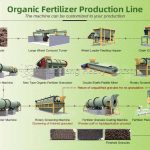
A bio organic fertilizer production line takes things further. On top of the organic fertilizer foundation, it adds a dedicated “beneficial bacteria incorporation” step. In simple terms, during granulation or coating, carefully selected functional microbes (like Bacillus subtilis, phosphate- and potassium-solubilizing bacteria, etc.) are blended into the organic fertilizer. Therefore, besides the standard fermentation, crushing, mixing, and granulation units, this line must also include low-temperature drying or ambient-temperature coating equipment—because high heat would kill the live microbes. Additionally, a fermentation tank for the bacterial culture and precise metering-mixing systems are essential.
Does that mean the regular organic fertilizer line is inferior? Not at all. If your goal is to quickly improve compacted soil or process large volumes of agricultural waste, regular organic fertilizer offers better cost-effectiveness with simpler equipment. But if you aim to suppress soil-borne diseases, activate soil nutrients, or boost crop resilience, then bio organic fertilizer is the true champion—those hundreds of millions of live microbes are hardworking allies.
Interestingly, the two production lines can share quite a lot of equipment. Crushers, rotary screens, mobile belt conveyor, and even some granulators are interchangeable. Many factories adopt a modular design: first build a basic organic fertilizer line, then add the bacterial culture preparation and low-temperature mixing units to upgrade it to a bio organic line. So, when you stand at an installation site, you’ll often see shared pipes, switchable hoppers, and those silent yet efficient machines—all singing together the industrial song of “turning waste into treasure.”
Ultimately, which line you choose depends on your target market and product positioning. If I were to advise: start with the organic fertilizer line to build a solid foundation; then, when the market calls for “living microbial power,” upgrade decisively. After all, soil health requires both a sturdy “organic base” and a lively “biological heart.”