

What is Coating Technology? Why Coat?
Coating technology refers to the process of applying a protective film to the surface of fertilizer granules (such as compound fertilizer and organic fertilizer granules). This process is usually carried out after screening and before packaging, and is a key step in improving product quality in commercial fertilizer production. The core purposes of coating are twofold: first, to prevent fertilizer from absorbing moisture and clumping, ensuring physical stability during storage and transportation; second, to create controlled-release or slow-release fertilizers, regulating the nutrient release rate through the film layer and extending the fertilizer’s effectiveness.
- Why Coat?
- Moisture Prevention and Clumping Prevention, Ensuring Product Quality
Pellet fertilizers are prone to absorbing moisture during storage and transportation, leading to surface dissolution and granule clumping, resulting in product spoilage. The coating layer forms a physical barrier on the granule surface, effectively isolating external moisture and keeping the granules dry and loose. Meanwhile, the anti-caking components in the coating agent reduce friction and adhesion between particles, ensuring the product maintains good flowability for a long time after packaging.
- Production of Controlled-Release/Slow-Release Fertilizers: Precise Regulation of Nutrient Release
This is a higher level of value in coating technology. By coating the surface of fast-acting fertilizers (such as urea) with a semi-permeable or impermeable material, precise control of the nutrient release rate can be achieved. The principle is: after fertilization, soil moisture slowly permeates the coating, gradually dissolving the nutrients inside the particles; the nutrients are then slowly released outward through the micropores of the coating, matching the fertilization rhythm with the crop’s growth needs. Specific benefits include: reducing nitrogen leaching, volatilization, and denitrification; reducing phosphorus fixation; preventing or mitigating concentration barriers caused by over-fertilization; significantly improving nutrient utilization (coated controlled-release fertilizers can increase fertilizer utilization by more than 20%), reducing fertilizer dosage and application frequency.
- Additional Functional Expansion
Functional microbial agents or trace elements can be added simultaneously during the coating process to create bio-organic fertilizers or functional fertilizers. Some coating materials (such as water-retaining agents for urea coating) can also improve the soil’s water retention and release properties.
- Coating Materials and Equipment
Coating materials are mainly divided into two categories: inorganic and organic. Inorganic materials include sulfur, zeolite, diatomaceous earth, gypsum, and metal oxides, which are relatively low in cost; organic materials include paraffin wax, olefin polymers, polyurethane, and natural rubber. Currently, environmentally friendly coating agents with polymers as the main material are gradually taking a dominant position in the market.
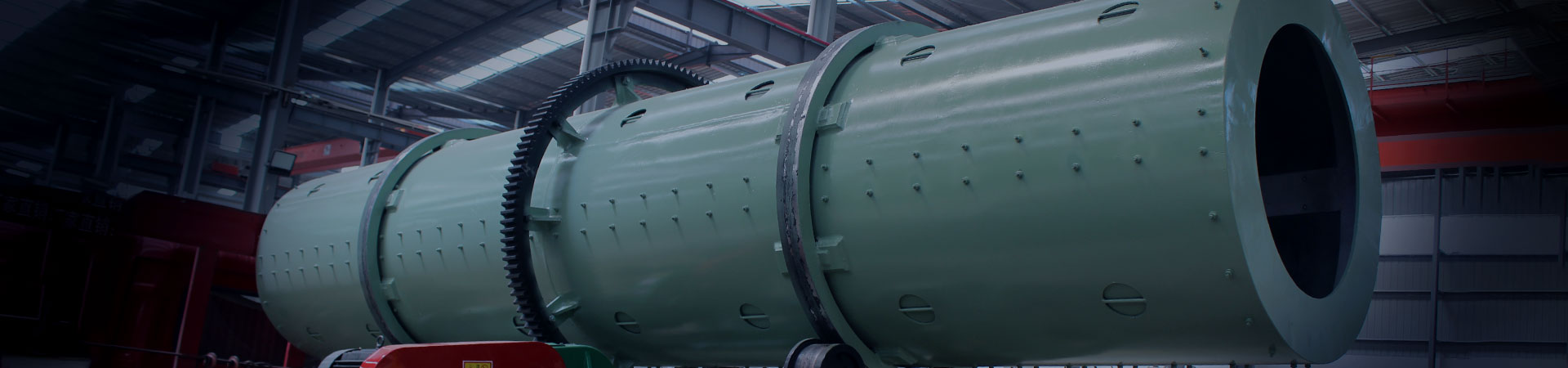
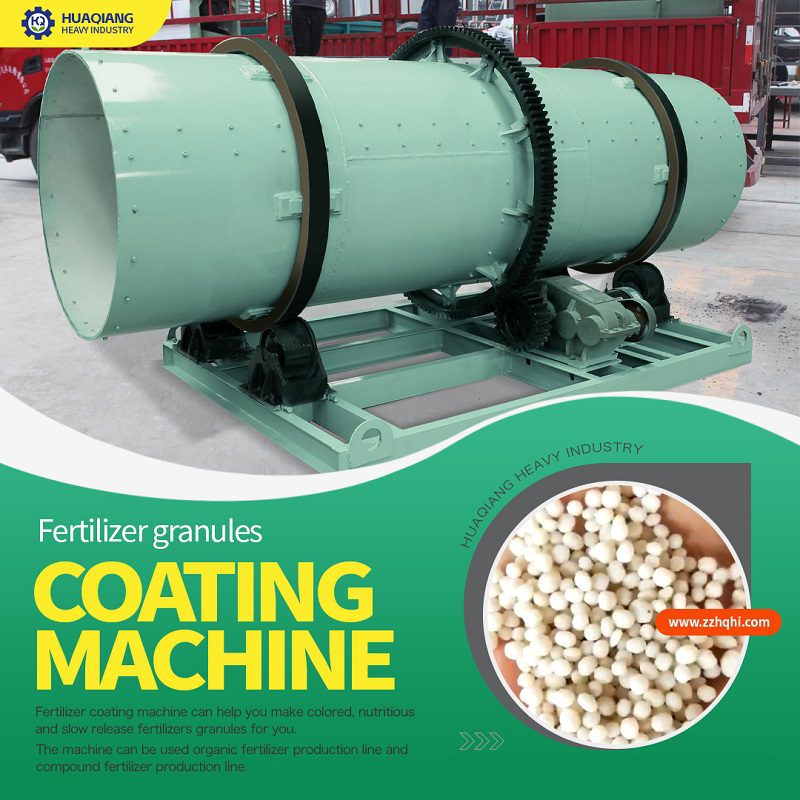
Rotary coating machines (coating cylinders) are commonly used in production. Cooled granules enter an inclined rotating cylinder, where a spray system evenly atomizes and coats the granule surface with liquid coating agent, or a powder coating material is applied to the granules using a dusting method. The internal lifting plate structure of the equipment ensures that each fertilizer granule is evenly coated.
In summary, the coating process is not only a means of “preserving” fertilizer quality—preventing moisture and clumping—but also a way to “add value”—achieving controlled and slow release of nutrients. It is a key process in modern fertilizer production that combines quality assurance and functional enhancement.
Coating Technology – The Strategic Link in Fertilizer Production
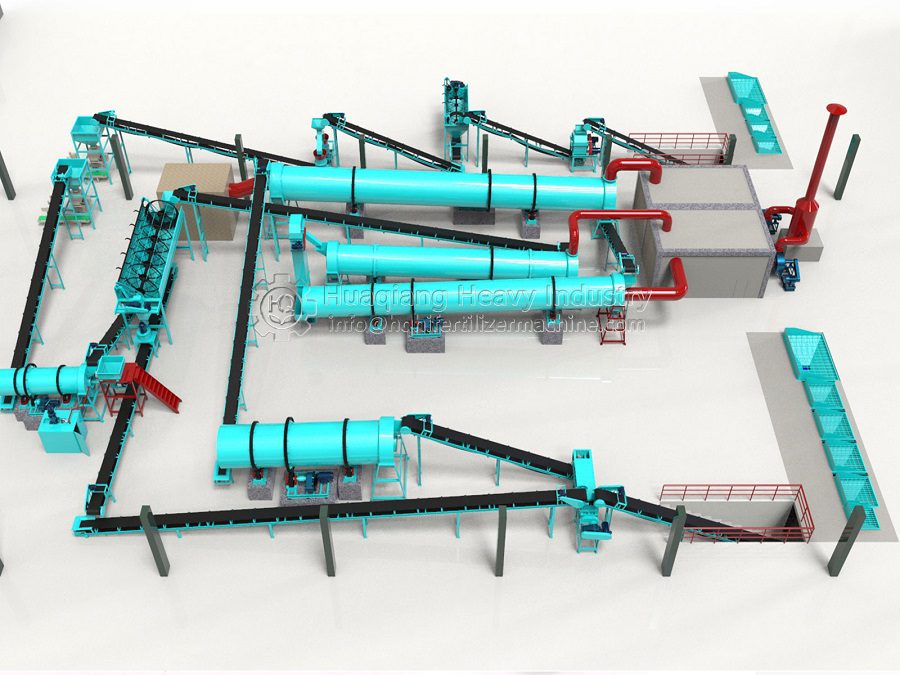
In modern fertilizer manufacturing, coating is never an isolated step—it is the strategic interface that bridges granulation, screening, and packaging. Whether operating a bio‑organic fertilizer production line or a full‑scale NPK fertilizer line, the coating stage directly determines the final product’s commercial value and field performance. For instance, in a roller press granulator production line, the extruded granules often have irregular surfaces; coating not only smoothens them but also seals micro‑cracks, enhancing both anti‑caking and controlled‑release functions. To ensure uniformity, advanced fertilizer screening equipment must precede coating—only granules with the right size and strength receive the film, avoiding waste and quality fluctuation. Meanwhile, for organic‑based products, the organic fertilizer disc granulator produces spherical granules that are ideal for film application; when combined with functional additives, this turns into a powerful platform for bio‑organic fertilizer production technology.
Ultimately, coating technology is not a mere “finishing touch” but a core enabler of compound fertilizer production technology, harmonizing physical preservation, nutrient‑release modulation, and even biological activation. As the industry moves toward higher efficiency and sustainability, the coating process will continue to evolve—integrating smart sensors, biodegradable polymers, and precision application—so that every granule leaving the production line delivers maximum agronomic benefit with minimal environmental footprint.