
We are a professional manufacturer of organic fertilizer equipment and a customized service provider for fertilizer production lines
-
NO.313, Wanshan Road, Xingyang City, Zhengzhou City, Henan Province, China
Company Address
-
Call Us: +86-18703630069
(Sat - Thursday)
-
inquiry@hqhifertilizermachine.com
Our Email
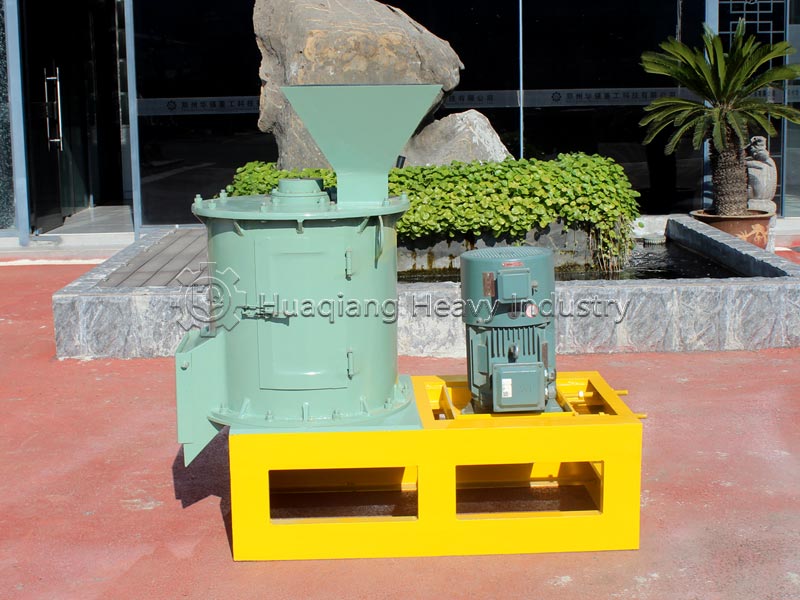
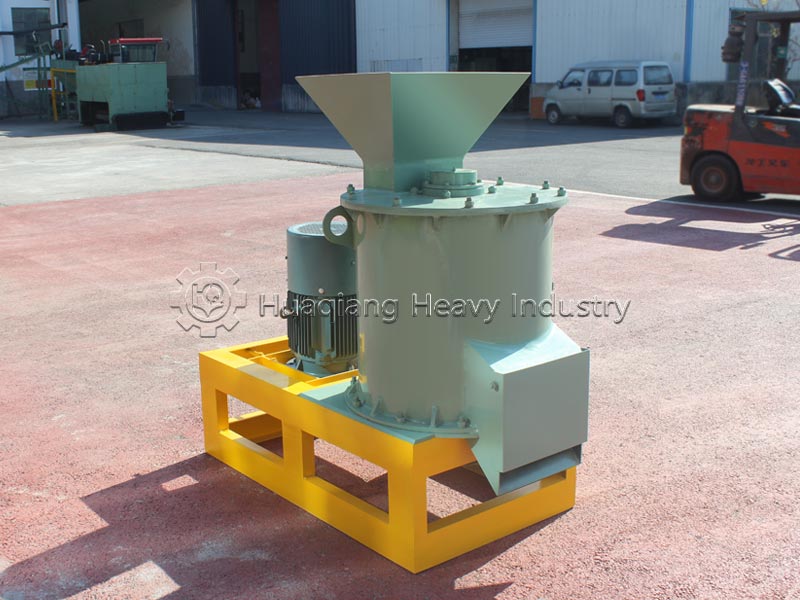
Half-Wet Material Crusher

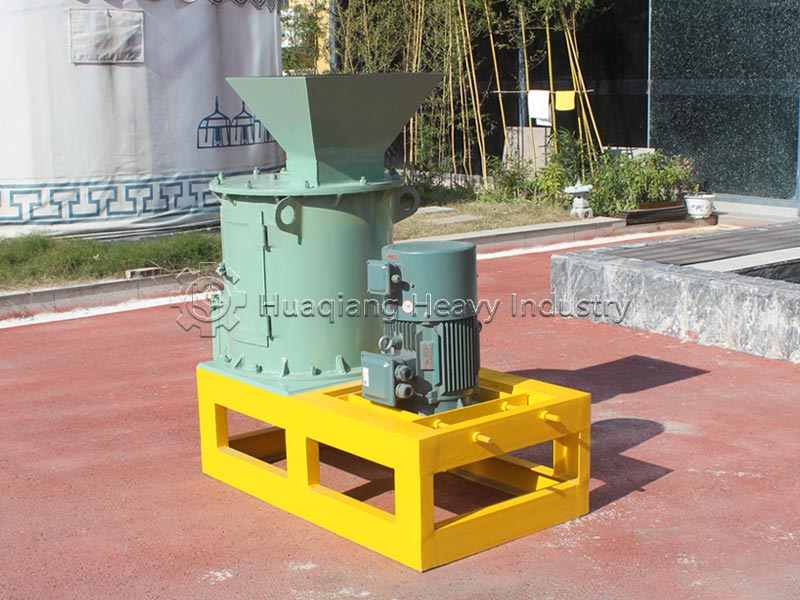
Equipment Introduction
The half-wet material crusher, also known as a high-moisture material crusher or wet material crusher, is a professional crushing equipment specifically designed for high-moisture, high-fibrous materials. This equipment is meticulously manufactured by a professional manufacturer, incorporating advanced domestic and international crushing technologies and years of production experience through repeated research, improvement, and refinement. The half-wet material crusher completely solves the problem of crushing high-moisture organic materials, representing a pioneering technology in China.
The core advantage of this equipment lies in its strong adaptability to material moisture content, effectively solving industry problems such as clogging, wall adhesion, and uneven crushing during the crushing of high-moisture organic materials. The half-wet material crusher is widely used in the organic fertilizer production and processing stage, and it is highly effective in crushing raw materials such as chicken manure and sodium humate.
Unlike ordinary dry powder pulverizers, half-wet material pulverizers are designed for the characteristics of half-wet materials such as livestock and poultry manure, sludge, mushroom residue, Chinese medicine residue, and straw wet materials. They have optimized internal structure, adopted special wear-resistant blade sets and anti-stick design, and can easily process various wet materials with a moisture content of 20% to 60% without the need for pre-drying, which greatly simplifies the production process and reduces operating costs.
Equipment Structure
| Structure Module | Core Composition & Functional Features |
|---|---|
| Frame Base Section | Integrally welded from carbon steel and channel steel with stress relief by aging treatment, featuring high rigidity and stable load bearing. Standard anchor mounting holes are reserved to adapt to various installation scenarios. Built-in damping structure effectively reduces vibration transmission of the equipment. |
| Double-layer Rotor Crushing Assembly (Core) | Adopts upper and lower double-layer series rotors; the upper layer conducts coarse crushing and the lower layer performs fine crushing to realize secondary fine pulverization of materials. Equipped with alloy wear-resistant blades capable of position shifting and reuse for long service life. Fitted with heavy-duty bearing housings and independent oil chambers to prevent water vapor erosion. Anti-sticking lining plates are optional for the crushing chamber to avoid material adhesion. |
| Flexible Transmission Connection Assembly | Adopts pulley flexible transmission with externally arranged motors. Full-enclosed protective structure prevents splashing safely. It can buffer equipment impact loads, reduce bearing load, deliver low failure rate and more stable operation. |
| Inlet & Outlet Sealed Housing | Widened top feed inlet fits multiple feeding modes and can be equipped with iron remover. The sealed housing is equipped with hydraulic access doors for easy cleaning and maintenance and prevents dust leakage. Large-diameter bottom discharge outlet avoids blockage and ensures smooth discharging, compatible with various conveying equipment. |
| Supporting Auxiliary Components | Optional accessories include pulse dust removal system, automatic lubrication system, variable frequency motor, feeding impurity removal equipment, electric control box, cavity cleaning fan, damping base and other fittings to meet the demands of different working conditions. |
Working Principle
The half-wet material crusher adopts a composite crushing mechanism of dual-stage rotor series impact + shearing + inter-particle collision. It has no screen bottom and relies on the rotor gap to control the output particle size. The complete process is as follows:
- Start the main motor; the upper and lower rotors rotate synchronously at high speed in the same direction, forming a two-stage crushing chamber;
- High-moisture material falls into the first-stage crushing chamber from the top feed inlet. The high-speed blades on the upper layer violently impact and shear large pieces of wet material, breaking them down into smaller particles;
- Under centrifugal force, the material automatically falls into the lower second-stage crushing chamber, where the lower blades again impact and grind at high speed, and the particles collide and compress with each other (particle-to-particle effect);
- After two stages of crushing, the material reaches a particle size of 0.5~5mm. 5. Qualified particles pass directly through the rotor gap and are discharged from the bottom outlet;
- Coarse particles, due to their size being larger than the rotor gap, undergo continuous secondary crushing within the crushing chamber until the particle size meets the standard;
- With no screen obstruction within the chamber, highly moist and sticky materials will not clog the channels; the inner wall anti-stick liner continuously peels away adhering materials, ensuring continuous operation;
- By adjusting the gap between the upper and lower blades and the liner, the fineness of the finished product can be freely adjusted to suit different process requirements such as fermentation and granulation.
Equipment Parameters
The table below shows the rated capacity for processing well-rotted chicken manure with a moisture content of 30%~35% and an output particle size of 0.5~5mm. Capacity decreases by 20%~40% when the material moisture content increases or the particle size is adjusted:
| Model | Matching Motor Power | Standard Capacity (t/h) | Discharge Particle Size Range (mm) | Overall Dimension (L × W × H, mm) |
|---|---|---|---|---|
| BSFS-40 | 15kW | 1~2 | 0.5~5 | 1250×550×1150 |
| BSFS-60 | 22kW | 2~4 | 0.5~5 | 1550×750×1500 |
| BSFS-80 | 37kW | 3~6 | 0.5~5 | 1720×920×1500 |
| BSFS-110 | 55kW | 4~10 | 0.5~5 | 2270×1250×1700 |
Applications of the Equipment
The half-wet material crusher has an extremely wide range of applications, covering almost all industries that require the processing of high-moisture organic materials:
- Organic Fertilizer and Bio-fertilizer Industry
This is the primary application area, including the crushing process for bio-organic fermentation composting, livestock and poultry manure organic fertilizer, biogas residue and biogas slurry treatment, mushroom residue fertilizer, humic acid fertilizer, etc. The equipment can crush fermented high-moisture materials to the particle size required for granulation, making it an ideal machine for fertilizer production and processing units.
- Environmental Protection and Solid Waste Treatment Industry
Used for municipal solid waste composting, sludge treatment, industrial organic waste treatment, and pharmaceutical residue treatment. The equipment has excellent grinding properties for hard materials such as glass, ceramics, bricks, and gravel in municipal solid waste organic fertilizer, achieving safe application.
- Agricultural Field
Processing agricultural waste such as crop straw, rice husks, sawdust, peat, and sphagnum moss, crushing it for use in organic fertilizer production or feed processing.
- Food and Chemical Industries: Crushing and processing of raw materials for wineries, sugar mills, and chemical plants, as well as processing fruit and vegetable residues in food processing.
- Other Industrial Sector: This equipment is also suitable for fine crushing operations in mining, coal mining, and metallurgy industries, demonstrating excellent cross-industry adaptability.
Complete Operation and Maintenance Process of Half-Wet Material Crusher
| Module Category | Inspection Item | Inspection Content / Acceptance Criteria |
|---|---|---|
| Startup Inspection | Safety Interlock Check | Check whether the safety protection switches at all access doors, feed inlet, and discharge inlet are sensitive and reliable. Test the emergency stop button to confirm quick response. Confirm that all safety guards are properly installed and secured before startup. |
| Startup Inspection | Lubrication System Check | Check whether the grease levels at all lubrication points are normal. Confirm that the automatic lubrication pump operates smoothly and that lubrication points are free from blockage or oil leakage. |
| Startup Inspection | Material Condition Check | Check whether the material contains hard impurities such as stones, metal, or large blocks. Confirm that the material moisture content is within the allowable range to avoid clogging, sticking, or overloading during operation. |
| Startup Inspection | Empty Startup Inspection | Start the equipment without material and observe for abnormal noise, vibration, or friction. Check whether the current and voltage are stable. If any abnormality occurs, stop immediately for inspection. |
| Operation Inspection | Load Inspection | After the no-load operation stabilizes, gradually feed material according to the process requirements. Observe whether the discharge particle size is uniform and whether the current fluctuates abnormally. Avoid sudden overfeeding. |
| Operation Inspection | Vibration and Temperature Check | Check the bearing housing temperature; it should generally not exceed 70°C. Observe equipment vibration; if vibration increases suddenly, stop immediately to check the rotor balance, foundation bolts, and wear condition. |
| Operation and Shutdown Handling | Material Blockage Handling | If the feed inlet or crushing chamber is blocked, stop the equipment first and lock out the power before cleaning. Do not use hands or tools to clear blockages while the machine is running. After cleaning, confirm that all personnel are clear before restarting. |
| Operation and Shutdown Handling | Power Failure and Emergency Stop | In case of sudden power failure or emergency stop, cut off the main power immediately. After the situation is confirmed safe, inspect the crushing chamber, motor, and electrical components. Do not restart until the fault is resolved. |
| Shutdown Inspection | Stop Inspection | Stop feeding first, then continue running the equipment for 3–5 minutes to fully discharge the residual material inside the machine. After shutdown, confirm that the equipment is completely stopped before cleaning and maintenance. |
| Shutdown Inspection | Cleaning and Maintenance | Clean residual material inside the crushing chamber, on the rotor, and at the discharge port. Check whether the blades, lining plates, and seals are worn. Remove accumulated dust and debris around the equipment. |
| Daily Maintenance | Daily Maintenance | Check the oil level of the lubrication pump and manually lubricate if necessary. Clean the feed inlet, discharge port, and crushing chamber. Inspect wear of blades and lining plates. Check foundation bolts, motor current, and operating noise. |
| Regular Maintenance | Monthly Maintenance | Inspect wear of the rotor, blades, and lining plates. Check bearing temperature and vibration. Clean the lubrication system and add grease. Inspect electrical components, control boxes, and safety interlocks. |
| Regular Maintenance | Quarterly Maintenance | Check the wear condition of the crushing chamber lining and sealing gaskets. Inspect belt tension and wear. Clean the motor surface and cooling fan. Check all electrical wiring and fasteners. |
| Regular Maintenance | Annual Maintenance | Perform a comprehensive inspection of the rotor assembly, bearings, motor, and electrical control system. Replace severely worn blades, lining plates, and seals. Calibrate safety protection devices and record all maintenance items. |
Applicable Raw Materials for the Equipment
The half-wet material crusher can process a wide variety of raw materials, mainly including:
- Organic Waste
Livestock and poultry manure (chicken manure, pig manure, cow manure, sheep manure, etc., fermented and decomposed); urban sludge; distiller’s grains; medicinal residue, traditional Chinese medicine residue; mushroom residue, fungal residue; peat moss; rural straw waste; biogas residue; kitchen waste
- Minerals
Coal gangue; slag
- Moisture Content Adaptability
The half-wet material crusher has a strong adaptability to the moisture content of materials. The main technical parameters are as follows:
Moisture content of bio-fermented organic fertilizer materials can reach 25%–55%
Materials with a moisture content between 20% and 50%
Some models can handle materials with a moisture content between 15% and 65%
Some equipment claims to be able to handle materials with a moisture content between 30% and 60%
It can be used to process high-moisture materials with a moisture content between 10% and 55%
- Raw Material Application Boundaries
While half-wet material crushers are widely adaptable, the following precautions should be taken:
When the material moisture content exceeds 65%, excessive viscosity can easily cause clumping and blockage at the feed inlet.
If the raw material contains hard objects such as stones or metal, it may damage the blades.
If the material contains long fibrous materials (such as long straw), they can easily become entangled in the cutter shaft.
Common Equipment Faults and Solutions
| Fault Phenomenon | Fault Cause | Solution |
|---|---|---|
| Abnormal vibration and noise | Rotor unbalance after blade replacement or uneven blade wear; foreign objects entering the crushing chamber; loose foundation bolts; bearing damage or lack of lubrication | Replace blades with matched weight and perform dynamic balance; clean foreign objects in the crushing chamber; tighten anchor bolts; inspect bearings and replenish grease |
| Output decreases and material cannot meet particle size requirements | Blade wear is serious; material moisture content is too high; feeding is uneven; gap between rotor and lining plate is abnormal | Replace worn blades; adjust material moisture content; control uniform feeding; check and adjust the gap between the rotor and the lining plate |
| Material blockage and frequent overload tripping | Feeding speed is too fast; material moisture content is too high and sticky; hard impurities enter the crushing chamber; discharge port is not smooth | Stop the machine and clean the blocked material; reduce feeding speed; control material moisture content; remove hard impurities; check the discharge system |
| Bearing overheating | Excessive or deteriorated grease; bearing misalignment; long-term overload operation; bearing housing sealing failure | Replenish or replace high-temperature grease; check bearing alignment; adjust feeding capacity; inspect sealing and cooling conditions |
| Material sticking and agglomeration | Material moisture content is too high; material stays in the crushing chamber for too long; anti-stick lining plate is worn; rotor speed does not match | Control material moisture content below 55%; clean the residual material in the chamber; replace the anti-stick lining plate; adjust rotor speed and feeding amount |
Preventive Maintenance Recommendations
- Strictly control the moisture content and impurity content of incoming materials, and prohibit hard foreign objects from entering the crushing chamber.
- Regularly check blade wear, bearing temperature, lubrication condition and bolt tightness.
- Clean the residual material inside the equipment after each shutdown to avoid material sticking and agglomeration.
- Establish a maintenance record system and regularly inspect wearing parts such as blades, lining plates and seals.
Typical Application Process Layout of half-wet Material Crusher in Production Line
(I) Complete Organic Fertilizer Production Line Supporting Process
Organic raw material collection (chicken manure/mushroom residue/straw) → High-temperature fermentation and composting → Screening and impurity removal + iron removal → Fine crushing by half-wet material crusher → Batching and mixing by twin-shaft mixer (addition of nitrogen, phosphorus, and potassium inorganic fertilizer) → Granulator (drum/extrusion granulation) → Rotary drum dryer → Cooler → Finished product grading and screening → Coating → Automatic packaging
Equipment function: Crushes large fermented materials with a moisture content of 30%~35% into uniform fine powder, solving the pain points of uneven mixing and poor granulation of wet materials. The screenless structure avoids material blockage and production stoppage. (II) Composting Secondary Fermentation Process Layout
Fermentation Raw Materials → Primary Compost Maturation → half-wet Material Crusher → Secondary Fermentation Chamber → Screening → Nutrient Soil/Substrate Fertilizer Finished Product
Equipment Function: Crushes large clumps of composted material, increases material porosity, accelerates microbial decomposition, and shortens the secondary fermentation cycle by more than 30%.
(III) Short-Line Process for Manure Resource Utilization
Livestock Farm Manure Sedimentation Tank → Simple Drying → half-wet Material Crusher → Direct Granulation and Packaging
Equipment Advantages: No need for supporting drying equipment, simplifies the production line, and reduces equipment investment and operating energy consumption.
(IV) List of Upstream and Downstream Supporting Equipment
- Front-end Supporting Equipment: Belt conveyor, bucket elevator, automatic feeding loader, drum screen, permanent magnet separator, uniform feeder;
- Back-end Supporting Equipment: Twin-shaft horizontal mixer, rotary drum granulator, double-roller extrusion granulator, drum dryer, cooler, grading vibrating screen, automatic quantitative packaging machine;
- Auxiliary Supporting Equipment: Cyclone dust collector, induced draft fan, complete machine electrical control cabinet, high-pressure cleaning fan, vibration damping base.
Performance Characteristics and Core Advantages of the Equipment
The core advantages of the half-wet material crusher include:
- Screen-free and anti-clogging: No screen or sieve bottom is designed, allowing for the crushing of over a hundred types of materials. High-moisture materials will not clog, and even materials just retrieved from water can be processed normally.
- Dual-stage high-efficiency crushing: The upper and lower rotors work in series, achieving twice the crushing efficiency of single-stage equipment, with uniform output particle size.
- High-alloy wear-resistant parts: The hammers are made of forged high-alloy wear-resistant material, making them strong, wear-resistant, and with a service life far exceeding that of ordinary hammers.
- Two-way gap adjustment technology: Wearing hammers requires no repair; they can be moved for continued use. The output particle size can be controlled by adjusting the gap.
- Simple operation and maintenance: Single-person operation of multiple machines; centralized lubrication system supports non-stop oiling, resulting in low maintenance costs.
- Energy consumption advantage: The overall power consumption is reduced by more than 25% compared to traditional crushers, meeting the industry standard of “Organic Fertilizer Processing Equipment” (JB/T 1093-2018).
- Fully enclosed and environmentally friendly: The equipment operates in a closed system, and with the dust removal system, the dust leakage rate is extremely low, meeting environmental protection requirements.