
We are a professional manufacturer of organic fertilizer equipment and a customized service provider for fertilizer production lines
-
NO.313, Wanshan Road, Xingyang City, Zhengzhou City, Henan Province, China
Company Address
-
Call Us: +86-18703630069
(Sat - Thursday)
-
inquiry@hqhifertilizermachine.com
Our Email
New Type Two In One Organic Fertilizer Granulator

Equipment Introduction
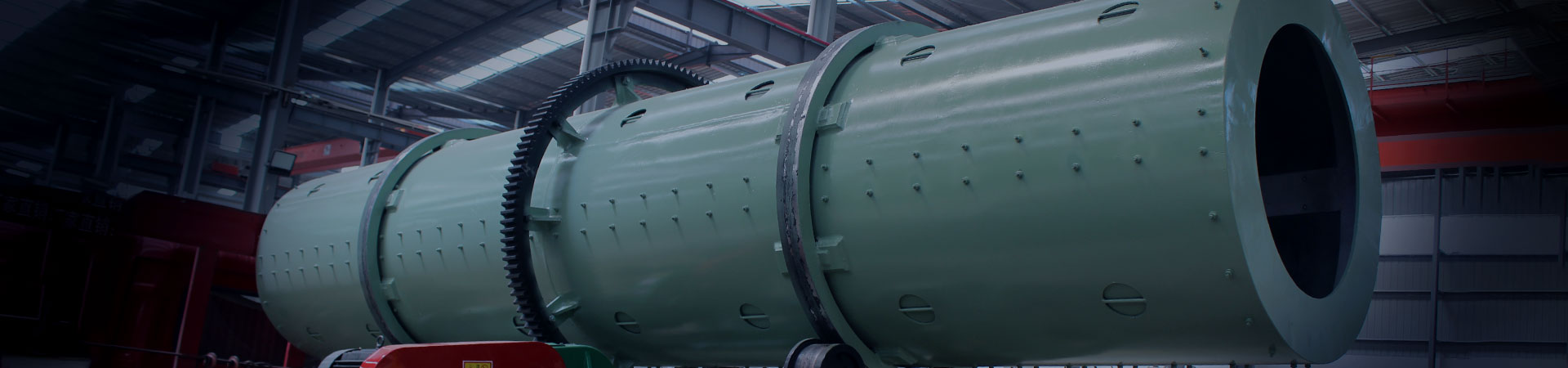
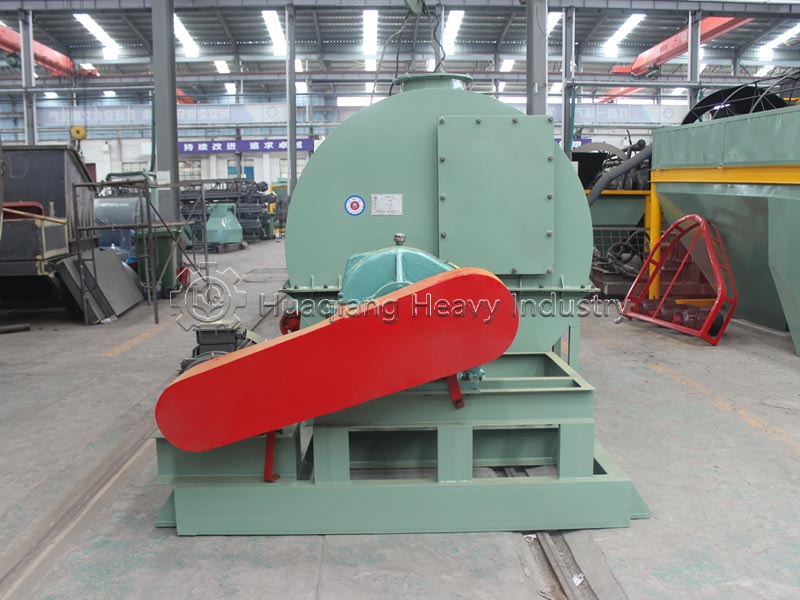
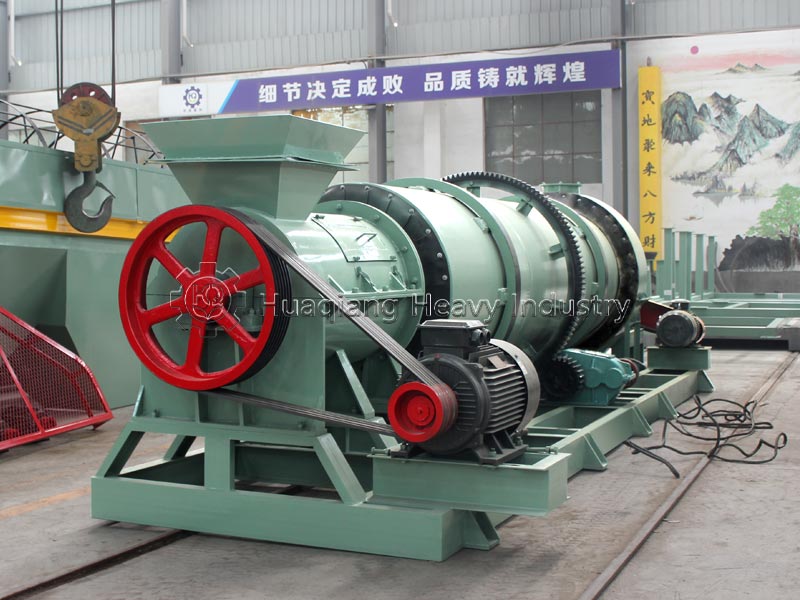
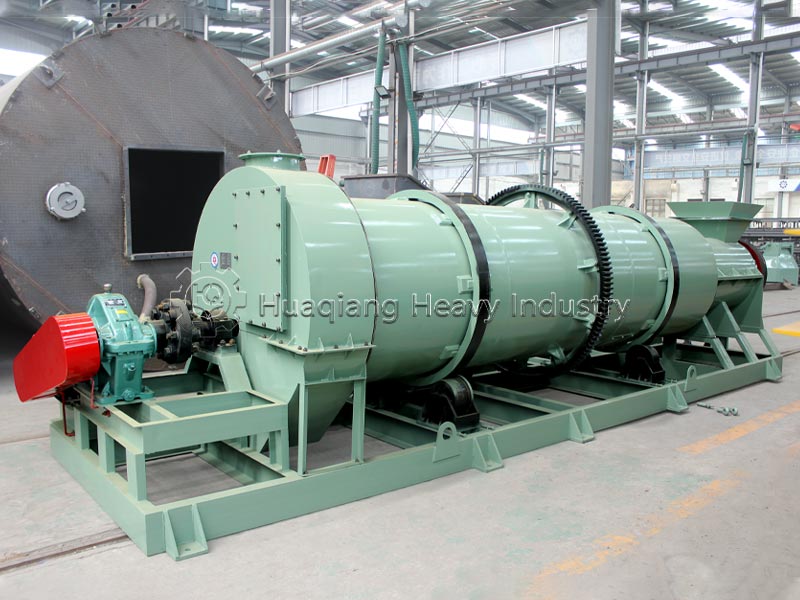
The new type two-in-one organic fertilizer granulator (also known as a new type stirring tooth-drum granulator) is a composite wet continuous granulation equipment that integrates the core advantages of traditional stirring tooth granulators and rotary drum granulators. It is a core forming equipment in organic fertilizer production lines. This equipment adopts a wet continuous pusher granulation process. It changes the low efficiency of traditional disc granulators and the unstable pelletizing rate of rotary drum granulators. Through the combined action of the inner stirring tooth and the outer rotating drum, the material undergoes multiple physical processes such as mixing, spheroidizing, extrusion, and polishing within the machine, producing round, firm granules with an organic matter content of up to 100%. The equipment overcomes the limitations of single granulation equipment, adopting an innovative wet continuous pusher granulation process that combines the dual characteristics of mechanical stirring forced granulation and rotary drum rolling polishing, perfectly solving the industry pain point that conventional granulation equipment cannot handle coarse fiber and high-moisture organic materials.
This equipment is suitable for large-scale production of organic fertilizers and organic-inorganic compound fertilizers. It can directly granulate fermented and decomposed organic materials without deep drying or the addition of binders. It boasts a high granulation rate, excellent granule quality, stable operation, and lower energy consumption, making it a mainstream upgraded equipment in the current field of ecological organic fertilizer production. The entire machine adopts a thickened seamless steel pipe shell and an integrated stable base, resulting in strong structural rigidity, wear resistance, durability, and a long service life. It supports multiple specifications and is suitable for various organic fertilizer production scenarios of all sizes.
Equipment Structure and Composition
The equipment adopts a modular integrated structure design, consisting of eight core components. The structure is rationally laid out, with stable transmission and convenient disassembly and maintenance. The specific components are as follows:
1. Uniform Feeding Mechanism: Precisely controls the feed rate, ensuring continuous and uniform material entry into the granulation chamber, avoiding material interruption and blockage, and guaranteeing granulation stability. It is the foundation for uniform granulation.
2. Dual-Stage Granulation Chamber: Integrates a primary stirring tooth granulation section and a secondary drum polishing and forming section, realizing integrated operation of material mixing, nucleation, extrusion, spheroidization, and polishing. This is the core working area of the equipment.
3. High-Speed Stirring Tooth Rotor System: The rotor is divided into three sections: mixing section, granulation section, and polishing section. The stirring teeth are made of high-hardness alloy steel, wear-resistant, and adjustable in length. The cutter heads are impact-resistant and not easily deformed. High-speed rotation achieves forced stirring and extrusion of materials into granules.
4. Drum Body Mechanism: Constructed from thickened seamless steel pipe with wear-resistant reinforced inner walls, it can rotate at a uniform speed, working in conjunction with the stirring teeth to achieve material rolling densification and spherical polishing, improving particle roundness.
5. Transmission Power System: Includes a national standard motor and a high-precision reducer. The reducer gears are machined using special processes, resulting in strong load-bearing capacity, low noise, and smooth transmission. High-power models are equipped with independent motor bases for excellent vibration damping.
6. Discharge Screening Pre-treatment Chamber: Automatically discharges formed particles, pre-screening a small amount of powder to reduce the pressure on subsequent processes and ensure uniform particle size.
7. Integrated Stable Frame: The frame fits evenly against the base surface, providing strong load-bearing capacity, vibration damping, and noise reduction, eliminating equipment vibration and ensuring long-term stable operation.
8. Speed Control System: Equipped with a stepless speed regulator, allowing free adjustment of the spindle speed and feed rate, precisely controlling particle size to adapt to different production needs.
Equipment Working Principle
The new type two-in-one organic fertilizer granulator adopts a wet continuous pusher granulation process. It overcomes the shortcomings of traditional disc granulators (low efficiency) and drum granulators (unstable pelletizing rates). Through the combined action of the inner rotating agitator and the outer rotating drum, the material undergoes multiple physical processes within the machine, including mixing, pelletizing, extrusion, and polishing, producing round, firm granules with an organic content of up to 100%.
The machine’s working principle can be divided into two stages: Stage 1 – Agitator Granulation: Material enters the machine through the feed inlet at one end and is continuously propelled by the granulation rotor. Utilizing the high-speed rotating mechanical stirring force and the resulting aerodynamics, the fine powder material continuously undergoes mixing, granulation, pelletizing, and densification within the machine. This stage leverages the characteristic that organic particles can interlock and grow under certain forces, achieving initial granulation without the need for binders.
The second stage – rotary drum granulation (secondary shaping): The semi-finished granules enter the rotary drum granulation section, where they undergo further spheroidization, densification, and polishing under the combined action of centrifugal force and friction, forming smooth, round spherical granules.
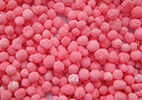
The shaped granules are then screened by a built-in sieving device. Qualified granules are discharged directly, while unqualified granules are recycled for secondary granulation, resulting in no material waste.
Equipment Compatibility with Raw Materials
This equipment boasts exceptional compatibility, overcoming the raw material limitations of traditional granulation equipment. It specializes in processing coarse fiber, high-moisture, and lightweight fine powder organic materials, adapting to all matured organic raw materials. The core compatible raw material categories are as follows:
1. Livestock and Poultry Manure: Chicken manure, pig manure, cow manure, sheep manure, and other livestock manure (after mature fermentation);
2. Agricultural Waste: Crop straw, mushroom residue, distiller’s grains, medicinal residue, oilseed cake, peat moss, straw bran powder, and other coarse fiber materials;
3. Industrial Organic Waste: Food processing waste, humic acid, urban sludge, kitchen waste fermentation residue, etc.;
4. Soil and Mineral Auxiliaries: Clay, kaolin, charcoal granules, and other lightweight fine powder materials;
5. Compound Fertilizers: Various organic-inorganic compound raw materials, microbial organic fertilizer raw materials, and ecological compost raw materials.
Raw material compatibility requirements: Before granulation, the particle size of the material should be ≤50 mesh, and the optimal moisture content should be 20%-40%. No deep drying is required. After fermentation and decomposition, the material can be directly granulated. The finer the material, the better the sphericity, uniformity, and compactness of the finished granules.
Organic Fertilizer Production Process (Fermentation + Granulation Entire Process)
1. Fermentation Process (Core Pre-process)
Fermentation is the core foundation of organic fertilizer production, directly determining the granulation effect and the fertilizer fertility of the finished product. The entire process utilizes aerobic composting, as follows:
Organic raw materials (manure, straw, waste residue, etc.)
Mixing ratios → Adding fermentation inoculum → Uniform stirring → Tank/stack aerobic fermentation → Regular turning and aeration (7-15 days) → High-temperature composting, deodorization, and dehydration → Material cooling and settling → Crushing and sieving (≤50 mesh) → Ready for granulation.
Core Requirements: The material must be fully composted, free of raw materials and odors. After composting, the moisture content should be controlled between 20% and 40%. No deep drying is required; it can be directly fed into the granulation stage.
2. Granulation and Molding Process (Core Equipment Section) Mature powdery material → Quantitative feeding by a uniform feeder → Mixing, extruding into pellets, and polishing to achieve density by a two-in-one granulator → Granulation discharge → Natural cooling → Precision sieving → Qualified granules → Packaging and warehousing; The sieved powder and small particles can be recycled for secondary granulation, eliminating raw material waste.
This process eliminates the drying and binder addition steps of traditional granulation, simplifying the production process, shortening the production cycle, and significantly reducing equipment investment and operating costs.
Equipment Operation Method
1. Installation and Debugging
Place the granulator flat on the precast concrete platform and secure the base with anchor bolts.
Assemble the components according to the instruction manual.
Add gear oil to the reducer.
Check that all bolts are tightened.
Check that the bearing housings and reducer have sufficient oil.
2. No-Load Test Run
The machine should be started under no-load conditions; starting with material is strictly prohibited.
Start the motor and check if the rotation direction is correct. If it is reversed, stop the machine immediately and adjust.
Run continuously under no-load for 8 hours; the temperature of each bearing must not exceed 50℃.
3. Trial Production
Control the raw material moisture content between 20% and 40% depending on the material.
First, test the machine with materials with lower moisture content (a lower pelletizing rate is normal at this time).
After producing 200-300 kg, adjust the raw material moisture content according to the pellet quality.
Reduce moisture if the pellets are too large; increase moisture if the pellets are too small or contain powder.
4. Normal Production
Ensure uniform feeding and consistent raw material moisture content
Adjust speed via frequency converter or pulley (usually 50-150 rpm)
Check pellet quality every 15-30 minutes
5. Shutdown Procedure
Stop feeding first, and stop the machine only after most of the material has been discharged.
If necessary, restart the machine after stopping for 2-3 minutes to expel all the material from the machine.
Equipment Application in Production Lines
The new type two-in-one organic fertilizer granulator is the core forming equipment in the entire organic fertilizer production line. A typical production line process flow is as follows: Raw material batching → Mixing and stirring → Crushing and agglomeration → Two-in-one granulation → Primary screening → Granule drying → Granule cooling → Secondary screening → Finished product coating → Quantitative packaging
This machine plays a crucial role in the production line by processing fermented and decomposed organic materials into regular granules. Its unique modular design allows for flexible adjustment of the process mode according to the material characteristics.
Suitable Scenarios:
1. Small and medium-sized organic fertilizer plants
2. Large-scale livestock farms (manure resource utilization)
3. Solid waste resource utilization centers
4. Production enterprises with limited space and low equipment investment budgets
Daily Equipment Maintenance Methods
1. Daily Cleaning: After each day’s production, clean the inner wall of the machine and remove any residual powder from the discharge port to keep the cavity clean and prevent material from clumping, corroding the equipment, and affecting the granulation effect in subsequent batches.
2. Lubrication and Maintenance: Check the lubricating oil level in the bearing housing and reducer weekly, and change the lubricating oil monthly. Regularly add grease to high-speed transmission components to reduce wear.
3. Inspection of Wear Parts: Check the wear of the agitator teeth and cutter heads monthly. Replace severely worn parts promptly to prevent decreased granulation rate and uneven particle size caused by agitator wear.
4. Fastener Inspection: Regularly check the bolts on the machine body, motor, and couplings, and tighten any loose parts promptly to prevent equipment vibration during operation.
5. Long-Term Shutdown Maintenance: For long-term shutdown, empty the equipment of materials, clean and dry the cavity, apply rust-preventive oil, and cover for protection to prevent rust and corrosion.
2. Lubrication and Maintenance: Check the lubricating oil level in the bearing housing and reducer weekly, and change the lubricating oil monthly. Regularly add grease to high-speed transmission components to reduce wear.
3. Inspection of Wear Parts: Check the wear of the agitator teeth and cutter heads monthly. Replace severely worn parts promptly to prevent decreased granulation rate and uneven particle size caused by agitator wear.
4. Fastener Inspection: Regularly check the bolts on the machine body, motor, and couplings, and tighten any loose parts promptly to prevent equipment vibration during operation.
5. Long-Term Shutdown Maintenance: For long-term shutdown, empty the equipment of materials, clean and dry the cavity, apply rust-preventive oil, and cover for protection to prevent rust and corrosion.
Common Equipment Faults and Solutions
| Common Faults | Possible Causes | Solutions |
|---|---|---|
| Low pelleting rate & excessive powder output | Too low raw material moisture; over-coarse material particle size; improper main shaft speed; severely worn stirring teeth | Properly increase raw material moisture content; re-sieve materials to below 50 mesh; fine-tune main shaft speed; replace worn stirring teeth |
| Over-sized & loosely formed pellets | Excessively high raw material moisture; over-large feeding volume; too low rotation speed | Air-dry to reduce material moisture; decrease feeding volume per unit time; properly raise main shaft speed |
| Material blockage & overloaded operation | Over-fast feeding & material agglomeration; accumulated residual materials inside the chamber | Stop feeding immediately and shut down to clean caked materials in the chamber; adjust to steady feeding rhythm to avoid overloaded operation |
| Abnormal noise & vibration during operation | Loose bolts; lack of lubrication & worn bearings; misalignment between motor and main unit | Tighten all loose bolts; refill lubricating oil or replace bearings; recalibrate parallelism between motor and main unit |
| High powdering rate & easily breakable pellets | Insufficient material decomposition; insufficient compaction after forming; over-high rotation speed | Ensure full decomposition of raw materials; lower main shaft speed to extend pellet polishing and compaction time |
Product Advantages
1. Dual-process integration, wide adaptability: The granulation mode can be flexibly switched according to raw material characteristics (humidity, viscosity, fiber content), requiring no complex pretreatment.
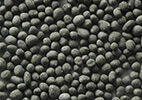
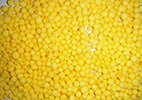
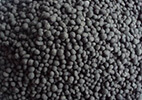
2. High pelleting rate, aesthetically pleasing granules: The pelleting rate can reach 90%-99%, producing spherical granules with smooth, rounded surfaces, no sharp corners, and extremely low pulverization rate.
3. High organic content: 100% pure organic granulation can be achieved without the addition of binders.
4. Energy saving and consumption reduction: No drying of raw materials is required before granulation; raw material moisture content of 20%-40% is sufficient for direct granulation. Compared to traditional equipment, the floor space is reduced by approximately 2/3, and equipment purchase costs are reduced by 30%-50%.
5. Concentrated particle size distribution, easy to control: Compared to disc granulators and traditional rotary drum granulators, the particle size distribution is more concentrated.
6. Robust and durable: Core components are made of high-manganese steel wear-resistant material, increasing service life by more than 50% compared to traditional granulators.
2. High pelleting rate, aesthetically pleasing granules: The pelleting rate can reach 90%-99%, producing spherical granules with smooth, rounded surfaces, no sharp corners, and extremely low pulverization rate.
3. High organic content: 100% pure organic granulation can be achieved without the addition of binders.
4. Energy saving and consumption reduction: No drying of raw materials is required before granulation; raw material moisture content of 20%-40% is sufficient for direct granulation. Compared to traditional equipment, the floor space is reduced by approximately 2/3, and equipment purchase costs are reduced by 30%-50%.
5. Concentrated particle size distribution, easy to control: Compared to disc granulators and traditional rotary drum granulators, the particle size distribution is more concentrated.
6. Robust and durable: Core components are made of high-manganese steel wear-resistant material, increasing service life by more than 50% compared to traditional granulators.
Equipment parameters
| Model | Capacity (t/h) | Output Granules Size (mm) | Motor Power (Kw) | Outside Dimension (mm) |
|---|---|---|---|---|
| YSL2-80/120 | 4-8 | 1-5 | 37+18.5-5.5 | 7500×2300×1950 |
| YSL2-100/150 | 6-10 | 1-5 | 55+18.5+11 | 7700×2500×2260 |
| YSL2-120/180 | 8-15 | 1-5 | 75+22+15 | 9600×3000×2750 |
The new type two-in-one organic fertilizer granulator (new type stirring tooth-drum granulator) organically integrates the forced stirring granulation mechanism of the stirring tooth granulator with the rolling polishing mechanism of the rotary drum granulator, achieving a major breakthrough in organic fertilizer granulation technology. This equipment boasts a granulation rate of 90%-98%, capable of handling high-moisture materials with a moisture content of 20%-40% and coarse fibrous materials that are difficult to granulate with conventional equipment. Furthermore, it achieves pure organic granulation without the need for binders, making it an ideal piece of equipment for the production of organic fertilizers and organic-inorganic compound fertilizers.
Whether you are building a new organic fertilizer/compound fertilizer/feed production line and need a complete equipment solution, upgrading an existing production line and need equipment selection advice, or encountering difficulties in granulating high-moisture, sticky, or coarse fibrous materials and need technical support—we are always ready to provide you with professional and sincere service.
Whether you are building a new organic fertilizer/compound fertilizer/feed production line and need a complete equipment solution, upgrading an existing production line and need equipment selection advice, or encountering difficulties in granulating high-moisture, sticky, or coarse fibrous materials and need technical support—we are always ready to provide you with professional and sincere service.