

Equipment Introduction
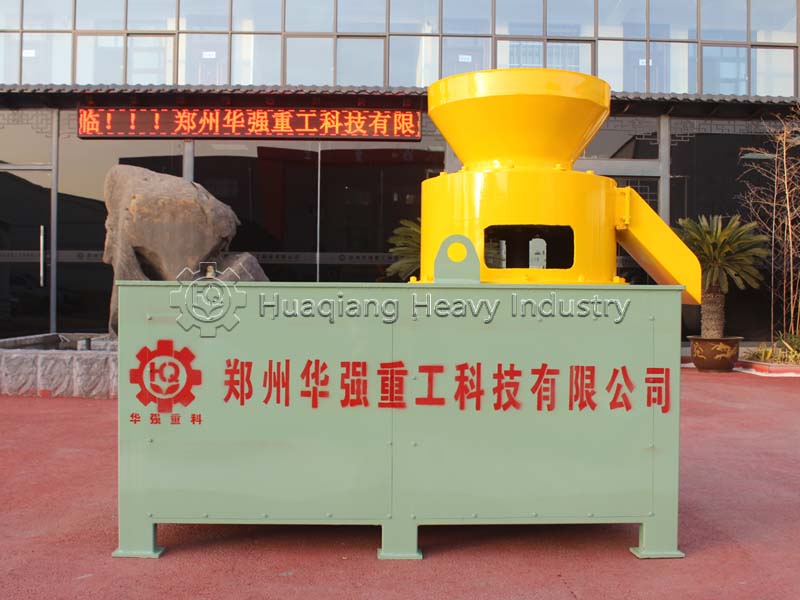
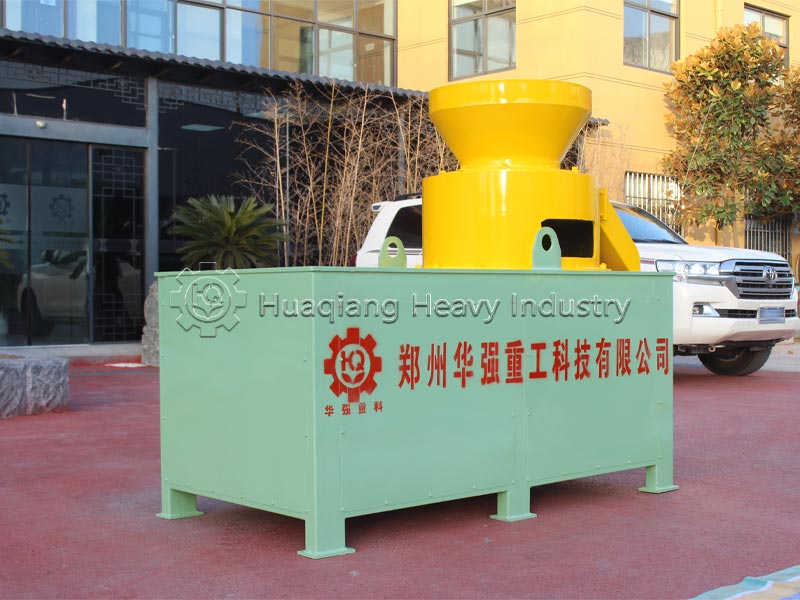
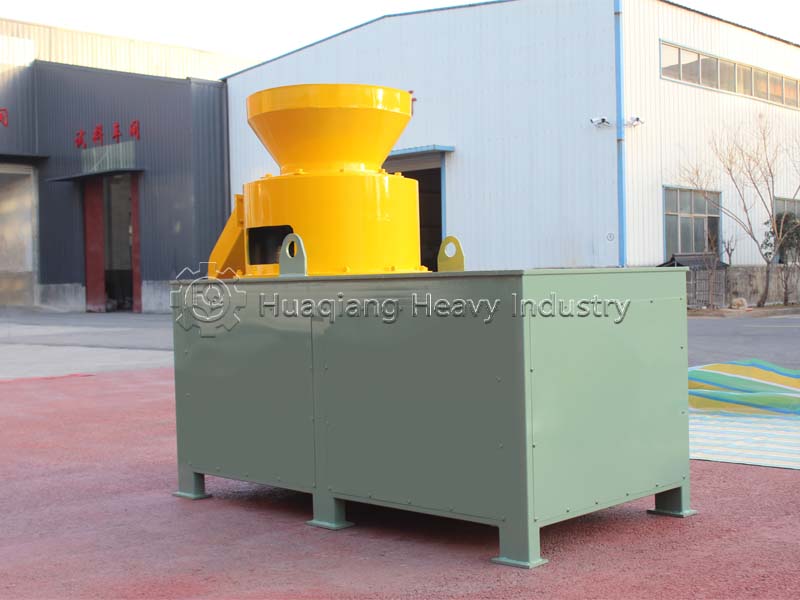
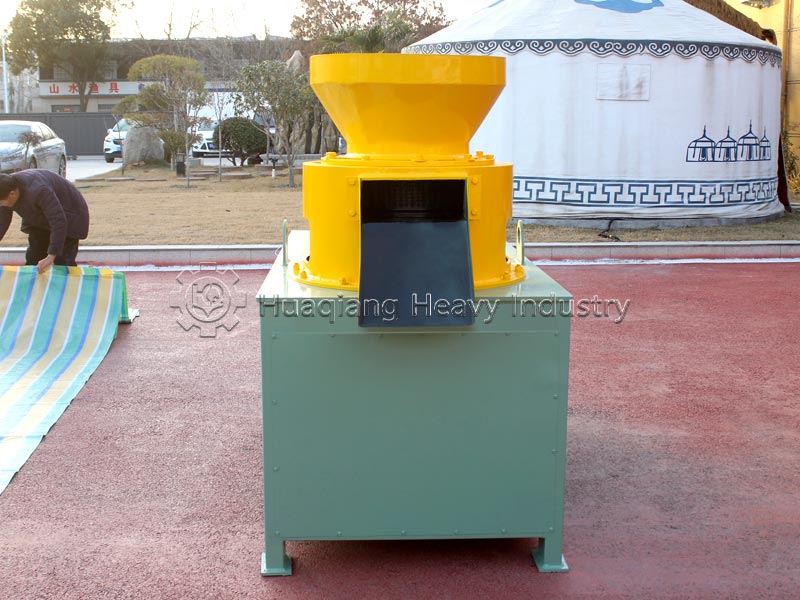
The ring die pelleting machine (also known as a dual-die pelleting machine) is a cutting-edge piece of equipment in the production of bio-organic fertilizers and compound fertilizers. It integrates the high-pressure molding performance of traditional ring die pelleting machines with the strong adaptability of flat die pelleting machines to coarse fibrous materials, representing a deep fusion and innovation in fertilizer granulation technology.
The ring die pelleting machine was specifically developed for organic fertilizer raw materials (such as livestock manure, straw, and medicinal residue) which have high fiber content, high moisture content, and poor binding strength. The core concept of this equipment is “energy reduction and efficiency improvement,” achieving high one-time granulation rate, aesthetically pleasing granules, and minimal nutrient loss through its unique mechanical structure.
The ring die pelleting machine(Ring Die & Flat Die Combined Pelleting Machine) is an innovative piece of equipment in the field of bio-organic fertilizer production. It cleverly combines the technical advantages of “ring die” and “flat die,” solving the pain points of traditional granulators such as poor adaptability to coarse fibrous materials and easy die wear.

Equipment Structure and Composition
I. Core Component System

Component NameFunction DescriptionMaterial / Process Specifications
Ring DiePorous cylindrical structure; materials are extruded and formed through its die holesHigh-quality alloy steel / stainless steel, precision machined with vacuum heat treatment; smooth and clean die hole surface
Pressure Roller2–4 free-rotating grooved rollers working with the ring die to squeeze materialsCast and tempered; surface hardness ≥ HRC55, wear-resistant and anti-corrosion
Flat DieFlat circular die plate with evenly distributed die holes, determines pellet shape and sizeAlloy structural steel forged, double-sided usable
Main Shaft / Drive ShaftTransmits power and drives the ring die or flat die to rotateAlloy structural steel forged, excellent strength and toughness
Feeding SystemScrew conveyor or vibration feeder, delivers materials evenly and stablyStainless steel construction, equipped with speed regulator
Cutter DeviceCuts extruded columnar materials from die holes into pelletsCutter head inlaid with cemented carbide
Gearbox / Transmission CaseReduces rotation speed and provides stable power outputIntegrally cast housing, equipped with gear oil lubrication system
Conditioner (Optional)Injects steam to adjust material temperature and moisture, improves pelleting performanceStainless steel construction

II. Five Major Functional Systems
1. Feeding System: Mechanical forced feeding or gravity vertical feeding, equipped with frequency conversion speed regulation.
2. Conditioning System: Steam conditioning to improve material granulation characteristics.
3. Granulation System: Core working area of ​​ring die + pressure roller extrusion molding.
4. Adjustment Mechanism: Die-roller gap adjustment (key parameter 0.1-0.3mm), pressure roller limit screws.
5. Lubrication System: Automatic lubrication pipeline to ensure good lubrication of pressure rollers and bearings.
III. Features of Dual-Die Integrated Structure
“Dual-Die” Core Meaning:
1. Ring Die Mode: The ring die rotates, and the pressure roller, as the driven wheel, follows the rotation, and the material is squeezed into the die hole between the die rollers.
2. Flat Die Mode: The flat die plate or the pressure roller rotates, and the material falls vertically into the pressing area to be extruded and molded.
3. Integrated Machine Design: The two modes are integrated into the same main unit, equivalent to two granulators working simultaneously, doubling the production capacity.

Equipment Working Principle
The working logic of the ring die pelleting machine is called “step-by-step compaction process”:
Distribution Stage: Material is evenly spread into the granulation chamber by a rotating forced feed knife.
Pre-compression Stage: The material first passes through the flat die area, where air is expelled under the pressure of the rotating rollers, initially increasing the material density.
Forming Stage: The pre-compressed material is forcibly pushed into the aperture of the annular die. Due to the strong friction and reaction forces within the aperture, the material undergoes physical deformation under extremely high pressure, eventually overflowing through the orifice.
Cutting Stage: An external adjustable cutter cuts the long strip of material into uniformly sized cylindrical particles according to customer requirements.

Applications and Raw Material Adaptability
The ring die pelleting machine is known as the “all-rounder of the fertilizer industry” due to its extremely high tolerance for raw materials:
Raw Material Types:
Plant-based: Corn stalks, rice straw, peanut shells, distiller’s grains, sugar residue, sawdust, palm residue.
Animal-based: Cow manure, pig manure, chicken manure, sheep manure, silkworm excrement.
Industrial-based: Paper mill sludge, organic matter from municipal solid waste, humic acid, biochemical treatment residues.
Applications: Large and medium-sized organic fertilizer plants with an annual output of 10,000-200,000 tons; professional feed processing units; ecological circular agriculture demonstration parks.

Raw Materials for the Equipment
The dual-die pelleting machine/ring die pelleting machine has strong adaptability to raw materials, mainly reflected in:
1. Wide range of raw material moisture content: It can process materials with a moisture content of 20%-50%. High-moisture, viscous materials (such as fermented livestock and poultry manure, sludge, etc.) can be directly granulated without pre-drying.
2. Raw Material Types
Livestock and Poultry Manure: Chicken manure, pig manure, cow manure, sheep manure, etc. (fermentation materials)
Agricultural Waste: Straw powder, corn stalks, rice straw, cotton stalks, etc.
Industrial Organic Waste: Distillers’ grains, soybean residue, mushroom residue, medicinal residue, sugar mill filter mud, papermaking sludge, etc.
Urban Organic Waste: Domestic sewage sludge, kitchen waste, etc.
Natural Organic Materials: Peat moss, humic acid, etc.
3. Raw Material Pretreatment Requirements
Fermentation and composting treatment is required first.
Ensure no hard impurities such as metal or stones are present before feeding.
For muddy materials with extremely high moisture content (>50%) and no binding properties, simple dehydration or the addition of straw powder, rice husks, or other auxiliary materials is recommended.
Materials need to be crushed to a suitable particle size to avoid excessive volume.

Granulation Process of the Equipment
The granulation process used in the dual-die pelleting machine/ring die pelleting machine is extrusion molding granulation. The core process parameters and control points are as follows:
1. Process Principle
The material is subjected to strong pressure from the pressure rollers within the ring die cavity, forcing it to be extruded through the die holes on the side wall of the ring die. The ring structure ensures more uniform stress on the raw material, resulting in high-density and regular-looking granules.
2. Key Process Parameters
Gap between pressure roller and ring die: 0.1-0.3mm
Material moisture content: 20%-50% (dual-die); typically 15%-17% for feed pelleting
Pellet temperature rise: <30℃
Pelletization rate: >95%
Pellet diameter: Φ2-10mm adjustable
3. Process Characteristics
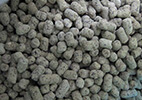
Smooth pellet surface and moderate hardness
Low temperature rise during processing, effectively preserving the nutrients within the raw material
Low pellet moisture content, facilitating storage
Retains its original shape for a longer period in water, improving material utilization
Flexible dual-die switching: flat die mode is suitable for highly moist and sticky materials, ring die mode is suitable for loose materials

Equipment Application in Production Line Integration
1. Complete Organic Fertilizer Production Line Configuration
Raw Material Collection → Pretreatment → Fermentation → Crushing → Batching → Mixing → Granulation → Drying → Cooling → Screening → Packaging

Work SectionMain EquipmentFunction Description
Fermentation SystemTurner, Mixing Blender, Biological DeodorizerMaterial decomposition and harmless treatment (about 15 days)
Crushing SystemSemi-wet Material Crusher, Chain CrusherCrush fermented materials to 3-4mm
Batching SystemElectronic Batching System, Disc FeederProportion multiple raw materials according to formula
Mixing SystemHorizontal Mixer / Disc MixerMix materials evenly
Granulation SystemDual Die Granulator (Core Equipment)Extrude and form pellets
Drying SystemRotary Dryer, Hot Air FurnaceReduce pellet moisture content
Cooling SystemCoolerFast temperature reduction to prevent caking
Sieving SystemDrum ScreenerClassified screening to remove unqualified pellets
Packing SystemAutomatic Packing ScaleQuantitative packing of 20-50kg per bag
Dust Removal SystemCyclone Dust Collector / Pulse Dust CollectorDust emission less than 10mg/m³

2. Configuration of production lines of different sizes

Annual Production CapacityGranulator ModelMatching PowerMain Production Line Equipment
10,000 tons per yearModel HP-45030+1.5kWCompost Turner, Crusher, Mixer, Granulator, Dryer, Screener
30,000 tons per yearModel HP-65055+3kWThe same equipment as above with upgraded specifications
50,000-100,000 tons per yearLarge Ring Die Granulator Unit90-150kWAutomatic batching system, PLC control system
Over 200,000 tons per yearMultiple Units in ParallelCombined power of multiple unitsFully automatic production line with DCS control system

Common Equipment Problems and Solutions
1. Common Problems: The following problems may occur during the use of the ring die pelleting machine:
Mold blockage: Caused by excessively dry material or a high proportion of coarse fibers.
Uneven particle size: May be caused by insufficient mixing or inappropriate material ratio.
Equipment overheating: Mainly caused by overload or prolonged continuous operation.
Equipment vibration: May be caused by loose pressure rollers or worn parts.
Abnormal noise: Due to aging bearings or insufficient lubrication.
2. Problem Solving Methods
For mold blockage, re-add lubricant and clean the blockage with oily powder.
For uneven particle size, readjust the mixing ratio and water ratio to ensure more uniform material distribution.
Inspect the motor and speed transmission; for overheating issues, reduce the material feeding speed.
Completely overhaul key components, including pressure rollers, bearings, and the motor, to eliminate potential safety hazards.
Equipment Parameters

Organic Fertilizer Double Die Pellet Machine

ModelHP-450HP-650
Capacity (t/h)2-54-8
Pelleting Rate (%)>95%>95%
Motor Power (Kw)30+1.555+3
Overall Dimension (mm)2150*1350*22002500*1350*2535
Equipment Maintenance Methods
1. Daily Maintenance
Removing Residual Material: Regularly remove residual material from the ring die cavity.
Lubrication: Before each shift, fill the lubrication gauges on the two roller eccentric shafts with lubricating oil.
Checking Clearance: Regularly check whether the clearance between the rollers and the inner wall of the ring die is within normal limits.
Checking Belts: Regularly check the tension of the V-belts and adjust them promptly.
Cleaning Equipment: Regularly clean the equipment exterior to remove dust and dirt.
2. Periodic Maintenance
Pressure Roller Bearings: Lubricate the pressure rollers every shift during the first week of operation; thereafter, after more than 10 shifts (8 hours per shift), the rollers need to be disassembled, and high-temperature grease should be applied to the bearings.
Gearbox: Replace the oil seal promptly if there is any oil leakage.
Bolt Inspection: Regularly check the tightness of the bolts.
New Ring Dies Require New Pressure Rollers: The pressure rollers must be loose at the beginning and tight at the end when fitting the ring die.
3. Precautions:
During granulation, the pressure roller must not come into contact with the die and run idle.
Do not allow the pellet mill to run idle for several minutes without material.
When installing the ring die, apply lubricant to the threads of the inner and outer fastening bolts, but be careful not to apply grease to the threads.
Advantages and Competitiveness of the Equipment
1. Core Advantages of the Dual-Mold Granulator
Advantage DimensionDetailed Performance
Dual Die Integrated DesignCombines ring die and flat die in one machine, equivalent to two granulators working simultaneously, doubling production capacity
High Granulation RatePellet forming rate >95%, qualified finished product rate over 90%
Excellent Pellet QualitySmooth surface, moderate hardness, uniform composition and neat shape
Low Temperature RiseTemperature rise during processing <30°C, retaining nutritional components of raw materials
Low Moisture ContentFinished pellets feature low moisture for easy storage and maintain intact shape in water
No Binder RequiredNo loss of organic matter, realizing pure organic granulation without additives
Durable MoldsMade of alloy steel/stainless steel with vacuum heat treatment, usable on both sides
Easy OperationOptimized process, simple operation; feeding system equipped with speed regulator
Strong Material AdaptabilityCapable of processing various raw materials to meet diverse production demands
2. Comparison with single-mode granulators
Comparison ItemDual Die GranulatorSingle Ring Die GranulatorSingle Flat Die Granulator
Production CapacityHigh (Cooperative work of dual dies)HighMedium-Low
Raw Material AdaptabilityWide (Complementary performance of two die types)Relatively WideWide (Optimal for crude fiber materials)
Investment CostMediumRelatively HighRelatively Low
Maintenance DifficultyMediumComplicatedSimple
Pellet DensityHighHighMedium
Flat die pellet machines employ a vertical pressure feeding design, making them highly adaptable to coarse fibrous materials and less prone to clogging; while ring die pelleting machines excel at handling standardized raw materials, offering high efficiency for large-scale production. The dual-die pellet mill combines the advantages of both, achieving an optimal balance.
Dual-die pelleting machines/ring die pelleting machines, with their core advantages such as ring die rotary extrusion molding technology, flexible switching between dual dies, direct granulation of high-moisture materials, and low-temperature processing to preserve nutrients, have become key granulation equipment in multiple fields including organic fertilizer, compound fertilizer, feed, and biomass fuel.
Whether you are building a new organic fertilizer/compound fertilizer/feed production line and need a complete equipment solution, upgrading an existing production line and need equipment selection advice, or encountering difficulties in granulating high-moisture, sticky, or coarse-fiber materials and need technical support—we are always ready to provide you with professional and sincere service.
logo-bottom1

We are a high-quality manufacturer of organic fertilizer equipment
Providing excellent consultation and after-sales service

© Copyright 2024 Huaqiang All rights reserved.