

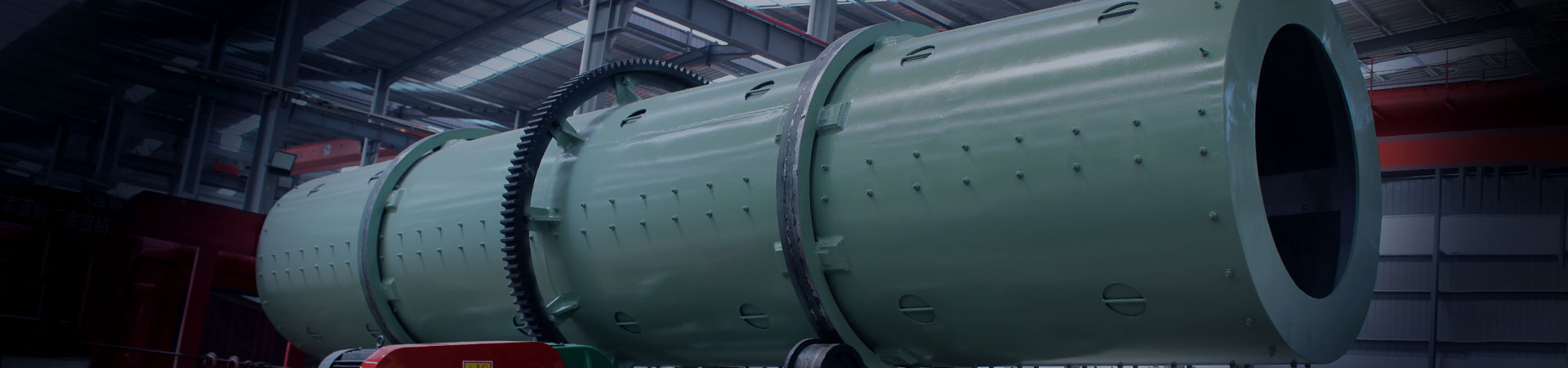
Yes, there is an upper limit to the L/D ratio of a rotary drum dryer, but this limit varies depending on the function of the equipment. For process dryers, the L/D ratio is generally controlled within the range of 3-6, and in industry practice, it rarely exceeds 6. For coolers, the opposite is true; an L/D ratio of no less than 6 is recommended, with 7-8 being more conducive to sufficient heat exchange between the particles and the cold air. The L/D ratio is not an isolated geometric parameter; it, along with air velocity, filling rate, and lifting plates, determines the residence time and thermal efficiency of the material within the drum. Exceeding a reasonable range will rapidly diminish the marginal benefits of lengthening the drum, and may even lead to new process problems.
I. Reasons for the Difference in L/D Ratio between Drying and Cooling
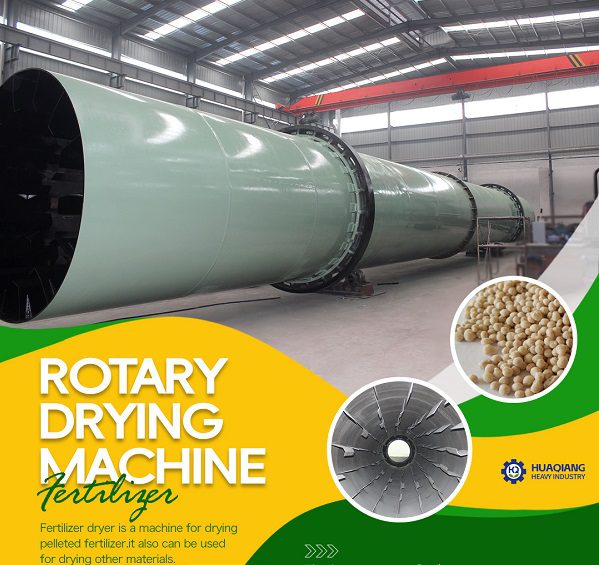
The requirements for L/D ratio in dryers and coolers are opposite because they perform different heat exchange tasks. The task of a dryer is dehydration; heat is mainly transferred to the wet material through hot air. The material needs sufficient residence time within the drum to complete surface evaporation and internal moisture migration. In industry design, the residence time of materials in a dryer is generally controlled at 25-35 minutes, corresponding to a length-to-diameter ratio typically between 3 and 6. Traditional rotary dryers are designed for a residence time of 15-30 minutes, with a length generally 3-6 times the diameter. The initial length-to-diameter ratio range for fertilizer and mineral drying drums is 4:1 to 6:1, with broader practical guidelines extending to approximately 10:1. However, exceeding 6 significantly reduces the drying efficiency per unit volume in the latter part of the drum. If the dryer is too short, to ensure dehydration of high-moisture-content materials, the rotation speed must be reduced to extend the residence time, preventing the formation of an ideal material curtain within the drum and thus impairing the drying effect.
The task of a cooler is different. Cooling does not require evaporation of moisture; it only needs to reduce the particle temperature from 70-90°C at discharge to near ambient temperature. The heat exchange in the cooling process is much less than in drying, but coolers still require sufficient gas-solid contact area and residence time to ensure the outlet temperature meets standards. When the length-to-diameter ratio is below 6, the cylinder is too short, resulting in insufficient contact path between the particles and the cold air. This easily leads to uneven cooling, with the surface being cool and the core hot, causing the temperature inside the bag to rise after packaging and inducing clumping. Increasing the length-to-diameter ratio of the cooler to 7-8 compensates for the smaller temperature difference by providing a longer heat exchange path, allowing the particles more sufficient cooling opportunity within the cylinder, and ensuring the outlet temperature remains more stably below 40℃ within the packaging window.
II. Matching of Filling Ratio and Air Velocity
While the length-to-diameter ratio determines the “geometric capacity” of the cylinder, the actual residence time of the material inside the cylinder and the adequacy of heat exchange also depend on the matching of the filling ratio and air velocity. The filling ratio of rotary dryers is generally controlled at 20%-25%. If the filling ratio is too high, the material layer is thick, the material is not sufficiently dispersed by the lifting plates, and hot air cannot penetrate the material curtain, resulting in decreased drying efficiency. If the filling ratio is too low, the cylinder volume is wasted, and the energy consumption per unit product increases.
Regarding air velocity, the airflow speed inside the dryer drum is typically controlled at 2-3 m/s and should not exceed this range to reduce the entrainment of fine particles. In engineering practice, a cross-sectional air velocity of 2-4 m/s is recommended for the dryer; below 2 m/s, the heat exchange capacity is severely insufficient. Air velocity and length-to-diameter ratio need to be calculated in conjunction: If the air velocity remains constant after lengthening the drum, the material residence time increases, but the temperature drop of the hot air along the path also accumulates, weakening the drying driving force in the later stages; if the air velocity is increased to improve output, it will exacerbate entrainment losses and dust removal load. Adjusting any one of the three factors—length-to-diameter ratio, filling rate, and air velocity—will disrupt the balance of the other two.
III. Length-to-Diameter Ratio Constraints When Increasing Production with Existing Equipment
When increasing the production capacity of existing dryers, the length-to-diameter ratio often becomes the first hard constraint encountered. Increasing output means an increase in the amount of wet material entering the drum per unit time, leading to a corresponding increase in the evaporation load. If only increasing the hot air temperature is used to address the issue, melting is likely to occur when the urea content in a high-nitrogen formulation exceeds 10%, leading to material fouling on the drum walls and deteriorating heat transfer. Increasing the airflow rate, once the wind speed exceeds a reasonable limit, will simultaneously increase fine particle entrainment and exhaust heat loss.
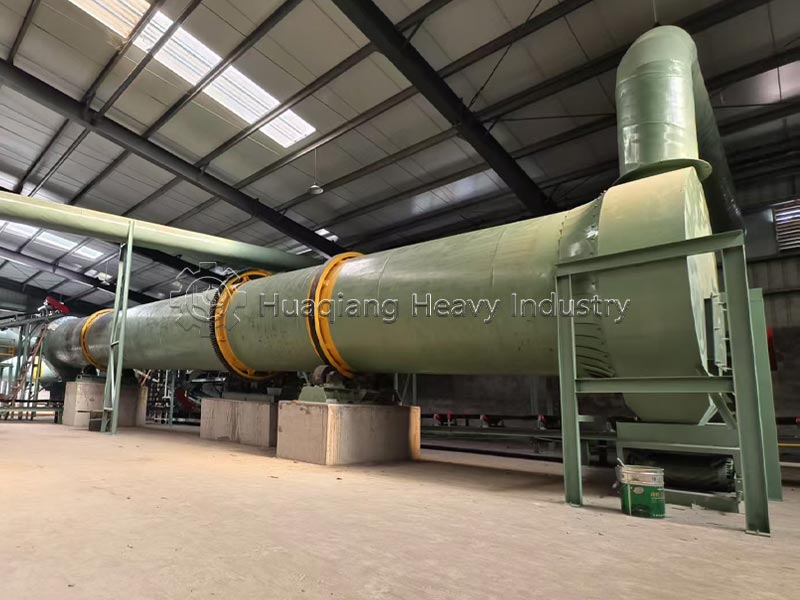
Lengthening the drum seems like a direct way to increase production, but there are clear diminishing returns from an engineering perspective. With an excessively long drum, the drying efficiency per unit volume decreases in the rear section. By the time the hot air reaches the rear section, its temperature and moisture absorption capacity have already diminished, and the increased drum length cannot be proportionally converted into evaporation capacity. Furthermore, the increased transmission load, foundation load, and floor space due to the longer drum will drive up modification costs. A more pragmatic approach to increasing production is to first optimize the layout and filling rate of the lifting plates to improve the uniformity of the material curtain, then calculate the matching of wind speed and hot air temperature, and only then consider changes to the drum geometry. If the existing length-to-diameter ratio is already close to the upper limit of 6, the marginal output of simply lengthening the drum is very low; a two-stage or multi-stage drying solution should be adopted.
IV. FAQ: Will Extending the Dryer Increase Production?
Q: The existing rotary drum dryer’s output is insufficient. Will simply extending the drum length solve the problem?
A: It can bring some improvement, but it usually doesn’t achieve the linear expectation of “the increase in output equals the increase in length.” The direct effect of extending the drum is to prolong the material residence time. For production lines with inherently short residence times and high output moisture content, the moisture index will improve after extension. However, the dryer’s evaporation capacity is limited by the heat input of the hot air and the contact efficiency between the airflow and the material. The hot air at the rear of the drum has already cooled and humidified, so the drying driving force of the added length is limited. If the moisture content of the granulation at the front end is not reduced, or if the lifting plate layout is unreasonable, resulting in a sparse material curtain, simply extending the drum only extends the “incomplete drying” problem to a longer drum, while energy consumption and floor space increase simultaneously. A more prudent approach is: first, measure the residence time and output moisture content to confirm whether the bottleneck is truly “insufficient length”; then check the lifting plate type and filling rate to improve the material curtain quality; finally, assess whether there is still room for adjustment in the hot air temperature and airflow. If all three factors are met and production capacity is still insufficient, then consider lengthening the drum or adding a secondary dryer. Lengthening is a last resort, not the first.
The upper limit of the length-to-diameter ratio of a rotary drum dryer is essentially a balance line between heat exchange efficiency and drum geometry. Dryers prioritize dehydration efficiency within the 3-6 range, while coolers prioritize cooling uniformity within the 6-8 range. These are opposite directions, but the logic is the same: the length-to-diameter ratio serves residence time and heat exchange path, not the other way around, forcing the process to accommodate drum dimensions. Only by accurately calculating the matching of residence time, fill rate, and air velocity before deciding whether to lengthen the drum or optimize its internal structure can a reliable foundation for increasing production be established.