

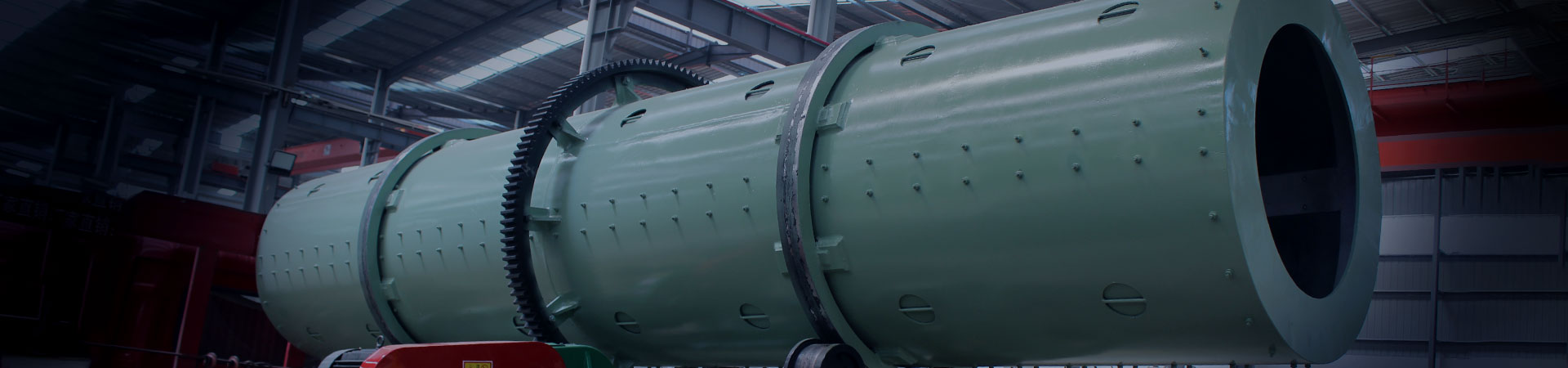
In the grand symphony of fertilizer production, if the various automated machines are the instruments playing precise melodies, then the Loader Feeding Hopper is the indispensable overture and rest—it steadily receives the irregular, variable rhythm of raw material input from the outside world and transforms it into a steady, continuous “beat” that the production line can smoothly digest. It is the cornerstone that allows the entire process to operate with poise and efficiency.
Core Advantages: The Master of Transforming Chaos into Order
The core value of the loader feeding hopper lies in its outstanding ability as a buffer and converter, perfectly transforming the intermittent, fluctuating operations of front-end loading into the continuous, stable demands of back-end production.
Powerful Material Receiving & Buffering Capacity
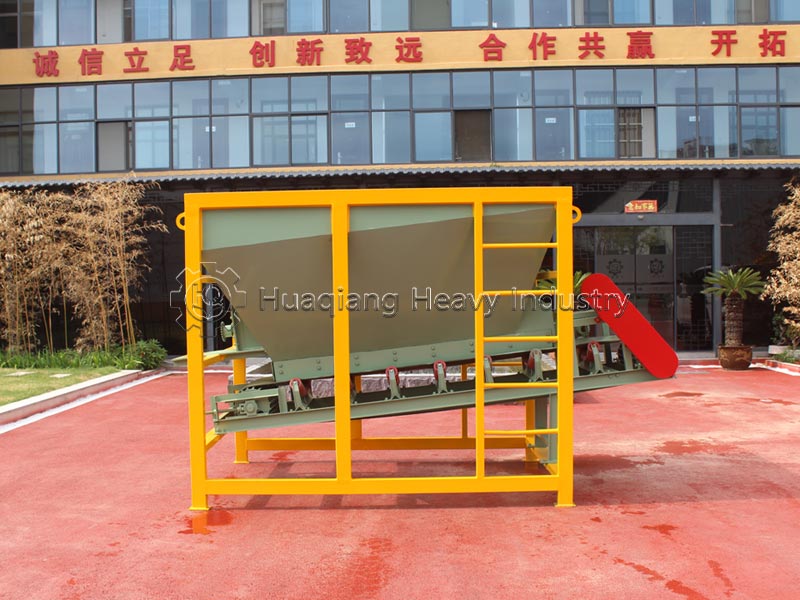
Featuring a wide receiving opening and ample capacity, it can easily accept large volumes of material quickly unloaded by loaders or other transport vehicles. This design cleverly resolves the rhythm mismatch between raw material supply and line consumption, preventing frequent starts and stops of the entire production line due to brief interruptions or fluctuations in front-end feeding. It provides the crucial buffer space and time margin for continuous operation.
The Guardian of Process Stability & Equipment Protection
By providing a steady, continuous feed to downstream equipment (such as belt conveyor, screw conveyor), the hopper effectively eliminates “pulsation” in the material flow. This not only protects conveying and crushing equipment from impact loads, extending their service life, but more importantly ensures that subsequent process units like mixing and granulation receive a stable and uniform supply of raw materials, fundamentally enhancing the consistency of final product quality.
Efficiency Booster & Safety Enhancer
An optimized hopper design (with proper incline angles, smooth inner walls, anti-clogging devices) ensures material flows smoothly and naturally, greatly reducing the risk of blockages and “bridging”, thereby minimizing safety hazards and labor intensity associated with manual clearing. Simultaneously, it allows equipment like loaders to complete unloading in a shorter time and quickly move to other tasks, significantly improving the overall logistics efficiency of the entire plant.
Synergistic Production: The Logistics Hub on the Line
The loader feeding hopper is never an isolated element; it is the core hub connecting external logistics with internal production. Its effectiveness is demonstrated through perfect connection with both upstream and downstream equipment.
Synergy with the “Front End”: It efficiently receives raw materials from loaders, trucks, or front-end loaders, acting as the first gateway for materials entering the factory’s processing system.
Linkage with “Conveying Systems”: Typically, a vibratory feeder or belt feeder is configured below its discharge outlet to precisely control the flow rate and volume of material, providing a stable source for subsequent conveying (e.g., bucket elevator, belt conveyors).
Serving “Pre-processing Equipment”: As an ideal feed hopper for crushers and screening machines (like rotary screeners), it ensures these devices can operate at full capacity and smoothly, avoiding idling or overload.
Adapting to “Multiple Raw Materials”: In compound fertilizer production lines, multiple hoppers can be designed in parallel to separately receive different base materials like N, P, and K, enabling parallel feeding of multiple streams and ensuring accurate formulation.
Evolution & Outlook: A Smarter, More Reliable Future
Modern loader feeding hoppers are continuously evolving towards greater intelligence and reliability
Intelligent Level Monitoring: Real-time monitoring of material level via non-contact sensors (radar, ultrasonic) with data integrated into the central control system, enabling inventory visualization and automatic replenishment alerts.
Anti-Clogging & Bridging Solutions: Adoption of advanced designs like air cannons, vibrators, or flexible sidewalls to proactively prevent and resolve blockages caused by sticky materials.
Modularity & Customization: Designing liners and structural angles tailored to different material properties (moisture, particle size, corrosiveness), providing bespoke solutions to maximize material flowability.