
We are a professional manufacturer of organic fertilizer equipment and a customized service provider for fertilizer production lines
-
NO.313, Wanshan Road, Xingyang City, Zhengzhou City, Henan Province, China
Company Address
-
Call Us: +86-18703630069
(Sat - Thursday)
-
inquiry@hqhifertilizermachine.com
Our Email
Windrow Compost Turning Machine

Equipment Overview
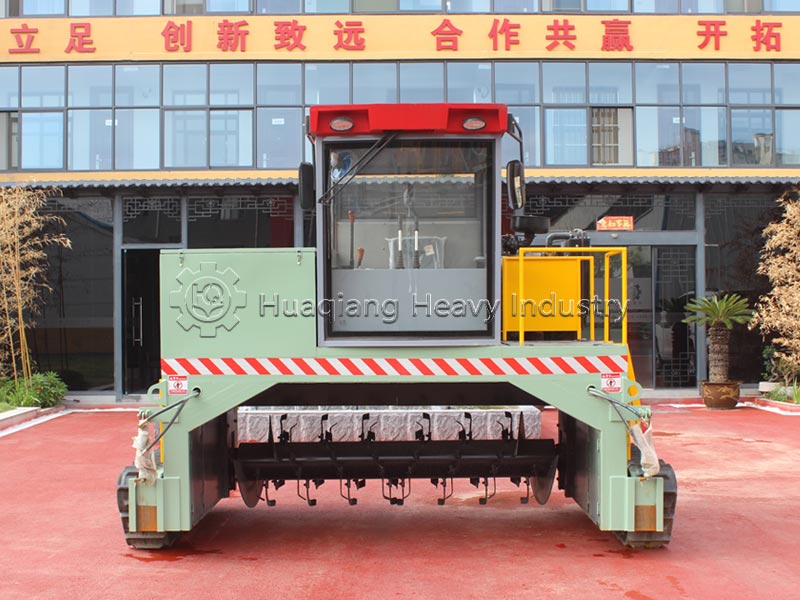
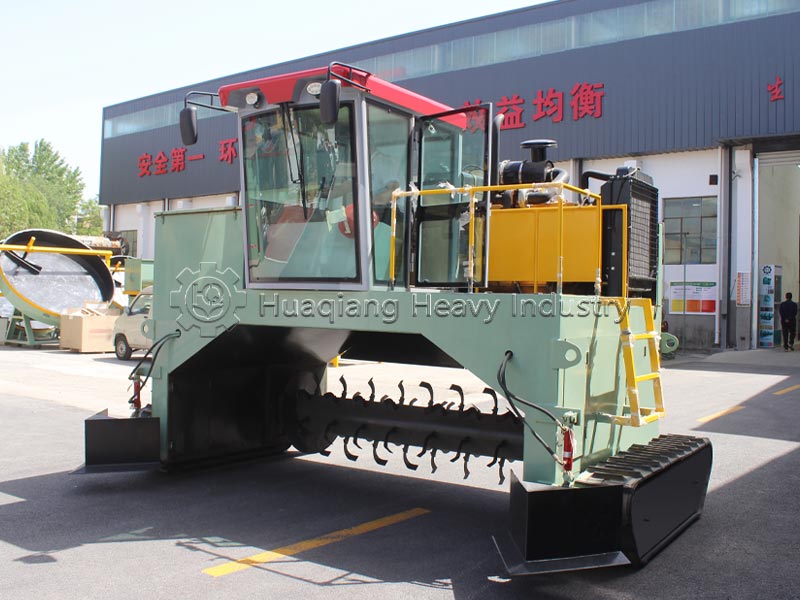
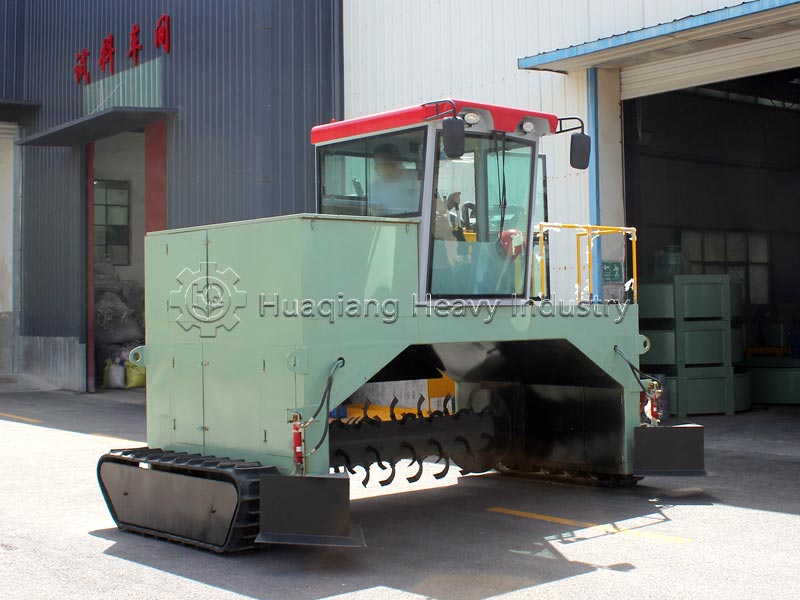
The windrow compost turning machine (also known as a windrow compost turner or self propelled compost production machine) is a specialized machine used in ground-based windrow composting processes. It is the core equipment for turning, crushing, aerating, and composting materials. This equipment belongs to the category of ground-based composting equipment and represents a relatively economical approach to fertilizer production, saving on civil engineering and human resources.
The windrow compost turning machine is a key fermentation piece in organic fertilizer production. Its technology integrates a crushing function in the later stages of fermentation—as the material is continuously turned, the cutter shaft effectively crushes clumps formed during fermentation, eliminating the need for an additional crusher. The equipment uses a rotating cutter shaft to turn, loosen, and move the material, and the integrated crushing function breaks down fermentation clumps, improving compost uniformity.
The windrow compost turning machine is a four-in-one multi-functional turning and composting device integrating fermentation, mixing, crushing, and relocation. As a mobile organic fertilizer equipment, it relies on its self-propelled tracked chassis for unrestricted movement throughout the site, making it suitable for production scenarios with scattered sites and non-fixed material piles. This equipment uses mechanical intelligence technology to achieve stepless speed control for both the walking and turning of the compost turner. It can precisely set the running speed of the wheels and the turning shaft according to the properties of the material to obtain the best output and quality.
Complete Equipment Structure
1. Tracked Chassis Assembly: Thickened steel track plates, drive wheels, guide wheels, track rollers, travel reducer, travel hydraulic control system; lever-type on-the-spot steering mechanism for 360° on-the-spot turning and high/low speed gear switching.
2. Turning and Crushing Drum Assembly (Core Working Component): 500mm diameter integrated roller with spirally distributed wear-resistant turning blades; equipped with an independent turning reducer and drive belt; hydraulic lifting cylinder controls the drum’s ground clearance to prevent blade wear from ground contact.
3. Hydraulic Control System: Hydraulic pump station, lifting hydraulic cylinder, pressure regulating valve, hydraulic oil pipes; functions: adjusts the turning drum’s ground clearance, assists in steering and buffering, and allows for fine-tuning of the turning depth according to material thickness.
4. Transmission and Speed Change Assembly: Dual independent transmission system: continuously variable transmission (CVT) for travel (10-50 m/min), continuously variable transmission for tumbling/pouring (6-10 m/min); main clutch, travel disengagement clutch, gear reducer, and drive shaft locking mechanism.
5. Operating Electronic Control Assembly: Cab control panel, push-button switches, operating control levers, insulated circuitry throughout the vehicle, battery starting system; waterproof and insulated circuitry throughout the vehicle, suitable for damp and sewage-prone environments.
6. Enclosed Cab Assembly: Standard steel frame cab, shock-absorbing seat; optional onboard air conditioning and dustproof glass to isolate fermentation dust and odors, improving the operator’s working environment.
7. Machine Frame Protection Assembly: Thickened national standard steel plate welded main frame, anti-corrosion side plates, transmission dust cover, material baffle; overall stress-relief welding, resistant to heavy loads and corrosion.
Equipment Parameters
| Item | HQ-FD 2500 | HQ-FD 2600 | HQ-FD 3000 |
|---|---|---|---|
| Model | HQ-FD 2500 | HQ-FD 2600 | HQ-FD 3000 |
| Compost Turning Width (mm) | 2500 | 2600 | 3000 |
| Compost Turning Height (mm) | 500-1000 | 500-1100 | 500-1200 |
| Stack Spacing (m) | 1.0-1.2 | 1.0-1.2 | 1.0-1.2 |
| Max Particle Size of Raw Material (mm) | 250 | 250 | 250 |
| Power | R4102 Turbocharged 90HP Diesel Engine | R4105 Turbocharged 105HP Diesel Engine | R6105 Turbocharged 136HP Diesel Engine |
| Rated Power Speed (r/min) | 2200 | 2200 | 2200 |
| Working Travel Speed (m/min) | 6-18 | 6-18 | 6-18 |
| Transfer Driving Speed (m/min) | 50 | 50 | 50 |
| Processing Capacity (m³/h) | 400-600 | 600-800 | 1000-1200 |
| Overall Dimension (m) | 3.64×2.6×2.7 | 3.75×2.6×2.7 | 4.36×2.75×2.95 |
Applications of the Equipment
The tracked compost turner is widely used in the following fields:
1. Livestock and poultry manure treatment: harmless treatment and resource utilization of livestock and poultry manure such as pig manure, chicken manure, and cow manure.
2. Agricultural waste treatment: crop straw, rice husks, edible mushroom residue, sugarcane bagasse, etc.
3. Sludge treatment: sludge from urban sewage treatment plants, filter mud from sugar mills, and paper mill sludge.
4. Municipal solid waste treatment: composting of organic municipal solid waste and kitchen waste.
5. Industrial organic waste: food processing waste, pharmaceutical residues, and brewing waste.
6. Landscaping: composting and fermentation of garden pruning waste and fallen leaves.
Applicable scenarios: large-scale organic fertilizer plants, large-scale farms, sludge treatment centers, landfills, horticultural farms, and button mushroom cultivation plants, etc.
Adaptable raw material list
1. Main fermentation raw materials
Livestock and poultry manure: chicken manure, cow manure, sheep manure, pig manure, duck manure, pigeon manure;
Agricultural and forestry waste: corn straw, wheat straw, rice straw, sawdust, sawdust, mushroom residue, garden leaves;
Organic waste residue: biogas residue, traditional Chinese medicine residue, sugarcane bagasse, wet kitchen waste, sludge, peanut shells.
2. Excipients and conditioning materials
Humic acid, peat soil, fermentation bacteria, straw powder, rice bran (used to adjust carbon-nitrogen ratio and moisture content)
3. Rigid requirements for material use (original factory site specifications)
The optimal moisture content of the material is 50%-65%. If it is too dry, water should be sprayed to moisten it. If it is too wet, add straw dry material to adjust;
Long straw materials need to be crushed/cut into short lengths. Direct fermentation of the whole bundle of long straw is prohibited to avoid entanglement in the throwing drum;
It is strictly forbidden to mix masonry, stone or metal hard objects into the material, which will directly break the turning blade teeth and damage the drum.
Equipment Working Principle
The tracked compost turner operates on two levels: a mechanical and physical operating principle and a fermentation and biochemical oxygen supply principle.
I. Mechanical Turning and Turning Physical Principle
1. The tracked machine straddles the stack of strip-shaped materials, driven by diesel power to move forward at a constant speed.
2. The bottom rotating turning drum rotates at high speed, its wear-resistant blades penetrating deep into the material stack, completely throwing, breaking up, and turning the bottom, middle, and surface layers of material.
3. The material is broken and layered in the air, while simultaneously introducing a large amount of air, falling back to form loose new windrows. The hydraulic system stabilizes the drum’s height above the ground in real time, preventing the blades from scraping the ground.
4. Independent speed regulation for both walking and turning; the walking speed is reduced for thicker material stacks and increased for thinner ones, ensuring uniform turning. A 360° in-situ turn allows for quick switching between working windrows without the need for long-distance reversing.
II. Aerobic Fermentation Biochemical Supporting Principles Composting relies on high-temperature microbial maturation, with the turner serving as the core oxygen supply equipment:
1. The turning process breaks up compacted materials, eliminating anaerobic clumps and providing sufficient oxygen for aerobic microorganisms;
2. Turning deep, high-temperature materials to the surface for heat dissipation, balancing the internal temperature of the pile and preventing the core from exceeding 75°C and killing beneficial bacteria;
3. Uniformly mixing microbial inoculum, manure, and straw additives, adjusting the overall moisture content, and accelerating organic matter decomposition;
4. Maturation is typically completed in 7-15 days, requiring turning 2-3 times per week, achieving fully automated cyclic fermentation through the turner.
Standard Operating Procedures for Equipment
1. Initial Break-in Requirements (Mandatory)
Before the new machine is put into formal fermentation operations, it must complete 5-6 hours of no-load break-in (walking, reversing, turning). During the break-in period, turning the pile with material is prohibited. After the break-in is completed, change the gearbox oil and tighten all bolts on the drive shaft and frame. Operators must hold a valid driver’s license and have at least 5 hours of hands-on experience operating the equipment; combine harvester drivers are preferred.
2. Pre-Start Machine Inspection
Mechanical Structure: Check the frame, tracks, turning blades, and the tightness of the drive shaft bolts; remove any debris entangled in the drum.
Energy System: Ensure diesel and engine oil levels are within specifications, and that the water tank has sufficient coolant. Select the appropriate grade of diesel/engine oil according to the ambient temperature.
Electrical System: Ensure the battery has sufficient charge, that wiring insulation is intact and undamaged, and that plugs are secure.
Transmission Components: Ensure the drive belt is properly tensioned and free of cracks or breaks.
Hydraulic System: Adjust the turning drum to a standard height of 5cm off the ground to prevent the blades from contacting the ground and causing wear.
3. Engine Starting Procedure
Depress the master clutch fully to disengage the power to the turning drum;
Ignite the engine and allow it to engage for ≤10 seconds per start, with no more than 3 consecutive starts and an interval of ≥2 minutes between starts;
After starting, idle for 10 minutes to warm up, stabilizing the speed to 2400 rpm;
Slowly release the master clutch, allowing the drum to start idling, then engage the first gear travel clutch for a low-speed test run.
4. Gear and Speed Adjustment Operation Specifications
Travel gears: “Up for low speed, down for high speed,” prioritizing low-speed travel during fermentation operations;
Turning drum speed adjustment: Press down the operating lever and pull to the left to adjust the drum speed;
Overload handling: Black smoke from the diesel engine indicates excessive material load. Immediately depress the travel clutch and allow the drum to idle and turn until the speed recovers before resuming forward operation.
5. Standard Operating Procedures for Formal Material Turning Operations
The equipment must straddle the entire material stack; forced compaction of the stack is prohibited. The width of the material stack must not exceed the equipment’s rated turning width.
After startup, allow the machine to idle for 3-5 minutes without load, then allow the rollers to idle for 1 minute before entering the stack for turning.
If straw or fiber materials are found entangled in the rollers, immediately stop the machine and clean them; forced forward/backward movement is prohibited.
Standard stack dimensions: base width 2.4-3m, height 0.8-1.3m, stack spacing 0.8-1m, site flatness with an unevenness difference ≤5cm; operation on slopes is strictly prohibited.
6. Post-Operation Inspection
Thoroughly clean any entangled material and hardened deposits from the rollers.
Inspect for damaged blades, tight bolts, and track tension.
Check diesel and coolant levels, and inspect wiring insulation and drive belt wear.
Park the machine on a flat, hardened surface; disconnect the negative terminal of the battery for long-term shutdown.
Common equipment malfunctions, causes of malfunctions and solutions
| Fault Phenomenon | Core Fault Causes | Standard Solutions |
|---|---|---|
| Difficult to start or fail to ignite the diesel engine | 1. Low battery power; 2. Mismatched engine oil / diesel grade; 3. Starter damaged by long single startup time; 4. Clogged filter element | 1. Charge immediately and disconnect the negative pole during long-term shutdown; 2. Replace matched oil according to ambient temperature; 3. Strictly control the duration of single startup; 4. Replace diesel filter and air filter |
| Black smoke and insufficient power during operation | 1. Over-thick material pile leads to equipment overload; 2. A large amount of straw wrapped around the roller increases resistance; 3. Insufficient diesel supply | 1. Step on the clutch to reduce load at idle speed and slow down the traveling speed; 2. Stop the machine to clean the straw wrapped on the roller; 3. Clean the diesel filter and check the oil circuit |
| Worn or broken composting blades | 1. Hard substances such as bricks and stones mixed in raw materials; 2. The roller height is too low to rub against the ground; 3. Loose fixing bolts of blades | 1. Remove hard impurities through screening in raw material pretreatment; 2. Adjust the hydraulic roller to be 5cm above the ground; 3. Tighten blade fixing bolts before each operation, replace worn blades in time |
| Crawler deviation and vehicle skidding | 1. Uneven, muddy and waterlogged site; 2. Uneven tightness of crawler belt; 3. Worn supporting wheels | 1. Level and harden the composting site and control water content; 2. Adjust the tightness of crawler tension wheel; 3. Replace worn supporting wheels and guide wheels |
| Weak hydraulic lifting and the roller cannot be lifted | 1. Insufficient hydraulic oil liquid level; 2. Clogged hydraulic filter element; 3. Oil leakage of hydraulic pipeline and aging sealing parts | 1. Supplement No.46 special hydraulic oil; 2. Clean or replace the hydraulic filter element; 3. Replace oil seals and fasten pipeline joints |
| Fracture and slipping of transmission belt frequently | 1. Too loose or too tight belt tension; 2. Offset pulley; 3. Excessive resistance caused by materials stuck on roller | 1. Recalibrate belt tension, readjust tension of new belt after 2 weeks; 2. Calibrate coaxiality of transmission wheel; 3. Stop the machine to clean materials wrapped on roller |
| Abnormal noise and severe vibration of the whole machine | 1. Loose bolts of frame and transmission shaft; 2. Lack of lubricating grease leading to bearing wear; 3. Unbalanced roller due to missing composting blades | 1. Fully tighten all frame bolts; 2. Fill lubricating grease for bearings; 3. Replace the missing composting blades |
| Short circuit and electrical malfunction of circuit | 1. Damaged wire insulation in humid compost environment; 2. Loose and corroded battery wiring; 3. Electric control panel soaked by rainwater | 1. Wrap damaged wires and take waterproof protection; 2. Polish wiring terminals and coat anti-rust grease; 3. Keep the cab dry and install rain shield on rainy days |
Application of the Equipment in the Production Line
The tracked compost turner is the core equipment in the fermentation section of an organic fertilizer production line, located at the source of the entire production line. Typical organic fertilizer production line process flow:
Raw material pretreatment → Windrow stacking → Tracked compost turner turning and fermentation → Matured material → Crushing and sieving → Batching and mixing → Granulation → Drying and cooling → Screening → Packaging
Specific positioning of the tracked compost turner in the production line:
Location: Fermentation section, windrow composting area
Function: Turning, crushing, aerating, and composting materials in windrow stacks
Connection: Connects to raw material pretreatment (mixing, stacking) at the front end, and prepares the matured material for entry into the granulation section at the rear end.
Suitable scenarios for the production line:
1. Large-scale production: In large organic fertilizer plants or farms, the tracked compost turner can be used with concrete fermentation tanks, with a turning depth of 2-3 meters, suitable for large-scale continuous production.
2. Small and medium-sized scenarios: The equipment is also suitable for ground-level windrow fermentation, requiring no complex civil engineering and resulting in low investment costs. Tracked compost turners, as mobile equipment, rely on their self-propelled tracked chassis to achieve unrestricted movement throughout the entire site.
3. Livestock Farm Support: In large-scale livestock farms, they can directly access the area around the pens to treat livestock manure, eliminating the need for manure transportation and achieving on-site fermentation, thus solving environmental emission problems.
4. Organic Solid Waste Treatment Station: Capable of processing organic materials such as straw and kitchen waste, enabling efficient open-air composting.
Raw material pretreatment → Windrow stacking → Tracked compost turner turning and fermentation → Matured material → Crushing and sieving → Batching and mixing → Granulation → Drying and cooling → Screening → Packaging
Specific positioning of the tracked compost turner in the production line:
Location: Fermentation section, windrow composting area
Function: Turning, crushing, aerating, and composting materials in windrow stacks
Connection: Connects to raw material pretreatment (mixing, stacking) at the front end, and prepares the matured material for entry into the granulation section at the rear end.
Suitable scenarios for the production line:
1. Large-scale production: In large organic fertilizer plants or farms, the tracked compost turner can be used with concrete fermentation tanks, with a turning depth of 2-3 meters, suitable for large-scale continuous production.
2. Small and medium-sized scenarios: The equipment is also suitable for ground-level windrow fermentation, requiring no complex civil engineering and resulting in low investment costs. Tracked compost turners, as mobile equipment, rely on their self-propelled tracked chassis to achieve unrestricted movement throughout the entire site.
3. Livestock Farm Support: In large-scale livestock farms, they can directly access the area around the pens to treat livestock manure, eliminating the need for manure transportation and achieving on-site fermentation, thus solving environmental emission problems.
4. Organic Solid Waste Treatment Station: Capable of processing organic materials such as straw and kitchen waste, enabling efficient open-air composting.
Equipment supporting complete fermentation process
The crawler compost turner is exclusively equipped with the stack fermentation process. The whole process takes 7-15 days to mature. There is no infrastructure fermentation tank and the cost is lower:
1. Raw material ratio pretreatment
Livestock and poultry manure (high humidity) + straw dry material adjust the carbon-nitrogen ratio to 25:1, control the moisture content to about 55%, add high-temperature fermentation bacteria, and stir evenly; long straw materials should be shortened to less than 5cm.
2. Strip stacking and forming
Forklifts stack standard strip stacks: the width matches the width of the turner (2.4/2.5/2.6/3m), the height is 0.8-1.3m, the stack spacing is 0.8-1m, and the walking channel for the turner is reserved.
3. Crawler turner periodically turns and supplies oxygen (core process)
Fermentation 1-3 days heating stage: toss once every 2 days, quickly aerate and heat to 55-65°C to kill insect eggs and weed seeds;
Fermentation 4-10 days high temperature maturation stage: turn once a day to balance the pile temperature and avoid anaerobic odor;
Fermentation 11-15 days Cooling and aging stage: Toss once every 3 days to stabilize decomposition of organic matter and complete decomposition.
4. Deep processing after decomposition
After the decomposed organic fertilizer naturally cools down, it enters the crushing and screening equipment and is divided into powdered organic fertilizer for direct export, or sent to a hydraulic roller granulator to prepare granular organic fertilizer.
Equipment Safety Prohibitions and Important Supplementary Instructions:
1. Unauthorized modification of the machine structure or addition of external equipment is prohibited. The manufacturer will not be liable for after-sales service for damage caused by modifications.
2. Operation on sloping ground or areas with unevenness exceeding 20cm is strictly prohibited to prevent track rollover and chassis damage.
3. This equipment is a site-specific fermentation machine and is prohibited from long-distance road travel. Cross-site transport must be carried by flatbed trailer.
4. When the equipment is running, no one is allowed to stand around the rollers or tracks. Personnel are prohibited from staying in front of or behind the operating area to prevent injury from falling materials.
5. In damp, sewage-filled working environments, the circuit insulation must be checked regularly to prevent short circuits that could burn out the electrical control system.
6. Overloading, exceeding width limits, and exceeding height limits are strictly prohibited. Long-term overloading will damage the reducer and hydraulic system.
2. Operation on sloping ground or areas with unevenness exceeding 20cm is strictly prohibited to prevent track rollover and chassis damage.
3. This equipment is a site-specific fermentation machine and is prohibited from long-distance road travel. Cross-site transport must be carried by flatbed trailer.
4. When the equipment is running, no one is allowed to stand around the rollers or tracks. Personnel are prohibited from staying in front of or behind the operating area to prevent injury from falling materials.
5. In damp, sewage-filled working environments, the circuit insulation must be checked regularly to prevent short circuits that could burn out the electrical control system.
6. Overloading, exceeding width limits, and exceeding height limits are strictly prohibited. Long-term overloading will damage the reducer and hydraulic system.
Tracked compost turners, as core equipment in the fermentation section of organic fertilizer production lines, have become the preferred choice for large-scale organic fertilizer plants, large-scale livestock farms, and sludge treatment centers due to their advantages such as fully hydraulic drive, tracked movement, on-the-spot turning, and high-power turning. Their aerobic fermentation technology can convert organic raw materials such as livestock manure and agricultural waste into high-quality organic fertilizer within 15-20 days, achieving the dual goals of resource utilization and environmental protection.
If you have any questions about fertilizer production equipment, fermentation equipment, production processes, granulation processes, or fermentation processes, or would like to learn more about customized solutions, please contact us immediately. Whether it’s equipment selection and quotation, installation, commissioning and operation training, or after-sales maintenance and process upgrades, we can provide you with professional and timely answers and support, offering full-process services.
If you have any questions about fertilizer production equipment, fermentation equipment, production processes, granulation processes, or fermentation processes, or would like to learn more about customized solutions, please contact us immediately. Whether it’s equipment selection and quotation, installation, commissioning and operation training, or after-sales maintenance and process upgrades, we can provide you with professional and timely answers and support, offering full-process services.