

If you are a farmer, cooperative leader, or an entrepreneur just starting out in organic fertilizer production and want to transform agricultural waste such as straw and livestock manure into valuable compost products, this article will guide you through the entire process from scratch. No complex technical background is required; simply mastering the core preparations, basic equipment, and standardized operations will allow you to take your first step towards success.
Core Preparations: Site, Raw Materials, and Budget – Three Steps The basic preparations for small-scale composting production revolve around three key elements. Site Selection: A flat, well-drained plot of land is required, at least 500 meters away from residential areas. The area depends on the processing volume—approximately 300-500 square meters are needed to process 5 tons of waste per day. Raw Material Preparation: Agricultural waste mainly includes straw (corn stalks, rice straw), livestock manure (chicken manure, cow manure), and auxiliary materials (sawdust, rice husks). Initially, it is recommended to start with a single raw material, such as chicken manure + rice husks, to reduce management complexity. Budget Planning: The initial investment for a small-scale production line mainly includes equipment purchase (US$20,000-50,000), site preparation (US$5,000-10,000), raw material procurement, and working capital (US$10,000-20,000). With an annual processing capacity of 1000 tons, the investment payback period is typically 1.5-2 years.
Minimum Equipment Configuration: For beginners, equipment configuration should follow the principles of “sufficient, durable, and easy to maintain.” Only two core pieces of equipment are needed: a chain-plate compost turner and a small chain crusher.
The chain-plate compost turner is ideal for small-scale open-air composting. Its turning width is 1.5-2.5 meters, its depth is 0.8-1.2 meters, and its daily processing capacity is 80-150 tons, fully meeting the needs of small to medium-sized operations. The equipment uses chain drive, has a simple structure, is easy to maintain, requires no track foundation, and can operate even on muddy ground. With an investment of only US$10,000-20,000, it is a cost-effective choice for beginners.
The small chain crusher is responsible for raw material pretreatment, crushing straw, manure, etc., to 10-20mm, improving subsequent fermentation efficiency. A belt conveyor enables automated feeding, reducing manual handling.
Five-Step Fermentation Process: Master these five steps to begin standardized composting production. Step 1: Raw Material Pretreatment: Crush straw to 2-5cm and mix with livestock manure at a volume ratio of 1:1-1.5, adjusting the moisture content to 55%-65% (it should clump together when squeezed but crumble when dropped). Step 2: Composting: Pile the mixture into windrows, 2-3 meters wide at the base, 1-1.5 meters wide at the top, and 1.2-1.5 meters high. The length can be adjusted according to the available space. Step 3: Inoculation: Evenly sprinkle in a special fermentation agent (0.5-1 kg per ton of raw material) to promote rapid microbial reproduction. Step 4: Regular Turning: Turn every 2 days in the early fermentation stage (0-10 days), every 3-4 days in the middle stage (10-20 days), and weekly in the later stage (20-30 days). Turning is best done between 9 am and 3 pm when the temperature is higher and microbial activity is stronger. Step 5: Maturity Assessment: The compost pile turns dark brown, has no odor but a fresh earthy scent, the temperature drops to ambient temperature, and it feels soft to the touch without any hard lumps, indicating fermentation is complete.
Three common problems beginners encounter:
- Smelly Compost Pile: This is often caused by excessively wet material or insufficient turning, leading to anaerobic fermentation. Immediately increase the turning frequency and add dry materials such as straw to adjust moisture.
- Slow Maturation: This may be due to an imbalanced carbon-to-nitrogen ratio or excessively low temperature. Check the C/N ratio; it should be maintained between 25-30:1. In winter, cover with straw mats for insulation; if necessary, build a simple fermentation shed.
- Fly and Mosquito Infestation: Cover the surface with 5-10cm of well-rotted compost or fine soil to destroy the fly and maggot habitat; control the covering after turning and cover promptly.
Our company has been deeply involved in the organic fertilizer equipment field for 19 years, with experience in over 1300 successful global projects. We provide novice users with full-process support from equipment selection and process design to fermentation formulas. All equipment is pre-assembled and tested before leaving the factory, and comes standard with an easy-to-understand Chinese and English operation panel. Key components feature a modular design, eliminating the need for specialized tools for replacement. We provide 24/7 remote technical support, ensuring timely response whether you are in Europe, Southeast Asia, or Africa.
From a vacant lot to stable output, small-scale agricultural waste composting is not complicated. Choose the right equipment, master the process, and operate according to regulations, and you can transform the waste around you into valuable green resources. Contact us for a one-on-one start-up plan.
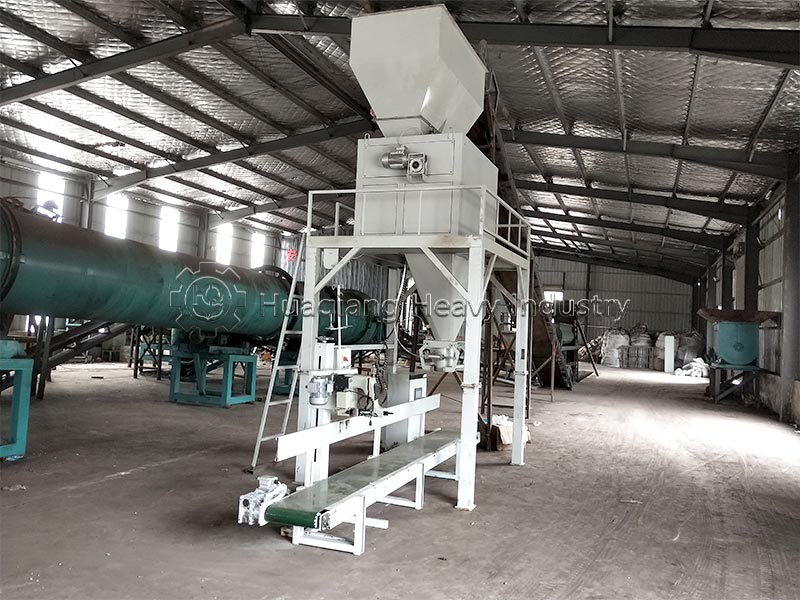
The beginner’s guide to composting provides the essential foundation for turning waste into a valuable soil amendment. Once you have mastered this process, the next logical step is to transform this basic compost into a commercial-grade fertilizer product. This is where you move from simple composting to a complete bio organic fertilizer production line. The cured, mature compost becomes the primary feedstock. To create a consistent, marketable granular product, you will need to integrate more specialized equipment. The compost, after potential secondary crushing, is fed into a granulator from the organic fertilizer granulator series. These moist granules then require processing through a fertilizer dryer machine and a fertilizer cooler machine to achieve the correct moisture and temperature for storage. A rotary drum screening machine classifies the granules, ensuring uniform size, before they are precisely weighed and bagged by a fertilizer packing machine. For those wishing to diversify into mineral-based fertilizers, a separate npk fertilizer line using an npk blending machine could also be added. This progression from simple composting equipment to a full production line represents the exciting journey from a beginner’s project to a professional, scalable fertilizer manufacturing business.