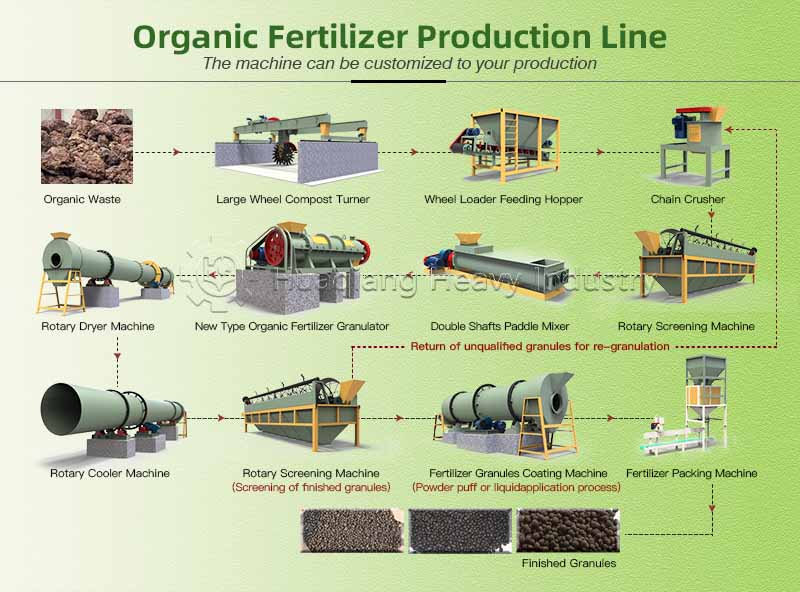

In the production of bio-organic NPK compound fertilizer, the granulator is the core equipment determining capacity and quality. Faced with three main types of granulators—drum, roller, and disc—how to make the optimal choice based on raw material characteristics, capacity requirements, and investment budget? This article will analyze the technical features and suitable scenarios for these three main granulator types.
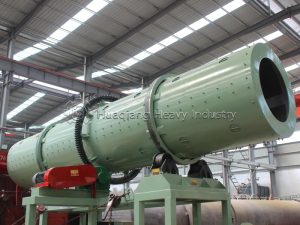
Drum Granulator: The First Choice for Large-Scale Continuous Production
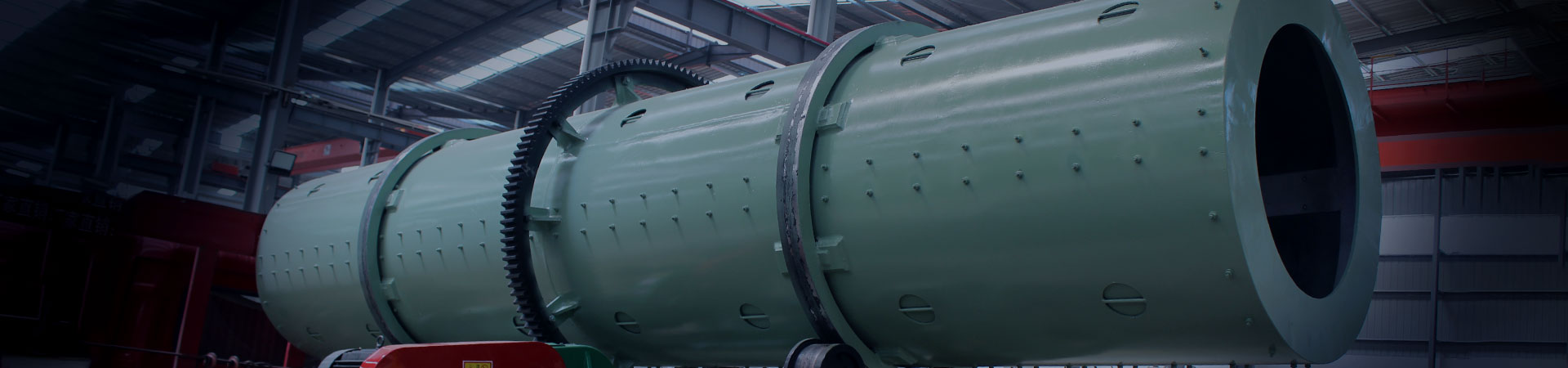
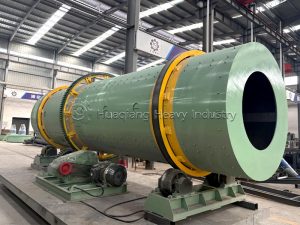
The rotary drum granulator is a classic configuration for large-scale compound fertilizer production lines. Its working principle is that the material falls in a waterfall-like manner inside an inclined rotating drum, and steam conditioning causes the granules to agglomerate into balls during the rolling process. The core advantages of this model are: a single-machine capacity of 10-20 tons/hour, a granulation rate of 85%-90%, and it is particularly suitable for high-nitrogen formulas (such as 25-10-5). The drum interior uses rubber or acid-resistant stainless steel lining, enabling automatic cleaning and reducing maintenance frequency. For bio-organic NPK projects with an annual production capacity of over 50,000 tons, the drum granulator is the best choice for achieving continuous and large-scale production. Its energy consumption is mainly reflected in steam and electric motor drives, but the overall cost per unit product decreases significantly with increased scale.
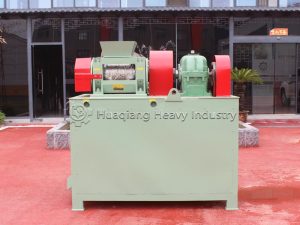
Double Roller Press Granulator: An Energy-Saving Choice for Dry Forming
The double roller press granulator uses a dry forming process. Material is subjected to 10-25MPa high pressure between two rollers and compressed into dense granules. Its biggest advantage is that it eliminates the need for a drying process, reducing overall energy consumption by 40%-60% compared to wet processes. It is particularly suitable for dry powder materials with a moisture content ≤8%. The granules have a compressive strength of 15-25N and are not easily pulverized during storage and transportation. This model performs excellently when processing mixtures with high organic matter content (above 40%), and requires no binders, resulting in high product purity. For small to medium-sized production lines with an annual output of 10,000-30,000 tons, the double roller press granulator offers moderate investment and low operating costs, making it an economical choice.
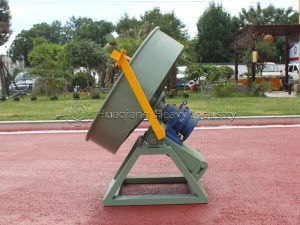
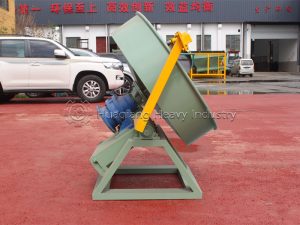
Disc Granulator: A Flexible and Precise Small-Scale Solution
The disc granulator uses a rotating inclined disc to naturally agglomerate material into spheres during rolling. Its core advantages lie in its flexible operation and low investment, with a single machine producing 0.5-3 tons per hour and a granulation rate of 80%-85%. The disc tilt angle (35°-55°) and rotation speed (10-20 r/min) are infinitely adjustable, allowing precise control of particle size within the 1-5mm range. This makes it particularly suitable for production scenarios involving frequent formula changes and small-batch, multi-variety production. For the production of organic-inorganic compound fertilizers with an annual output of less than 10,000 tons and primarily composed of organic matter (content ≥60%), the disc granulator is a cost-effective starting solution.
Choosing a granulator requires comprehensive consideration of four indicators: Production capacity: For annual production below 30,000 tons, disc or roller granulators are preferred; for 30,000-100,000 tons, medium-sized drums or multiple roller granulators in parallel can be selected; for over 100,000 tons, large drums are essential. Raw material characteristics: Dry powder with a moisture content ≤8% is suitable for roller extrusion; wet materials with a moisture content of 15%-25% are suitable for drums or discs; for organic matter content exceeding 60%, disc or roller granulators are recommended. Formula Type: High-nitrogen formulas (high urea content) require a low-temperature steam process using a rotary drum to avoid nitrogen loss; high-organic formulas are suitable for dry extrusion using rollers. Investment Budget: Disc granulators have the lowest investment (US$30,000-80,000), roller granulators are next (US$80,000-200,000), and rotary drum granulators have the highest investment (US$150,000-400,000), but drying energy consumption and long-term operating costs need to be comprehensively calculated.
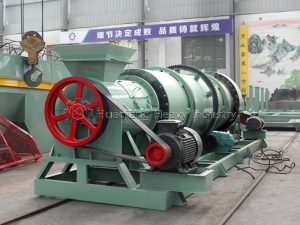
New Type Two-in-One Organic Fertilizer Granulator: A Flexible and Adaptable Solution
For production scenarios with multiple raw material types and frequent formula changes, our new type two in one organic fertilizer granulator can quickly switch between rotary drum agglomeration and roller extrusion processes on a single machine. This saves 30% on investment and reduces floor space by 40% compared to purchasing two separate machines, making it a flexible choice for small and medium-sized factories.
From the flexibility and precision of disc granulators to the energy efficiency of roller granulators, from the scale advantage of rotary drum granulators to the universal adaptability of the two-in-one design, there is no “one-size-fits-all” answer when selecting a bio-organic NPK granulator, but there is an “optimal solution.” Please provide your raw material list and capacity requirements to obtain a one-to-one equipment matching solution.
The selection of a granulator is a critical decision for any bio organic fertilizer production line or npk fertilizer line. The chosen disc granulator or other granulator must be integrated with essential upstream and downstream equipment. The process begins with fertilizer raw material processing machinery and equipment, such as crushers and mixers, to prepare the feedstock. Before granulation, an npk blending machine may be used to precisely proportion the organic base with mineral nutrients. After granulation, the product is stabilized in a fertilizer dryer machine and fertilizer cooler machine to achieve the correct moisture and temperature. Finally, a fertilizer packing machine seals the product. The choice between a drum, roller, or disc granulator defines the production line’s character. A drum granulator is ideal for large-scale, continuous production of spherical granules. A roller press is best for dry, energy-efficient compaction, producing high-strength granules. A disc granulator offers a flexible, low-cost entry point for small-scale production. Understanding the trade-offs between these technologies—capacity, energy use, and product characteristics—is essential for building a bio organic fertilizer production line that is both efficient and profitable. The right granulator, properly integrated with the entire system, is the key to transforming raw materials into a high-value final product.