
In the modern fertilizer industry, green production has become a key component of core competitiveness. This is reflected not only in clean production processes but also throughout every aspect of the exhaust gas purification system and personnel training system. The exhaust gas treatment system and professional commissioning training together constitute a dual guarantee for achieving efficient, environmentally friendly, and sustainable production in modern fertilizer plants.
Systematic Exhaust Gas Treatment: From Dust Recovery to Resource Recycling
During fertilizer production, especially in granulation, drying, and cooling processes, a large amount of dust-containing and ammonia-containing exhaust gas is generated. If these exhaust gases are directly discharged, they will not only cause raw material losses and environmental pollution but also seriously affect the surrounding ecosystem and residents’ health.
The Scientific Principles of a Four-Stage Purification System
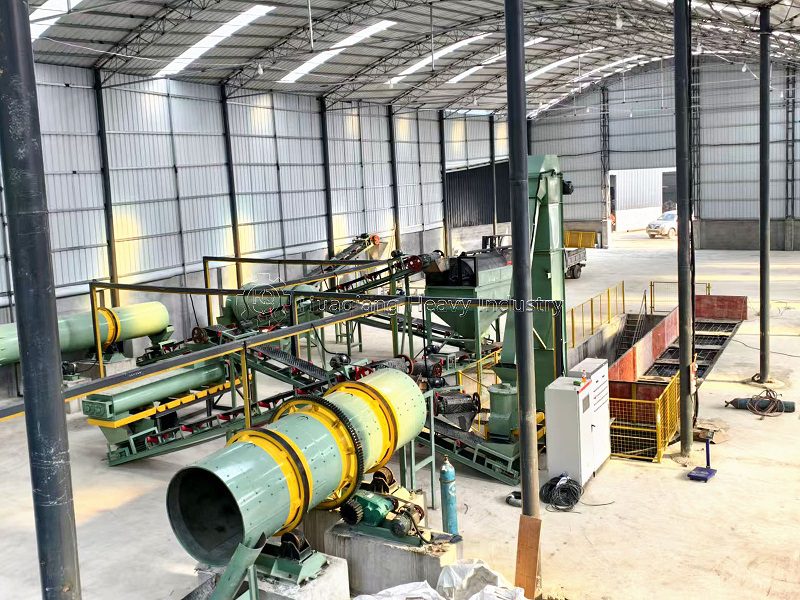
Modern large-scale fertilizer plants typically employ a four-stage purification system to treat process exhaust gases:
First Stage: Gravity Settling Chamber
The exhaust gas first enters an enlarged cross-section settling chamber, where the airflow velocity drops sharply from 15-20 meters/second to 1-2 meters/second. Using the principle of gravity settling, large dust particles with a diameter greater than 100 micrometers are effectively separated. This pre-treatment reduces wear on subsequent equipment and lowers maintenance costs by approximately 20%.
Second Stage: Optimized Cyclone Dust Collector Design
After settling, the exhaust gas enters a high-efficiency cyclone dust collector. Unlike traditional designs, modern cyclone dust collectors use a double-cone structure and optimized guide vanes. The strong centrifugal force field generated (typically 500-800 times that of gravity) separates fine particles of 10-100 micrometers. Actual operating data from a composite fertilizer plant with an annual output of 300,000 tons shows that the optimized cyclone dust collector can achieve a removal efficiency of 85-92% for total dust.
Third Stage: Venturi Scrubber and Acid Washing Combination
For smaller dust particles and gaseous ammonia, the system uses a combination of a Venturi scrubber and a packed tower. At the Venturi throat, the exhaust gas is accelerated to 60-80 meters/second and vigorously mixed with the injected dilute acid solution (usually 1-3% dilute sulfuric acid or phosphoric acid), achieving efficient gas-liquid contact. This process not only captures ultra-fine dust particles of 1-10 micrometers but also removes most of the gaseous ammonia through chemical absorption:
NH₃ + H₂SO₄ → (NH₄)₂SO₄
The resulting ammonium sulfate solution can be reused as a raw material for fertilizer production, achieving resource recycling.
Fourth Stage: Wet Electrostatic Precipitator Deep Purification
For factories requiring ultra-low emission standards, a wet electrostatic precipitator is installed at the end of the system. Under the action of a high-voltage electric field (40-70kV), residual submicron particles and droplets in the airflow are charged and collected on the collecting electrode. This deep purification technology can stably control the final emission concentration below 10 mg/m³, far below the national standard of 30 mg/m³.
Intelligent Control System Integration
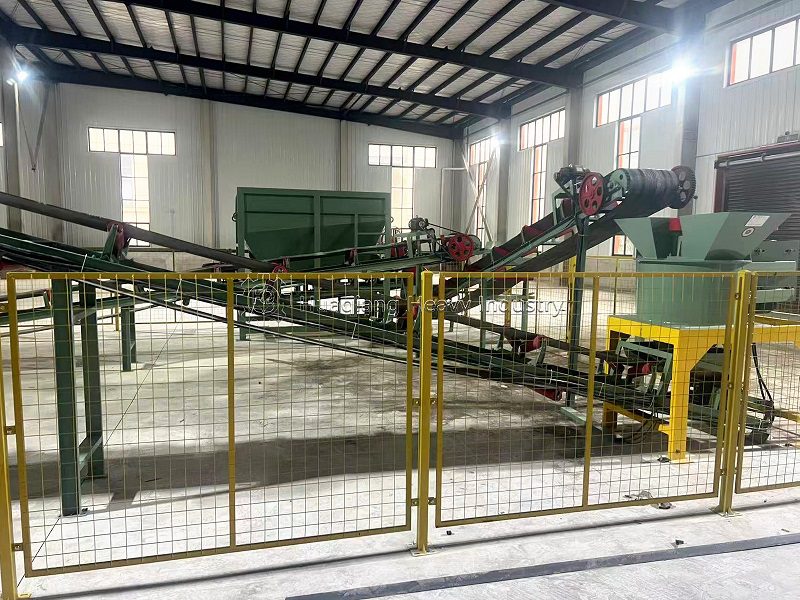
The advanced exhaust gas treatment system is equipped with a comprehensive online monitoring and automatic control system. Key parameters such as pH value, liquid-to-gas ratio, and pressure drop are monitored and automatically adjusted in real time. For example, the system automatically adjusts the amount of dilute acid solution added based on data feedback from online pH meters and ammonia concentration analyzers, ensuring that the ammonia removal rate remains stable at over 98%, while avoiding resource waste caused by excessive acid addition.
Professional Commissioning and Training: From Equipment Installation to Independent Operation
Equipment commissioning and personnel training are crucial links in transforming an advanced production line into stable productivity. This process usually lasts 4-8 weeks and is carried out in three stages.
First Stage: No-Load Commissioning and System Verification
After equipment installation is complete, the engineering team first conducts a 7-10 day no-load commissioning:
Starting each piece of equipment individually, checking mechanical parameters such as rotation direction, bearing temperature, and vibration values.
Testing the interlocking control and alarm functions of the automation system.
Calibrating all measuring instruments and sensors to ensure measurement accuracy.
Conducting a 72-hour continuous no-load operation test to verify system stability.
In a large-scale compound fertilizer project, 23 installation problems were discovered and resolved during the no-load commissioning phase, preventing potential failures in later production.
Second Stage: On-Load Commissioning and Process Optimization
After successful no-load commissioning, a 2-3 week on-load commissioning phase begins. This is a critical period for process parameter optimization:
Raw Material Adaptability Adjustment: Engineers will systematically adjust key process parameters based on the customer’s actual raw material characteristics. Taking the drum granulator as an example, the commissioning content includes:
Tilt angle adjustment: Optimized within the range of 2.5-4.5° based on material flowability.
Rotation speed optimization: Determining the optimal rotation speed based on production capacity requirements and granulation quality (usually 10-18 rpm).
Steam control: Determining the optimal steam pressure (0.2-0.4 MPa) and injection position through experiments.
Moisture adjustment: Determining the optimal granulation moisture content based on the initial moisture content of the raw materials and product requirements (usually 2.5-3.5%).
System balance debugging: Ensuring that the capacities of the preceding and succeeding processes are matched to avoid bottlenecks. For example, the commissioning team will adjust the hot air temperature and residence time of the dryer to maintain a dynamic balance between its processing capacity and the output of the granulator.
Quality control system establishment: Establishing quality control points throughout the entire process from raw materials to finished products, and determining the monitoring frequency and standard operating procedures for key parameters. In one project, 21 quality control points were established through commissioning, increasing the first-pass yield from 75% initially to over 95%.
Phase 3: Systematic Training and Knowledge Transfer
During commissioning, the engineering team will conduct layered and systematic training:
Operator training (2 weeks):
Safe operating procedures and emergency handling
Equipment start-up and shutdown procedures and daily inspection points
Process parameter monitoring and adjustment methods
Quality inspection and sampling specifications
Identification and preliminary handling of common faults
Maintenance personnel training (1 week):
Equipment structure principles and maintenance points
Preventive maintenance plan development
Identification and management of key spare parts
Lubrication system management and oil selection
Use and calibration of special tools
Management personnel training (3 days):
Production cost analysis and optimization
Production planning and scheduling management
Quality management system operation
Energy efficiency management and optimization
Particularly important is the training on formula switching procedures. Engineers will demonstrate the switching process between different formulas in detail, emphasizing the need to thoroughly clean the mixer, granulator, and related conveying equipment to prevent cross-contamination of nutrients. In one case, strict switching procedures kept the nutrient content deviation of different formula products within ±0.3%. Continuous Support and Performance Enhancement
Excellent equipment suppliers also provide continuous after-sales support:
Remote technical support and troubleshooting
Regular follow-up visits and performance evaluation
Process optimization suggestions and upgrade solutions
Spare parts supply and rapid response
Comprehensive Benefits with Dual Guarantees
Combining advanced exhaust gas treatment systems with professional commissioning and training can create multiple values for fertilizer production enterprises:
Environmental compliance and sustainable development: Ensuring long-term stable operation of the enterprise and avoiding environmental penalties and production shutdown risks.
Efficient resource utilization: Recycling dust and ammonia from exhaust gas, reducing raw material consumption by 3-5%.
Production stability and quality assurance: Through professional commissioning and training, the equipment quickly reaches its designed performance, ensuring stable product quality.
Improved personnel quality: Establishing a professional operation and maintenance team reduces long-term dependence on equipment suppliers.
Optimized overall costs: Although initial investment increases, the investment can usually be recovered within 2-3 years through resource recovery, reduced downtime, and lower maintenance costs.
Future Development Trends
With technological advancements, exhaust gas treatment and commissioning training are also constantly innovating:
Intelligent exhaust gas management system: Applying big data and artificial intelligence technology to achieve predictive maintenance and optimized operation of the exhaust gas treatment system.
Virtual reality training system: Using VR technology to simulate equipment operation and troubleshooting, improving training effectiveness and safety.
Digital twin technology application: Establishing a digital twin model of the production line for process optimization and personnel training.
In today’s world where green development has become a global consensus, a complete exhaust gas treatment system and professional commissioning training are not only environmental requirements but also important strategic investments for fertilizer companies to enhance their competitiveness and achieve sustainable development. Only by perfectly combining advanced hardware facilities with professional human resources can truly green, efficient, and sustainable fertilizer production be achieved.
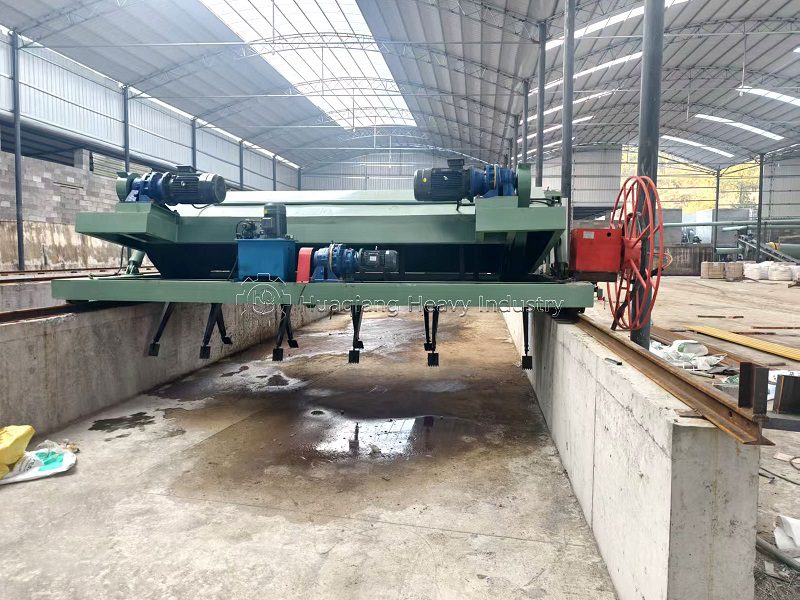
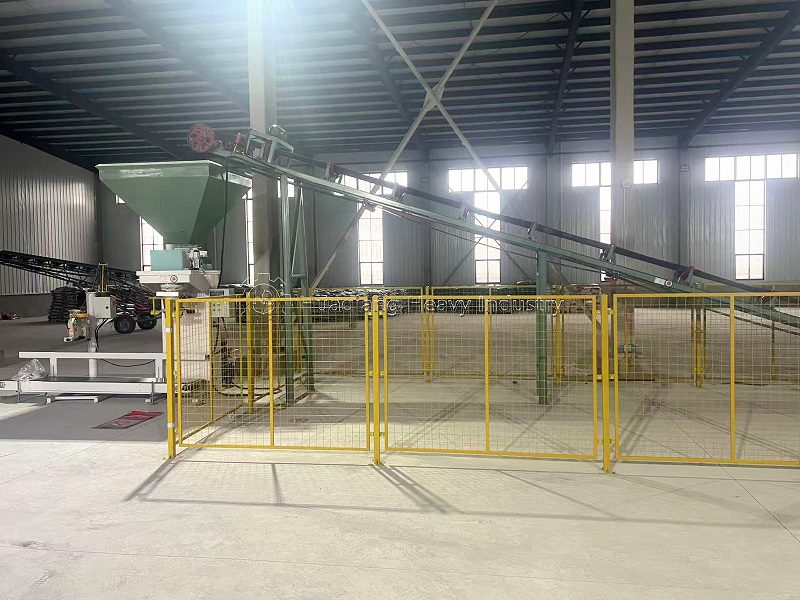
Professional commissioning ensures the optimal integration of all fertilizer raw material processing machinery and equipment. For an npk fertilizer line, this begins with precise formulation using an npk blending machine or an npk bulk blending machine. Granulation is then achieved via core professional fertilizer manufacturing equipment like a disc granulator (central to a disc granulation production line or an organic fertilizer disc granulation production line) or a double roller press granulator for compaction. The granulation stage is supported by auxiliary units like dryers and coolers. For organic production, the system starts with a windrow composting machine or a double screws compost turning machine for efficient aerobic fermentation, before the material proceeds to the granulation line. Whether using a dedicated disc granulator machine for spherical granules or a roller press for flakes, the integrated line is optimized during commissioning to ensure seamless material flow, energy efficiency, and consistent product quality, forming a complete, high-performance manufacturing system.