


In short: Screen aperture directly determines the particle size distribution of fertilizer granules, thus affecting the uniformity of spreading, particle separation during transportation, and particle hardness during storage. Using a double-layer screening system, with an upper screen aperture of 5.5mm and a lower screen aperture of 3.5mm, ensures that the final product particle size conforms to the 2-4.75mm range specified in GB/T 20781-2006 compound fertilizer standard, thereby achieving a granulation rate of ≥90%. Fine particles smaller than 1mm generate excessive dust, forming crystal bridges and agglomerates through capillary moisture absorption. Furthermore, due to their different ballistic characteristics when leaving the spreading disc, they lead to uneven nutrient distribution during spreading.
The Physical Principles of Screen Selection: Vibrating screens in fertilizer production are not only used for particle sorting but also for optimizing product performance. Screen size (defined as the number of openings per inch or the actual aperture in millimeters) plays a crucial role in quality control. When particles leave the cooler at 28-30°C and enter the screening circuit, the upper screen removes oversized material, which can affect the dissolution rate and clog the application equipment; the lower screen removes undersized fine powder, which decomposes into hygroscopic dust. Screen size selection must consider the phenomenon of near-size particles: particles with a diameter within 10% of the screen aperture size are prone to clogging the screen surface, a problem exacerbated by static charge generated during cooling.
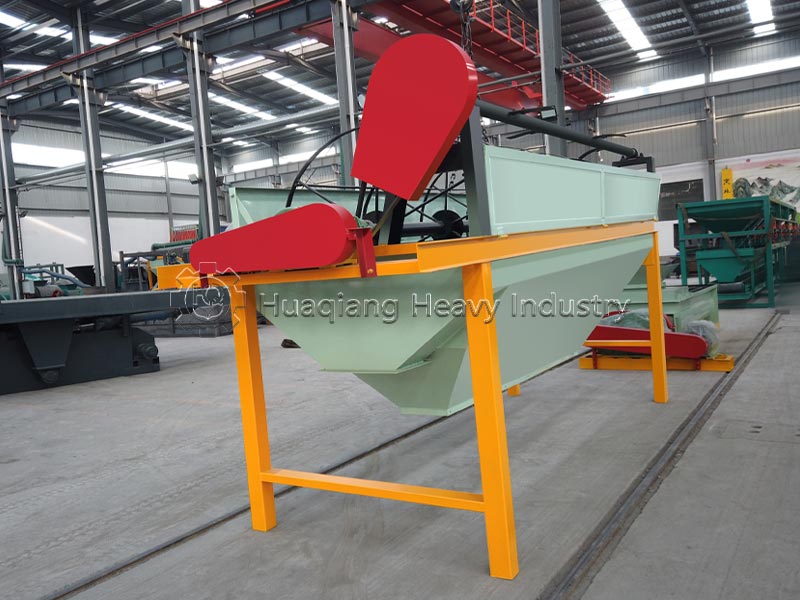
Screen Specifications and Their Direct Impact
A 5.5 mm upper screen aperture can trap oversized particles, returning them to the crusher for further particle size reduction. This specification ensures that the final maximum particle size does not exceed the centrifugal spreader’s spreading capacity. When particle size exceeds 5 mm, the spreader’s uniformity is affected due to inertia causing separation from the disc. Larger particles dissolve more slowly in the soil, delaying nutrient absorption, which crops require a rapid supply of nutrients.
A 3.5 mm bottom sieve aperture allows the finished product to pass through while trapping smaller particles in the recovery stream. During broadcasting, particles smaller than 2 mm travel only half the distance of 4 mm particles, creating streaks of nutrient deficiency and excess in the field. In bagged storage, these fine particles fill the gaps between larger particles, significantly increasing contact points and inducing capillary water bridges, ultimately leading to particle agglomeration. For mechanically compacted materials produced by high-pressure roller granulators, the double-layer sieve design is particularly important because the flaky crushing stage produces a wide initial particle size distribution, requiring precise grading to achieve final uniformity.
Separation Mechanisms in Mixed Fertilizers
When NPK particles with mismatched size ranges after sieving are used for bulk mixing, vibration during transport causes particle separation based on size. Smaller, denser particles migrate downwards through the material, while larger, less dense particles rise—a phenomenon known as the Brazil nut effect. This causes what was originally a homogeneous mixture to become stratified, resulting in significant differences in nitrogen, phosphorus, and potassium content in individual samples. This stratification can be eliminated by matching the sieve specifications of all mixture components to maintain a particle size uniformity index of over 80%, ensuring that each batch of mixed fertilizer achieves the nutrient ratios stated on the label.
The choice of sieve aperture is the final and most crucial quality control decision in fertilizer granulation. A double-layered sieve with a 3.5-5.5 mm aperture consistently produces finished granules of 2-4.75 mm, balancing spreading uniformity, dissolution rate, and storage stability, while minimizing electrostatic clogging and clumping, thus avoiding customer complaints and returns.
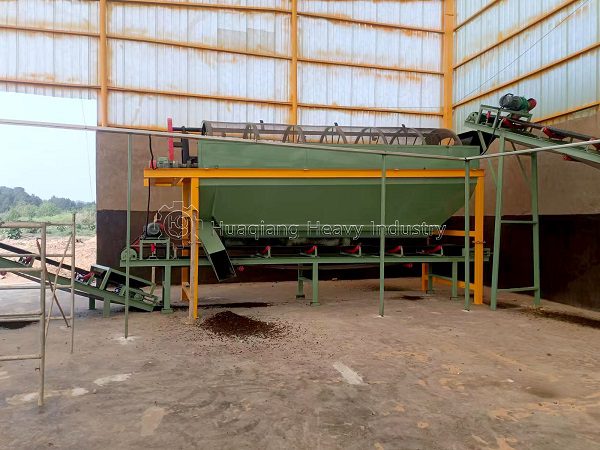
Screening as the Final Quality Gate
The 3.5-5.5 mm double-layer sieve specification is not merely a sorting step—it is the final arbiter of product performance across the entire production workflow. In a modern npk fertilizer line, granules exit the fertilizer cooler machine at 28-30°C and enter a precision rotary drum screening machine where the upper deck traps >5.5mm oversize for crusher recycle while the lower deck captures <3.5mm fines for re-agglomeration, ensuring only 2-4.75mm product reaches the fertilizer packing machine. For roller press granulator production line operations, this screening discipline is especially critical because dry compaction generates wider initial size distributions demanding rigorous classification to prevent Brazil-nut segregation during transport. Similarly, a bio organic fertilizer production line must integrate gentle fertilizer dryer machine stages—operating below 60°C to preserve microbial viability—before screening, as overdried bio-granules become electrostatically charged and prone to blinding. Ultimately, matching sieve aperture to spreading physics, dissolution kinetics, and storage thermodynamics transforms screening from passive quality control into active value engineering, eliminating customer complaints while maximizing field-level nutrient uniformity.