

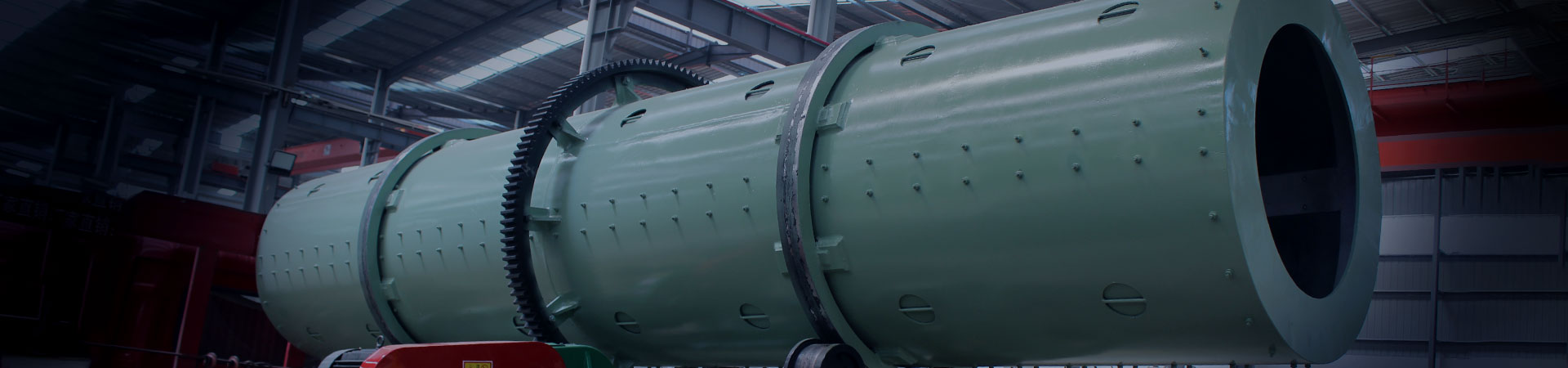
The rotary drum granulator is a standard machine in large and medium-sized organic fertilizer plants and production lines with an annual output of tens of thousands of tons. Its core advantages are high output, stable operation, strong continuous operation capability, and suitability for various mixed raw materials such as cow manure, sheep manure, sludge, mushroom residue, and straw.
The rotary drum granulator is a horizontal cylindrical machine, 3-6 meters long and 1.2-2.4 meters in diameter. Internally, it is equipped with lifting plates and baffles, dividing the drum into a mixing and granulation zone and a polishing and granulation zone. After the material enters the drum, it gradually agglomerates into granules under the action of rotation, lifting plates, and spraying. The polishing zone at the tail makes the granules rounder and harder.

The rotary drum granulator boasts significant advantages: continuous feeding and discharging, extremely high capacity (5-15 tons per hour); a wear-resistant and impact-resistant internal structure, suitable for raw materials containing small amounts of impurities; moderate particle strength, suitable for long-distance transportation; stable operation with low vibration and noise, allowing for 24-hour continuous operation.
The rotary drum granulator is highly adaptable to materials, handling high organic matter, high fiber, and high moisture content. Its disadvantages include a slightly lower pelletizing rate (approximately 40%-60%) and a relatively high amount of recycle material, requiring a screening and recycle system. However, in large-scale, low-cost, and high-output production models, it is an irreplaceable mainstay machine.