
What is a One-Ton-Per-Hour Organic Fertilizer Production Line?
A one-ton-per-hour organic fertilizer production line refers to a small-scale production unit that stably produces one ton of finished organic fertilizer per hour. It typically serves family farms, small-scale livestock farms, or village cooperatives. This production capacity represents the entry level of industrialized organic fertilizer production. Its low investment threshold and simple operation make it an ideal starting point for validating organic fertilizer business models.
- Basic Configuration: Powdered Organic Fertilizer Production Line The minimum configuration includes only fermentation auxiliary tools, a semi-wet material crusher, a screening machine, and an automatic packaging scale. The fermentation process relies on a loader for windrow turning, eliminating the need for specialized turning equipment. The crusher has a power of approximately 15 to 22 kilowatts and can break up clumps of fermented material to below 3 millimeters. The screening machine uses a drum type with a recommended screen aperture of 2 to 4 millimeters to separate large, insufficiently decomposed return materials. The packaging scale is a single-bucket quantitative type with an accuracy controlled within ±0.5%. The basic configuration of this equipment costs between $3,000 and $6,000. The product is powdered organic fertilizer, suitable for markets with readily available low-cost organic raw materials and where farmers accept powdered fertilizer.
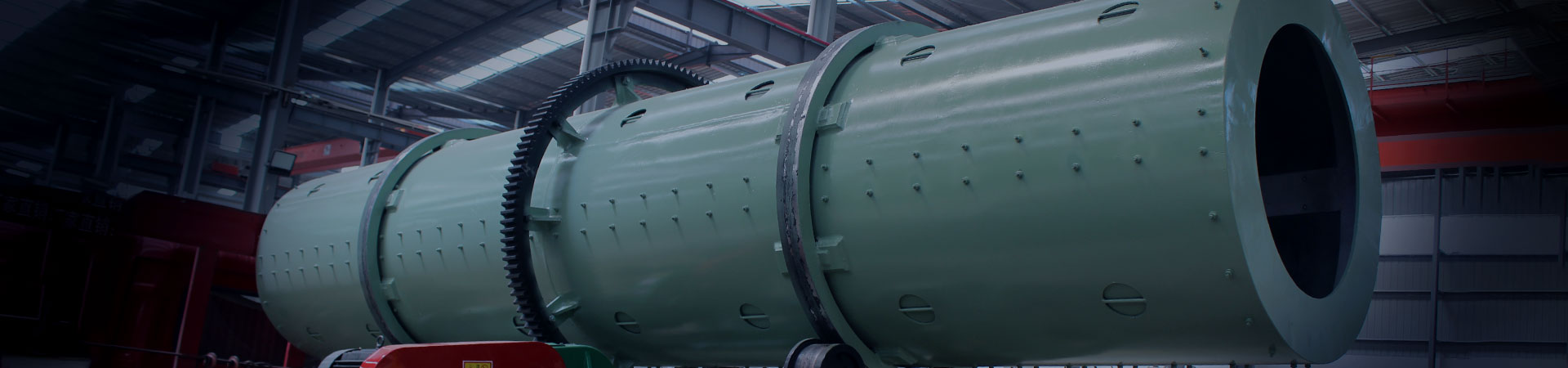
- Standard Configuration: Granular Organic Fertilizer Production Line Adding a granulation unit to the basic configuration upgrades the powder to granules, increasing the final selling price by 25% to 40%. For a production scale of one ton per hour, a flat die extrusion granulator is the most economical choice. This machine has a power of 22 to 30 kilowatts and uses pressure rollers to extrude material through die holes to form cylindrical granules, typically 4 to 6 millimeters in diameter. Compared to a roller extrusion granulator, the flat die solution is about 30% cheaper per unit, but the die wears slightly faster—when processing fibrous organic fertilizer, the lifespan of a set of die discs is approximately 600 to 800 hours. The standard configuration also requires the addition of a small rotary dryer (0.8 to 1.0 meters in diameter, 5 to 8 meters in length) to reduce the moisture content after granulation from 30% to below 15%. The heat source can be biomass pellets or a liquefied petroleum gas burner. The equipment investment range for the standard configuration is US$12,000 to US$20,000.
III. Complete Configuration: Automated Packaging and Dust Removal System
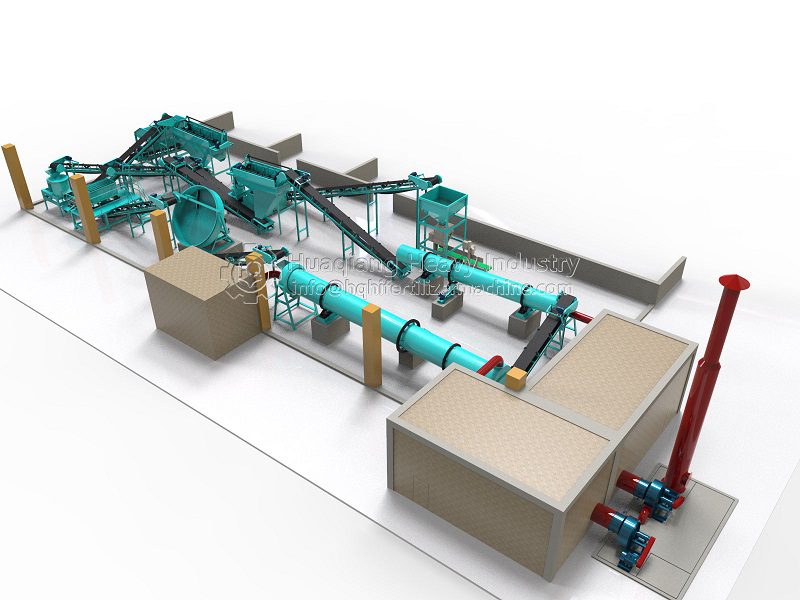
Adding two auxiliary units to the standard configuration can significantly improve the continuous operation capability of the production line. The automated packaging and palletizing unit includes: an automatic bag sewing machine, a bag inverting machine, a metal detector, and a simple palletizing robotic arm. This adds US$3,000 to US$5,000 to the investment and can reduce the number of workers at two packaging stations. The dust removal system includes a cyclone separator and a pulse-jet bag filter. This adds US$2,000 to US$3,500 to the investment and can control the dust concentration in the workshop to below 10 milligrams per cubic meter, meeting environmental protection acceptance requirements. The equipment investment range for the complete configuration is US$17,000 to US$28,000.
Three Hidden Costs of Ancillary Investments
Besides the main equipment, three ancillary expenses are often underestimated by first-time investors. Power Capacity Expansion: A one-ton-per-hour pellet production line typically has a total installed capacity of 60 to 90 kilowatts. If the existing power supply capacity is insufficient, the cost of upgrading the transformer is approximately $1,500 to $3,000. Plant and Ground Hardening: A steel-structured plant area of 150 to 250 square meters and a hardened ground thickness of 15 centimeters are recommended, with a total investment of approximately $5,000 to $10,000 (depending on the region). Environmental Approvals: The cost of preparing and accepting environmental impact assessment reports is approximately $1,000 to $3,000, depending on the strictness of local regulations.
Choosing Between Used and New Equipment: For a one-ton-per-hour production scale, used equipment is a worthwhile option. Fertilizer equipment has a relatively simple structure. Refurbished non-precision equipment such as flat die pellet mills, drum screens, and bucket elevators can have a service life of 70-80% of that of new equipment, while the price is only 30-50% of the price of new equipment. However, used drying drums require careful evaluation—the drum wall thickness may have been reduced by 1 to 3 millimeters due to long-term wear, and the risk of internal lifting plates detaching is high. It is recommended that the budget for used equipment be set at 40% to 60% of that for new equipment, with 10% to 20% reserved for replacement and adjustment of easily worn parts.
Modular Scaling from Entry-Level to Full Automation
A one-ton-per-hour organic fertilizer production line exemplifies how strategic fertilizer equipment sequencing can transform agricultural waste into revenue with minimal capital risk. The entry-level powder configuration—anchored by a fertilizer crusher and mixer and basic fertilizer screening equipment—validates raw material supply and local demand at the lowest threshold. Upgrading to granular output introduces a fertilizer granulator machine and compact fertilizer dryer and cooler, capturing the 25%–40% price premium that spherical or cylindrical pellets command over powder. The complete tier adds an automatic fertilizer packing machine, dust removal, and palletizing modules, reducing labor dependency and ensuring environmental compliance. While industrial fertilizer machine price varies from $3,000 entry points to $28,000 fully automated suites, the decisive factor is not upfront cost alone but the alignment between equipment tier, raw material profile, and market willingness to pay. By staging investment from powder to pellet to automation, operators convert trial-and-error capital into proven cash flow—building not just a production line, but a resilient, data-validated organic fertilizer enterprise.
We offer a full range of domestically produced organic fertilizer equipment, including powder production lines, granulation lines, and fully automatic lines with a capacity of one ton per hour. We support flexible selection from entry-level configurations of $3,000 to complete solutions of $28,000. We can also provide free customized optimal configuration solutions and ROI calculations based on your raw material type and target market, helping you start your organic fertilizer production journey with minimal trial and error costs.