

What is Seaweed Fertilizer Production Equipment?
Seaweed fertilizer production equipment refers to specialized machinery that uses fresh kelp, Sargassum, giant kelp, or other large brown algae such as *Sargassum fusiforme* as raw materials. Through processes such as washing, crushing, cell wall disruption, enzymatic or alkaline hydrolysis, filtration, and concentration, it extracts active substances from the seaweed and produces liquid or powdered fertilizer. Unlike chemical hydrolysis, modern seaweed fertilizer production emphasizes low-temperature physical or biological processes to maximize the retention of active ingredients such as alginic acid, mannitol, fucoidan, and natural plant growth regulators.
Raw Material Pretreatment Unit: Seaweed Purification and Crushing
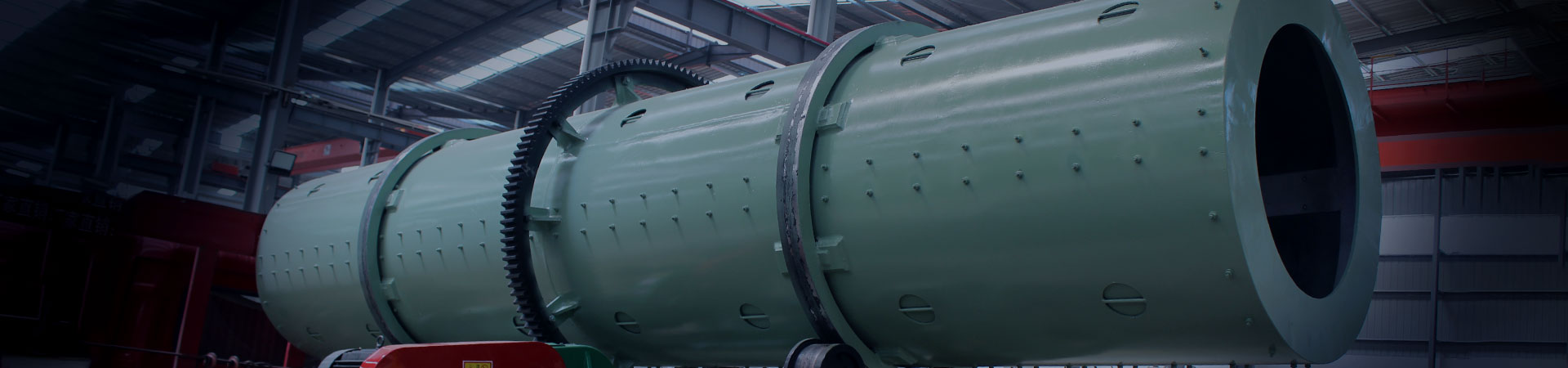
Fresh seaweed contains a large amount of mud, salt, and shell fragments upon arrival at the shore, requiring three stages of washing to remove impurities. The drum washing machine is the first stage—its inner wall has spiral guide plates, allowing the seaweed to tumble and move forward under the water flow for 3 to 5 minutes. It then enters the bubble washing machine, where the shockwaves generated by bottom aeration remove fine sand. Finally, the seaweed undergoes a high-pressure spray (0.5 to 1.0 MPa) for final washing. After washing, the seaweed has a water content of approximately 85% to 90%, requiring dehydration to 75% to 80% using a belt filter press, followed by shearing and pulverizing into 1 to 3 cm pieces.
Cell Wall Disruption and Extraction Unit: The Core of Active Substance Release
The active components of seaweed are encapsulated within tough cell walls (cellulose, hemicellulose, and alginate). The core task of the extraction process is efficient cell wall disruption. A two-stage extraction scheme is recommended:
The first stage is low-temperature alkaline hydrolysis. The pulverized seaweed is fed into a stainless steel reaction vessel (with jacketed heating and stirring), and 0.5% to 1.0% potassium hydroxide or sodium hydroxide solution is added at a material-to-liquid ratio of 1:3 to 1:5. The temperature is controlled at 50 to 60 degrees Celsius, and the reaction time is 2 to 4 hours. Alkaline hydrolysis dissolves alginate and cellulose, releasing the cell contents. The reaction vessel must be made of 316L stainless steel to resist alkali corrosion, with a volume of 1 to 10 cubic meters, and an investment of approximately US$10,000 to US$30,000.
The second stage is enzymatic hydrolysis. After alkaline hydrolysis, the pH is adjusted to 5.0 to 6.0, and a compound enzyme preparation (cellulase, alginate lyase, protease) is added. The temperature is maintained at 45 to 55 degrees Celsius, and enzymatic hydrolysis is carried out for 2 to 3 hours. Enzymatic hydrolysis can further degrade polysaccharides into small molecule oligosaccharides, improving the product’s bioactivity. The enzymatic hydrolysis vessel needs to be equipped with an online pH monitoring and automatic acid-base addition system.
For high-end seaweed fertilizer products, low-temperature physical cell disruption technology can also be used—a high-pressure homogenizer ruptures seaweed cells instantly at a pressure of 60 to 100 MPa, without the need for chemical reagents. However, the investment for a single unit is approximately US$30,000 to US$80,000, and the processing capacity is relatively low (0.5 to 2 tons per hour).
III. Solid-Liquid Separation and Concentration Unit: Purification of the Extract
The extracted mixture contains undegraded fiber residue. Solid-liquid separation is performed using a plate and frame filter press or a horizontal screw centrifuge, requiring a filtrate solid content of less than 0.5%. Plate and frame filter presses operate intermittently, with a lower investment (US$10,000 to US$20,000), but the filter cloth needs regular cleaning and replacement. Horizontal screw centrifuges can operate continuously, with an investment of US$30,000 to US$60,000, suitable for production lines with a daily output of 10 tons or more.
The separated clarified liquid is a dilute seaweed extract with a solid content of approximately 3% to 6%. It needs to be concentrated to 15% to 30% using a triple-effect evaporator or multi-effect membrane system to reduce subsequent packaging and transportation costs. A triple-effect evaporator consumes approximately 0.3 to 0.4 tons of steam per ton of water evaporated, with an investment of US$50,000 to US$120,000. Reverse osmosis membrane concentration is a low-temperature process (below 40 degrees Celsius), which maximizes the retention of heat-sensitive active ingredients, but the investment is higher (US$80,000 to US$150,000), and the membrane modules require regular cleaning and replacement.
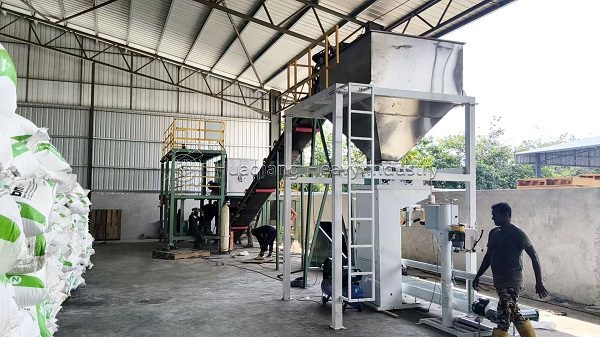
Compounding and Filling Unit: Finished Product Shaping The concentrated seaweed extract can be compounded by adding nitrogen, phosphorus, potassium, and trace elements according to the formula. The compounding tank is equipped with a high-speed shear emulsifier to ensure uniform dispersion of each component (fineness less than 10 microns). Liquid products are automatically filled into plastic drums or bulk bags; powder products need to be converted from liquid to dry powder using a spray drying tower. The inlet temperature of the spray drying tower is controlled at 180 to 200 degrees Celsius, and the outlet temperature is 80 to 100 degrees Celsius, producing powder with a particle size of 50 to 150 microns. The active ingredient retention rate of the powder product is approximately 70% to 85% of that of the liquid. The investment for the compounding and filling unit is approximately US$30,000 to US$80,000, and the spray drying tower requires an additional US$50,000 to US$150,000.
From Marine Biomass to Premium Agricultural Input
Seaweed fertilizer production exemplifies how specialized fertilizer equipment can transform marine biomass into high-value agronomic inputs while preserving delicate bioactive compounds. The upstream processing train—drum washers, belt filter presses, and shear crushers—purifies and fragments raw kelp, while alkaline and enzymatic hydrolysis vessels unlock alginic acid, fucoidan, and growth regulators from rigid cell walls. Once extracted and concentrated, the clarified liquid can be directly formulated into liquid fertilizers or further processed through spray drying into micronized powder. For producers diversifying into solid granular products, the same extraction infrastructure feeds into a fertilizer granulator machine—such as a disc or extrusion unit within the broader fertilizer equipment family—where concentrated extract is blended with NPK carriers and pelletized. A fertilizer crusher and mixer ensures uniform nutrient distribution, while fertilizer screening equipment classifies pellets by size, and a fertilizer dryer and cooler stabilizes moisture for extended shelf life. The final automatic fertilizer packing machine delivers sealed, accurately weighed containers. By integrating low-temperature extraction with precision granulation and packaging, manufacturers capture the full premium potential of seaweed-derived biostimulants across both liquid and solid product portfolios.