
What is an NPK compound fertilizer production line for the African and Southeast Asian markets?
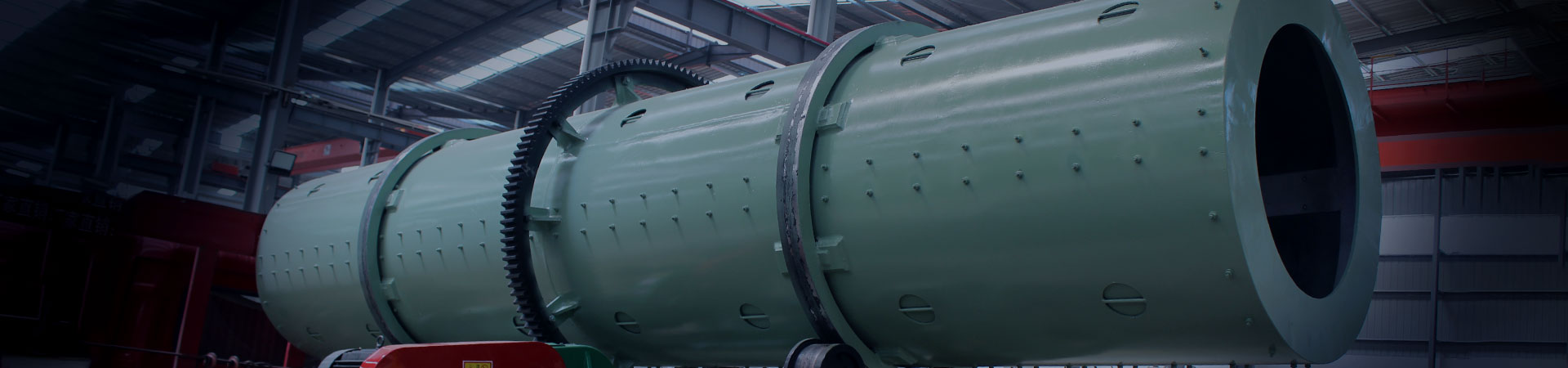
A nitrogen, phosphorus, and potassium (NPK) compound fertilizer production line for the African and Southeast Asian markets refers to a complete industrial system adapted to the constraints of tropical climates, unstable power supply, weak logistics infrastructure, and unique local raw material structures. These production lines need to strike a balance between equipment weather resistance, energy flexibility, ease of maintenance, and investment threshold, which differs significantly from production lines in standard temperate regions.
Energy Adaptation: From Grid Dependence to Diverse Power Sources
Power supply is unstable in parts of Africa and Southeast Asia, with daily power outages of 2 to 6 hours being common. A standard NPK production line has a total installed capacity of approximately 200 to 400 kilowatts. Frequent start-ups and shutdowns not only damage motors but also cause temperature fluctuations in boilers and drying drums, leading to product quality control issues. Production lines for these markets need to be equipped with diesel generator sets as backup power, with a capacity selected at 1.2 to 1.5 times the peak power of the production line, and equipped with automatic switching devices to restore power to core equipment within 30 seconds after a power outage. A better solution is to replace coal-fired or gas-fired boilers with biomass hot air furnaces—biomass fuels such as African palm shells, Southeast Asian rice husks, and coconut shells are inexpensive (approximately 30% to 50% of the price of coal), and the combustion system has low dependence on electricity. The steam auxiliary system of the drum pellet mill can be modified to a hot water circulation system, using hot water (80 to 95 degrees Celsius) generated by the biomass boiler to replace steam. Although the pelleting rate decreases slightly by 5 to 8 percentage points, it completely eliminates dependence on industrial boilers and high-pressure pipelines.
Climate Tolerance: Equipment Protection in High Humidity and High Heat Environments
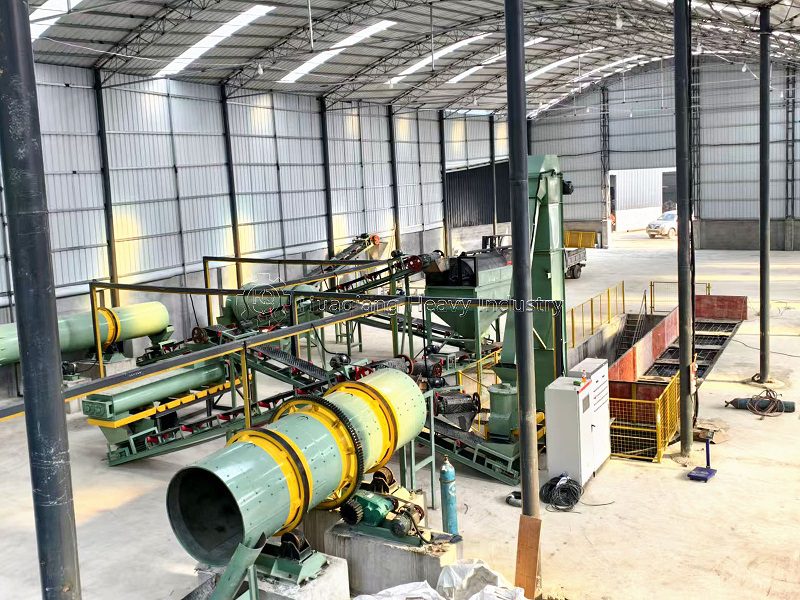
Southeast Asia has an average annual relative humidity exceeding 80%, and coastal areas of Africa can reach over 90% during the rainy season. Standard carbon steel structure equipment will show corrosion within 3 to 6 months under these conditions, and condensation inside the electrical control cabinet will frequently cause short circuits. Production lines targeting these markets need to implement full-scale hot-dip galvanizing or stainless steel replacement—exposed components such as batching silos, elevator housings, and conveyor supports should be treated with a galvanized layer thickness of no less than 80 microns, while core material-contacting components (mixer inner walls, granulator lifting plates) should be replaced with 304 or 316L stainless steel. The electrical system protection rating should be upgraded from the conventional IP54 to IP65, and control cabinets should be equipped with constant temperature and dehumidification devices and positive pressure ventilation systems. The insulation layer thickness of the drying cylinder should be increased from 100 mm to 150 mm, with an external aluminum reflective layer to reduce heat loss in high-temperature and high-humidity environments by approximately 15% to 20%. It is recommended that the packaging process be equipped with a dehumidified packaging room, with relative humidity controlled below 50%, to prevent finished products from absorbing moisture and clumping after being bagged and stored.
Localized Operations and Maintenance: From Spare Parts Supply Chain to Personnel Training Spare parts procurement cycles are long (typically 4 to 8 weeks) in the African and Southeast Asian markets, and local technical maintenance capabilities are weak. Production line design should adhere to the principle of “less precision, more versatility”—prioritizing belt drives over gear drives, pneumatic components over complex hydraulic systems, and standardized bearings and seals. Equipment suppliers should provide a 3-6 month supply of consumable parts (screens, belts, bearings, seals) and establish regional spare parts warehouses. Operational training should go beyond routine equipment start-up and shutdown instruction, covering routine maintenance skills such as fault diagnosis, belt replacement, and screen tensioning; the training period should ideally be no less than 2 weeks. The configuration of a remote diagnostic system is particularly crucial—using an IoT module to transmit equipment operating data back to headquarters in real time, allowing local engineers to complete over 80% of fault troubleshooting under video guidance, reducing downtime from weeks to hours.
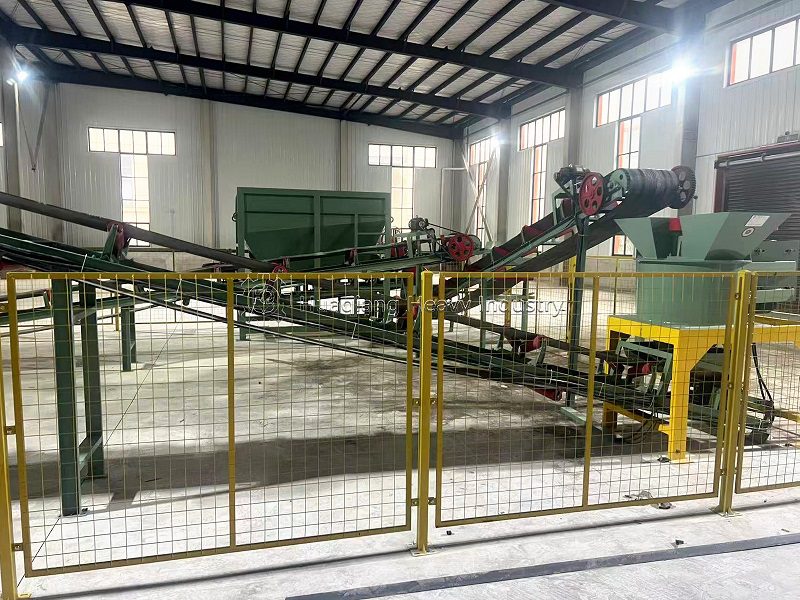
Investment Threshold Matching Capacity: Production line investments targeting these markets must balance economies of scale with financial accessibility. A compact production line with an hourly output of 3-5 tons (annual output of 20,000-30,000 tons) is the optimal entry point—equipment investment is approximately US$150,000-250,000, occupying 2,000-3,000 square meters, and requiring only 3-5 operators. This scale can meet the needs of a single country or regional market without tying up capital due to overcapacity. Once the market proves successful, production can be expanded to 10 tons per hour by adding modular components such as batching silos and parallel granulators. For startups with limited funds, a “powder blending first, granulation upgrade later” strategy is recommended—first configure a blended fertilizer (BB fertilizer) production line (investment of US$50,000 to US$80,000), and after verifying local raw material supply and farmers’ willingness to pay, then add granulation and drying units. This gradual investment spreads risk over a 2-3 year period, making it more suitable for the uncertain environment of the African and Southeast Asian markets.
In conclusion, designing an NPK production line for African and Southeast Asian markets demands a holistic approach to fertilizer equipment selection that prioritizes climate resilience, energy flexibility, and operational simplicity. The fertilizer granulator machine serves as the core processing unit, where drum or disc configurations must be adapted to biomass-fired hot air systems rather than conventional steam boilers to eliminate grid dependency. Equally critical is the fertilizer crusher and mixer stage, which ensures uniform particle size distribution and homogenous nutrient blending—key prerequisites for achieving consistent granulation quality in high-humidity environments. Post-granulation, the fertilizer dryer and cooler must feature enhanced insulation and corrosion-resistant materials to maintain thermal efficiency while preventing moisture reabsorption during the rainy season. When assessing the industrial fertilizer machine price, investors should evaluate total lifecycle costs, including spare parts availability, energy consumption under diesel backup scenarios, and maintenance training requirements, rather than focusing solely on initial capital expenditure. The automatic fertilizer packing machine should be installed within a dehumidified enclosure to prevent clumping, while the fertilizer screening equipment needs robust, easily replaceable mesh screens to handle abrasive local raw materials. For operations seeking gradual market entry, the organic fertilizer disc granulator offers a lower-investment, modular alternative that can be integrated later into full compound fertilizer systems. Ultimately, success in these markets hinges on configuring scalable, locally maintainable production lines that transform regional agricultural constraints into sustainable competitive advantages.