

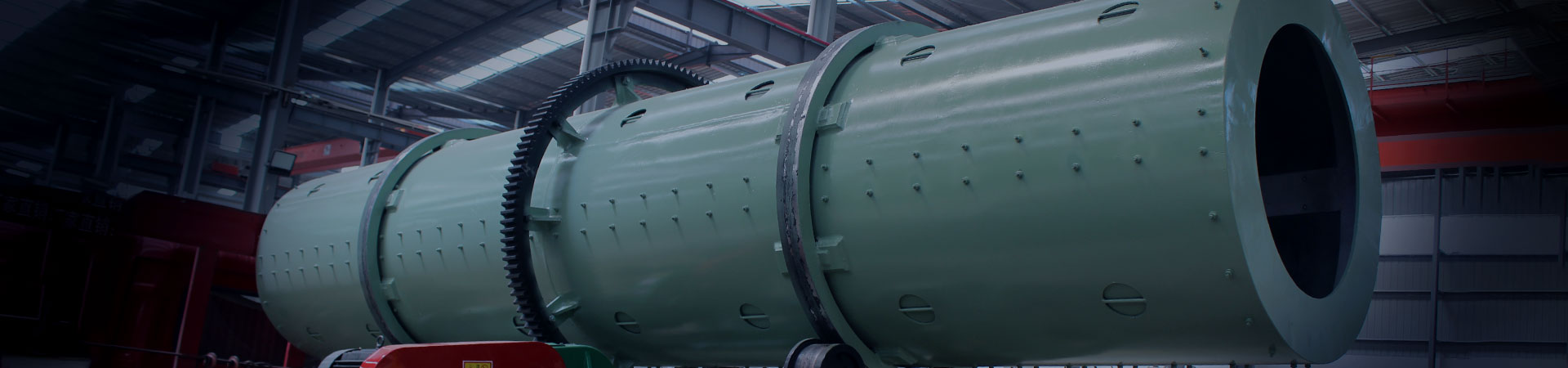
What is Poultry Manure Fertilizer Treatment?
Poultry manure fertilization refers to a systematic treatment method that uses specialized machinery to transform the mixture of manure and bedding produced during the raising of poultry such as chickens, ducks, and geese into commercial organic fertilizer through processes such as solid-liquid separation, aerobic fermentation, and granulation. Unlike direct return to the field or natural composting, mechanized fertilization treatment can complete the harmless transformation within 15 to 25 days, while eliminating environmental pressure on farms and generating additional fertilizer sales revenue.
Solid-Liquid Separation: From Liquid Manure to Compostable Raw Material
Poultry manure (especially laying hen manure) has a high water content of 75% to 85%. Direct fermentation will produce large amounts of ammonia and hydrogen sulfide due to lack of oxygen. A screw extrusion solid-liquid separator is a standard configuration in the pretreatment stage—a variable-diameter screw forcibly pushes the manure to the end of the screen, squeezing out free water under a pressure of 20 to 30 MPa. After separation, the moisture content of the solid material is reduced to 55% to 65%, reaching the suitable range for aerobic fermentation. The separated liquid can be used to produce biogas in anaerobic digesters or treated in multi-stage oxidation ponds for irrigation. A separator with a processing capacity of 10 to 15 cubic meters per hour can meet the daily manure treatment needs of a laying hen farm with 100,000 chickens, with an equipment investment of approximately US$5,000 to US$12,000.
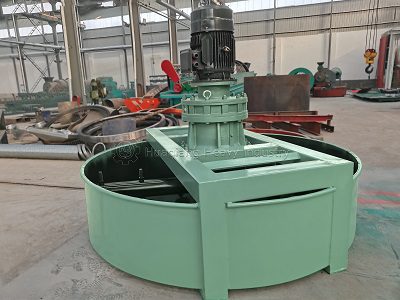
Trough-type Turning Fermentation: Large-scale Aerobic Conversion
The separated solid manure needs to undergo a fermentation process for harmless treatment. Trough-type turning fermentation systems are currently the mainstream choice for large-scale poultry farms. Its core configuration includes: a concrete fermentation trough (3 to 6 meters wide and 1.2 to 1.5 meters high), a bottom forced ventilation duct, and a track-mounted turning machine. The turning machine runs back and forth along the track, using a blade roller to break up, displace, and convey the material backward, turning it every 2 to 3 days. Forced ventilation and regular turning work together to raise the pile temperature to 55-65 degrees Celsius within 48 hours and maintain it for 7-10 days—a temperature and duration sufficient to kill avian influenza virus, coccidia oocysts, and E. coli. The fermentation cycle is 15-20 days, and the matured material is odorless, free of insect eggs, and retains an organic matter content of over 45%. A trough system with a daily output of 20 tons of material requires an investment of approximately US$30,000 to US$60,000.
III. Crushing and Screening: Refining Fermentation Products
Matured poultry manure still contains a small amount of fibrous clumps and incompletely decomposed bedding material (such as rice husks and sawdust). A semi-wet material crusher breaks up the clumps, requiring over 90% of the output to pass through a 3mm screen. It then enters a drum screen (2-4mm mesh) to remove fibrous impurities and stones; the undersize material is the powdered organic fertilizer semi-finished product. The oversize material (approximately 5%-10% of the total) can be returned to the fermentation tank for further processing or reused as bedding material. The combined investment for the crusher and screening machine in this unit is approximately US$8,000 to US$15,000.
Granulation and Packaging: Achieving Commercial Value Added The final selling price of powdered poultry manure organic fertilizer is typically US$80 to US$150 per ton, while the selling price after granulation can increase to US$150 to US$250 per ton. Given the high fiber content of poultry manure, a roller extrusion granulator is recommended—it requires no binder and relies on a linear pressure of 150 to 250 MPa to extrude the material into lentil-shaped or irregular granules. The granulated granules do not require drying (the moisture content of fermented poultry manure is approximately 30% to 35%, which is reduced to 25% to 30% after extrusion) and can directly enter the cooling and screening process. The finished granules after screening are automatically packaged into 25 kg or 50 kg bags using a packaging scale. If it is necessary to reduce the moisture content to below 20% to extend shelf life, a low-temperature belt dryer (temperature 60 to 80 degrees Celsius) can be configured. The investment for the granulation and packaging unit is approximately US$20,000 to US$40,000, depending on whether drying equipment is included.
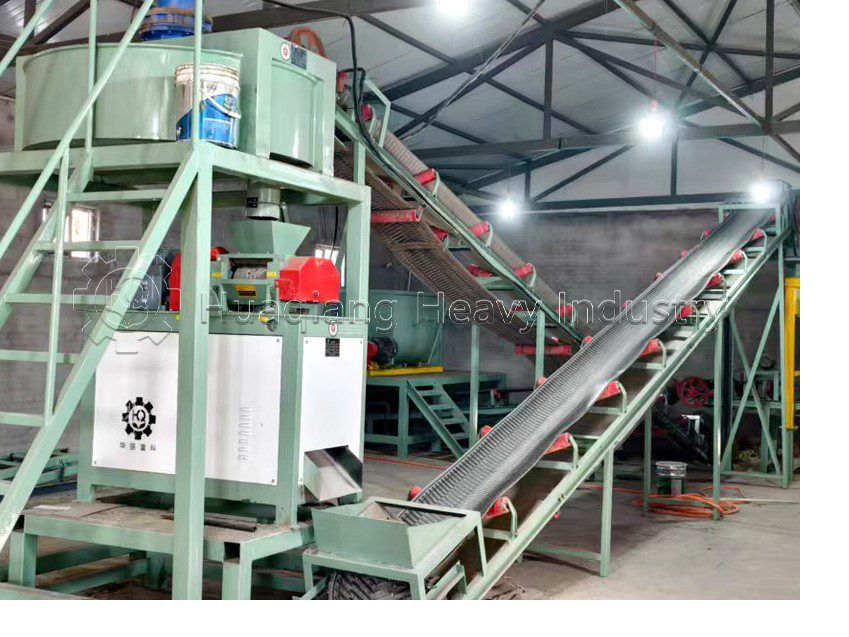
The complete poultry manure valorization workflow demonstrates that modern fertilizer equipment has evolved from standalone machines into integrated production ecosystems. From solid-liquid separation through fermentation to final pelletizing, each stage demands purpose-built machinery: a robust fertilizer crusher and mixer for size reduction and homogenization, a high-efficiency fertilizer granulator machine for extrusion compaction, and a precision fertilizer dryer and cooler for moisture regulation and thermal stabilization. The downstream automatic fertilizer packing machine ensures consistent bag weights and sealed integrity, critical for retail distribution and export compliance. When assessing industrial fertilizer machine price, operators should evaluate total lifecycle costs rather than initial capital outlay—energy-efficient motors, wear-resistant alloy components, and modular designs that accommodate future capacity expansion deliver superior long-term returns. By configuring these interconnected systems as a unified production line, poultry farms can reliably convert waste streams into premium organic fertilizers, achieving both environmental compliance and sustained profitability within a fully automated, traceable manufacturing framework.
We provide a complete set of poultry manure treatment equipment, from solid-liquid separation and tank fermentation to extrusion granulation. We can also customize production line configurations and investment recovery calculations free of charge according to your livestock scale, helping you efficiently transform livestock waste into commercial organic fertilizer with stable annual returns.