


Answer: Scientific fertilization of field crops should follow the core principle of “phosphorus and potassium as base fertilizer, nitrogen fertilizer applied in stages.” Different nutrients exhibit different behaviors in the soil, determining their optimal application time and allocation ratio. Improper allocation can lead to a chain reaction of “excessive early growth – nutrient deficiency in the later stage – nutrient fixation,” resulting in a severe discrepancy between fertilizer input and yield return. The allocation logic and mechanism are as follows:
Phosphorus and Potassium Fertilizers: Primarily as base fertilizer, applied in one application.
Phosphorus and potassium fertilizers have extremely poor mobility in the soil. In particular, after application, phosphorus fertilizer is easily fixed by iron, aluminum, calcium, and other ions in the soil, transforming into ineffective phosphorus that is difficult for crops to absorb. The more times fertilizer is applied, the larger the contact area between the phosphorus fertilizer and the soil, and the more phosphorus is fixed. Therefore, all phosphorus fertilizer should be applied as base fertilizer in one application to minimize fixation and maximize effectiveness. Although potassium fertilizer has slightly better mobility in the soil than phosphorus, the peak absorption of potassium by field crops occurs in the early growth stage. Therefore, potassium fertilizer should primarily be applied as basal fertilizer (generally accounting for 70%–80% of the total), with the remainder applied as topdressing during critical periods of potassium demand.
Nitrogen Fertilizer: Combining Basal and Topdressing, “Controlling Early Growth and Promoting Mid-Growth” The allocation of nitrogen fertilizer is the most crucial aspect of fertilization management for field crops. Nitrogen is highly mobile in the soil and easily leached or volatilized by water; therefore, a combination of basal and topdressing is essential. The specific ratio varies depending on the crop, soil fertility, and yield target: For general field crops: 30%–70% (most commonly 50%) of nitrogen fertilizer should be applied as basal fertilizer, with the remainder applied as topdressing during the rapid growth stage.
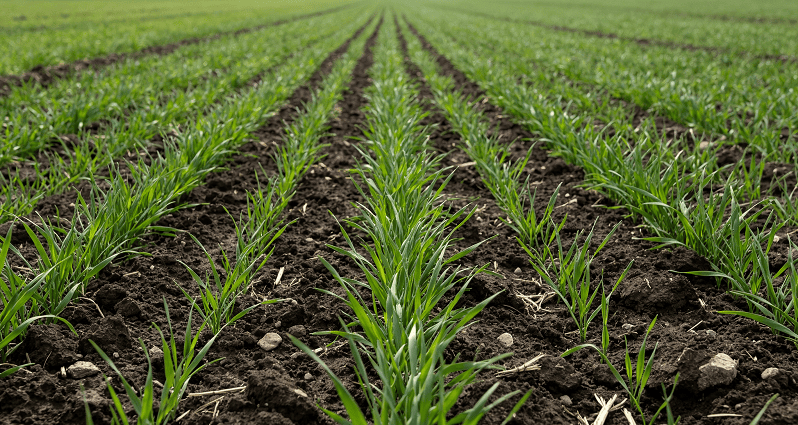
For wheat: 30%–50% of the total nitrogen fertilizer should be applied as basal fertilizer, and 50%–70% as topdressing at the jointing stage. For high-yield wheat fields, a scheme of “30% basal application, 60% topdressing at the jointing stage, and 10% topdressing at the booting stage” can be adopted.
Corn: For spring corn, 40% of nitrogen fertilizer should be applied as base fertilizer, and 60% as topdressing. Topdressing should follow the principle of “light application at the beginning and heavy application at the end,” with 1/3 applied at the jointing stage and 2/3 at the tasseling stage. For summer corn, a scheme of “30%–40% base application, 50% topdressing at the tasseling stage, and 10% supplemental application at the silking stage” can be adopted.
Rice: 60% of nitrogen fertilizer should be applied as base fertilizer, and 40% as topdressing (which can be applied once or twice).
III. Organic Fertilizer: All as base fertilizer to improve soil fertility. Organic fertilizers (farmyard manure, compost, etc.) have long-lasting effects and comprehensive nutrients. They should all be applied as base fertilizer in conjunction with deep plowing into the soil layer to improve soil structure and enhance soil fertility.
How can fertilizer companies adapt to the base and topdressing distribution needs of field crops?
Formulation Differentiation Design: Develop specialized formulas for the base and topdressing needs of different crops. Base fertilizer products should have sufficient phosphorus and potassium content and moderate nitrogen; top dressing products should be nitrogen-based and have a fast-acting effect.
Slow-release and controlled-release coating technology: A coating machine is used to coat granular fertilizers, synchronizing the nutrient release rate with the crop’s absorption curve, reducing the frequency of top dressing and labor input.
Seed-fertilizer co-application adaptation: For areas advocating simultaneous seed-fertilizer application, specialized base fertilizer products with uniform particle size, high strength, and no seed-burning properties are developed, compatible with precision seeders.
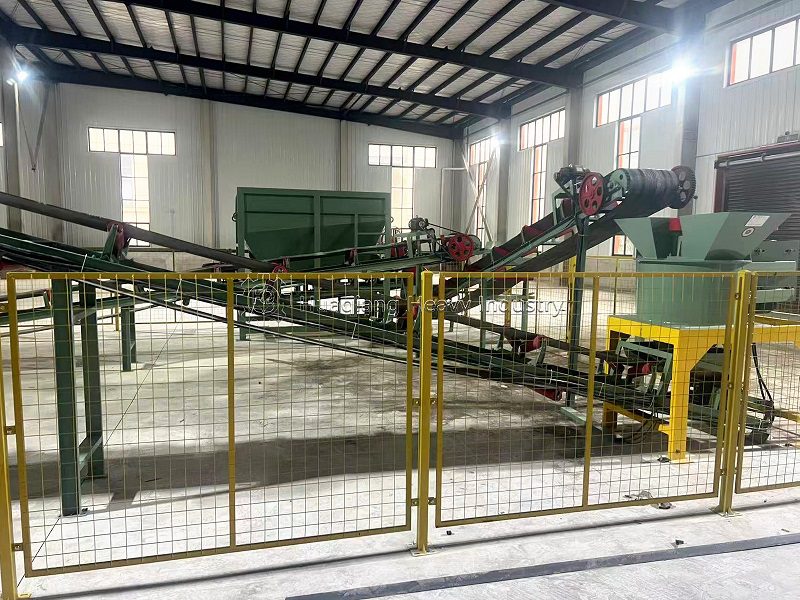
Soil testing and formula formulation and precise batching: A PLC automatic batching system is used to precisely control the nitrogen, phosphorus, and potassium ratio of base fertilizer and top dressing products based on the soil nutrient status and crop nutrient requirements of the target area.
The scientific allocation of “base fertilizer + top dressing” is essentially a precise match based on the behavior of nutrients in the soil and the absorption patterns of crops at different growth stages. Phosphorus and potassium at the base, nitrogen in stages—mastering this core principle allows for efficient fertilizer utilization while ensuring yield.
Translating the scientific base‑plus‑topdressing principle into commercial fertiliser products requires flexible and precise production equipment. For phosphorus‑ and potassium‑rich base fertilisers, a bio organic fertilizer production line can incorporate composted manure and rock phosphate, while the organic fertilizer disc granulator gently shapes the material into uniform, slow‑release granules that preserve microbial activity. For high‑nitrogen topdressing products, the roller press granulator production line — using advanced fertilizer production machine technology — compacts dry powders into dense, rapidly dispersible granules without binders, ensuring quick nutrient availability. The npk fertilizer granulator machine equipment (including rotary drum and extrusion types) offers flexible control over granule hardness and dissolution rate, allowing manufacturers to tailor base and topdressing formulations to specific crop needs. After granulation, fertilizer screening equipment separates oversized and undersized particles, guaranteeing uniform size for precision seeding, while the fertilizer drying and cooling machine ensures optimal moisture content and stability, preventing caking during storage. By integrating these technologies, producers can design dedicated base fertilisers with balanced N‑P‑K and high organic matter, and fast‑acting topdressing products with elevated nitrogen and controlled release — all while meeting the diverse requirements of field crops, soil types, and application methods. Ultimately, modern equipment empowers fertiliser companies to move beyond generic blends, delivering tailored solutions that align nutrient release with crop uptake patterns, maximising yield, minimising losses, and supporting sustainable intensification in global agriculture.
If you encounter difficulties in formula design or process optimization during production, our technical team can provide you with a complete solution from raw material analysis to equipment selection.